fshiels

Progressive Future USA

fshiels

WE MUST LISTEN TO THE OPPOSTION; REGARDLESS

Thomas L. Johnson

His shamelessness is almost mythical in its duration and scope.

While most people raised in a social culture exercise high levels of shame-driven behavior, disguising their dark side behaviors while projecting a persona that is always Facebook pure, the Donald has never demonstrated anything that would qualify as shame.

  • He never apologizes. This week, when an aide made a comment about the impending death of John McCain, he has prevented any public apology. He never apologized to the disabled reporter whose speech impediments he mimicked; he has never apologized for things he said about political opponents or everybody from Meryl Streep to Maggy Haberman.
  • He is the master of the fine art of doubling down. His whole campaign to nullify very achievement of the Obama presidency is just a protracted double-down exercise.
  • He shamelessly insults his allies and supports dictators likely to violate human rights like Rodrigo Duterte. He has bromances with Putin, Xi Jin-Ping, and makes a point of demonstrating limited regard for Angel Merkel.

While Richard M. Nixon and Bill Clinton both demonstrated well-developed levels of shamelessness, Donald J. Trump has mastered the subject through a life of utter consistency, whether it was taking away the healthcare of a nephew or allegedly bedding down a porn star and a playmate during the early stages of his marriage to his third wife. You have to love a guy who is so convinced of his abilities that he lives in a gold-plated world of shamelessness, even through six episodes of bankruptcy

Take Action: The Trump administration MUST stop ripping families apart at the border

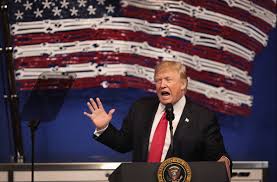
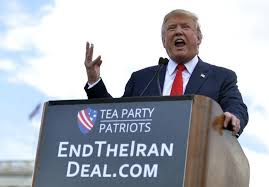
TRUMP SEPARATING CHILDREN AT BORDERTRUMP SPPECH AT SNAP ON TOOLS


blogger’s note: ACLU SUING TRUMP OVER BORDER SEPARATIONS OF YOUNG CHILDREN FROM PARENTS

6/5/2018

Target: U.S. Attorney General Jeff Sessions

Immigrant and civil rights groups have never seen anything like this. Infants and children are being ripped from their mother’s arms as they enter the United States.

In one case in Arizona, a 53 week old infant was recently in court without a parent. These are children and families seeking asylum from Central America and Africa―from violence in their home countries.

In a recent interview with NPR, White House Chief of Staff John Kelly called this policy a “tough deterrent.” But the motives of the White House are clear: To punish immigrant families.

Now, the ACLU is suing the U.S. government to reunite these families.


DEMOCRAT CANDIDATE FOR CONGRESS RASHIDA CALLS THIS TO OUR ATTENTION.

Tell U.S. Attorney General Jeff Sessions:

Stop the atrocious policy of ripping children from their parents arms as they cross into the United States. This policy is unprecedented and is causing permanent harm to children and their families.

We demand that you stop your assault on immigrant families and immediately reunite children with their parents.

frederick,

We have long known of Donald Trump’s atrocious rhetoric and actions toward immigrants. But now we are learning of his administration’s unprecedented policy of ripping children from the arms of their parents at the border.

In one case in Arizona, a 53 week old infant was recently in court without a parent. These are children and families seeking asylum in the U.S. from Central America and Africa―people fleeing violence in their home countries.

ICE agents are putting children into government detention centers, where children are abused and traumatized.

The motives of the White House are clear: To punish immigrant families.

In a recent interview with NPR, White House Chief of Staff John Kelly called this policy a “tough deterrent.” But now, the ACLU is suing the U.S. government to reunite these families.

Stand with me and our partners to demand that the Trump administration and U.S. Attorney General Jeff Sessions stop its assault on immigrant families. Demand that children and parents be immediately reunited.

In past administrations, the Office of Refugee Resettlement had been used to assist children who crossed the border on their own. These were children who were often 13 or 14 years old, fleeing violence and poverty. But this new U.S. government policy is unnecessarily turning children―often as young as 6 or 7―into unaccompanied minors.

Immigrant and civil rights groups have said that they have never seen anything like this. This type of policy is causing permanent harm to children and families, in the name of our government.

Sign the petition to Jeff Sessions demanding that he and the administration immediately stop this atrocious policy of ripping families apart at the border.

Donald Trump’s cruelty toward immigrants and people of color knows no bounds. Together we must fight his destructive policies, which directly harm children and families.

Thank you for standing with me and taking action today.

-Rashida

The U.S. lost track of 1,475 immigrant children last year. Here’s why people are outraged now.

May 29 at 7:07 AM
 1:25
Outrage over reports of ‘missing’ immigrant children

Outrage about treatment of children taken into U.S. custody at the Southwest border has reached a fever pitch, exploding in a barrage of tweets and calls to act 

Reports of federal authorities losing track of nearly 1,500 immigrant children in their custody. Scathing criticism over children being taken from their migrant parents at the border. Proposed rallies.

In the recent days, outrage about treatment of children taken into U.S. custody at the Southwest border has reached a fever pitch, exploding in a barrage of tweets and calls to action with the hashtags #WhereAreTheChildren and #MissingChildren.

How accurate are certain claims circulating online? Are these children really missing? What do those children have to do with the Trump administration’s new immigration enforcement policies? How many families are being separated? And why is there so much outrage about it now? We take a look at how the story has snowballed.

Did the United States really lose track of 1,475 immigrant kids?

In short, yes. During a Senate committee hearing late last month, Steven Wagner, an official with the Department of Health and Human Services, testified that the federal agency had lost track of 1,475 children who had crossed the U.S.-Mexico border on their own (that is, unaccompanied by adults) and subsequently were placed with adult sponsors in the United States. As the Associated Press reported, the number was based on a survey of more than 7,000 children:

From October to December 2017, HHS called 7,635 children the agency had placed with sponsors, and found 6,075 of the children were still living with their sponsors, 28 had run away, five had been deported and 52 were living with someone else. The rest were missing, said Steven Wagner, acting assistant secretary at HHS.

Health and Human Services officials have argued it is not the department’s legal responsibility to find those children after they are released from the care of the Office of Refugee Resettlement, which falls under HHS‘s Administration for Children and Families. And some have pointed out that adult sponsors are sometimes relatives who already were living in the United States and who intentionally may not be responding to contact attempts by HHS.

CHUCK SCHUMER IS THE WORST POSSIBLE DEMOCRATIC LEADER ON FOREIGN POLICY AT THE WORST POSSIBLE TIME

WASHINGTON, DC - DECEMBER 21:  U.S. Senate Minority Leader Sen. Chuck Schumer (D-NY) listens during a news conference at the Capitol December 21, 2017 in Washington, DC. Senate Democratic leadership held a year-end news conference to the GOP and Trump Administration.  (Photo by Alex Wong/Getty Images)

Blogger’s note: Is it time for new leadership, Democrats? Chris Murphy? Sherrod Brown? Kristen Gillenbrand? An “American Macron?”

from THE INTERCEPT

PRESIDENT DONALD TRUMP chose Gina Haspel, who supervised torture during the George W. Bush administration, to run the Central Intelligence Agency. He violated and withdrew from the Iran nuclear deal. He bombed Syria. He moved America’s embassy in Israel from Tel Aviv to Jerusalem. He’s continued the United States collaboration with Saudi Arabia on waging brutal war on Yemen. He first threatened to “totally destroy” North Korea with “fire and fury,” and then, last Thursday, spoke of North Korea being “totally decimated” by the U.S.

Trump’s frightening and erratic approach to foreign policy has galvanized grassroots opposition, so Democrats desperately need a prominent leader who can both fuel and channel that energy, while motivating the Democratic Party’s base for the 2018 midterms with a vision of a starkly different foreign policy.

Instead, Democrats have Chuck Schumer.

Schumer, a New Yorker who was first elected to the House of Representatives in 1980 and then the Senate in 1998, is the upper chamber’s minority leader. He is thus, since both houses of Congress and the White House are held by Republicans, formally the highest ranking Democratic official in America.

Schumer’s positions on domestic policy leave much to be desired, but not on every issue. By contrast, his views on foreign policy are largely indistinguishable from the Republican Party in general and Trump specifically.

A look back at Schumer’s history demonstrates just why it has been so difficult for Democrats to “resist” Trump with him at the helm.

  • In the end, Schumer did vote against Haspel’s nomination. However, he did not publicly commit to doing so during the weeks leading up to the vote, which lessened pressure against other Democrats in the Senate who were tempted to support her. Schumer also did not whip the Democratic Caucus to oppose Haspel. In the end, her nomination cruised 54-45, with six Democrats voting yes — meaning that enough Republicans voted no that if Schumer had held his caucus together, Haspel would not have been sworn in at the CIA on Monday. Of course, it would have been difficult for Schumer to lead any effort to stop Haspel with a straight face. During a 2004 hearing, Schumer sympathetically told then-Attorney General John Ashcroft, “There are probably very few people in this room or in America who would say that torture should never, ever be used. … It’s easy to sit back in the armchair and say that torture can never be used. But when you’re in the foxhole, it’s a very different deal.” (Schumer did say he was concerned about torture being used “willy-nilly.”)
  • At the beginning of the Trump administration, Schumer voted for Mike Pompeo’s nomination to head the CIA. Pompeo is a member of the Christian far right who’s said that terrorism will continue “until we make sure that we pray and stand and fight and make sure that we know that Jesus Christ is our savior, is truly the only solution for our world.” While Schumer did vote against Pompeo’s nomination to be Secretary of State, he similarly did not whip against it and kept his decision to himself until it would have no impact. The Senate foreign relations committee barely approved Pompeo, who was then confirmed by the full Senate with the support of seven members of the Democratic Caucus.
  • Even as Israel was slaughtering protesters in Gaza, Schumer released a statement in which he said, “I applaud President Trump” for moving the U.S. Embassy in Israel to Jerusalem, calling the move “long overdue.” He also proudly noted that he had been a co-sponsor of the Jerusalem Embassy Act of 1995. Schumer has almost always moved in lockstep with the Israeli right, and on several occasions he’s learnedly explained that there cannot be peace between Israel and Palestinians, because Palestinians “don’t believe in the Tora,” and so “you have to force them to say, Israel is here to stay.” Thus, Schumer says, it makes sense for Israel “to strangle [Gaza] economically.” The United Nations has found that the Israeli blockade of Gaza will render it “uninhabitable” for humans by 2020.
  • Schumer was one of only four Senate Democrats who voted against the Iran nuclear deal that was negotiated by the Obama administration. The U.S., Schumer said, “would be better off without it.” In 2015, when Republicans invited Israeli Prime Minister Benjamin Netanyahu to address the U.S. Congress in an effort to derail the Iran deal, Schumer praised Netanyahu’s speech as “powerful.”
  • Schumer supported Trump’s bombing of Syria, both in 2017 (it was “the right thing to do”) and in 2018 (it was “appropriate”).
  • Earlier this year, the Trump administration successfully pushed to increase the Defense Department’s budget by 10 percent, to $700 billion, or more than one-third of all federal non-entitlement spending. Schumer announced, “We fully support President Trump’s Defense Department’s request.”
  • When Sens. Bernie Sanders, I-Vt., Mike Lee, R-Utah, and Chris Murphy, D-Conn., introduced a bill to halt U.S. support for the Saudi war against Yemen, Schumer voted for it, but, as with Haspel and Pompeo, did not use his power in the Democratic Caucus to whip recalcitrant senators. Ten Democrats voted against it. The vote took place even as Schumer (and other top lawmakers) were meeting with the war’s architect, Saudi Crown Prince Mohammed bin Salman.
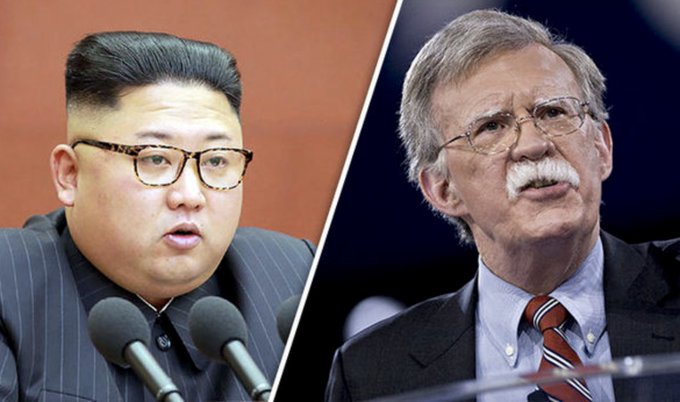
  • Schumer was a vociferous supporter of John Bolton’s 2005 nomination to be the U.S. ambassador to the U.N. “A vote against Bolton,” Schumer proclaimed, “was a vote against Israel.” But Bolton was correctly perceived as so dangerously belligerent that even a Republican-led Senate rejected him. Bolton has since called for the U.S. to attack both Iran and North Korea. (More recently, when Trump chose Bolton as his national security adviser, Schumer mildly stated that Bolton’s positions were “troubling.”)
  • Schumer has attacked Trump’s policy on North Korea — from the right. Meanwhile, when Democratic senators have made attempts to rein in Trump’s terrifying instinct to consider a gigantic war with North Korea, Schumer has been nowhere to be found.
  • Schumer voted in 2002 for the Iraq War, citing Saddam Hussein’s imaginary but “vigorous pursuit of biological, chemical, and nuclear weapons.” His statement was later cited frequently by Republicans as evidence that Bush had just made an honest mistake about Iraq and weapons of mass destruction.
  • Schumer voted for the Patriot Act in 2001, and was the House sponsor of its antecedent, the Omnibus Counterterrorism Act of 1995.

So, taken together, it’s obvious that Schumer does not, and never will, offer voters an alternative to Trump and Republicans in general on the most important questions of national security. That’s because Schumer truly, deeply, and sincerely agrees with them.

What do you think of Trump’s decision to pull out of the Iran Nuclear Deal?

Alex Zhu

Trump is doing something good for the American global hegemony. Remember his slogan is “make America great again”, but you can complete the next half of this sentence as “at the expense of…” This is the reality of international politics. It is no difference from Lord of the Flies-jungle laws, prey and predators.

To analyze his action we must temporarily forget about the miscellaneous things, such as WMD, human rights, democracy, nukes or treaties… because these are the tools but not the motives. For those who are still discussing how evil Iran is, you should go home and suck the popsicles passed from media. Evil does not apply to international politics. Meanwhile, we must realize the complexity of such issue stretches into domestic politics as well.

The American mid-east policy evolves around clear motives:

  1. Petrodollar stability, the right to control global oil trade, and the dominance of US dollar.
  2. Protect Israel as US representative in the region.
  3. Control the choke point of international trade.

To meet the goals, US’s priority is to build puppet governments throughout mid-east and Eastern Europe. The tactics include war and colour revolution. In Syria, US manipulates different anti-government forces to fight a proxy war against the Russia and China backed Syrian government. Russia is in the war to defend its influence from the Black Sea to the Mediterranean region and its oil business with Europe. China is in the war to protect its oil trade and its economy from America’s financial war machine.

The US’s representatives in Syria are already losing, and with a nuclear agreement Iran’s Shiah Muslim government is becoming too powerful. It is a threat to US that Russia and China will infiltrate the middle-east with the fist of Iran. If Iran as the regional power overtakes leadership and creates a united and peaceful ME, Israel and US will be kicked out and US global hegemony is doomed, and US dollar is doomed, and US as a country will face severe internal issues.

The US is not letting that happen! The Republicans don’t want that either; they need the support from Jewish communities in the swinging states. Giving Iran the opportunity to take over power vacuum in Iraq and Syria is nothing more than a nightmare. The US is basically applying its contingency plan: stir up the peaceful countries, even risk to trigger a major regional war. Don’t be surprised, to the US government, lives of the civilians in ME mean no more than numbers on a piece of paper. The least US anticipates is to see a united Muslim world not under the US control.

Americans. You must acknowledge the fact Trump is protecting your interest, although this could be a gamble. International politics is dynamic, stucking in ME means more time for East Asia to form a new partnership, one that is not good for the US. It could mean splits between Europe and US. If ME is screwed by war, Europe takes direct hit both economically and socially. The US doesn’t mind that at all.

Let their blood shed, let them burn to the ground, because they are not servile democracies and they can’t make America great again.


For the noble Persians to counter the challenge, they must sustain Israeli provocations in the coming month but they should hold still and avoid a direct war. Slowly digest the fruits in Syria and claim as must interest as possible while ignoring the distraction from US, because US doesn’t mind spill some Israeli blood for the Americans.

Thousands of Russia-linked Facebook adverts aimed at influencing 2016 presidential election released by Congress

FLS/ BLOGGER: Somehow I do not think we find this information surprising!


Democrats pushed for release of all ads tied to Russia

Congress has released all of the more than 3,000 Facebook ads purchased by Russian-linked agents ahead of the 2016 presidential contest, seeking to illuminate a massive election disruption effort.

Democrats on the House Intelligence Committee moved to release the full stash of posts paid for by the Internet Research Agency, which is described by intelligence agencies as a Kremlin-linked troll farm, saying the American people deserved to understand the extent of Russian meddling.

“There’s no question that Russia sought to weaponise social media platforms to drive a wedge between Americans, and in an attempt to sway the 2016 election”, California Democrat Adam Schiff said in a statement.

“The only way we can begin to inoculate ourselves against a future attack is to see first-hand the types of messages, themes and imagery the Russians used to divide us”, he added.

They offered a fuller picture of tactics already detailed in congressional hearings and in an indictment of alleged Internet Research Agency personnel from special counsel Robert Mueller, who is investigating Russian election meddling and potential links to the Trump campaign.

Seeking to inflame social tensions, advertisements took provocative stances on issues like immigration and gun control – often releasing content that took both multiple sides of the same issue.

Russian-backed posts praising Donald Trump and assailing his Democratic opponent Hillary Clinton proliferated, bearing out what Mr Mueller’s indictment and intelligence agencies call Russia’s clear preference for Mr Trump. Other posts favoured Ms Clinton’s Democratic rival Bernie Sanders.

The posts also harnessed Facebook’s tools for targeting specific voter demographics. A page sponsored by an apocryphal “Army of Jesus” group that likened Ms Clinton to Satan was geared towards people whose interests included “stop illegal immigration” and a range of Fox News personalities.

Play VideoPlay

Mute

Loaded: 0%

Progress: 0%

-0:50

ShareFullscree

Zuckerberg on countering Russian election interference efforts: ‘This is an arms race’


With a Facebook advertising budget of about $100,000, Russian-tied actors were able to amplify the reach of their content so that it appeared before well over 100 million Americans.

Amid a backlash over its role as a conduit for disinformation, Facebook pledged to begin releasing more information about political advertising and has unveiled a feature letting users see if they interacted with Russian-generated content.

Mr Mueller’s inquiry has attracted the unflagging wrath of the president, who regularly denounces the investigation as a meritless “witch hunt” manufactured by partisan law enforcement officials.

This Is Your Banking System on Trump


Any questions?

Getty Images

This story first appeared on TomDispatch.com.

Warning: What you are about to read is not about Russia, the 2016 election, or the latest person to depart from the White House in a storm of tweets. It’s the Beltway story hiding in plain sight with trillions of dollars in play and an economy to commandeer.

While we’ve been bombarded with a litany of scandals from the Oval Office and the Trump family, there’s a crucial institution in Washington that few in the media seem to be paying attention to, even as President Trump quietly makes it his own. More obscure than the chambers of the Supreme Court, it’s a place where he has already made substantial changes. I’m talking about the Federal Reserve.

As the central bank of the United States, the “Fed” sets the financial tone for the global economy by manipulating interest rate levels. This affects everyone, yet very few grasp the scope of its influence.

During times of relative economic calm, the Fed is regularly forgotten. But what history shows us is that having leaders who are primed to neglect Wall Street’s misdoings often sets the scene for economic dangers to come. That’s why nominees to the Fed are so crucial.

We have entered a landmark moment: No president since Woodrow Wilson (during whose administration the Federal Reserve was established) will have appointed as many board members to the Fed as Donald Trump. His fingerprints will, in other words, not just be on Supreme Court decisions, but no less significantly Fed policymaking for years to come—even though, like that court, it occupies a mandated position of political independence.

The president’s latest two nominees to the Fed’s Board of Governors exemplify this. He has nominated Richard Clarida—a former Treasury official from the days of President George W. Bush who later became a strategic adviser to investment goliath Pimco—to the Fed’s second most important slot, while giving the nod to Michelle Bowman, a Kansas bank commissioner, to represent community banks on the same board.

Like many other entities in Washington, the Board of Governors has been operating with less than a full staff. If Clarida is approved, he will join Trump-appointed Fed Chairman Jerome Powell and incoming New York Federal Reserve Bank head John C. Williams—the New York Fed generally exists in a mind meld with Wall Street—as part of the most powerful trio at that institution.

Williams served as president of the San Francisco Fed. Under his watch, the third largest US bank, Wells Fargo, created about 3.5 million fake accounts, gave its CEO a whopping raise, and copped to a $1 billion fine for bilking customers on auto and mortgage insurance contracts.

Not surprisingly, Wall Street has embraced Trump’s new Fed line-up because its members are so favorably disposed to loosening restrictions on financial institutions of every sort. Initially, the financial markets reflected concern that Powell might turn out to be a hawk on interest rates, meaning he’d raise them too quickly, but he’s proved to be anything but.

As Trump stacks the deck in his favor, count on an economic impact that will be felt for years to come and could leave the world devastated. But rest assured, if the Fed can help Trump keep the stock market buoyant for a while by letting money stay cheap for Wall Street speculation, and the dollar competitive for a trade war, it will.


At a time when inequality, economic hardship, and household and personal debtlevels are escalating while wages are not, why should any of this matter to the rest of us? The answer is simple enough: because the Fed sets interest rates and therefore the cost of money. This, in turn, indirectly affects the value of the dollar, which means everything you buy.

Since the financial crisis of a decade ago, the Fed has kept the cost of borrowing for banks at near zero. This allowed banks to borrow money to buy their own stock (as did many corporations) to inflate their own value but not, of course, the value of their service to Main Street.

When money is cheap because interest rates are low or near zero, the beneficiaries are those with the most direct access to it. Which means that the biggest banks, members of the Fed since its inception, get the largest chunks of fabricated money and pay the least interest on it.

Although Trump chastised the Fed during his campaign for its cheap-money policies, he’s evidently changed his mind (how Trumpian of him). That’s because he knows that the cheaper money is, the easier it is for major companies to borrow. Easy money means easy speculation for Wall Street and its main corporate clients, and sooner or later, that will be a threat to the rest of us.

The era of trade wars, soaring stock markets, and Trump gaffes may feel like it’s gone on forever. But don’t forget that there was a moment not so long ago when the same banking policies still reigning caused turmoil, ripping through the country and devouring the finances of so many. It’s worth recalling what happened during the Great Meltdown of 2008, when unrestrained megabanks ravaged the economy before being bailed out. In the midst of the current market ecstasy, it’s an easy past to ignore. That’s why Trump’s takeover of the Fed and its impact on the financial system matters so much.

Let’s recall that, on September 15, 2008, Lehman Brothers crashed. Lehman, like my former employer Goldman Sachs, had been around more than 150 years. Its collapse was a key catalyst in a spiral of disaster that nearly decimated the world financial system. It wasn’t the bankruptcy that did it, however, but the massive amount of money the surviving banks had already lent Lehman so it could buy the toxic assets they created.

Around the same time, Merrill Lynch, a competitor of Lehman’s, was sold to Bank of America for $50 billion and American International Group (AIG) received $182 billionin government assistance. JPMorgan Chase had already bought Bear Stearns, which had crashed six months earlier, utilizing a $29 billion government and Federal Reserve security blanket in the process.

In the wake of Lehman’s bankruptcy, $16 trillion in bailouts and other subsidies from the Federal Reserve and Congress were offered mostly to Wall Street’s biggest banks. That flow of money allowed them to return from the edge of financial disaster. It also fueled the stock and bond markets, as untethered from economic realities as the hot air balloon in The Wizard of Oz.

After nearly tripling since the post-financial crisis spring of 2009, the Dow Jones Industrial Average rose magically again last year by nearly percent. Why? Because despite all of his swamp-draining campaign talk, Trump embraced the exact same bank-coddling behavior as his predecessor. He advocated the Fed’s cheap-money policy and hired Steve Mnuchin, an ex-Goldman Sachs partner and Wall Street’s special friend, as Treasury secretary. He doubled down on rewarding malfeasance and fraud by promoting the deregulation of the banks, as if Wall Street’s greed and high appetite for risk had vanished. 


A quarter of the way into 2018, shadows of 2008 are already emerging. Only two months ago, the Dow logged its worst single-day point decline in history before bouncing back with vigor. In the meantime, the country whose banks caused the last crisis faces record consumer and corporate debt levels and a vulnerable geopolitical landscape.

True, the unemployment rate is significantly lower than it was at the height of the financial crisis, but for Main Street, growth hasn’t been quite so apparent. About one in five American jobs still pays a median income below the federal poverty line. Median household income is only up 5.3 percent since 2008 and remains well below where it was in 1998, if you adjust for inflation. Workforce participation remains nearly as low as it’s ever been. Meanwhile, the top 1 percent of American earners saw their median income rise by leaps and bounds since the Fed started manufacturing money—to more than 40 times that of the bottom 90 percent.

Just as before the crisis, there’s a scary level of confidence among politicians and regulators that neither the economy nor the banking sector could possibly go bust. Even the new Federal Reserve chair views bailouts as a relic of a bygone time. As Ben Bernanke said at his confirmation hearing, “Generally speaking I think the financial system is quite strong.” When asked if there are any US banks that are still too big to fail, he responded, “I would say no to that.”

That’s a pretty decisive statement, and not strikingly different from one outgoing Fed Chair Janet Yellen made last year. By extension, it means that Trump’s new chairman supports laxer structures for the big banks and more cheap money, if needed, to help them. So watch out.

When a crisis hits, liquidity dies, and banks close their doors to the public. Ultimately, the same formula for crisis will surely send Wall Street executives crawling back to the government for aid and then Donald Trump will find out what financial negligence truly is.


As signs of crisis emerge, few in Washington have delved into how we can ensure that a systemic crash does not happen again. That’s why I’ll never forget the strange message I got one day. It was in the middle of May 2015, about a year after my book, All the Presidents’ Bankers, had been published, when I received an email from the Federal Reserve. Every year, the Fed, the International Monetary Fund, and the World Bank hold an annual conference where the most elite central bankers from around the globe assemble. To my shock, since I hadn’t exactly written in a kindly fashion about the Fed, I was being invited to speak at the opening session about why Wall Street wasn’t helping Main Street.

Two months later, I found myself sitting in front of a room filled with central bankers from around the world, listening to Fed Chair Janet Yellen proclaim that the worst of the crisis and its causes were behind us. In response, the first thing I asked that distinguished crowd was this: “Do you want to know why big Wall Street banks aren’t helping Main Street as much as they could?” The room was silent. I paused before answering, “Because you never required them to.”

I added, “The biggest six US banks have been rewarded with an endless supply of cheap money in bailouts and loans for their dangerous behavior. They have been given open access to these funds with no major consequences, and no rules on how they should utilize the Fed’s largess to them to help the real economy. Why should you expect their benevolence?”

After I returned home, I became obsessed with uncovering just how the bailouts and loans of that moment were only the tip of an iceberg, the sort of berg that had once taken down the Titanic—how that cheap money fabricated for Wall Street had been no isolated American incident.

What my research for my new book, Collusion: How Central Bankers Rigged the World, revealed was how central bankers and massive financial institutions have worked together to manipulate global markets for the past decade. Major central banks gave themselves a blank check with which to resurrect problematic banks; purchase government, mortgage, and corporate bonds; and in some cases—as in Japan and Switzerland—stocks, too. They have not had to explain to the public where those funds were going or why. Instead, their policies have inflated asset bubbles, while coddling private banks and corporations under the guise of helping the real economy.

The zero-interest-rate and bond-buying central bank policies prevailing in the US, Europe, and Japan have been part of a coordinated effort that has plastered over potential financial instability in the largest countries and in private banks. It has, in turn, created asset bubbles that could explode into an even greater crisis the next time around.

So, today, we stand near—how near we don’t yet know—the edge of a dangerous financial precipice. The risks posed by the largest of the private banks still exist, only now they’re even bigger than they were in 2007-2008 and operating in an arena of even more debt. In Donald Trump’s America, what this means is that the same dangerous policies are still being promoted today. The difference now is that the president is appointing members to the Fed who will only increase the danger of those risks for years to come.

A crash could prove to be President Trump’s worst legacy. Not only is he—and the Fed he’s helping to create—not paying attention to the alarm bells (ignored by the last iteration of the Fed as well), but he’s ensured that none of his appointees will either. After campaigning hard against the ills of global finance in the 2016 election campaign and promising a modern era Glass-Steagall Act to separate bank deposits from the more speculative activities on Wall Street, Trump’s policy reversals and appointees leave our economy more exposed than ever. 

When politicians and regulators are asleep at the wheel, it’s the rest of us who will suffer sooner or later. Because of the collusion that’s gone on and continues to go on among the world’s main central banks, that problem is now an international one.

Nomi Prins’ latest book is Collusion: How Central Bankers Rigged the World.

Craig Wilson contributed research for this article. 

Bolton says U.S. to follow ‘Libya model’ on North Korea Not exactly the best message to send to Kim Jong Un.

Screenshot, Face the Nation
SCREENSHOT, FACE THE NATION


John Bolton said Sunday that the United States will follow the “Libya model” as it prepares for talks on denuclearizing North Korea.

That will probably be less than reassuring to Pyongyang’s leader Kim Jong Un, who likely is only too aware that Washington launched a military operation that led to the overthrow of the North African nation’s president, Moammar Gadhafi, in 2011.

“I think we’re looking at the Libya model of 2003, 2004,” Bolton, President Donald Trump’s national security adviser, said on CBS’s Face the Nation program.

“We’re also looking at what North Korea itself has committed to previously and most importantly, I think, going back over a quarter of a century to the 1992 joint North-South denuclearization agreement where North Korea committed to give up nuclear weapons and committed to give up uranium enrichment and plutonium reprocessing,” Bolton said.

He made similar comments on Fox News Sunday.

Watch:

Bolton was referring to Gadhafi’s promise in 2003 to give in to Western demands and abandon his pursuit of nuclear weapons.

What he failed to mention was that Gadhafi’s concessions did not prevent the United States and NATO from invading the country in 2011, ultimately resulting in the leader’s death at the hands of NATO-backed rebels.

North Korean leader Kim Jong Un is likely keenly aware of the meaning behind such comparisons. That may be why Kim told South Korean president Moon Jae-in during their meeting earlier this weekend that he would abandon the country’s nuclear aspirations if the United States promised not to invade the country, as The New York Times reported on Sunday.

“[T]hink of message this sends to Kim Jong-un: US ended up attacking Libya leading to Qaddafi’s slaying!” Shibley Telhami, professor of government and politics at the University of Maryland Department, said on Twitter.

Shibley Telhami@ShibleyTelhami

Bolton says on @FaceTheNation “we are looking at the Libya model” for nuclear disarmament for North Korea. Libya had a very rudimentary program (little leverage). More relevant, think of message this sends to Kim Jong-un: US ended up attacking Libya leading to Qaddafi’s slaying!

Other experts agree. Speaking to CNBC last July, Guo Yu, principal Asia analyst at global risk consultancy firm Verisk Maplecroft, said Kim is “watching what’s been happening in the Middle East, and the external military interventions — mostly led by the U.S. — which are interested in regime change and just reinforce the mindset for pursuing independent credible nuclear deterrence.”

Michael Cohen, once at pinnacle of Trump’s world, now poses threat to it

NY TIMES 4/21/18

Untangling the web of Michael Cohen

Here’s a breakdown of the people that President Trump’s lawyer Michael Cohen dealt with and the investigations he’s entangled in. 

 April 21 at 3:56 PM 

When Donald Trump won the presidency, his longtime attorney Michael Cohen seemed in position for a coveted spot in the senior ranks of the White House.

At one point, Cohen topped a list of five candidates for White House counsel, according to documents reviewed by The Washington Post. He suggested to some Trump allies that he might make a good chief of staff.

But when Trump built his West Wing team, the brash New York lawyer did not make the cut.

Some in Trump’s inner circle worried about blowback from Cohen’s associations and un­or­tho­dox tactics in fixing the New York developer’s problems, Trump associates said.

Among those opposed, the associates said, were Trump’s daughter Ivanka and son-in-law, Jared Kushner. For his part, Cohen had warned Trump against giving Ivanka Trump and Kushner White House jobs, saying the president would be hammered by complaints of nepotism, according to two people familiar with the matter.

The rebuff wounded Cohen, according to people familiar with his views, although he continued to publicly express admiration for his longtime boss.

Michael Cohen, a personal attorney to President Trump, leaves federal court in Manhattan on April 16, 2018. (Lucas Jackson/Reuters)

“Here was a guy who dedicated his life to Trump, who was sure he would be a top pick,” said a Trump associate who spoke on the condition of anonymity to describe conversations that he witnessed. But, in the end, “He was iced out.”

Now, the bond between the president and his self-proclaimed fixer is under much more punishing pressure: a wide-ranging criminal investigation into Cohen’s business dealings and actions he took to quash negative stories about Trump during the 2016 campaign.

ADVERTISING

The outcome — and Cohen’s response to the investigation — could determine the fate of both men, who have relied heavily on each other for years.

Both men have sent public signals in recent days that their relationship remains steady, with Trump describing a federal raid on Cohen’s offices and home as a “disgrace” and calling his attorney to check on him.

But associates of Trump and Cohen say that Cohen, with his deep knowledge of Trump’s personal and financial life, could seek to cut a deal with prosecutors at a moment when Trump’s business dealings are facing scrutiny related to the separate inquiry by special counsel Robert S. Mueller III into Russian interference in the 2016 election.

Trump’s former attorney Jay Goldberg, who has talked about the matter with the president, said that if Cohen faces jail time, he would be under extraordinary pressure from his family “to say what he believes the government wants to hear.”

In tweets Saturday, Trump rejected speculation that Cohen would turn against him. Citing a New York Times report on the issue, the president wrote that he “always liked & respected” Cohen, adding: “Most people will flip if the Government lets them out of trouble, even if it means lying or making up stories. Sorry, I don’t see Michael doing that despite the horrible Witch Hunt and the dishonest media!”

Cohen declined to comment for this story, as did the White House.

A wannabe tough guy

Cohen hardly seemed headed for life as a tough-talking “fixer” growing up in an upper-middle-class town on Long Island. He attended a yeshiva day school, and then elite Lawrence Woodmere Academy. His father, a physician, was a Polish-born Holocaust survivor; his mother was a nurse. Cohen described himself as an “agnostic Jew.”

As a teenager in the 1980s, he dated Ukrainian emigre Laura Shusterman. Cohen often visited her home in Queens, and he also visited friends in Brooklyn, where Soviet refugees had settled in Brighton Beach and Sheepshead Bay.

“He grew up in a homogenous, wealthy enclave, and he came to a radically different place, Brighton Beach, on the border of Coney Island, which was filled with immigrants and minorities,” said a longtime Cohen friend who spoke on the condition of anonymity to describe a private relationship.

The Soviet emigres were “tough kids,” and there was a “lot of friction between the Italian and Russian gangs,” the friend said. Cohen emulated them. He later learned to speak Russian “like a 4-year-old,” Cohen told The Post in an interview last year.

Laura’s father, Fima Shusterman, pleaded guilty in 1993 to fraud charges. Cohen married Laura the following year. He befriended a number of emigres from Russia and Ukraine. Among them was Russian migrant Felix Sater, who years later would work with both Trump and Cohen on efforts to develop Trump-branded real estate in Russia and elsewhere.

Cohen was drawn to politics, first as a Democrat volunteering for the 1988 presidential campaign of Michael Dukakis and then as a Republican, losing a 2003 bid for city council.

In a candidate questionnaire for the New York race, Cohen touted his appointment by Republican Gov. George E. Pataki to a transit board, “where I serve as a public watchdog against corruption in government.”

As for his other New York City accomplishments, Cohen wrote that, among his achievements, he had “hectored” a local coffee shop into better managing its trash.

Making money was another Cohen goal. His role model was Trump, whose first book, “The Art of the Deal,” had inspired him. “I’ve been admiring Donald Trump since I was in high school,” Cohen told ABC News.

He invested in the taxi business, for a time managing a fleet of 200 cabs with Simon Garber, a Ukrainian immigrant who also operates a fleet of taxis in Moscow. By 2012, when his partnership with Garber ended, Cohen was earning $90,000 a month from taxi medallions, according to a court filing. He told The Post last year that he never invested in Garber’s Russian business.

Before going to work for Trump, he also invested $1.5 million in a Florida casino boat with two Ukrainian emigres, but the project flopped. “We lost the boat into a foreclosure,” Cohen told The Post last year. “And I wasn’t happy.”

His investments in Trump properties proved more secure. Cohen bought his first property in a Trump building — Trump World Tower near the United Nations — in April 2001, paying $1 million for a condominium that sold 16 years later for $5 million. His in-laws had purchased a separate unit. Trump himself signed Cohen’s sales document.

In 2005, Cohen purchased his most expensive Trump property, in Trump Park Avenue, a former hotel that Trump turned into some of Manhattan’s most luxurious apartments. Its owners included Trump’s daughter Ivanka. Cohen paid $5 million for unit 10A. Again, Donald Trump signed the sales document.

Cohen met Trump in the late 1990s at a political fundraiser for a local Republican whom the developer hosted in Trump Tower. Cohen performed some legal work for Trump in the early 2000s, according to a person familiar with their relationship.

It was a real estate brawl that cemented their bond.

In 2006, Cohen took Trump’s side in a dispute at Trump World Tower, where some condominium owners wanted to oust Trump from managing the property, according to people familiar with the dispute. Cohen, as a unit owner, vocally sided with Trump, who prevailed.

“When Michael won that fight, that’s when Trump gained a lot of respect for him,” said Cohen’s lawyer and longtime friend David Schwartz.

That led to an extraordinary leap in Cohen’s career. Trump hired him as special counsel and executive vice president of the Trump Organization, a privately owned family company that had a collection of hotels, condos, casinos and other properties.

Goldberg, the attorney who was working for Trump at the time, said Cohen stepped into the void left by the 1986 death of Trump’s longtime lawyer Roy Cohn, the former chief counsel to Sen. Joseph McCarthy who had told Trump to counterpunch 100 times harder against whoever tried to hit him.

It was a coup for Cohen, Goldberg said, because at the time, “everybody in the world was trying to get Trump as a client.”

In the following decade, Cohen handled all manner of problems for his boss that could not be solved through traditional channels. Cohen, according to a former associate, employed Trump’s tactics of threats and lawsuits, relying on tough-guy language.

Describing his methods to ABC News, he said that “if somebody does something Mr. Trump doesn’t like, I do everything in my power to resolve it to Mr. Trump’s benefit. If you do something wrong, I’m going to come at you, grab you by the neck, and I’m not going to let you go until I’m finished.”

Cohen also did side deals with Trump. One involved a mixed martial arts fight company called Affliction Entertainment that planned to host pay-per-view bouts in the United States and a reality television show to be filmed in Russia, home to the most famous fighters in the burgeoning sport. The business faltered after Affliction hosted just a few matches.

Cohen, meanwhile, expanded his real estate investments beyond Trump properties. Learning skills from the boss, he invested in New York City real estate and made substantial profits. Starting in 2011, he bought four New York City buildings and sold them for $32 million. One property, a modest apartment building at 172 Rivington St., cost him $2 million in 2011. Three years later, he sold it for $10 million to a family real estate fund represented by Brooklyn lawyer Herbert Chaves, who did not respond to a request for comment. Cohen used the proceeds in 2015 to purchase an interest in a $58 million, seven-story apartment building on the Upper East Side.

Cohen’s wealth is not publicly disclosed, but he has luxurious tastes. He paid $150,000 for a one-month vacation rental in the Hamptons but later sued the landlord, complaining about the small beds and electrical problems in what he called a “nightmare.” The 2014 suit was settled confidentially.

Part of Cohen’s role at the Trump Organization was negotiating licensing deals, selling Trump’s name to developers interested in building Trump Towers abroad. He was the Trump Organization’s main contact for a project in Batumi, a resort city in the former Soviet republic of Georgia. He also told The Post he once traveled to Kazakhstan to try to land a similar deal there.

Ultimately, neither project was constructed, but Trump did make money from preliminary licensing deals in a development in Georgia.

Some of Cohen’s work on international deals has drawn the attention of special counsel Mueller and congressional committees examining possible collusion between the Trump presidential campaign and Russia.

In late 2015, as the Trump campaign was ascendant, Cohen received an email from his old Brighton Beach friend Felix Sater. Sater had worked with Trump on a number of real estate ventures, including Trump Soho condominium. Sater in 1998 pleaded guilty to a role in a Mafia-linked stock-fraud case and later served as an FBI informant, a role that led a federal official to certify that he had provided “information crucial to national security.”

Sater wrote to Cohen that he was pursuing a deal for a Trump Tower in Moscow. Moreover, Sater wrote, Russian President Vladi­mir Putin could help Trump.

“I will get Putin on this program and we will get Donald elected,” Sater wrote to Cohen, according to an email first reported by the New York Times.

In January 2016, Cohen wrote to Putin’s spokesman seeking help on the Trump Tower project. The email went to a general press email address, and the Moscow project did not go forward.

Cohen told congressional investigators in a statement that “this was solely a real estate deal and nothing more. I was doing my job.”

The Moscow proposal came under scrutiny when Mueller and congressional committees began examining Trump’s Russia contacts. Questions also were raised about Cohen’s role in the “Steele dossier,” a report put together by a former British spy that included the unsubstantiated allegation that Cohen had met with Russians in Prague to discuss the hacking of Democrats’ computers. Cohen has said consistently that no such meeting occurred.

Promoting the boss

Cohen for years had pushed Trump to seek the presidency. In 2011, Cohen created a website, shouldtrumprun.com, and traveled on Trump’s plane to the first-caucus state of Iowa to promote his potential candidacy. Trump decided not to run then, but Cohen kept pushing the idea.

Michael Caputo, a former Trump political adviser, said that Cohen was “an ever-present force” in Trump’s activities, including a prospective run for New York governor, the possible purchase of the Buffalo Bills football team, and a presidential bid.

Cohen also became Trump’s attack dog, particularly with journalists. Most famously, he vowed to a Daily Beast reporter in 2015 to “mess your life up” if a story was published about Ivana Trump’s statement in a deposition that her husband had “raped” her. The story included Cohen’s threats and his incorrect assertion that a person cannot be raped by a spouse. He later apologized, and Ivana Trump, Donald Trump’s first wife, backed down from the allegation.

Cohen’s tough talk and willingness to handle difficult problems for Trump became especially useful as Trump launched his bid for the 2016 Republican presidential nomination.

Cohen said his job was to protect his boss “from all those who seek to malign him.” And as Trump was battling Democratic candidate Hillary Clinton for the White House, an issue surfaced that called for Cohen’s tough negotiating skills.

In the campaign’s final weeks, Cohen paid $130,000 to adult-film star Stormy Daniels in exchange for her silence about an alleged sexual encounter with Trump a decade earlier.

Cohen has said that the Trump campaign and the Trump Organization were not involved with the payment, which he said he made by drawing money from a home equity credit line secured by his Trump Park Avenue condo.

In the view of several Cohen associates, the Daniels payment was an ill-conceived Cohen effort to curry Trump’s favor at a time when the lawyer’s rivals were shutting him out. The president has said he was unaware of the payment.

Federal investigators are scrutinizing the payment and any involvement Cohen may have had with another Trump accuser, former Playboy model Karen McDougal. She sold the story of her alleged affair with Trump for $150,000 to AMI, the company that publishes the National Enquirer.

AMI did not publish the McDougal story.

After leaving the Trump Organization in early 2017, Cohen became Trump’s personal attorney, and he secured a contract with the New York law office of Squire Patton Boggs, which agreed to pay him $500,000 annually to help the firm land new business, court documents show. The firm ended its association with Cohen this spring, according to filings.

In the past year, Cohen has had just two other legal clients besides the president, his attorney told a federal judge last week: Fox News host Sean Hannity, who said he consulted Cohen on unspecified real estate matters, and Elliott Broidy, a major Trump supporter who served with Cohen as a deputy finance chairman of the Republican National Committee. Broidy used Cohen to arrange a $1.6 million payment to a Playboy playmate with whom Broidy had an affair.

Cohen also had seven unnamed business clients to whom he did not provide legal advice, according to court filings.

Meanwhile, the value of Cohen’s taxi medallions, required to operate cabs in New York City, has plummeted — from the 2014 peak of $1.2 million per medallion to $300,000 today — amid the rise of ride-hailing companies. Cohen owed $56,000 in back taxes for his New York taxi business, records show.

How Cohen will fare under the financial and legal strain of the investigation remains an open question.

“I will always protect our @POTUS,” he tweeted April 8.

The next morning, the FBI raided Cohen’s office and residences.
Cambridge Analytica execs boast of role in getting Donald Trump elected

FROM THE GUARDIAN 3/20/18

Execs from firm at heart of Facebook data breach say they used ‘unattributable and untrackable’ ads, according to undercover expose

Play Video
3:41
 Everything you need to know about the Cambridge Analytica exposé – video explainer

Senior executives from the firm at the heart of Facebook’s data breach boasted of playing a key role in bringing Donald Trump to power and said they used “unattributable and untrackable” advertising to support their clients in elections, according to an undercover expose.

In secretly recorded conversations, Cambridge Analytica’s CEO, Alexander Nix, claimed he had met Trump “many times”, while another senior member of staff said the firm was behind the “defeat crooked Hillary” advertising campaign.

“We just put information into the bloodstream of the internet and then watch it grow, give it a little push every now and again over time to watch it take shape,” said the executive. “And so this stuff infiltrates the online community, but with no branding, so it’s unattributable, untrackable.”

Caught on camera by an undercover team from Channel 4 News, Nix was also dismissive of Democrats on the House intelligence committee, who had questioned him over Russian meddling in the 2016 campaign.

Senior managers then appeared to suggest that in their work for US clients, there was planned division of work between official campaigns and unaffiliated “political action groups”.

That could be considered coordination – which is not allowed under US election law. The firm has denied any wrongdoing.

Cambridge Analytica said it had a firewall policy in place, signed by all staff and strictly enforced.

The disclosures are the latest to hit Cambridge Analytica, which has been under mounting pressure since Sunday, when the Observer reported the company had unauthorised access to tens of millions of Facebook profiles – and used them to build a political targeting system.

In Tuesday’s second instalment of an undercover investigation by Channel 4 News in association with the Observer, Nix said he had a close working relationship with Trump and claimed Cambridge Analytica was pivotal to his successful campaign.

“We did all the research, all the data, all the analytics, all the targeting. We ran all the digital campaign, the digital campaign, the television campaign and our data informed all the strategy,” he told reporters who were posing as potential clients from Sri Lanka.

The company’s head of data, Alex Tayler, added: “When you think about the fact that Donald Trump lost the popular vote by 3m votes but won the electoral college vote that’s down to the data and the research.

“You did your rallies in the right locations, you moved more people out in those key swing states on election day. That’s how he won the election.”

Pinterest

Another executive, Mark Turnbull, managing director of Cambridge Analytica’s political division, was recorded saying: “He won by 40,000 votes in three states. The margins were tiny.”

Turnbull took credit for one of the most well known and controversial campaigns of the last presidential campaign, organised by the political action group Make America Number 1.

Advertisement

“The brand was ‘Defeat Crooked Hillary’. You’ll remember this of course?” he told the undercover reporter. “The zeros, the OO of crooked were a pair of handcuffs … We made hundreds of different kinds of creative, and we put it online.”

Turnbull said the company sometimes used “proxy organisations”, including charities and activist groups, to help disseminate the messages – and keep the company’s involvement in the background.

When the undercover reporter expressed worries that American authorities might seize on details of a dirty campaign, Nix said the US had no jurisdiction over Cambridge Analytica, even though the company is American and is registered in Delaware.

“I’m absolutely convinced that they have no jurisdiction,” he told the purported client. “So if US authorities came asking for information, they would simply refuse to collaborate. “We’ll say: none of your business.”

Turnbull added. “We don’t talk about our clients.”

Speaking to Channel 4 News before seeing the undercover film, Hillary Clintonsaid: “There was a new kind of campaign that was being run on the other side, that nobody had ever faced before. Because it wasn’t just all about me. It was about how to suppress voters who were inclined to vote for me … when you have a massive propaganda effort to prevent people from thinking straight, because they’re being flooded with false information.”

In the report, Nix also implied that it was possible to mislead authorities by omission, discussing his appearance in front of the House intelligence committee, for its inquiry into possible Russian election meddling.

The Republicans only asked three questions, which took five minutes, he told the reporter. And while the Democrats spent two hours questioning him, he claimed they were so far out of their depths that he didn’t mind responding.

“We have no secrets. They’re politicians, they’re not technical. They don’t understand how it works,” he said, when asked about whether he was forced to testify.

He went on to describe how political candidates are manipulated.

“They don’t understand because the candidate never, is never involved. He’s told what to do by the campaign team.” The reporter asks if that means the candidate is just a puppet, and Nix replies simply: “Always.”

In another exchange, Tayler describes an apparently planned division of spending on the campaign trail, with the candidate organising “positive” messages, with negative attack ads left to the super Pacs, which may engage in unlimited political spending independently of the campaigns.

“As part of it, sometimes you have to separate it from the political campaign itself … campaigns are normally subject to limits about how much money they can raise. Whereas outside groups can raise an unlimited amount.”

“So the campaign will use their finite resources for things like persuasion and mobilisation and then they leave the ‘air war’ they call it, like the negative attack ads to other affiliated groups.”

Play Video
13:04
 Cambridge Analytica whistleblower: ‘We spent $1m harvesting millions of Facebook profiles’ – video

This raises questions over whether Cambridge Analytica blurred the boundaries between official campaign groups, which have spending limits, and unaffiliated political action groups or super Pacs.

The latter can spend as much as they want but must not coordinate with the candidate they support.

The Campaign Legal Center has accused Cambridge Analytica over allegations of illegal coordination of this nature.

It has filed evidence with the FEC alleging that the super Pac Make America Number 1 made illegal contributions to Trump’s campaign, “engaging in unlawful coordinated spending by using the common vendor Cambridge Analytica”.

Cambridge Analytica said it had never claimed to have won the election for Donald Trump.

“This is patently absurd. We are proud of the work we did on that campaign, and have spoken in many public forums about what we consider to be our contribution to the campaign.”

It said there was no evidence of coordination between the Make America Number 1 super Pac and the Trump campaign. The company said it was not under investigation.

It has accused the Channel 4 News undercover investigation of grossly misrepresenting how the company conducts its business.

However, speaking to the BBC on Monday, Nix said he had “huge amounts of regret that we undertook this meeting and spoke with a certain amount of hyperbole”.

On Tuesday the website Politico reported that Trump’s 2020 campaign was moving to distance itself from Cambridge Analytica. A campaign official told Politico it had no existing contracts with the firm and no plans to hire it in the future.