I am please to share a blog post from, Dr. Leroy Seat from Missouri, a perceptive colleague whom I just reconnected with almost forty years after my Fulbright year in Japan 1985-86. Dr. Seat, whose credentials are listed at the bottom of this “guest post”, has a fine blog written from the perspective of a Christian scholar with insights on a variety of subjects, including politics. Leroy, a former Chancellor of Seinan Gakuin University in Fukuoka, Kyushu, Japan. His keen intellect and generous assistance to our young family was so welcome after many conversations and assistance “settling in” to my one year sabbatical in Japan. Here is the Link to his entire blog, “From This Seat.” Link: https://theviewfromthisseat.blogspot.com/2024
Expressing Sympathy (and Congratulations) to VP Harris
This is not the article I planned to write for this month’s first blog post. “Expressing Congratulations (and Sincere Sympathy) to Pres. Harris” was the title of the post I anticipated making. But the sad news I read upon arising early Wednesday clearly indicated that I would have to write a different article.
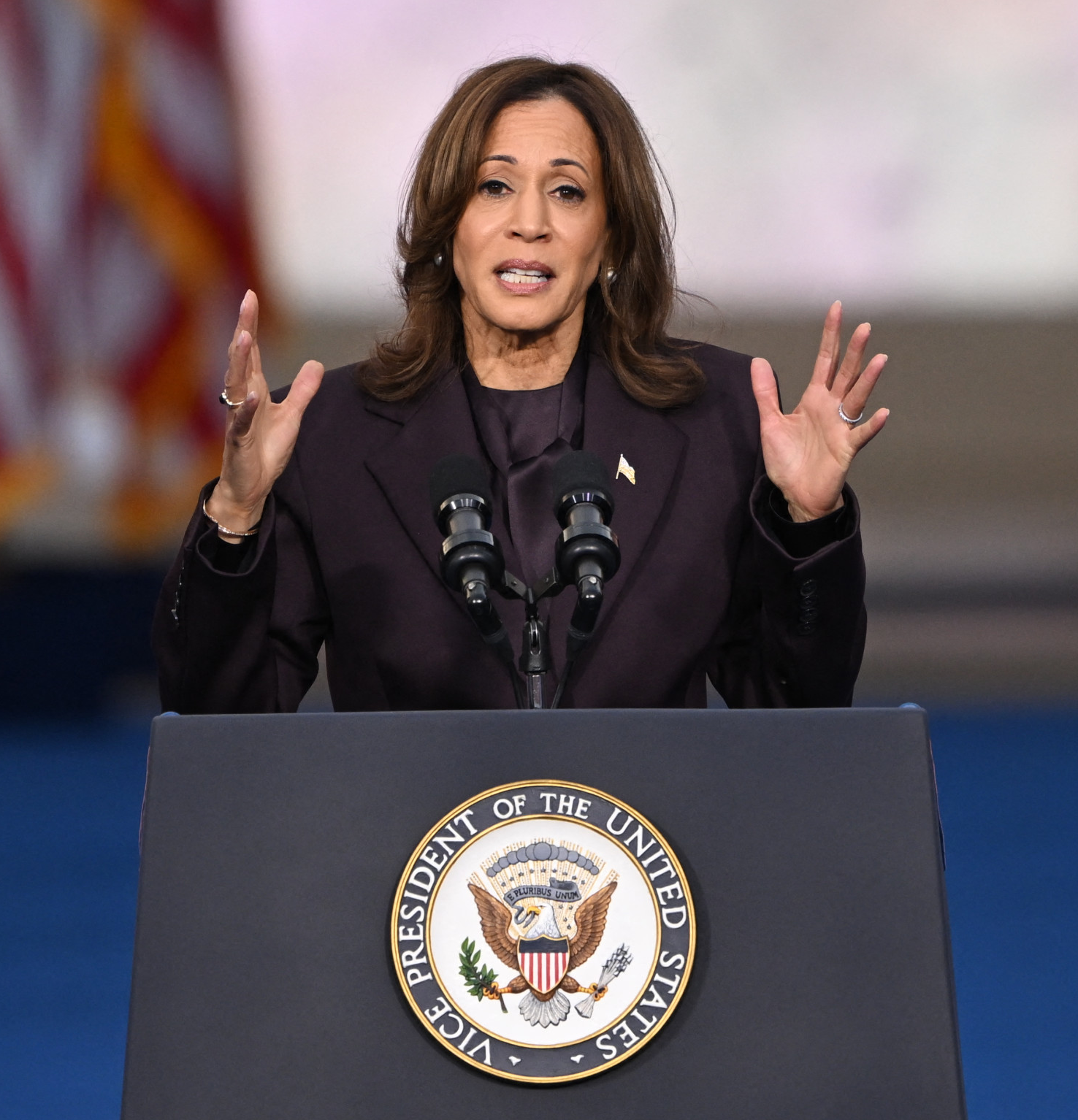
VP Harris making concession speech (11/6)VP Harris making concession speech (11/6)
Kamala Harris campaigned well, but both the popular and the electoral votes were decisive. Nevertheless, I congratulate her for her valiant efforts, determination, and forward-looking spirit. In her concession speech on Wednesday afternoon, she said,
… while I concede this election, I do not concede the fight that fueled this campaign—the fight: the fight for freedom, for opportunity, for fairness, and the dignity of all people. A fight for the ideals at the heart of our nation, the ideals that reflect America at our best. That is a fight I will never give up.
Of course, no politician likes to lose, but for VP Harris herself, losing may have been good for her. Because of current and lurking problems in the U.S. and the world, she could have well ended up with a failed presidency. (For some of the same reasons, the same may happen to Trump).
If Harris had won, she would have had to contend with debilitating Senate opposition and continual opposition by the NAR (which I wrote about here a month ago) and other MAGA adherents, including the growing number of White Christian nationalists.
In addition, Kamala would have had to—and now Trump will have to—deal with the warfare in the Near East, which will likely grow worse before it gets much better. We don’t know how she would have handled that incendiary situation, but she would likely have faced considerable criticism no matter what she did.
Perhaps more serious than anything else is the worsening of climate change and the urgency of dealing with the ecological predicament. This crucial matter will quite surely get markedly worse in the new Trump administration, but Harris would not have been able to forestall the coming crisis.
Consider why Trump “should” have won the election. In addition to the large block of White Christians voting for Trump and the residual racism and sexism still lingering in the land (as I wrote about in last Saturday’s “extra” blog post (see here)**, consider the following:
* The unpopularity of President Biden. According to a highly reliable poll taken on Nov. 1-2, Biden’s approval rating was 40% and 56% disapproving. It is rare for the Party in power to win a presidential election with the sitting president’s rating 16% more negative than positive.
* The perception that the country is on the wrong track. As indicated here, 63% of the U.S. public think the country is headed in the wrong direction (on the wrong track), and only 26% that it is headed in the right direction. That makes it very hard for the incumbent Party to win a presidential election.
* Continuing high prices because of inflation and corporate greed. This 11/6 Washington Post piece doesn’t deal with corporate greed as I think it should, but it does suggest that the widely held perception that the economy is “not good” or “poor” impelled many to cast their vote for Trump.
* The unaddressed problem of classism. This issue is addressed well by a 11/6 New York Times opinion article by the eminent journalist David Brooks (see here). Another source indicates that while voters with graduate degrees vote Democratic overwhelmingly, this year more than ever before, those with no college education voted overwhelmingly for Trump.
Where do we go from here? On Wednesday, the editorial board of the New York Times wrote, “Benjamin Franklin famously admonished the American people that the nation was ‘a republic, if you can keep it’.” They go on to say,
Mr. Trump’s election poses a grave threat to that republic, but he will not determine the long-term fate of American democracy. That outcome remains in the hands of the American people. It is the work of the next four years.”
So, I conclude by again congratulating VP Harris for her valiant campaign and expressing sympathy to her for losing the election to a far less worthy candidate. And I trust that she will, indeed, continue to lead in the struggle for implementing “the ideals at the heart of our nation.”
_____
** In that post, I wrote, “If VP Harris loses the election, … it will be because of the votes of White Christians more than any other chosen demographic (that is, other than non-chosen demographics such as gender, race, or ‘class.’)” Thursday morning there was this post on Religious News Service’s website: “White Christians made Donald Trump president — again.”
LKSeat* Born in Grant City, Mo., on 8/15/1938 * Graduated from Southwest Baptist College (Bolivar, Mo.) in 1957 (A.A.) * Graduated from William Jewell College (Liberty, Mo.) in 1959 (A.B.) * Graduated from The Southern Baptist Theological Seminary (Louisville, Ken.) in 1962 (B.D., equivalent of M.Div.) * Received the Doctor of Philosophy degree in theology from SBTS. * Baptist missionary to Japan from 1966 to 2004. * Full-time faculty member at Seinan Gakuin University (Fukuoka, Japan) from 1968 to 2004. * Chancellor of Seinan Gakuin from 1996 to 2004
What I like about this guy’s work is: he doesn’t deal in illusions, or rationalizations. To call him cynical just proves his point. To do so requires “whistling a happy tune” ~ FL SHIELS EDITOR
I remember when Trump would win because Joe Biden was old.
I remember when Kamala Harris’s joy would overpower Trump’s fearmongering.
Sign up for the Opinion Today newsletter Get expert analysis of the news and a guide to the big ideas shaping the world every weekday morning. Get it sent to your inbox.
I remember when Trump was weird.
I remember when Trump was not who we are.
There have been so many attempts to explain away Trump’s hold on the nation’s politics and cultural imagination, to reinterpret him as aberrant and temporary. “Normalizing” Trump became an affront to good taste, to norms, to the American experiment.
We can now let go of such illusions. Trump is very much part of who we are. Nearly 63 million Americans voted for him in 2016. Seventy-four million did in 2020. And now, once again, enough voters in enough places have cast their lot with him to return him to the White House. Trump is no fluke, and Trumpism is no fad.
After all, what is more normal than a thing that keeps happening?
In recent years, I’ve often wondered if Trump has changed America or revealed it. I decided that it was both — that he changed the country by revealing it. After Election Day 2024, I’m considering an addendum: Trump has changed us by revealing how normal, how truly American, he is.
Throughout Trump’s life, he has embodied every national fascination: money and greed in the 1980s, sex scandals in the 1990s, reality television in the 2000s, social media in the 2010s. Why wouldn’t we deserve him now?
At first, it seemed hard to grasp that we’d really done it. Not even Trump seemed to believe his victory that November night in 2016. We had plenty of excuses, some exculpatory, some damning. The hangover of the Great Recession. Exhaustion with forever wars. A racist backlash against the first Black president. A populist surge in America and beyond. Deaths of despair. If not for this potent mix, surely no one like Trump would ever have come to power.
If only the Clinton campaign had focused more on Wisconsin. If only African American turnout had been stronger in Michigan. If only WikiLeaks and private servers and “deplorables” and so much more. If only.
Now we’ll come up with more, no matter how contradictory or consistent they may be. If only Harris had been more attuned to the suffering in Gaza, or more supportive of Israel. If only she’d picked Josh Shapiro, the governor of Pennsylvania, as her running mate. If only the lingering fury over Covid had landed at Trump’s feet. If only Harris hadn’t been so centrist, or if only she weren’t such a California progressive, hiding all those positions she’d let slip in her 2019 campaign. If only Biden hadn’t waited so long to withdraw from the race, or if only he hadn’t mumbled stuff about garbage.
Harris decried Trump as a fascist, a petty tyrant. She called him divisive, angry, aggrieved. And that was a smart case to make if, deep down, most voters held democracy dear (except maybe they didn’t) and if so many of them weren’t already angry (except they were). If all America needed was an articulate case for why Trump was bad, then Harris was the right candidate with the right message at the right moment. The prosecutor who would defeat the felon.
But the voters heard her case, and they still found for the defendant. A politician who admires dictators and says he’ll be one for a day, whom former top aides regard as a threat to the Constitution — a document he believes can be “terminated” when it doesn’t suit him — has won power not for one day but for nearly 1,500 more. What was considered abnormal, even un-American, has been redefined as acceptable and reaffirmed as preferable.
The Harris campaign labored under the misapprehension, as did the Biden campaign before it, that more exposure to Trump would repel voters. They must simply have forgotten the mayhem of his presidency, the distaste that the former president surely inspired. “I know Donald Trump’s type,” Harris reminded us, likening him to the crooks and predators she’d battled as a California prosecutor. She even urged voters to watch Trump’s rallies — to witness his line-crossing, norm-obliterating moments — as if doing so would inoculate the electorate against him.
It didn’t. America knew his type, too, and it liked it. Trump’s disinhibition spoke to and for his voters. He won because of it, not despite it. His critics have long argued that he is just conning his voters — making them feel that he’s fighting for them when he’s just in it for himself and his wealthy allies — but part of Trump’s appeal is that his supporters recognize the con, that they feel that they’re in on it.
Trump has long conflated himself with America, with the ambitions of its people. “When you mess with the American dream, you’re on the fighting side of Trump,” he wrote in “The America We Deserve,” published in 2000.
The Democrats tried hard to puncture those fantasies in this latest campaign. They raised absurd amounts of cash. They pushed the incumbent president, the standard-bearer of their party, out of the race, once it became clear he would not win. They replaced him with a younger, more dynamic candidate who proceeded to trounce Trump in their lone presidential debate.
None of it was enough. America had voted early, long before any mail-in ballots were available, and it has given Trump the “powerful mandate” he claimed in the early hours of Wednesday morning.
This time, that choice came with full knowledge of who Trump is, how he behaves in office and what he’ll do to stay there. He hasn’t just shifted the political consensus on a set of policy positions, though by moving both parties on trade and immigration, he certainly has done that. The rationalization of 2016 — that Trump was a protest vote by desperate Americans trying to send a message to the establishment of both parties — is no longer operative. The grotesque rally at Madison Square Garden, that carnival of insults against everyone that the speakers do not want in their America, was not an anomaly but a summation. It was Trumpism’s closing argument, and it landed.
The irony of one of the more common critiques of Harris — that her “word salad” moments and default platitudes in extended interviews made it hard to know what she believed — is that Trump manages to seem real even when his positions shift and his words weave. Authenticity does not require consistency or clarity when it is grounded in pitch-perfect cynicism.
We don’t call this period “the Trump era” just because the once and future president won lots of votes and has now prevailed in two presidential contests. It remained the Trump era even when Biden exiled him to Mar-a-Lago for four years. It is the Trump era because Trump has captured not just a national party but also a national mood, or at least enough of it. And when Democrats presented the choice this year as a referendum on Trumpism more than an affirmative case for Harris, they kept their rival at the center of American politics.
Harris gave it away whenever she called on voters to “turn the page” from Trump. Didn’t we do that in 2020 when we chose Biden and Harris? Not really. Trump was still waiting in the epilogue.
For those who have long insisted that Trump is “not who we are,” that he does not represent American values, there are now two possibilities: Either America is not what they thought it was, or Trump is not as threatening as they think he is. I lean to the first conclusion, but I understand that, over time, the second will become easier to accept. A state of permanent emergency is not tenable; weariness and resignation eventually win out. As we live through a second Trump term, more of us will make our accommodations. We’ll call it illiberal democracy, or maybe self-care.
“We’re not going back,” Harris told us. The tragedy is not that this election has taken us back, but that it shows how there are parts of America’s history that we’ve never fully gotten past.
In her book “America for Americans,” Erika Lee argues that Trump’s immigration policies and statements are part of a long tradition of xenophobia — against Southern Europeans, against newcomers from Asia, Latin America and the Middle East — a tradition that has lived alongside our self-perception as a nation of immigrants. In his book “The End of the Myth,” Greg Grandin warned of the “nationalization of border brutalism” under Trump, whereby harsh policies at the U.S.-Mexico border would spread elsewhere, an “extremism turned inward, all-consuming and self-devouring.”
When Trump first began his ascent into presidential politics, some readers turned to Sinclair Lewis’s 1935 novel, “It Can’t Happen Here,” about homegrown authoritarianism in the United States. In the story, Doremus Jessup, a liberal-minded newspaper editor, marvels at the power of Buzz Windrip, a crudely charismatic demagogue who captivates the country and imposes totalitarian rule. The stylistic similarities between Trump and Windrip are evident, but Lewis’s real protagonists are the well-meaning, liberal-minded citizens, like Jessup, who can’t quite bring themselves to grasp what is happening.
Jessup tells his readers that the insanity won’t last, that they can wait it out. “He simply did not believe that this comic tyranny could endure,” Lewis wrote. When it does endure, Jessup blames himself and his class for their obliviousness. “If it hadn’t been one Windrip, it’d been another. … We had it coming, we Respectables,” he laments.
For too long, today’s Respectables have insisted on Trump’s abnormality. It is a reflex, a defense mechanism, as though accepting his ordinariness is too much to bear. Because if Trump is normal, then America must be, too, and who wants to be roused from dreams of exceptionalism? It’s more comforting to think of Trumpism as a temporary ailment than a pre-existing condition.
When Hillary Clinton described half of Trump’s supporters as a “basket of deplorables” in September of 2016, she did more than dismiss a massive voting bloc and confirm her status as a Respectable in good standing. What she said about those voters moments later was even more telling: “Some of those folks, they are irredeemable. But, thankfully, they are not American.”
It’s a neat move: Rather than accept what America was becoming and who Americans could become, just write them out of the story.
Are we what we say, or what we do — are we our actions or our aspirations? From America’s earliest moments, we have lived this tension between ideals and reality. It may seem more honest to dismiss our words and focus on our deeds. But our words also matter; they reveal what we hope to do and who we want to be. That yearning remains vital, no matter in what direction our national reality points.
The way to render Trump abnormal is not to insist that he is, or to find more excuses, or to indulge in the great and inevitable second-guessing of Democratic campaign strategy. It begins by recognizing that who we are is decided not only on Election Day — whether 2024 or 2016, or 2028 for that matter — but every day. Every day that we strive to be something other than what we’ve become.
I remember when I thought Trump wasn’t normal. But now he is, no matter how fiercely I cling to that memory.
BY JAMIE BARNETT, OPINION CONTRIBUTOR – 07/02/24 9:45 AM ET
This is a tough question, BUT: Absolutely not resign. WTF? Yet an open convention might be good. If Joe has no more senior moments his nomination could be reaffirmed. But note that the conservative HILL newsletter also has an opinion piece urging BOTH major party nominees to resign for the good of the country. We have two old men, one of which is certifiably insane. And then there’s the other: Joe Biden. The mainstream press that The Trump is always denigrating has been working diligently to ease Biden out for his senior moment daily updates.
This news blog editor is not voting for the President. But that has nothing to do with doubts about his age. It has to do with being EYELESS IN GAZA: a human rights catastrophe that Biden-Blinken seem to be deaf to. So a write-in is in order: say, Micky Mouse. Biden’s opponent is the most dangerous, mentally defective individual to seek the office– Ever.
The press gave lip service to Donald’s cascade of lies at the debate and his threats if elected. But they did not do much more than tap his wrists, because the expectations were so low and it was assumed that Biden would be in “State of the Union” mode. He wasn’t when it counted, but Was when visiting North Carolina the next day. The fact that ex-President Bone-spur has avoided prison and will be kept out of jail by his pet Supreme Court, another disgrace guarantees that 2024 will continue to be a rocky year. Yes, Joe Biden should have been a highly rated 1-term president.
PHILADELPHIA, PENNSYLVANIA – MAY 29: U.S. President Joe Biden and U.S. Vice President Kamala Harris wave to members of the audience after speaking at a campaign rally at Girard College on May 29, 2024 in Philadelphia, Pennsylvania. Biden and Harris are using today’s rally to launch a nationwide campaign to court black voters, a group that has traditionally come out in favor of Biden, but their support is projected lower than it was in 2020. (Photo by Andrew Harnik/Getty Images)
President Joe Biden should not just leave the presidential race. He should resign the presidency. Now.
The New York Times editorial board and a host of other non-partisan voices have called for Biden to announce that he will no longer run for president. But in this particular race, it is not enough. Biden’s departure from the race this summer would kick-off a tumultuous, bitter fight for the nomination in an open convention that is already in jeopardy of crippling protests. The infighting would leave bruises or wounds among the likely Democratic contenders and the constituencies that have been loosely united behind the incumbent until his unfortunate debate performance. Biden’s remaining in the race would most probably ensure a return of Donald Trump to the White House.
These are not the musings of a Trump supporter. I actively campaigned for the Obama-Biden ticket twice and appeared on stage at the Democratic National Convention in 2008 and in a convention video in 2012. I served in a low-level appointive position in the first Obama administration. I campaigned for Joe Biden in 2020, and I have a picture of him on the wall of my office. I think history will remember him as an extraordinarily effective president in a time of incredible peril.
Joe Biden does not get anywhere near the credit he deserves for his performance. He came into the presidency with the economy wrecked by Donald Trump’s malfeasance in handling the COVID-19 pandemic. Biden was able to overcome embittered partisanship to deliver the infrastructure bill with $1.2 trillion in investments to bridges, roads, waterways, broadband and energy. The infrastructure bill also paved the way to record-breaking job growth.
The CHIPS Act bolstered strong jobs with an industrial policy that ensures national security and a reliable supply chain. His Inflation Reduction Act has actually helped reduce the inflation caused by Trump’s mishandling of the pandemic and the Trump tariffs, which drove up prices for Americans. There are many other examples. At this time in history, no one else could have achieved this except Joe Biden. Whatever mistakes Biden has made, these achievements shine brightly.
But his greatest achievement was his first one, the one that caused him to run in 2020: saving the nation and the world from the disaster of another Trump term.
Biden has the judgment and the character to be president again, two things that Donald Trump does not have and never will. But judgment and character will not defeat Donald Trump. If President Biden stays in the race, I will vote for him, but we may look back at this moment and wonder whether Biden’s judgment and character should have led him to leave the race and the presidency.
If the goal is once again for Joe Biden to save the nation and the world from the disaster of another Trump term, there is no dishonor if Biden passes the baton, of his own accord, having run the good race. If he resigns the presidency now, he will give the Democratic Party a fighting chance to beat Trump. He will create the first female president, the first African American female, the first multi-racial female president in history. In one fell swoop, he will have enlivened many of the constituencies that the media have claimed are disaffected. Kamala Harris will have the first first gentleman in history, one who is Jewish. She will be able to unite the party with a strong running mate.
This will not keep the Democratic National Convention from being a chaotic, open convention, but it will be a strong move that could lead to unity and victory. It will be Joe Biden that provides that victory.
There are drawbacks, there are counterarguments to such a bold move. One is that Speaker Mike Johnson (R-La.) would be second in line to the presidency, and the minority-controlled Senate would be unlikely to confirm a new vice president before the election. Biden would be criticized for choosing his successor, but he already did in choosing Harris as his vice president.
Biden is no quitter. He has overcome many, many tragedies and challenges. But despite his weakened presentation as a campaigner, he is a truth teller, and he has good judgment and good character. He has said over and over: This is not about him.
It’s about the country. It’s about the democracy. It’s about the people.
Jamie Barnett is a retired rear admiral in the U.S. Navy, serving 32 years in the Navy and Navy Reserve. After he retired, he served as the chief of the Public Safety and Homeland Security Bureau of the Federal Communications Commission during the Obama administration.
Biden should not just drop out of the race. He should resign.
BY JAMIE BARNETT, OPINION CONTRIBUTOR – 07/02/24 9:45 AM ET
PHILADELPHIA, PENNSYLVANIA – MAY 29: U.S. President Joe Biden and U.S. Vice President Kamala Harris wave to members of the audience after speaking at a campaign rally at Girard College on May 29, 2024 in Philadelphia, Pennsylvania. Biden and Harris are using today’s rally to launch a nationwide campaign to court black voters, a group that has traditionally come out in favor of Biden, but their support is projected lower than it was in 2020. (Photo by Andrew Harnik/Getty Images)
President Joe Biden should not just leave the presidential race. He should resign the presidency. Now.
The New York Times editorial board and a host of other non-partisan voices have called for Biden to announce that he will no longer run for president. But in this particular race, it is not enough. Biden’s departure from the race this summer would kick-off a tumultuous, bitter fight for the nomination in an open convention that is already in jeopardy of crippling protests. The infighting would leave bruises or wounds among the likely Democratic contenders and the constituencies that have been loosely united behind the incumbent until his unfortunate debate performance. Biden’s remaining in the race would most probably ensure a return of Donald Trump to the White House.
These are not the musings of a Trump supporter. I actively campaigned for the Obama-Biden ticket twice and appeared on stage at the Democratic National Convention in 2008 and in a convention video in 2012. I served in a low-level appointive position in the first Obama administration. I campaigned for Joe Biden in 2020, and I have a picture of him on the wall of my office. I think history will remember him as an extraordinarily effective president in a time of incredible peril.
Joe Biden does not get anywhere near the credit he deserves for his performance. He came into the presidency with the economy wrecked by Donald Trump’s malfeasance in handling the COVID-19 pandemic. Biden was able to overcome embittered partisanship to deliver the infrastructure bill with $1.2 trillion in investments to bridges, roads, waterways, broadband and energy. The infrastructure bill also paved the way to record-breaking job growth.
The CHIPS Act bolstered strong jobs with an industrial policy that ensures national security and a reliable supply chain. His Inflation Reduction Act has actually helped reduce the inflation caused by Trump’s mishandling of the pandemic and the Trump tariffs, which drove up prices for Americans. There are many other examples. At this time in history, no one else could have achieved this except Joe Biden. Whatever mistakes Biden has made, these achievements shine brightly.
But his greatest achievement was his first one, the one that caused him to run in 2020: saving the nation and the world from the disaster of another Trump term.
Biden has the judgment and the character to be president again, two things that Donald Trump does not have and never will. But judgment and character will not defeat Donald Trump. If President Biden stays in the race, I will vote for him, but we may look back at this moment and wonder whether Biden’s judgment and character should have led him to leave the race and the presidency.
If the goal is once again for Joe Biden to save the nation and the world from the disaster of another Trump term, there is no dishonor if Biden passes the baton, of his own accord, having run the good race. If he resigns the presidency now, he will give the Democratic Party a fighting chance to beat Trump. He will create the first female president, the first African American female, the first multi-racial female president in history. In one fell swoop, he will have enlivened many of the constituencies that the media have claimed are disaffected. Kamala Harris will have the first first gentleman in history, one who is Jewish. She will be able to unite the party with a strong running mate.
This will not keep the Democratic National Convention from being a chaotic, open convention, but it will be a strong move that could lead to unity and victory. It will be Joe Biden that provides that victory.
There are drawbacks, there are counterarguments to such a bold move. One is that Speaker Mike Johnson (R-La.) would be second in line to the presidency, and the minority-controlled Senate would be unlikely to confirm a new vice president before the election. Biden would be criticized for choosing his successor, but he already did in choosing Harris as his vice president.
Biden is no quitter. He has overcome many, many tragedies and challenges. But despite his weakened presentation as a campaigner, he is a truth teller, and he has good judgment and good character. He has said over and over: This is not about him.
It’s about the country. It’s about the democracy. It’s about the people.
Jamie Barnett is a retired rear admiral in the U.S. Navy, serving 32 years in the Navy and Navy Reserve. After he retired, he served as the chief of the Public Safety and Homeland Security Bureau of the Federal Communications Commission during the Obama administration.
Pilgrims offer prayers outside at the Grand Mosque during the annual Hajj pilgrimage in Mecca, Saudi Arabia, June 12, 2024.
Here WeGo Again
WASHINGTON —
Once seemingly fading into obscurity, anti-Muslim hate groups in the United States have surged back into the spotlight in recent months, reinvigorated by the Israel-Hamas war in Gaza.
Many of these groups, such as Jihad Watch and ACT for America, emerged in the aftermath of the 9/11 attacks on the U.S. and thrived on public fears of terrorism. But as those fears waned in recent years, so did the groups’ sway. Some disbanded, while others gravitated to other hot-button issues.
From a peak of 114 in 2017, their number dropped to a mere 34 last year, according to the Southern Poverty Law Center, a nonprofit that tracks hate groups.
In early 2023, “Islamophobia was down to a slow trickle,” SPLC senior research analyst Caleb Kieffer said.
Then came the October 7 Hamas assault on Israel, which claimed about 1,200 lives and triggered a massive Israeli military response in Gaza.
Anti-Muslim groups that had “opportunistically” seized on divisive issues, such as critical race theory and LGBTQ-inclusive policies, swung back into action.
“These anti-Muslim groups went right back to their core messaging,” Kieffer said in an interview with VOA. “They’ve been going hard on the rhetoric since October last year.”
Take ACT for America. Founded in 2007 by Brigitte Gabriel, a Lebanese American political activist and self-described “survivor of terrorism,” it grew into one of the country’s leading anti-Muslim organizations.
At its peak, the group had more than 50 active chapters, each counted as a separate hate group by the SPLC. But in recent years, most of those chapters either shut down or shifted into other areas, leaving ACT for America with just eight on SPLC’s most recent list.
According to the SPLC, ACT for America embraced a “nativist tone” before October 7, circulating, among other things, a petition calling to “Stop the Taxpayer Funded Border Invasion.”
After October 7, the group launched another petition more in line with its agenda and with a call by former U.S. President Donald Trump to stop admitting Palestinian refugees from Gaza.
Warning her followers about homegrown jihadi terror, Gabriel, a staunch Trump supporter, began peddling her bestselling anti-Muslim book, Because They Hate: A Survivor of Islamic Terror Warns America, in exchange for a $25 donation.
In a video titled “Wake Up America” in October, she claimed, “Hamas has a large network of cells spreading all across America,” from Laurel, Maryland, to Tucson, Arizona.
Other groups that had also latched onto contentious issues similarly pivoted back to their core agenda.
Muslim pilgrims circumambulate the Kaaba, the cubic building at the Grand Mosque, during the annual Hajj pilgrimage in Mecca, Saudi Arabia, June 11, 2024.
Jihad Watch, a website run by prominent anti-Muslim figure Robert Spencer, published an article last October claiming, “We’re in a war between savages and civilization. Everything else is a detail.”
Eight days later, an affiliated political website called FrontPage Magazine ran a piece titled “It’s Islam, Stupid,” arguing that everything Hamas did “has been done by Muslims throughout history and is still being practiced today.”
FrontPage Magazine is published by the David Horowitz Freedom Center, another leading anti-Muslim group. Jihad Watch is a project of the center.
ACT for America, Jihad Watch and the David Horowitz Freedom Center are part of what experts describe as a well-funded, close-knit anti-Muslim industry, with each group playing a distinct role in the ecosystem.
With chapters across the country, Washington-based ACT for America provides the “grassroots muscle” to the movement, Kieffer said. The Center for Security Policy serves as its think tank, he said.
The SPLC-designated groups appear on other hate lists. Several SPLC-branded groups contacted by VOA condemned their designation.
In a statement to VOA, a spokesperson for ACT for America rejected the “anti-Muslim” label, saying the organization has “always welcomed and included members of all faiths,” including Muslims, and hosted Muslim keynote speakers at its conferences.
ACT for America works “on a broad range of issues, none of which are anti-Muslim,” the spokesperson said. “As a matter of fact, since the defeat of ISIS and al-Qaida between 2018 and 2024, you didn’t hear a blurb from ACT for America about radical Islam.”
In response to a VOA query, Jihad Watch’s Spencer accused the SPLC of smearing and defaming “organizations that oppose its far-left political agenda by lumping them in with the likes of the KKK and neo-Nazis.”
In a brief interview with VOA, J. Michael Waller, a senior analyst for strategy at the Center for Security Policy, called the designation “slander,” saying it was tied to his group’s criticism of the Iranian government and the Muslim Brotherhood.
Kieffer defended the SPLC’s methodology, saying it only designates groups that “vilify” and “demonize” people because of their race, religion, ethnicity, sexual orientation or gender identity.
The SPLC defines anti-Muslim hate groups as organizations that “broadly defame Islam and traffic in conspiracy theories of Muslims being a subversive threat to the nation.”
Not every anti-Muslim hate group has stood the test of time. In recent years, dozens of ACT for America chapters have closed.
The ACT for America spokesperson said most of its member groups have “turned into digital chapters meeting via zoom or other technology platforms.”
Last year, an anti-refugee and anti-Muslim blog called Refugee Resettlement Watch became inactive and was dropped from SPLC’s list of hate groups.
Another well-known anti-Muslim group called Understanding the Threat announced last year it was shutting down. The group was operated by a former FBI agent known for spreading anti-Muslim conspiracy theories.
Other groups have rebranded. One former ACT for America chapter now operates as AlertAmerica.News, according to SPLC. Its focus ranges from “strengthening national security” to “fighting communism and American Marxism.”
Kieffer said while the group’s central focus may have shifted away from Islamophobia, it continues to invite well-known, anti-Muslim speakers to its events.
With the war in Gaza still raging, the resurgence in Islamophobia remains unabated, Kieffer said. But that’s likely to change in the run-up to the presidential election in November.
“I imagine that we’re going to slowly see a decline again as these groups start to push other issues,” he said.
Brian Levin, a criminologist and hate crime researcher, noted that anti-Muslim hate crimes have surged in recent years, even as the number of hate groups has dwindled.
That’s because hatred has found a new home in the mainstream, rendering niche groups such as Islamophobic outfits increasingly obsolete, he said.
“The bottom line is, the way we associate to express and amplify hatred has changed,” Levin said in an interview with VOA. “Up-and-coming bigots of all sorts will find an array of xenophobic bigotry and conspiracism within general mainstream platforms.”
Crisis-ridden Haiti turns a page, officially welcomes new transitional government
Jacqueline Charles
Wed, June 12, 2024 at 4:07 PM EDT·4 min read
balawou.blogspot.com
Haiti welcomed a new government on Wednesday, completing the final step in a new political transition that many are hoping will bring a reprieve to the country’s ongoing gang-fueled crisis and pave the way for long-overdue general elections.
A new cabinet of ministers was presented by newly selected Prime Minister Garry Conille at a ceremony. Conille this week finalized his government after days of negotiations with members of the transitional presidential council. Conille, 58, a former regional director with UNICEF, the United Nations child welfare agency, managed to reduce the cabinet from 18 ministers to 14 by combining some ministries.
Like former Prime Minister Ariel Henry, who was forced to resign by the United States to pave the way for a transition amid gang attacks that erupted on Feb. 29, Conille will keep for himself the portfolio of interior minister. In Haiti, the interior ministry is responsible for issuing passports and staging elections.
Most of the members of Conille’s new cabinet are unknowns or relative newcomers to Haitian politics. Most of their names, however, were put forward by the sectors represented on the nine-member presidential council, where seven members have voting rights and two serve as observers. Still, there are some notable names among them. They include Carlos Hercule, the new minister of justice; Dominique Dupuy, the minister of foreign affairs and Haitians Living Abroad, and Ketleen Florestal, the minister of finance and planning.
Hercule, a lawyer, formerly headed the Port-au-Prince bar association. In his role he will need to rebuild the justice system that today is wrestling with the escape of more than 4,000 inmates after armed groups raided the country’s two largest prisons in early March. There is also the thorny issue of the investigation into the assassination of President Jovenel Moïse. More than 50 people, including the president’s widow, have been indicted and Hercule will face pressure to continue to pursue the case.
The justice ministry has also been intimately involved in the negotiations with the government of Kenya over the deployment of the Multinational Security Support mission to help the country’s beleaguered police take on powerful gangs.
Dominique Dupuy, Haiti’s former ambassador to UNESCO, has been named Haiti’s foreign minister.
Dupuy was Haiti’s ambassador to UNESCO and had been previously named as one of the seven members of the presidential council by a political party coalition led by former prime minister and foreign minister Claude Joseph. She resigned, citing threats to her life. She will be charged with not only overseeing Haiti’s foreign policy but cleaning up a ministry saddled with corruption allegations in some of its foreign embassies.
A Columbia University graduate, Florestal is an economist who began her career as a law intern and briefly served as chief of staff in Haiti’s justice ministry in the early 1990s. She replaces finance minister Michel Patrick Boisvert, who served as interim prime minister after Henry’s resignation Florestal has worked on the Haiti portfolio at the three leading international lending institutions including the World Bank, the Inter-American Development Bank and the International Monetary Fund. Florestal holds a master’s degree from Columbia University in economic policy management and a master’s from Johns Hopkins University in applied economics.
The new government faces a host of challenges, from restarting the economy to addressing the ongoing violence.
Armed violence that escalated nearly four months ago has brought Haiti to the brink of both economic and humanitarian collapse. The most recent numbers from the United Nations show that there’s been a 60% increase in the number of people displaced between March and June, from 360,000 to nearly 580,000.
On Wednesday, a court in Kenya postponed for two weeks a hearing on a new lawsuit against the government’s efforts to deploy police officers to Haiti. Days earlier three Haitian police officers were killed after armed gang members set a trap, leading to their ambush in the Delmas neighborhood of the capital.
In March, the Caribbean Community, along with the U.S. and other nations, brokered a deal with Haitian political and civic leaders that led to the formation of a nine-member presidential council. Last month, after wading through more that five dozen applications, the council selected Conille, a former U.N. development expert who briefly served as prime minister between 2011 and 2012 , as the new prime minister.
Over the weekend, Conille needed medical care after experiencing breathing problems. He was discharged from a hospital after spending the night. Though he immediately addressed the population in a video about his ordeal, Conille has yet to provide specifics about his priorities or how he intends on governing Haiti.
Haiti has formalized a new presidential transitional council that will help to move the embattled nation toward peace after the Caribbean island has been consumed by gang violence and left with almost no government.
A decree was published Friday establishing the new nine-member council in Le Moniteur, the official gazette of the Haitian government, according to local Haitian outlets. The decree states a goal of securing peace in the country and moving toward elections, with the formation of various governmental bodies to achieve those aims.
The Caribbean Community (CARICOM), an organization made up of regional nations, welcomed the arrival of the new council as the “possibility of a new beginning for Haiti.”
“CARICOM has supported Haiti, its sister nation, through the challenging process of arriving at a Haitian owned formula for governance that will take the troubled country through elections to the restoration of the lapsed state institutions and constitutional government,” the group said in a statement.
Haiti plunged into violence after the 2021 assassination of – Haitian President Jovenel Moïse, and gang violence has grown particularly rampant in the past year.
Gangs have run amok in the capitol of Port-au-Prince, pushing the island nation into a humanitarian crisis that the United Nations and aid groups say is teetering on the brink of a complete collapse.
The violence and demands from gang leaders forced Haitian Prime Minister Ariel Henry to step down last month. The U.S., U.N. and CARICOM want to restore order with a Kenyan-led police force, but Kenya paused its deployment in the wake of Henry’s resignation because there was no official government to work with.
The transitional council is viewed by regional countries as a step toward securing peace in Haiti.
In the decree shared by Haitian outlets, officials said Haiti must hold elections by February 2026. Haiti has not had an election since 2016 and has been without a president since 2021.
The decree also outlines steps toward constitutional and election reform and economic recovery.
CARICOM said the first priority for the new council will be to “address the security situation so that Haitians can go about their daily lives in a normal manner” and get access to food, water and other critical services.
“There are still daunting challenges ahead,” the organization said in the statement. “CARICOM stands ready to continue to support the Haitian people and their leaders as they determine their future in a sovereign manner through this transitional period on the path to stability, security and long-term sustainable development for Haiti.” Tags Ariel Henry CARICOM gang violence Haiti Haiti Jovenel Moise transitional council
Copyright 2024 Nexstar Media Inc. All rights reserved. This material may not be published, broadcast, rewritten, or redistributed.
Supreme Court Seems Inclined to Reject Bid to Curtail Abortion Pill Access
A majority of the justices questioned whether a group of anti-abortion doctors and organizations trying to sharply limit availability of the medication could show they suffered harm.
BLOG Editor: When Neil Gorsuch, Brett Kavanaugh, Elena Kagan and Sonia Sotomajor are all on the same page, more or less, That’s News!!!
The challenge to the abortion pill was brought in the fall of 2022, a few months after the Supreme Court overturned Roe v. Wade.Credit…Kent Nishimura for The New York Times
A majority of the Supreme Court appeared deeply skeptical on Tuesday of efforts to severely curtail access to a widely used abortion pill, questioning whether a group of anti-abortion doctors and organizations had a right to challenge the Food and Drug Administration’s approval of the medication.
Over nearly two hours of argument, justices across the ideological spectrum seemed likely to side with the federal government, with only two justices, the conservatives Samuel A. Alito Jr. and, possibly, Clarence Thomas, appearing to favor limits on the distribution of the pill.
Describing the case as an effort by “a handful of individuals,” Justice Neil M. Gorsuch raised whether it would stand as “a prime example of turning what could be a small lawsuit into a nationwide legislative assembly on an F.D.A. rule or any other federal government action.”
The challenge involves mifepristone, a drug approved by the F.D.A. more than two decades ago that is used in nearly two-thirds of abortions in the country. At issue is whether the agency acted appropriately in expanding access to the drug in 2016 and again in 2021 by allowing doctors to prescribe it through telemedicine and to send the pills by mail.
The Biden administration had asked the Supreme Court to intervene after a three-judge panel of a federal appeals court favored curbing distribution of the drug. Until the justices decide, access to mifepristone remains unchanged, delaying the potential for abrupt limits on its availability.
Even if the court preserves full access to mifepristone, the pills will remain illegal in more than a dozen states that have enacted near-total abortion bans. Those bans do not distinguish between medication and surgical abortion.
The case brought the issue of abortion access back to the Supreme Court, even as the conservative majority had said in the case that overturned Roe v. Wade, Dobbs v. Jackson Women’s Health Organization, that it would cede the question “to the people and their elected representatives.”
Justice Gorsuch’s pointed questioning was echoed by other justices, who asked whether any of the doctors involved in the lawsuit could show they were harmed by the federal government’s approval and regulation of the abortion drug.
In one instance, Justice Elena Kagan asked the lawyer for the anti-abortion groups whom they were relying on to show an actual injury.
“You need a person,” Justice Kagan said. “So who’s your person?”
Although the argument contained detailed descriptions of abortion, including questions about placental tissue and bleeding, the focus on whether the challengers were even entitled to sue suggested that the justices could rule for the F.D.A. without addressing the merits of the case.
Since the decision to overturn Roe v. Wade ended a nationwide right in place for nearly a half-century, abortion pills have increasingly become the center of political and legal fights.
The case began in November 2022, when a group of anti-abortion doctors and medical organizations sued the F.D.A., asserting that the agency erred when it approved the drug in 2000.
A federal judge in Texas, Matthew J. Kacsmaryk, issued a preliminary ruling last spring invalidating the F.D.A.’s approval of the drug. In August, a panel of federal appeals judges in New Orleans limited his ruling, determining that mifepristone should remain legal but imposing significant restrictions on access. Those focused on the F.D.A. decisions about telemedicine and pills by mail.
If you have information to share about the Supreme Court or other federal courts, please send us a secure tip at nytimes.com/tips.
A ruling for the anti-abortion doctors could have implications for the regulatory authority of the F.D.A., potentially calling into question the agency’s ability to approve and distribute other drugs.
Solicitor General Elizabeth B. Prelogar, arguing for the government, warned of the far-ranging consequences, both for the pharmaceutical industry and for reproductive rights. “It harms the pharmaceutical industry, which is sounding alarm bells in this case and saying that this would destabilize the system for approving and regulating drugs,” she said. “And it harms women who need access to medication abortion under the conditions that F.D.A. determined were safe and effective.”
To bring the legal challenge, the anti-abortion doctors and groups must show that they will suffer concrete harm if the pill remains widely available. Lawyers call this requirement standing.
Whether anti-abortion groups had met this basic threshold took up much of the questioning.
The argument zeroed in on the declarations by seven anti-abortion doctors in the lawsuit. They said they have suffered moral injuries from the availability of the abortion pill because they may be forced to treat women who come to emergency rooms suffering complications from the pill, including heavy bleeding.
Erin M. Hawley, the lawyer for the anti-abortion doctors, claimed that her clients suffered harm from the abortion pill and were subjected to acting against their conscience. They were forced to treat women in “life-threatening situations in which the choice for a doctor is either to scrub out and try to find someone else or to treat the woman who’s hemorrhaging on the emergency room table,” she said.
Ms. Hawley, who is married to Josh Hawley, a Republican senator from Missouri who has been involved in anti-abortion legislation, added that in an emergency, “it’s a lot to ask” for “doctors to go up to the top floor and litigate this with the general counsel when the federal government’s telling them they don’t have a conscience protection.”
Ms. Prelogar asserted that the claims by the anti-abortion doctors and groups “rest on a long chain of remote contingencies,” with scientific studies showing that medical complications from abortion pills are very rare.
She argued that there was only a slim chance that doctors who oppose abortion would have to treat patients. If those doctors wanted to opt out, they can do so under federal conscience protections, policies that allow doctors and other health workers to refrain from providing care they object to.
The anti-abortion challengers had made generalizations, with no specific example of a doctor who had to provide care against their conscience, Ms. Prelogar said, demonstrating “that the past harm hasn’t happened.”
She urged the justices to “put an end to this case.”
Justice Thomas asked Ms. Prelogar who could bring such a lawsuit, if she was correct that the doctors could not show a direct injury.
When Ms. Prelogar demurred, Justice Alito, who wrote the majority opinion in Dobbs, returned to the point.
“Is there anybody who could challenge in court the lawfulness of what the F.D.A. did here in this particular case?” he asked.
“In this particular case, I think the answer is no,” Ms. Prelogar responded.
“Well, that wasn’t my question,” Justice Alito said. “Is there anybody who can do that?”
Ms. Prelogar said there was “a profound mismatch here” between the injury claimed by the doctors — that they would be forced to participate in abortion by treating women who had taken an abortion pill — and the remedy they sought, which was to end access to the drug for everyone.
Justice Ketanji Brown Jackson examined the idea that if the justices chipped away at the F.D.A.’s regulatory powers, it may fall to “judges parsing medical and scientific studies” to determine whether a drug is safe.
Jessica L. Ellsworth, the lawyer for Danco Laboratories, a manufacturer of the drug, agreed that such a system would raise concerns for “pharmaceutical companies who do depend on F.D.A.’s gold standard review process to approve their drugs and then to be able to sell their products in line with that considered judgment.”
Abbie VanSickle covers the United States Supreme Court for The Times. She is a lawyer and has an extensive background in investigative reporting. More about Abbie VanSickle
OK, then the question becomes: How long are the media going to fill their copy with obsession with the aging candidate? Or candidate’s? Or as a neurologist on NPR interview suggests: age Can be a a factor increasing cognitive issues. BUT age is not a disease, you have to judge the older person on a specific basis. Biden’s sharpness on policy speaks for itself.
By Kayla Epstein,BBC NewsShare
Getty ImagesViewers watch a 2020 presidential debate between Joe Biden and Donald Trump. The two will likely face off again this year
US President Joe Biden and his predecessor Donald Trump have both passed the delegate thresholds to clinch their parties’ nominations.
They each won several states in primary elections on Tuesday to propel them over the finish line.
The two 2020 contenders will provide the US with its first rematch in a presidential election for 70 years.
Polling suggests it will be a tight race that will come down to narrow margins in a few key states.
The nominations will be made official at party conventions this summer.
The 81-year-old president said on Tuesday evening that he was “honoured” voters had backed his re-election bid “in a moment when the threat Trump poses is greater than ever”.
Citing positive economic trends, he asserted the US was “in the middle of a comeback”, but faced challenges to its future as a democracy, as well as from those seeking to pass abortion restrictions and cut social programmes.
“I believe that the American people will choose to keep us moving into the future,” Mr Biden said in a statement from his campaign.
Incumbency gave Mr Biden a natural advantage and he faced no serious challengers for the Democratic nomination.
Despite persistent concerns from voters that his age limits his ability to perform the duties of the presidency, the party apparatus rallied around him.
Meanwhile, Mr Trump, 77, remains very popular with the Republican voter base, which has propelled him to victory in primary after primary over well-funded rivals.
His campaign for a second term in the White House has zeroed in on stricter immigration laws, including a pledge to “seal the border” and implement “record-setting” deportations.
Mr Trump has also vowed to fight crime, boost domestic energy production, tax foreign imports, end the war in Ukraine and resume an “America first” approach to global affairs.
Tuesday night’s results do not come as a shock, as both men have dominated their races so far.
The Democrats and the Republicans have slightly different rules for their primaries, but the process is essentially the same.
Each state is allocated a certain share of party delegates, which are awarded either as a whole to the winning candidate or proportionally, based on the results.
A Republican candidate must secure at least 1,215 of their party’s delegates during the primary season to win their presidential nomination, while a Democrat must secure 1,968.
On Tuesday, Republicans held primaries in Mississippi, Georgia and Washington State, as well as a caucus in Hawaii.
Democrats, meanwhile, held primaries in the states of Georgia, Washington and Mississippi, as well as in the Northern Mariana Islands and for Democrats living abroad.
Mr Biden and Mr Trump’s main competitors had dropped out before Tuesday’s primary contests, so the results had been all but certain.
Former UN Ambassador Nikki Haley, Mr Trump’s last remaining rival, dropped out earlier this month after losing 14 states to Mr Trump on Super Tuesday.
Although several more states have yet to hold their primary contests, with Mr Trump and Mr Biden over the delegate threshold, the 2024 general election is now in effect under way.
The US presidential election will be held on 5 November 2024.
From The Pew Research Center: Americans Weigh In on Foreign Conflicts
Odesa Technical College in Odesa, Ukraine, damaged in a nighttime Russian drone attack on Feb. 8. (Nina Liashonok/Ukrinform/Future Publishing via Getty Images)
Two years on from Russia’s invasion of Ukraine, 74% of Americans view the war there as important to U.S. national interests – with 43% describing it as very important.
Similar shares see the war between Israel and Hamas (75%) and tensions between China and Taiwan (75%) as important to U.S. national interests, according to a Pew Research Center survey conducted Jan. 22-28.
How we did this
When asked how important each conflict is to them personally, 59% of Americans say the war between Russia and Ukraine is important to them.
This is similar to the share who say tensions between China and Taiwan (57%) are important to them personally. But it is lower than the share who see the Israel-Hamas war as personally important (65%).
Roughly a third of Americans describe the Israel-Hamas war as very important to them personally, compared with around a quarter for the other two conflicts we asked about.
Differences by party
Democrats and Democratic-leaning independents are more likely than Republicans and Republican leaners to see the Russia-Ukraine war as important to U.S. national interests (81% vs. 69%).
However, Democrats and Republicans are about equally likely to see the Israel-Hamas war (76% vs. 77%) and China-Taiwan tensions (76% vs. 78%) as important to U.S. interests.
Americans at the ideological poles – that is, conservative Republicans and liberal Democrats – are more likely than their more moderate counterparts in each party to view both the Israel-Hamas war and China-Taiwan tensions as important to U.S. interests.
When it comes to the importance of each conflict to them personally, Democrats are more likely than Republicans to say the Russia-Ukraine war is important to them (65% vs. 56%), while Republicans are more likely than Democrats to say this about China-Taiwan tensions (62% vs. 56%). Roughly equal shares of Democrats (67%) and Republicans (66%) say the Israel-Hamas war is personally important to them.
For all three conflicts we asked about, the oldest Americans are more likely than younger Americans to perceive them as important to both U.S. national interests and to them personally.
However, even among U.S. adults under 30, a majority (58%) see the Israel-Hamas war as personally important. This is not the case for the Russia-Ukraine war or for the ongoing tensions between China and Taiwan.
Key question for this article: SHOULD PUTIN ACCEPT A NEGOTIATED SOLUTION IN UKRAINE, WOULD HIS NEED TO “DECLARE VICTORY” BE ACCEPTED ZELENSKY (Symbolic Victory with little loss of Ukrainian territory in reality)~ Blog Editor FLS
Despite its bravado in public, the Kremlin has indicated its interest in striking a deal to halt the war — so long as it could still declare victory.
President Vladimir V. Putin of Russia speaking at a rally in February at Luzhniki Stadium in Moscow.Credit…Nanna Heitmann for The New York Times
President Vladimir V. Putin’s confidence seems to know no bounds.
Buoyed by Ukraine’s failed counteroffensive and flagging Western support, Mr. Putin says that Russia’s war goals have not changed. Addressing his generals on Tuesday, he boasted that Ukraine was so beleaguered that Russia’s invading troops were doing “what we want.”
“We won’t give up what’s ours,” he pledged, adding dismissively, “If they want to negotiate, let them negotiate.”
But in a recent push of back-channel diplomacy, Mr. Putin has been sending a different message: He is ready to make a deal.
Mr. Putin has been signaling through intermediaries since at least September that he is open to a cease-fire that freezes the fighting along the current lines, far short of his ambitions to dominate Ukraine, two former senior Russian officials close to the Kremlin and American and international officials who have received the message from Mr. Putin’s envoys say.
In fact, Mr. Putin also sent out feelers for a cease-fire deal a year earlier, in the fall of 2022, according to American officials. That quiet overture, not previously reported, came after Ukraine routed Russia’s army in the country’s northeast. Mr. Putin indicated that he was satisfied with Russia’s captured territory and ready for an armistice, they said.
Ukrainian soldiers atop an armored vehicle last year in Ukraine’s northeastern Kharkiv region. Credit…Finbarr O’Reilly for The New York TimesThe bodies of Russian soldiers outside Lyman, Ukraine, in October 2022 after a railroad hub was retaken by Ukrainian forces.Credit…Nicole Tung for The New York Times
Mr. Putin’s repeated interest in a cease-fire is an example of how opportunism and improvisation have defined his approach to the war behind closed doors. Dozens of interviews with Russians who have long known him and with international officials with insight into the Kremlin’s inner workings show a leader maneuvering to reduce risks and keep his options open in a war that has lasted longer than he expected. While deploying fiery public rhetoric, Mr. Putin privately telegraphs a desire to declare victory and move on.
“They say, ‘We are ready to have negotiations on a cease-fire,’” said one senior international official who met with top Russian officials this fall. “They want to stay where they are on the battlefield.”
There is no evidence that Ukraine’s leaders, who have pledged to retake all their territory, will accept such a deal. Some American officials say it could be a familiar Kremlin attempt at misdirection and does not reflect genuine willingness by Mr. Putin to compromise. The former Russian officials add that Mr. Putin could well change his mind again if Russian forces gain momentum.
In the past 16 months, Mr. Putin swallowed multiple humiliations — embarrassing retreats, a once-friendly warlord’s mutiny — before he arrived at his current state of relaxed confidence. All along, he waged a war that has killed or maimed hundreds of thousands while exhibiting contradictions that have become hallmarks of his rule.
While obsessed with Russia’s battlefield performance and what he sees as his historic mission to retake “original Russian lands,” he has been keen for most Russians to go on with normal life. While readying Russia for years of war, he is quietly trying to make it clear that he is ready to end it.
“He really is willing to stop at the current positions,” one of the former senior Russian officials told The New York Times, relaying a message he said the Kremlin was quietly sending. The former official added, “He’s not willing to retreat one meter.”
Passengers waiting for delayed flights in August in Moscow. The airspace had been closed that morning because of drone strikes.Credit…Nanna Heitmann for The New York TimesA damaged skyscraper in a Moscow business district after a reported drone attack in August.Credit…Nanna Heitmann for The New York Times
Mr. Putin, the current and former officials said, sees a confluence of factors creating an opportune moment for a deal: a battlefield that seems stuck in a stalemate, the fallout over Ukraine’s disappointing offensive, its flagging support in the West, and, since October, the distraction of the war in Gaza. The officials spoke on the condition of anonymity, like others interviewed for this article, because of the sensitive nature of the back-channel overtures.
Responding to written questions after declining an interview request, Mr. Putin’s spokesman, Dmitri S. Peskov, said in a voice message that “сonceptually, these theses you presented, they are incorrect.” Asked whether Russia was ready for a cease-fire at the current battle lines, he pointed to the president’s recent comments; Mr. Putin said this month that Russia’s war goals had not changed.
“Putin is, indeed, ready for talks, and he has said so,” Mr. Peskov said. “Russia continues to be ready, but exclusively for the achievement of its own goals.”
Ukraine has been rallying support for its own peace formula, which requires Moscow to surrender all captured Ukrainian territory and pay damages. President Volodymyr Zelensky said Tuesday that he saw no sign that Russia wanted to negotiate.
“We just see brazen willingness to kill,” he said.
Early Talks
Mr. Putin first explored peace talks in the early weeks of the war, but they fell apart after Russia’s atrocities in Ukraine came to light. Then, in the fall of 2022, after Russia’s embarrassing retreat from northeastern Ukraine, Mr. Putin again sent messages to Kyiv and the West that he would be open to a deal to freeze the fighting, American officials say.
Some of Ukraine’s supporters, like Gen. Mark A. Milley, then the chairman of the Joint Chiefs of Staff, encouraged Kyiv to negotiate because Ukraine had achieved as much on the battlefield as it could reasonably expect. But other top American officials believed it was too soon for talks. And Mr. Zelensky vowed to fight on until the entire country had been freed from Russia’s grasp.
By early 2023, gloom had settled over Moscow. On eastern Ukraine’s frozen plains, much of Russia’s prewar professional force had been decimated, leaving poorly trained draftees and convicts recruited from prisons to be gunned down in haphazardly planned infantry storms.
Mr. Putin said little in public about the war, stoking questions about his plans and motivations. In private, though, Mr. Putin embraced his role as commander in chief with an almost messianic determination during these months, the people close to the Kremlin contend. One said last February that the president held two videoconferences a day with military officials who briefed him on the minutiae of movements on the battlefield.
The funeral for Garipul S. Kadyrov, a Russian soldier who was killed while fighting in Ukraine, last month in the village of Ovsyanka, Russia.Credit…Nanna Heitmann for The New York TimesRecruitment advertising for the Russian Army featuring the slogan, “People are not born heroes — they are self-made,” in May in Ivolginsk, Russia.Credit…Nanna Heitmann for The New York Times
The war was “impossible to stop,” the person said, describing a conversation with a top Russian military official, because Mr. Putin “remains consumed by all this.”
“People want to tell him only good news, and there’s not much of that,” the person said. “So you have to lie.”
Sergei K. Shoigu, the Russian defense minister, made clear in a private meeting earlier this year that, despite his setbacks, Mr. Putin was determined to keep fighting. According to the senior international official, who was present, Mr. Shoigu gave statistics showing Russia’s advantage in tanks and warplanes and its plans to increase defense production. He boasted that Russia could mobilize as many as 25 million men, the official recalled.
“For Putin, it’s about Russia versus the U.S. and the West,” the official said after the meeting. “Putin can’t afford to back down.”
Turning Points
As Ukraine launched its long-anticipated counteroffensive in June, Mr. Putin appeared tense, anxious for battlefield updates, people close to the Kremlin said. In public, Mr. Putin became a live commentator of the fight, eager to claim incremental successes.
“The enemy is trying to attack,” Mr. Putin said onstage at his marquee St. Petersburg International Economic Forum on June 16, describing a battle happening “right now.” “I think the armed forces of Ukraine have no chance.”
The same day, a delegation of African leaders arrived in Kyiv hoping to broker peace. At one point, Ukrainian officials rushed them into a shelter, warning of an attack. The next day, in St. Petersburg, President Cyril Ramaphosa of South Africa asked Mr. Putin whether he had really bombed the Ukrainian capital while the African leaders were there.
“Yes, I did,” Mr. Putin responded, according to two people close to Mr. Ramaphosa, “but I made sure it was very far from where you were.”
He still tried to play the gracious host, taking the leaders on a dinner cruise. A member of the African delegation said Mr. Putin seemed interested in preparing a channel for future talks.
“It’s not that I want to negotiate,” the person said, describing Mr. Putin’s stance. “But I need to have ready, when the time will come, a very well-conceived, intelligent, capable channel of negotiations.”
The body of a Russian soldier in July in the Zaporizhzhia region, where Ukraine was waging a counteroffensive.Credit…Tyler Hicks/The New York TimesPart of a delegation of African leaders to Kyiv, Ukraine, in June visited an exhibition of destroyed Russian military equipment.Credit…Brendan Hoffman for The New York Times
A week later, the mercenary warlord Yevgeny V. Prigozhin launched his failed mutiny.
After Mr. Prigozhin accepted a deal to retreat to Belarus, Mr. Putin proceeded to spin what seemed to be one of the most humiliating moments of his 24 years in power into a victory. He declared in a lavish Kremlin ceremony that the failure of the rebellion demonstrated the strength of the Russian state. It offered a hint of what Mr. Putin might do if he fell short of his original goals in Ukraine: declare victory and move on.
The Kremlin’s analysis appeared to be that public support for the war was broad, but not deep — meaning that most would accept whatever Mr. Putin termed a victory. One of the government’s pollsters, Valery Fyodorov, said in a September newspaper interview that only 10 to 15 percent of Russians actively supported the war, and that “most Russians are not demanding the conquest of Kyiv or Odesa.”
By the end of the summer, events were shifting in Mr. Putin’s favor. Mr. Prigozhin’s death in a plane crash, widely seen as the Kremlin’s doing, eliminated his most dangerous domestic foe. On the battlefield, Russia already appeared to be successful in repelling Ukraine’s counteroffensive.
Mr. Putin and his government exuded stability and confidence. The president continued to go for his morning swims, several people with knowledge of his schedule said. Top Kremlin officials had gone back to taking vacations.
“They’ve calmed down already,” Prime Minister Akylbek Zhaparov of Kyrgyzstan said in an interview in October, referring to the surprise and worry among many Russian officials and the elite when Mr. Putin invaded Ukraine last year. After first seeing Mr. Putin’s war as a “catastrophe,” he added, “they’ve now gotten used to it.”
Kremlin Confidence
On a Saturday in October, Mr. Putin marked his 71st birthday with the leaders of Uzbekistan and Kazakhstan, two Central Asian countries that have tried to take a neutral stance in the war. When they arrived at his suburban Moscow residence, Mr. Putin got behind the wheel of a new Russian-made limo, showing off one of the ways in which, in the Kremlin’s telling, Russia is becoming more self-sufficient.
Once indoors, the three leaders spoke about a plan to sell Russian gas to Uzbekistan. A person present recalled Mr. Putin’s calm confidence and relaxed body language.
“He doesn’t look like a man who’s waging war,” the person said.
A photograph released by Russian state media of President Vladimir V. Putin of Russia and President Shavkat M. Mirziyoyev of Uzbekistan in October near Moscow.Credit…Vyacheslav Prokofyev/Sputnik, via Associated PressPolice officers stood guard at the Porohovsky cemetery in St. Petersburg in August after it was announced that Yevgeny V. Prigozhin, the mercenary warlord, had been buried there.Credit…Nanna Heitmann for The New York Times
Only after a birthday lunch did they grasp the full significance of events elsewhere. It was Oct. 7.
The terrorist attack by Hamas that day — and Israel’s fierce military response — proved to be a propaganda boon for Russia, pulling attention away from Ukraine and allowing Mr. Putin to line up with much of the world in condemning the bombardment of Gaza and American support for Israel.
“He sees that the attention of the West is turning away,” said Balazs Orban, an aide to Prime Minister Viktor Orban who participated in the Hungarian leader’s meeting with Mr. Putin in October.
In late October, Grigory A. Yavlinsky, a liberal Russian politician, waited past midnight for an audience at the Kremlin. He said he tried to impress upon Mr. Putin the scale of the Russian deaths in Ukraine, which dwarfed Soviet losses over a decade of war in Afghanistan.
Then Mr. Yavlinsky made what he said was his central pitch in the 90-minute meeting: If Mr. Putin were prepared “at least to think about a cease-fire,” Mr. Yavlinsky, who was born in western Ukraine, would be ready to act as a negotiator.
“The fact that he agreed to talk to me for so long speaks for itself,” he said.
Cease-Fire Opening
Since at least September, Western officials have been picking up renewed signals that Mr. Putin is interested in a cease-fire.
The signals come through multiple channels, including via foreign governments with ties to both the United States and Russia. Unofficial Russian emissaries have spoken to interlocutors about the contours of a potential deal that Mr. Putin would accept, American officials and others said.
“Putin and the Russian army, they don’t want to stretch their capacity further,” said the international official who met with top Russian officials this fall.
Mr. Putin has also made vague public comments about being open to negotiations, which have largely been dismissed by Western commentators.
Some analysts argue that Mr. Putin benefits from a long war, and that he wants to delay any negotiation until a possible return to office by former President Donald J. Trump, the front-runner for the Republican presidential nomination in 2024. The former Russian officials said that Mr. Putin would prefer to strike a deal sooner, given the uncertainty inherent in war.
They said that Mr. Putin’s propaganda could easily spin the status quo as a victory, celebrating a land corridor to Crimea, an army that withstood Ukraine’s Western-supplied counteroffensive and Russia’s claimed annexation of four Ukrainian regions — papering over the fact that Russia doesn’t fully control them.
Ukrainian soldiers with the 22nd Mechanized Brigade firing at Russian positions in the direction of Bakhmut, in eastern Ukraine, last month. The front line has remained largely static over the past year.Credit…Tyler Hicks/The New York TimesA Ukrainian soldier who was severely injured on the front line in Avdiivka, in the Donetsk region of Ukraine, in November.Credit…Tyler Hicks/The New York Times
The ideal timing, one of the people said, would be before Russia’s presidential election in March. Mr. Putin is certain to secure another six-year term, but he cares deeply about the election as a marker of his domestic support.
Publicly, Mr. Putin has stuck to his aggressive stance, saying he is resisting a West seeking to destroy a 1,000-year-old Russian civilization.
But American officials see a shift in Mr. Putin’s position, noting that he is no longer demanding the departure of Mr. Zelensky’s government. They said that the cease-fire being floated by Mr. Putin would maintain a sovereign Ukraine with Kyiv as its capital, but leave Russia in control of the nearly 20 percent of Ukrainian territory it has already conquered. They added that while Mr. Putin is telegraphing that he is open to such a deal, he is waiting to be brought a more specific offer.
Among the many likely sticking points is Mr. Putin’s determination to keep Ukraine out of NATO. But one of the former Russian officials said a disagreement on that score would not be a deal breaker for Mr. Putin, because the alliance is not expected to admit Ukraine in the foreseeable future.
Still, senior American officials said they did not believe that any prominent Ukrainian politician could agree at this time to a deal leaving Russia with so much Ukrainian territory.
Russian conscripts in the Moscow region last year.Credit…Nanna Heitmann for The New York TimesA tour of the Victory Museum, a museum dedicated to the Great Patriotic War, in Moscow. Mr. Putin sees the current war as part of a historic Russian struggle against a West seeking to destroy a 1,000-year-old Russian civilization.Credit…Nanna Heitmann for The New York Times.
Another potential impasse stems from Mr. Putin’s efforts to put the United States at the center of any negotiations.
The U.S. and Russian governments have channels for communications on issues that include prisoner swaps. But William J. Burns, the director of the Central Intelligence Agency, and Sergei Naryshkin, the director of Russia’s foreign intelligence service, last met about a year ago in Turkey, officials said. And U.S. officials say the United States has not and will not negotiate on behalf of Ukraine.
American officials argue that regardless of Mr. Putin’s overture, Ukraine must demonstrate its staying power, and the United States must show it is willing to support Ukraine to puncture Mr. Putin’s confidence that time is on his side and to force concessions in any negotiations.
Many in the West are skeptical of a cease-fire because they say Mr. Putin would rearm for a future assault. President Edgars Rinkevics of Latvia argued in an interview that Mr. Putin was committed to war because he dreams of “re-establishing the empire.”
“They never honored any agreements,” Mr. Rinkevics said of the Russians, “and they have violated them immediately when they saw it was convenient.”
A heavily damaged church last month in the village of Bohorodychne, in Ukraine’s Donetsk region.Credit…Emile Ducke for The New York Times
Reporting was contributed by Neil MacFarquhar, John Eligon, Declan Walsh, Andrew E. Kramer and Valerie Hopkins.
Adam Entous is a Washington-based investigative correspondent and a two-time Pulitzer Prize winner. Before joining the Washington bureau of The Times, he covered intelligence, national security and foreign policy for The New Yorker magazine, The Washington Post and The Wall Street Journal. More about Adam Entous
Julian E. Barnes covers the U.S. intelligence agencies and international security matters for The Times. He has written about security issues for more than two decades. More about Julian E. Barnes
A version of this article appears in print on Dec. 24, 2023, Section A, Page 1 of the New York edition with the headline: Putin Quietly Signals Openness to Ukraine Deal. Order Reprints | Today’s Paper | Subscribe

.jpg)


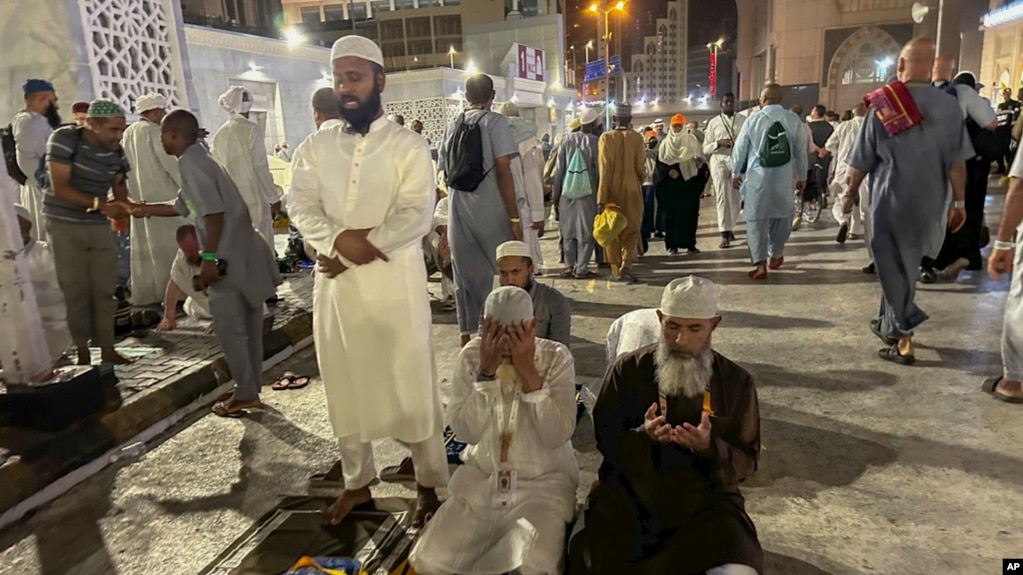


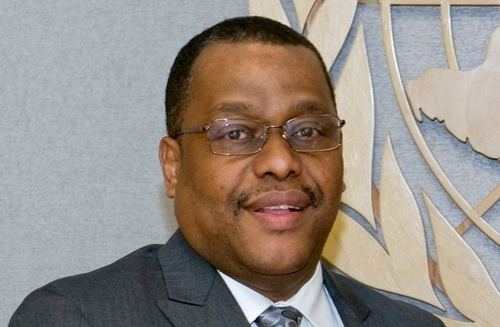


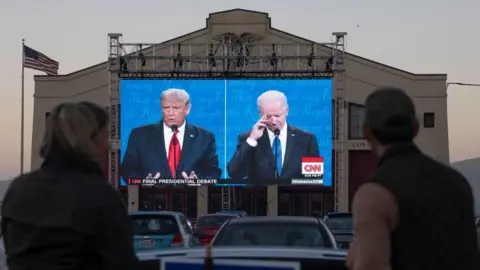 Getty ImagesViewers watch a 2020 presidential debate between Joe Biden and Donald Trump. The two will likely face off again this year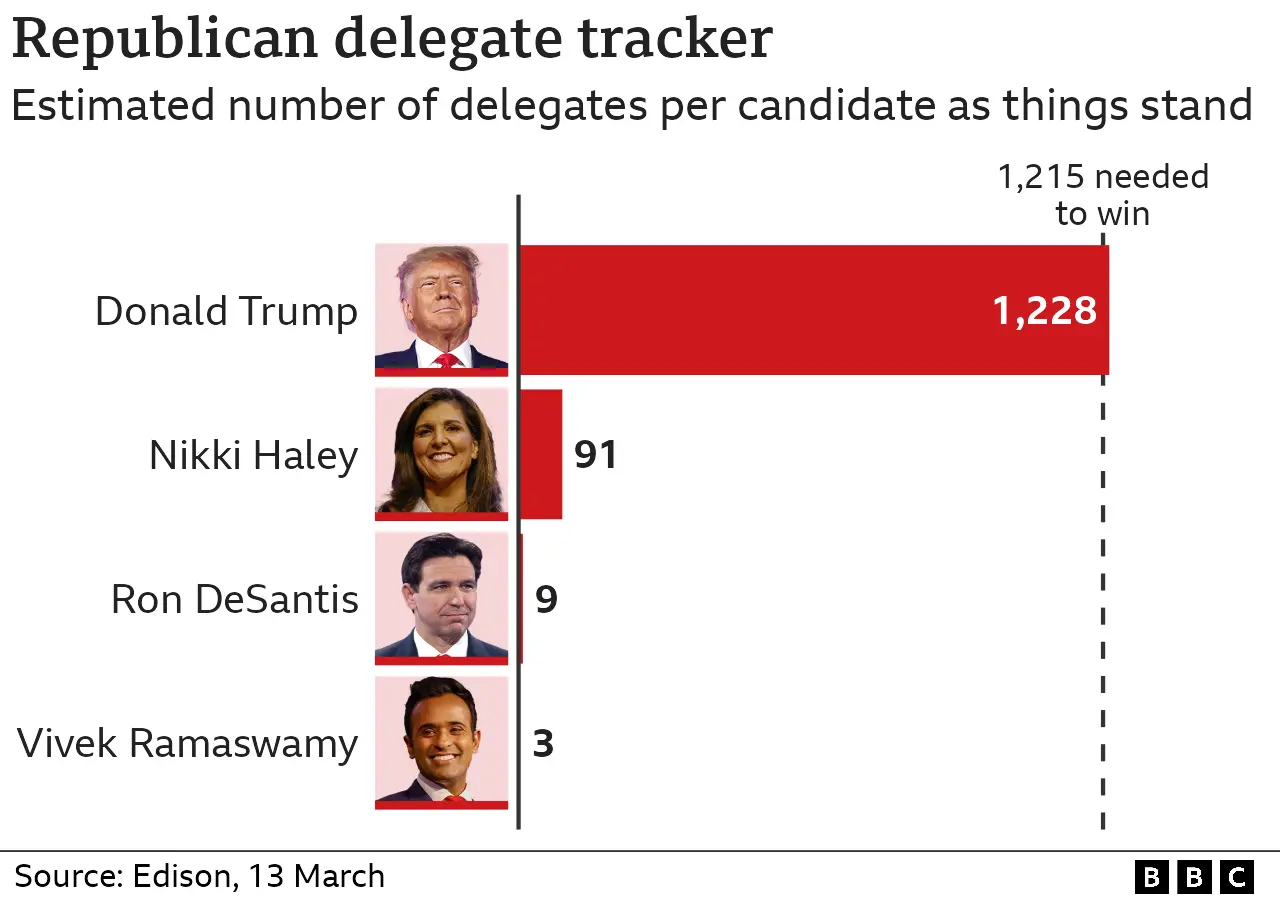

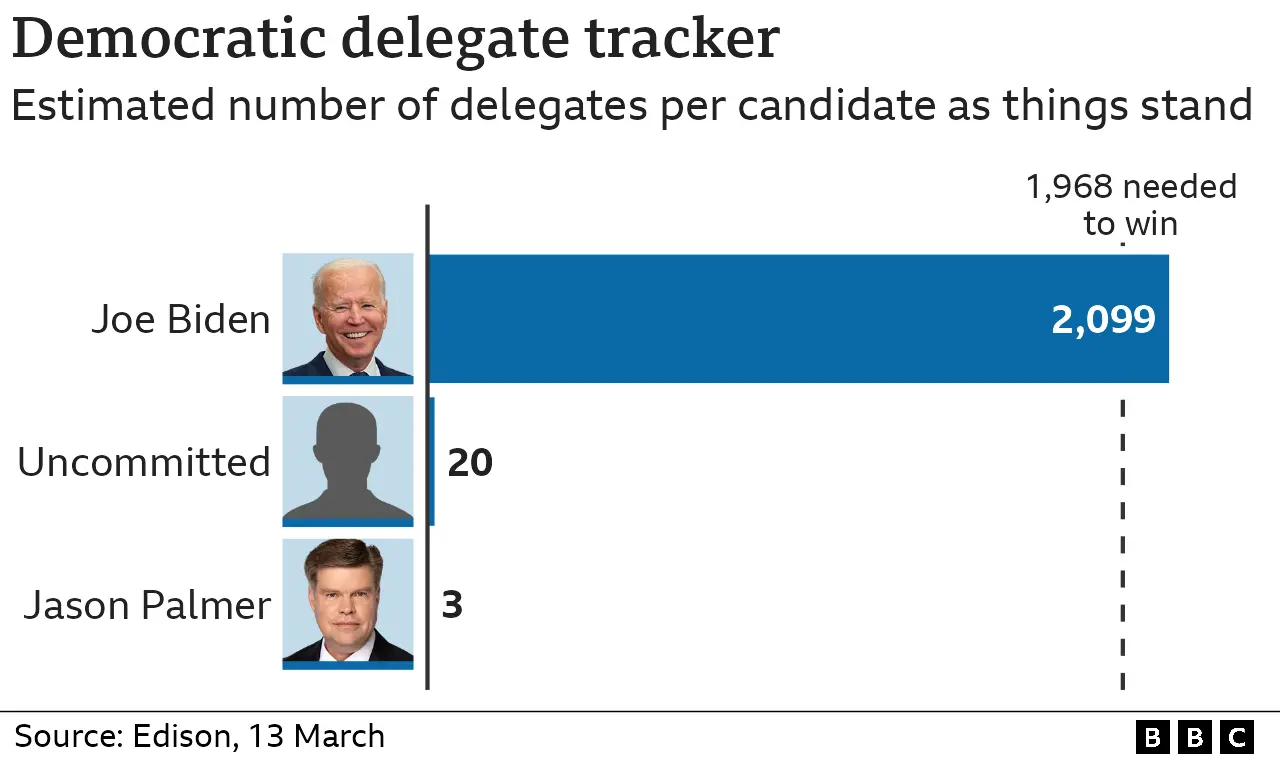


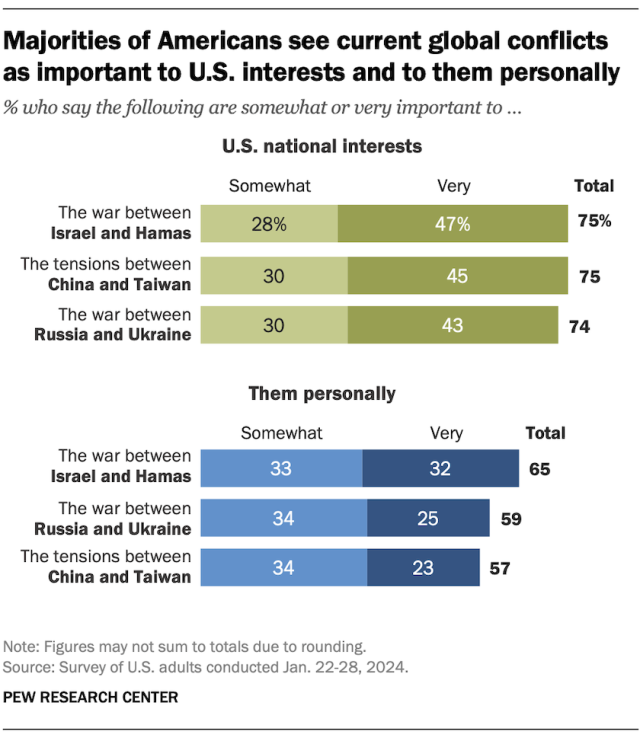
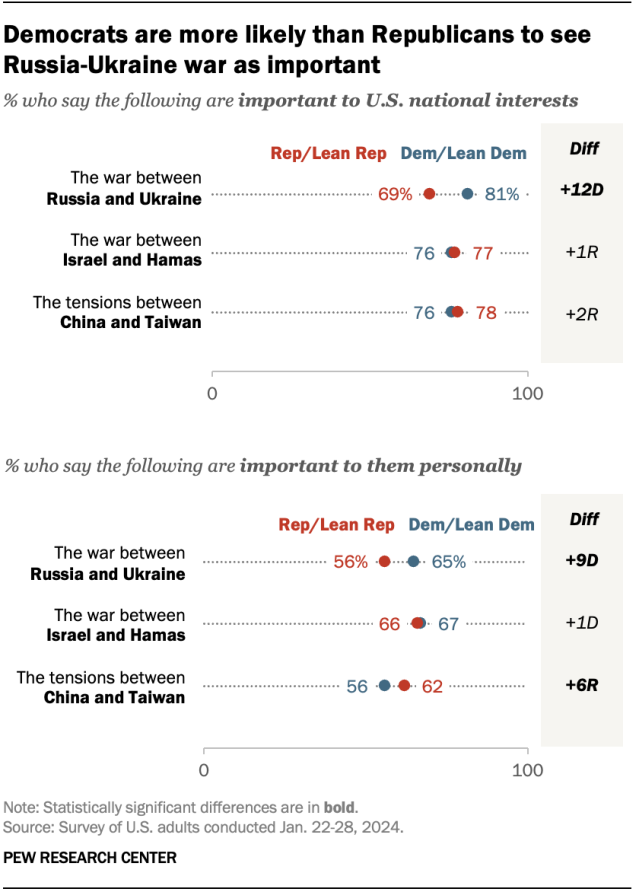
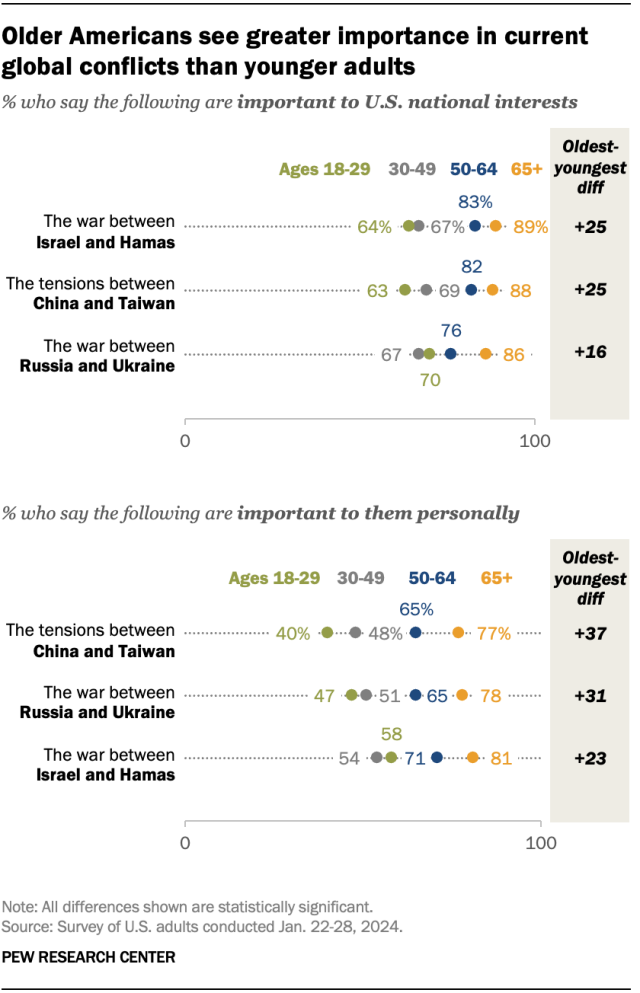


 fshiels