MY INTERNATIONAL RELATIONS STUDENT IVANNA ON NATIONALISM

Ivanna Lewis-McGregor

Jan 22, 2026 10:19 PM

Constructive Example: India’s Anti‑Colonial Nationalism (1880s–1947)

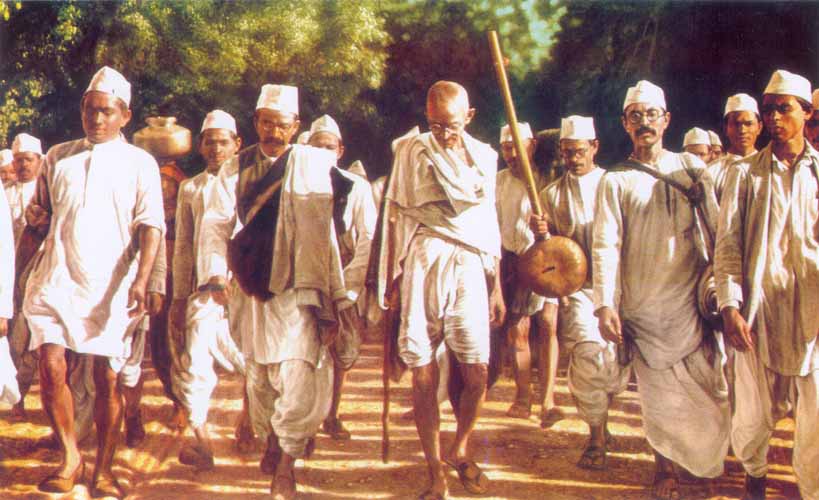
Gandhi’s Salt March, The Tax Protest that changed Indian History
Salt March

One moment that always stands out to me is how Indian nationalism shifted from scattered regional identities into a shared political force during British rule. You can see this unity in scenes like the 1930 Salt March, where thousands of ordinary people walked behind Gandhi, barefoot, refusing to fight back even when beaten. That march was not just symbolic; it showed Indians from different castes, religions, and languages acting as one political body for the first time.

Why is this nationalism constructive?

  • It united a fragmented subcontinent without relying on violence.
  • It created a civic identity based on rights, dignity, and self‑rule.
  • It helped dismantle one of the largest empires in history.

This was nationalism as empowerment, a way for people who had been treated as subjects to finally see themselves as citizens.

Toxic Example: Rwanda’s Hutu Power Nationalism (early 1990s)

On the other side, nationalism in Rwanda shows how quickly pride can turn into poison. Radio broadcasts in 1993–94 didn’t just criticize Tutsis, they described them as “cockroaches,” as if they weren’t human at all. That language wasn’t accidental. It was a deliberate attempt to turn national identity into a weapon.

You can picture the scene: neighbors who had lived side‑by‑side for decades suddenly checking ID cards, deciding who belonged and who didn’t. Nationalism became a test of purity, not unity.

Why has this nationalism become toxic?

  • It defined the nation by exclusion instead of inclusion.
  • It used fear and myth to justify violence.
  • It turned political competition into ethnic survival.

The result was catastrophic: a genocide carried out not by an invading army, but by citizens who believed they were “protecting” their nation.

Positive Nationalism — India

History.com  (Salt March)  

History.com  Editors. “Salt March.” History, 2019, https://www.history.com/topics/india/salt-march (history.com.

Britannica (Indian Independence Movement)  

“Indian Independence Movement.” Encyclopaedia Britannica, https://www.britannica.com/event/Indian-independence-movement.

Toxic Nationalism — Rwanda

United Nations (Rwanda Genocide Overview)  

“Rwanda: A Brief History of the Country.” United Nations, https://www.un.org/en/preventgenocide/rwanda (un.org.

Human Rights Watch (Leave None to Tell the Story)  

Des Forges, Alison. Leave None to Tell the Story: Genocide in Rwanda. Human Rights Watch, 1999, https://www.hrw.org/report/1999/03/01/leave-none-tell-story/genocide-rwanda (hrw.org.

Britannica (Rwandan Genocide)  

“Rwandan Genocide.” Encyclopaedia Britannica, https://www.britannica.com/event/Rwandan-Genocide (britannica.com

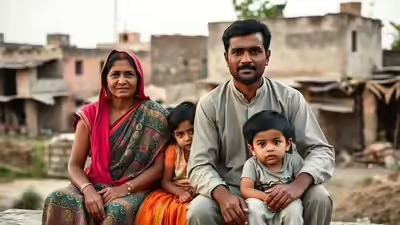
Indian poverty: Post/Response in my International Relations Class

James Walker A fine Student

Post and Response from my fine student, James Walker

Nov 17, 2025 12:56 PM

MY CLASS CONDERS INDIAN POVERTY: FINE STUDENT’S REACTION

James Walker

Nov 17, 2025 12:56 PM

The debate over whether the poor have an inherent right to a better standard of living often centers on ethical perspectives, contrasting moral imperatives with human rights. Some argue that access to essential needs such as food, shelter, and healthcare constitutes a fundamental right. In contrast, others contend that improving the living conditions of the poor is primarily a matter of humanitarian concern, contingent on societal goodwill. Ultimately, the argument for a right to a better standard of living aligns with human rights principles and recognizes the intrinsic dignity of all individuals.

To improve the conditions of agricultural workers in a specific country, I propose implementing robust land reform policies in India, which would grant land rights to tenant farmers and smallholders. This measure aligns with the Millennium Development Goals, which aim to eradicate extreme poverty and ensure sustainable livelihoods. By recognizing land ownership and providing access to financial resources and technical assistance, these farmers would gain autonomy, enhance productivity, and contribute to food security, ultimately elevating their standard of living and economic stability.

J

Nov 17, 2025 12:56 PM

The debate over whether the poor have an inherent right to a better standard of living often centers on ethical perspectives, contrasting moral imperatives with human rights. Some argue that access to essential needs such as food, shelter, and healthcare constitutes a fundamental right. In contrast, others contend that improving the living conditions of the poor is primarily a matter of humanitarian concern, contingent on societal goodwill. Ultimately, the argument for a right to a better standard of living aligns with human rights principles and recognizes the intrinsic dignity of all individuals.

To improve the conditions of agricultural workers in a specific country, I propose implementing robust land reform policies in India, which would grant land rights to tenant farmers and smallholders. This measure aligns with the Millennium Development Goals, which aim to eradicate extreme poverty and ensure sustainable livelihoods. By recognizing land ownership and providing access to financial resources and technical assistance, these farmers would gain autonomy, enhance productivity, and contribute to food security, ultimately elevating their standard of living and economic stability.

James,

AS you are almost always a high flying maker of posts I’m going to credit this (why Nov. 17 posted Nov. 24th?) with excellence, yet still point out some small tweaks to give this more altitude. The CLASS should profit from this, too.

The first paragraph is OK, BUT how many times have we read this almost boilerplated and oft repeated conundrum, which is largely true and not mutually exclusive. (for both).

You get down to it in paragraph 2, where you make the Indian land reform case. It’s a cut above just stating a problem and a bunch of “every article on the topic” multiple ‘solutions’ to the problem. You actually laser in on a huge progressive deed affecting hundred of millions of people

The next level stems from that word “Progressive:” There could be 100 million + progressives in India (that’s on the high side) and there would still remain

1, 368.000.000 other Indians. The country is Crowed: land reform with this many people is a worthy goal, but Complex given the population density of the country: 468/p/sq. kilometer. Compare that with China’s 170 density, and the U./S./’s 38! The ful piece is that you have to persuade many in the Indian Congress, many of the Brahmins, to do the work of implementing such a program. All tall– but worthy order.

While the value of this “X program would be good” but ‘Y problems get in the way’ needs to be spelled out (the political obstacles, is that it implies Attempting such reforms on Whatever scale would be good. That is in the unlikely event of the election of a charismatic, fierce reformer with a big following. Now you can take this little essay and my challenges and use them for an (edited) final exam easy if you so choose.