Another fresh face itching to get in the ring with Donald
Video Player is loading.
The Hill’s Headlines — August 25, 2025
Maryland Gov. Wes Moore (D) is seeing his national profile rise as his feud with President Trump intensifies and he seeks to position himself as a leader in the chorus of Democratic governors resisting Trump.
Trump and Moore spent much of the weekend firing insults at each other after Trump threatened to deploy the National Guard to Baltimore, describing the city as “out of control” and “crime-ridden.” Moore subsequently hit back, saying the president “is doing everything in his power to distract from the Epstein files.”
Moore also revealed over the weekend that he is actively exploring redistricting options in Maryland in an effort to counter GOP redistricting in red states such as Texas. Those comments elicited praise from California Gov. Gavin Newsom (D), who has led the Democratic redistricting counterattack.
The Maryland governor’s increasingly aggressive stance against the Trump administration echoes Newsom’s in particular, and comes as he faces speculation that, like his California counterpart, he’s weighing a presidential run in 2028.
Trump’s push for Republicans to redistrict in red states, as well as his move to deploy National Guard soldiers in Washington, D.C., and threaten to deploy them to other cities, have become particular flash points in the Democratic resistance to Trump.
FBI raids John Bolton’s home; Gen Z Men shifting toward GOP | RISING
“The redistricting fight is becoming somewhat of a litmus test for who’s willing to do what’s necessary to stop Donald Trump,” said Mike Nellis, a Democratic strategist.
The Maryland governor has signaled he is building his national brand in recent months, taking trips to a number of major presidential contest states including Pennsylvania and South Carolina.
Sign up for the Morning Report
The latest in politics and policy. Direct to your inbox.
By signing up, I agree to the Terms of Use, have reviewed the Privacy Policy, and to receive personalized offers and communications via email, on-site notifications, and targeted advertising using my email address from The Hill, Nexstar Media Inc., and its affiliates
Moore made headlines Sunday when he told CBS News that “all options were on the table” when it comes to redistricting in Maryland.
Newsom has been the most prominent face of the Democratic response to Republican redistricting efforts, setting up a special election in the state to pass newly redrawn maps designed to cancel out the Republican-drawn ones in Texas.
“I don’t think he has to recreate what Newsom did to get some attention, but it’s more important that these guys deliver what is necessary, because the Republicans are going to do what they’re told,” Nellis said. “For Wes, it’s an opportunity to show that he can deliver to Democratic base voters who are frustrated with this administration.”
Meanwhile, his feud with Trump is playing out against the backdrop of Trump’s threats to send troops into Baltimore to “quickly clean up” crime.
“But if Wes Moore needs help, like Gavin Newscum did in L.A., I will send in the ‘troops,’ which is being done in nearby DC, and quickly clean up the Crime,” the president wrote in a Truth Social post Sunday.
Trump continued to criticize Moore and Baltimore while speaking to reporters in the Oval Office on Monday, calling the city “a horrible deathbed.”
“Gov. Moore said, ‘Oh, he wants to take a walk with me.’ He meant it in a derogatory tone. I said, ‘No, no. I’m the president of the United States. Clean up your crime and I’ll walk with you,’” Trump said, referring to Moore’s calls for him to visit Baltimore. “He doesn’t have what it takes.”
The president went on to say he spoke with Moore at the Army-Navy football game last year, claiming the governor told him he was the “greatest president of all time.”
Moore quickly responded to that allegation, writing “lol” in a post on the social platform X.
“Keep telling yourself that, Mr. President,” the governor added.
In a lengthier statement, Moore said Trump “represents what people hate most about politicians — someone who only seeks to benefit themselves.”
“This is a President who would rather attack his country’s largest cities from behind a desk than walk the streets with the people he represents,” the 46-year-old governor said. “The President should join us in Baltimore because the blissful ignorance, tropes, and the 1980s scare tactics benefit no one. We need leaders who are there helping the people who are actually on the ground doing the work.”
According to a U.S. News and World Report poll released last month, Baltimore was ranked as the fourth most dangerous city in the country. The survey’s rankings were based on murder and property rate crimes determined by FBI crime reports.
But Baltimore Mayor Brandon Scott (D) says the city has recently seen a dramatic decrease in crime. According to Scott’s office, the city has experienced a 24.3 percent decrease in homicides and a 18.3 percent decrease in fatal shootings. Additionally, Scott’s office notes that as of Aug. 1, Baltimore saw 84 homicides this year, compared to 111 homicides in the first seven months of 2024, marking a 50-year low.
“Baltimore is a story of resilience and strength. When I took office, Baltimore averaged nearly a homicide a day. Today, after record-level funding for law enforcement and increased coordination, homicides in Baltimore are lower than when I was born–the fewest homicides at this point in a year in the last fifty years. But let me be clear, if one person does not feel safe in their neighborhood, that’s one too many,” Moore said in a statement.
Democratic strategists have warned other members of the party about debating crime statistics. However, Moore made a unique and personal case against Trump’s move to deploy the National Guard to Washington and threats to send them to nearby Baltimore.
“It’s deeply disrespectful to the members of the National Guard,” Moore, an Army veteran, said in his interview with CBS News. “As someone who actually deployed overseas and served my country in combat, to ask these men and women to do a job that they’re not trained for is just deeply disrespectful.”
Moore’s comments invoking his own military background are reflective of Democrats’ argument that Trump’s use of the National Guard in Washington is for optics.
“I think Wes is smart to personalize the fight for him, because it would have been easy for a commander in chief to abuse Wes and his fellow soldiers in the same way,” Nellis said. “They’re using them as political props.”
“You can twist the numbers any way you want to make whatever case you want but nobody, especially Donald Trump, is actually going to do anything that’s going to solve or reduce crime in this country,” he said. Tags Brandon Scott Donald Trump Gavin Newsom Wes Moore
Smart Take withBlake BurmanFour former Biden White House senior officials are set to provide depositions in the House Oversight and Government Reform Committee’s investigation into the former president. NewsNation’s Joe Khalil reports Neera Tanden, Anthony Bernal,Ashley Williams, and Annie Tomasini will provide statements in the coming weeks. “The lawyers have probably worked out the parameters of their testimony in these closed-door depositions before they appear in a hearing,”Bill McGinley, former White House Cabinet secretary in the first Trump administration, told me. “Executive privilege is something that their lawyers or the president’s — Biden’s lawyers — may try to assert, but the Trump White House is going to have a say in that or try to influence that.” We are in a dynamic news cycle at the moment. However, as much as Democrats would like to bury all 2024 talk, it’s unlikely to happen with this continuing investigation. Burman hosts “The Hill” weeknights, 6p/5c on NewsNation.
3 Things to Know Today The Justice Department indicted Rep. LaMonica McIver (D-N.J.) Tuesday on three charges alleging she impeded and interfered with immigration officers outside a detention center on May 9 in Newark, N.J. She contests the charges. The Trump administration is planning to dramatically ramp up sending migrants to Guantánamo Bay starting this week, with at least 9,000 people being vetted for transfer.The Southern Baptist Convention approved a resolution to work to reverse the historic U.S. Supreme Court ruling legalizing same-sex marriage.
She also added that “sending in active-duty troops to deal with domestic law enforcement issues raises very serious concerns.”House Democrats, meanwhile, are shedding any concerns over potential political fallout to challenge the president forcefully on a radioactive issue that’s long divided the country. The top Democratic leaders in both chambers are accusing Trump of waging a war on nonwhite immigrants — and trampling on democratic conventions and human rights in the process. “This isn’t about law and order or protecting public safety. Donald Trump wants conflict and violence,” Rep. Pete Aguilar (Calif.), chair of the House Democratic Caucus, told reporters in the Capitol. “House Democrats stand on the side of peaceful protests and condemn the violence that Donald Trump is rooting for.”Rank-and-file Democrats are piling on as they return to Washington this week, portraying Trump as an autocrat who’s hell-bent on undermining America’s foundational role as a country of immigrants and a refuge for people of all ethnicities.
The assertive strategy is not without risks. “This is a fight Republicans want right now. Republicans are trying to lean into this blue-states-versus-Trump dynamic,” one top Democratic strategist said. “And Democrats want a fight, we want a fight we can win. But this is a difficult fight to win because there’s so much we can’t control. There are so many variables here and a lot of it is completely out of our hands.”MEGABILL: Sen. John Curtis (R-Utah), a moderate Republican, called July 4 a “false deadline” for Republicans to pass their megabill and said it’s more important for the Senate to get it done “right” than fast.But some Republicans hope the LA protests could give the bill a boost as pressure mounts on members to get on board and approve fresh immigration funding or risk appearing on the side of California Democrats. “It’s been a high priority before what happened in Los Angeles, and I think the American people are seeing firsthand what happens when lawlessness rules the streets and you’re undercutting the very important mission of ICE,” said Sen. Steve Daines (R-Mont.), a top ally of Senate Majority Leader John Thune (R-S.D.). “It helps illustrate the consequences of not having ICE fully supported, whether that is supported by government officials, as well as the needed financial support to make sure they have the capacity to do their job.”Sen. Ron Johnson (R-Wis.), an outspoken opponent of future debt embodied in Trump’s “big, beautiful bill,” met Tuesday in the Capitol with Vice President Vance.“We spoke about the path forward, and what I continue to ask for is: I need forcing mechanisms to make sure we get another bite at the apple, that there’s going to be a must-pass second reconciliation bill so we can do what’s left undone in this bill,” Johnson told the Washington Examiner.The Hill: Elon Musk today expressed recriminations about his feud with the president: “I regret some of my posts about President @realDonaldTrump last week. They went too far,” he posted on his social media platform X. CBS News: Sen. Josh Hawley (R-Mo.) introduced legislation to raise the federal minimum wage to $15 per hour.Roll Call: The House eyes cuts to D.C.’s autonomy as local budget fix gathers dust. WHEN & WHEREThe House will convene at 10 a.m.TheSenate will meet at 11 a.m.The president will receive his intelligence briefing at 11 a.m. Trump will have lunch with Vice President JD Vance at 12:30 p.m. The president will participate in a credentialing ceremony for ambassadors at 4 p.m. Trump and first lady Melania Trump will attend an opening night performance of “Les Misérables” at the Kennedy Center at 6:30 p.m. in Washington and return to the White House.The White House press briefing is scheduled at 1 p.m.
President Trump’s administration said it will freeze around $2.2 billion in multi-year grants and $60 million in multi-year contracts to Harvard University after the Ivy League institution rejected the government’s demands earlier Monday.
“Harvard’s statement today reinforces the troubling entitlement mindset that is endemic in our nation’s most prestigious universities and colleges – that federal investment does not come with the responsibility to uphold civil rights laws,” the Joint Task Force to Combat Anti-Semitism said in a statement Monday evening.
The response from the administration came just hours after Harvard’s leadership said that it would not comply with the demands from the federal government, including instituting changes around protesting and diversity, equity and inclusion (DEI) efforts in order to keep their funding.
“No government — regardless of which party is in power — should dictate what private universities can teach, whom they can admit and hire, and which areas of study and inquiry they can pursue,” Harvard’s President Alan Garber said Monday.
He said the school is already working on several initiatives to fight antisemitism and it will continue to do so in the future, but the administration’s requests are a step too far.
WCMH: debate over SNAP
Next
Stay-01:20
Combating antisemitism “will not be achieved by assertions of power, unmoored from the law, to control teaching and learning at Harvard and to dictate how we operate. The work of addressing our shortcomings, fulfilling our commitments, and embodying our values is ours to define and undertake as a community,” Garber said.
Last week, the federal government asked the Ivy League school to also reform its admission and hiring practices, make leadership changes, probe departments for antisemitism and ban face masks, among other demands, in order to keep the funding.
Sign up for the Morning Report
The latest in politics and policy. Direct to your inbox.
By signing up, I agree to the Terms of Use, have reviewed the Privacy Policy, and to receive personalized offers and communications via email, on-site notifications, and targeted advertising using my email address from The Hill, Nexstar Media Inc., and its affiliates
“The disruption of learning that has plagued campuses in recent years is unacceptable,” the task force said Friday evening. “The harassment of Jewish students is intolerable. It is time for elite universities to take the problem seriously and commit to meaningful change if they wish to continue receiving taxpayer support.”
When reached for comment, Harvard’s spokesperson pointed The Hill to Garber’s Friday statement, where he said that “for the government to retreat from these partnerships now risks not only the health and well-being of millions of individuals, but also the economic security and vitality of our nation.”
The current administration has targeted multiple Ivy League institutions, accusing them of not doing enough to fight antisemitism on campuses, particularly after the Palestinian militant group Hamas’s Oct. 7 terrorist attack on Israel.
Elliott is a senior correspondent at TIME, based in the Washington, D.C., bureau.
Senate Minority Leader Chuck Schumer (D-NY) leaves the Democratic caucus lunch at the U.S. Capitol in Washington, D.C. on March 13, 2025.Kayla Bartkowski—Getty Images
This article is part of The D.C. Brief, TIME’s politics newsletter. Sign up here to get stories like this sent to your inbox.
The Senate’s move Friday to avoid a government shutdown—essentially ceding spending power to President Donald Trump and downgrading Congress to an advisory role—was an epic climbdown that is rightfully sending the Democrats’ base into a spiral.
The rage among Democrats trained on one figure: Senate Minority Leader Chuck Schumer of New York, who signaled a day earlier that the fight was over and it was time to move on. The choice was to hold open the doors of a scaled-down government or to slam it closed on what stood before, and the outcome tells the story.
That does not mean anyone in the party was happy about how this went down.
Asked Friday if it was time for a new Leadership team for Senate Democrats, House Minority Leader Hakeem Jeffries declined to throw Schumer a life preserver. “Next question,” Jeffries said. In other spaces, there was an open talk of primarying Schumer when he is next on the ballot in 2028.
Nine Senate Democrats—and Independent Angus King of Maine who caucuses with them—joined all but one Senate Republican on Friday to sidestep a government shutdown. The stopgap spending plan gives the White House a freer hand to shutter dozens of federal functions created by Congress and eliminate thousands of jobs. Congress, at least through Sept. 30, is in effect legislating a stronger executive branch that can basically do anything with the money lawmakers release.
It was a crap ending to what’s been a crap week for Democrats, frankly. On top of all of the chaos unfurling from the Trump White House by way of new executive orders, hires, fires, and tariffs, they have also had to face this ticking clock of a government shutdown. House Republicans jammed Democrats with a party-line spending plan that is especially heinous in its cuts to the District of Columbia. Then, the House ditched town, giving the Senate zero say to tweak the spending. Then, Schumer on Wednesday asserted the framework had insufficient support to get across the finish line. And, then, a day later, he said he would support the spending structure to block a shutdown.
The whiplash from the shut-it-down to keep-it-alive posturing only fed the contempt that many Democrats were already harboring toward their current leaders.
“Whatever happens will happen,” said Sen. Sheldon Whitehouse of Rhode Island, who was a “no” vote and used the hours ahead of the votes to telegraph a dark fatalism.
That resignation has been bleeding through Washington in recent weeks. The fight among anti-Trumpers of all stripes has faded in recent days as Trump’s brazen conquest of the spending system was looking increasingly inevitable. The chest-thumping celebrations in the White House and the antics of its pet-project DOGE intersected to rile up Democrats, who have been trying to defend all corners of the federal cogs.
Ultimately, though, the Democrats in a position to thwart Trump and his GOP allies caved. Republicans have majorities in the House and Senate, plus control of the White House. But Senate rules require 60 votes to get balls rolling, and Republicans had just 52 yes votes in the Upper Chamber. That meant GOP lawmakers needed to get eight converts among Democrats.
Senate Democrats looked at the math, polling, and their own talents. They made the call that the mismatch of their desire to oppose Trump’s unilateral power grab did not match their ability to actually stop it. Poli-sci nerds will tell you that actual power lies at the point where will and capacity are synced up. Democrats had the power to shut down the government but lacked the bandwidth to sell it as the other guys’ fault, or put forth a unified plan on how to reopen the government on better terms.
The problem now lies with how Democrats deal with the Schumer sitch. They are very, very quiet at the moment, but there are the faintest of rumblings about whether Schumer gets to hold his position as Minority Leader for the balance of this term. Progressive and rank-and-file corners of the party alike were uneasy about this call, and steering this unruly ship into 2026 is a job that is not something to be taken lightly.
To be clear: Schumer is not at risk of being deposed in short order, and Democrats do not carry House Republicans’ appetite for cannibalizing their own. Schumer acts on calculations, not confidences. His decision to side with keeping the government open at the expense of legislative branch power came from a place of rationality, not rashness. But it still carried costs, and the first among them was his standing with frustratedDemocrats who want the opposition party to do its job: to oppose an administration hellbent on dismantling a government it holds in sheer contempt.
Government, for the moment, survives. Democrats, for the foreseeable future, find their ability to check Trump diminished. And, until Congress reverses itself, the legislative branch takes a secondary role to the executive.
After a monthlong honeymoon for the G.O.P. at the start of President Trump’s term, lawmakers are confronting a groundswell of fear and disaffection in districts around the country.
Representative Pete Sessions fielded a barrage of frustration from constituents at a town-hall meeting in Trinity, Texas, on Saturday.Credit…Mark Felix for The New York Times
Robert Jimison, who covers Congress, reported from Trinity County in the 17th Congressional District of Texas.
Feb. 23, 2025
Some came with complaints about Elon Musk, President Trump’s billionaire ally who is carrying out an assault on the federal bureaucracy. Others demanded guarantees that Republicans in Congress would not raid the social safety net. Still others chided the G.O.P. to push back against Mr. Trump’s moves to trample the constitutional power of Congress.
When Representative Pete Sessions, Republican of Texas, arrived at a crowded community center on Saturday in the small rural town of Trinity in East Texas, he came prepared to deliver a routine update on the administration’s first month in office. Instead, he fielded a barrage of frustration and anger from constituents questioning Mr. Trump’s agenda and his tactics — and pressing Mr. Sessions and his colleagues on Capitol Hill to do something about it.
“The executive can only enforce laws passed by Congress; they cannot make laws,” said Debra Norris, a lawyer who lives in Huntsville, arguing that the mass layoffs and agency closures Mr. Musk has spearheaded were unconstitutional. “When are you going to wrest control back from the executive and stop hurting your constituents?”
“When are you going to wrest control back from the executive?” Debra Norris, a lawyer who lives in Huntsville, asked Mr. Sessions.Credit…Mark Felix for The New York Times
Louis Smith, a veteran who lives in East Texas, told Mr. Sessions that he agreed with the effort to root out excessive spending, but he criticized the way it was being handled and presented to the public.
“I like what you’re saying, but you need to tell more people,” Mr. Smith said. “The guy in South Africa is not doing you any good — he’s hurting you more than he’s helping,” he added, referring to Mr. Musk and drawing nods and applause from many in the room.
Many of the most vocal complaints came from participants who identified themselves as Democrats, but a number of questions pressing Mr. Sessions and others around the country came from Republican voters. During a telephone town hall with Representative Stephanie Bice in Oklahoma, a man who identified himself as a Republican and retired U.S. Army officer voiced frustration over potential cuts to veterans benefits.
“How can you tell me that DOGE with some college whiz kids from a computer terminal in Washington, D.C., without even getting into the field, after about a week or maybe two, have determined that it’s OK to cut veterans benefits?” the man asked.
Beyond town halls, some Democrats have organized a number of protests outside the offices of vulnerable Republicans. More than a hundred demonstrators rallied outside the New York district office of Representative Mike Lawler. Elected Democrats are also facing fury from within the ranks of their party. A group of voters held closed-door meetings with members from the office of Senator Chuck Schumer, Democrat of New York and the minority leader, after a demonstration at his New York offices.
Some of the scenes recalled the raucous town-hall meetings of 2009 that heralded the rise of the ultraconservative Tea Party, where throngs of voters showed up protesting President Barack Obama’s health care law and railed against government debt and taxes. It is not yet clear whether the current backlash will persist or reach the same intensity as it did back then. But the tenor of the sessions suggests that, after a brief honeymoon period for Mr. Trump and Republicans at the start of their governing trifecta, voters beginning to digest the effects of their agenda may be starting to sour on it.
Representative Rich McCormick, a Republican from Georgia, also faced shouts and jeers from constituents at a meeting last week.Credit…Valerie Plesch for The New York Times
Mr. Sessions, who was first elected to Congress nearly three decades ago and represents a solidly Republican district, appeared unfazed by the disruptions on Saturday. Some audience members laughed at him and retorted with hushed but audible expletives when he spoke about his support of some of Mr. Trump’s policy proposals and early actions.
And some of his constituents were plainly pleased by what they had seen so far from the new all-Republican team controlling the White House and both chambers of Congress. Several cheered an executive order barring transgender women and girls from participating in school athletic programs designated for female students, applauded plans to shrink the Department of Education and welcomed calls from Mr. Sessions to end remote work flexibility for federal employees.
“Ladies and gentlemen, we are going to have a reduction in force,” Mr. Sessions told the crowd.
And while many in the room voiced displeasure over the sweeping changes underway in Washington, some were agitating for bolder action to address what they called government corruption — not for pumping the brakes.
As Mr. Sessions spoke about the administration’s efforts to streamline bureaucracy and root out wasteful spending, shouts erupted.
“Take care of it, Congressman,” one woman said, interrupting him.
“Do something about it,” another man added.
One man’s voice rose above the others railing against nongovernmental organizations that receive federal money: “They’re laundering money to NGOs. Who’s in jail?”
Still, much of the pressure came from constituents concerned about how he might be enabling Mr. Trump to enact policies that could hurt them.
Mr. Sessions did not promise that Social Security would be insulated from cuts when pressed by John Watt, left.Credit…Mark Felix for The New York Times
John Watt, the chairman of the Democratic Party in nearby Nacogdoches County, asked for guarantees from the congressman that he would oppose any cuts to Social Security if Mr. Trump and Mr. Musk turned their attention to the entitlement program.
“Will you be courageous enough to stand up to them?” Mr. Watt asked.
Mr. Sessions spoke at length about his support for the program, but said he could not promise it would be insulated from the blunt cuts Republicans in Washington are seeking across the government. Instead, he said he supported a comprehensive audit of the program that could result in some cuts.
“I’m not going to tell you I will never touch Social Security,” Mr. Sessions said, parting ways with Mr. Trump, who campaigned saying he never would. “What I will tell you is that I believe we’re going to do for the first time in years a top-to-bottom review of that. And I will come back, and I will do a town-hall meeting in your county and place myself before you and let you know about the options. But I don’t know what they’re proposing right now.”
It was a nod to the uncertainty surrounding the Republican budget plan, even as House leaders hope to hold a vote on it within days. Already, the level of cuts they are contemplating to Medicaid has drawn resistance from some G.O.P. lawmakers whose constituents depend heavily on the program, raising questions about whether they will have the votes to pass their blueprint at all.
The public pushback could further complicate that debate, as well as efforts to reach a spending agreement as lawmakers return to Washington this week with less than three weeks to avert a government shutdown.
The tenor of the town-hall meetings, including Mr. Sessions’s, suggested that voters were beginning to digest the effects of the Republican agenda.Credit…Mark Felix for The New York Times
Republicans generally hold fewer in-person open town halls than their Democratic counterparts, opting instead for more controlled settings, such as telephone town halls, that minimize the risk of public confrontations. But even before last week, they had begun hearing frustration from voters, who have also expressed their discontent by flooding the phones of congressional offices.
With their already narrow majority in the House, G.O.P. lawmakers are in a fragile position. A voter backlash could sweep out some of their most vulnerable members in midterm elections next year. But the pushback in recent days has come not only in highly competitive districts but also in deeply Republican ones, suggesting a broader problem for the party.
And there is little sign that Mr. Trump is letting up. On Saturday, Mr. Trump said in a social media post that Mr. Musk “is doing a great job, but I would like to see him be more aggressive.” Mr. Musk responded by sending government employees emails that he said were “requesting to understand what they got done last week. Failure to respond will be taken as a resignation.”
GOP lawmakers expected to vote soon on slashing the insurance program for low-income people represent tens of millions reliant on it.
Louis Smith, a veteran who lives in East Texas, told Mr. Sessions that he agreed with the effort to root out excessive spending, but he criticized the way it was being handled and presented to the public.
“I like what you’re saying, but you need to tell more people,” Mr. Smith said. “The guy in South Africa is not doing you any good — he’s hurting you more than he’s helping,” he added, referring to Mr. Musk and drawing nods and applause from many in the room.
“I like what you’re saying, but you need to tell more people,” Mr. Smith said. “The guy in South Africa is not doing you any good — he’s hurting you more than he’s helping,” he added, referring to Mr. Musk and drawing nods and applause from many in the room.
Many of the most vocal complaints came from participants who identified themselves as Democrats, but a number of questions pressing Mr. Sessions and others around the country came from Republican voters. During a telephone town hall with Representative Stephanie Bice in Oklahoma, a man who identified himself as a Republican and retired U.S. Army officer voiced frustration over potential cuts to veterans benefits.
“How can you tell me that DOGE with some college whiz kids from a computer terminal in Washington, D.C., without even getting into the field, after about a week or maybe two, have determined that it’s OK to cut veterans benefits?” the man asked.
Beyond town halls, some Democrats have organized a number of protests outside the offices of vulnerable Republicans. More than a hundred demonstrators rallied outside the New York district office of Representative Mike Lawler. Elected Democrats are also facing fury from within the ranks of their party. A group of voters held closed-door meetings with members from the office of Senator Chuck Schumer, Democrat of New York and the minority leader, after a demonstration at his New York offices.
Some of the scenes recalled the raucous town-hall meetings of 2009 that heralded the rise of the ultraconservative Tea Party, where throngs of voters showed up protesting President Barack Obama’s health care law and railed against government debt and taxes. It is not yet clear whether the current backlash will persist or reach the same intensity as it did back then. But the tenor of the sessions suggests that, after a brief honeymoon period for Mr. Trump and Republicans at the start of their governing trifecta, voters beginning to digest the effects of their agenda may be starting to sour on it.
Representative Rich McCormick, a Republican from Georgia, also faced shouts and jeers from constituents at a meeting last week.Credit…Valerie Plesch for The New York Times
Mr. Sessions, who was first elected to Congress nearly three decades ago and represents a solidly Republican district, appeared unfazed by the disruptions on Saturday. Some audience members laughed at him and retorted with hushed but audible expletives when he spoke about his support of some of Mr. Trump’s policy proposals and early actions.
And some of his constituents were plainly pleased by what they had seen so far from the new all-Republican team controlling the White House and both chambers of Congress. Several cheered an executive order barring transgender women and girls from participating in school athletic programs designated for female students, applauded plans to shrink the Department of Education and welcomed calls from Mr. Sessions to end remote work flexibility for federal employees.
“Ladies and gentlemen, we are going to have a reduction in force,” Mr. Sessions told the crowd.
And while many in the room voiced displeasure over the sweeping changes underway in Washington, some were agitating for bolder action to address what they called government corruption — not for pumping the brakes.
As Mr. Sessions spoke about the administration’s efforts to streamline bureaucracy and root out wasteful spending, shouts erupted.
“Take care of it, Congressman,” one woman said, interrupting him.
“Do something about it,” another man added.
One man’s voice rose above the others railing against nongovernmental organizations that receive federal money: “They’re laundering money to NGOs. Who’s in jail?”
Still, much of the pressure came from constituents concerned about how he might be enabling Mr. Trump to enact policies that could hurt them.
Mr. Sessions did not promise that Social Security would be insulated from cuts when pressed by John Watt, left.Credit…Mark Felix for The New York Times
John Watt, the chairman of the Democratic Party in nearby Nacogdoches County, asked for guarantees from the congressman that he would oppose any cuts to Social Security if Mr. Trump and Mr. Musk turned their attention to the entitlement program.
“Will you be courageous enough to stand up to them?” Mr. Watt asked.
Mr. Sessions spoke at length about his support for the program, but said he could not promise it would be insulated from the blunt cuts Republicans in Washington are seeking across the government. Instead, he said he supported a comprehensive audit of the program that could result in some cuts.
“I’m not going to tell you I will never touch Social Security,” Mr. Sessions said, parting ways with Mr. Trump, who campaigned saying he never would. “What I will tell you is that I believe we’re going to do for the first time in years a top-to-bottom review of that. And I will come back, and I will do a town-hall meeting in your county and place myself before you and let you know about the options. But I don’t know what they’re proposing right now.”
It was a nod to the uncertainty surrounding the Republican budget plan, even as House leaders hope to hold a vote on it within days. Already, the level of cuts they are contemplating to Medicaid has drawn resistance from some G.O.P. lawmakers whose constituents depend heavily on the program, raising questions about whether they will have the votes to pass their blueprint at all.
The public pushback could further complicate that debate, as well as efforts to reach a spending agreement as lawmakers return to Washington this week with less than three weeks to avert a government shutdown.
The tenor of the town-hall meetings, including Mr. Sessions’s, suggested that voters were beginning to digest the effects of the Republican agenda.Credit…Mark Felix for The New York Times
Republicans generally hold fewer in-person open town halls than their Democratic counterparts, opting instead for more controlled settings, such as telephone town halls, that minimize the risk of public confrontations. But even before last week, they had begun hearing frustration from voters, who have also expressed their discontent by flooding the phones of congressional offices.
With their already narrow majority in the House, G.O.P. lawmakers are in a fragile position. A voter backlash could sweep out some of their most vulnerable members in midterm elections next year. But the pushback in recent days has come not only in highly competitive districts but also in deeply Republican ones, suggesting a broader problem for the party.
And there is little sign that Mr. Trump is letting up. On Saturday, Mr. Trump said in a social media post that Mr. Musk “is doing a great job, but I would like to see him be more aggressive.” Mr. Musk responded by sending government employees emails that he said were “requesting to understand what they got done last week. Failure to respond will be taken as a resignation.”
“I have not yet begun to fight, and neither have you,” President Trump said at the Conservative Political Action Conference on Saturday.Credit…Maansi Srivastava for The New York Times
Hours later, during a speech at the Conservative Political Action Conference, Mr. Trump signaled that he was only just beginning to enact his agenda.
“I have not yet begun to fight, and neither have you,” Mr. Trump told a crowd of his supporters at the annual gathering outside in Washington.
Such remarks offer little cover for Republicans like Mr. Sessions facing tough questions from voters who are beginning to chafe at the changes Mr. Trump is pursuing.
But the congressman said that tense exchanges would not deter him from holding more events and seeking opportunities to communicate with his constituents, whether they agree with his positions or not. He said he would hold more events across the district next week, and hopes that after another week in Washington, he will be able to provide more clarity for those who show up.
“I heard them and they heard me,” he said of Saturday’s gathering. “And I don’t think there was a fight.”
The silence of Republicans about voter fraud in the 2024 elections is– SURPRISE!– deafening. Also the silence of Democrats about the role of voter suppression in electing Trump and many of his “Class of 2024 boys and girls in the Congress” is equally so.
A guest post by Greg Palast for the Hartmann Report
Trump lost. That is, if all legal voters were allowed to vote, if all legal ballots were counted, Trump would have lost the states ofWisconsin, Michigan, Pennsylvania and Georgia. Vice-President Kamala Harris would have won the Presidency with 286 electoral votes.
And, if not for the mass purge of voters of color, if not for the mass disqualification of provisional and mail-in ballots, if not for the new mass “vigilante” challenges in swing states, Harris would have gained at least another 3,565,000 votes, topping Trump’s official popular vote tally by 1.2 million.
Stay with me and I’ll give you the means, methods and, most important, the key calculations.
But if you’re expecting a sexy story about Elon Musk messing with vote-counting software from outer space, sorry, you won’t get that here.
As in Bush v. Gore in 2000 and in too many other miscarriages of Democracy, this election was determined by good old “vote suppression,” the polite term we use for shafting people of color out of their ballot. We used to call it Jim Crow.
Here are key numbers:
— 4,776,706 voters were wrongly purged from voter rolls according to US Elections Assistance Commission data. — By August of 2024, for the first time since 1946, self-proclaimed “vigilante” voter-fraud hunters challenged the rights of 317,886 voters. The NAACP of Georgia estimates that by Election Day, the challenges exceeded 200,000 in Georgia alone. — No fewer than 2,121,000 mail–in ballots were disqualified for minor clerical errors (e.g. postage due). — At least 585,000 ballots cast in-precinct were also disqualified. —1,216,000 “provisional” ballots were rejected, not counted. — 3.24 million new registrations were rejected or not entered on the rolls in time to vote.
If the purges, challenges and ballot rejections were random, it wouldn’t matter. It’s anything but random. For example, an audit by the State of Washington found that a Black voter was 400% more likely than a white voter to have their mail-in ballot rejected. Rejection of Black in-person votes, according to a US Civil Rights Commission study in Florida, ran 14.3% or one in seven ballots cast.
There are also the uncountable effects of the explosive growth of voter intimidation tactics including the bomb threats that closed 31 polling stations in Atlanta on Election Day.
America’s Nasty Little Secret
The nasty little secret of American democracy is that we don’t count all the votes. Nor let every citizen vote.
In 2024, especially, after an avalanche of new not-going-to-let-you-vote laws passed in almost every red state, the number of citizens Jim Crow’d out of their vote soared into the millions. According to the Brennan Center for Justice, since the 2020 election, “At least 30 states enacted 78 restrictive laws” to blockade voting. The race-targeted laws ran the gamut from shuttering drop boxes in Black-majority cities to, for the first time, allowing non-government self-appointed “vote fraud vigilantes” to challenge voters by the hundreds of thousands.
Throughout election seasons, The New York Times and NPR and establishment media write stories and editorials decrying vote suppression tactics, from new ID requirements to new restrictions on mail-in voting. But, notably, the mainstream press never, ever, not once, will say that these ugly racist attacks on voters changed the outcome of an election.
Question: If these vote suppression laws—notorious example: Georgia’s SB 202—had no effect on election outcomes, then why did GOP legislators fight so hard to pass these laws? The answer is clear on the Brennan Center’s map of states that passed restrictive laws. It’s pretty much Trump’s victory map.
America Goes Postal
Let’s look at just one vote suppression operation in action.
In 2020, during the pandemic, America went postal. More than 43% of us voted by mail.
But it wasn’t easy. Harris County, Texas, home of Houston, tried to mail out ballots during the Covid epidemic on the grounds that voters shouldn’t die waiting in lines at polling stations. But then, the state’s Republican Attorney General Ken Paxton stopped this life-saving measure.
Why wouldn’t this GOP official let Houstonians vote safely? Maybe it’s because Houston has the largest number of Black voters of any city in America. Indeed, on Steve Bannon’s podcast, Paxton proudly stated, “Had we not done that [stopped Houston from sending out ballots], Donald Trump would’ve lost the election” inTexas. Texas!
Before the 2024 election, prompted by Trump’s evidence-free attack on mail-in ballots as inherently fraudulent, 22 states, according to the Brennan Center, imposed “38 new restrictions on the ability to vote absentee that were not in place in 2020…likely to most affect or already have disproportionately affected voters of color.” You’re shocked, right?
Texas’ requirement to add ID numbers to an absentee ballot caused the rejection rate to jump from 1% to 12%.
So, here’s the question we need to ask. If restrictions on mail-in balloting swung Texas to Trump, how did all these new restrictions affect the outcome of the vote in other states?
In 2020, an NPR study found the mail-in ballot rejection rate hit 13.8% during the Democratic primaries—a loss of one in seven ballots.
Here are photos of a Georgia voter, career military officer and Pentagon advisor Major Gamaliel Turner (Ret), demonstrating for young voters how to fill out an absentee ballot, emphasizing that it must be mailed in promptly. He did, seven days before the deadline. But we only recently learned that Georgia officials disqualified his ballot as received too late.
Major Gamaliel Turner (now retired) about to mail in his absentee ballot. The state of Georgia rejected it. (Photo: Palast Investigative Fund 2024.)
In 2008, even before the majority of Democrats began voting by mail, when absentee balloting was much rarer, the federal government reported 488,136 mail-in ballots were rejected, almost all on picayune grounds (i.e. middle initial on signature missing etc.). An MIT study put the number of rejected mail-in ballots at 2.9%.
That’s the low-end of MIT’s estimate of mail-in ballots tossed out. Charles Stewart, Distinguished Professor of Political Science, author of the report, notes mail-in ballots requested and never received nor returned could raise the total mail-in ballot loss rate to 21%.
For 2024, that would total 14.1 million ballots that, effectively, vanished from the count.
The “failure to return” ballot was exacerbated in this election by the steep cut in ballot drop boxes, a method favored by urban (read, “Democratic”) voters. Black voters in Atlanta used ballot drop boxes extensively because they feared, with good reason, relying on the Post Office [see Major Turner’s story above].
In response, the Republican Governor of Georgia, Brian Kemp, signed SB 202 which slashed the number of drop boxes by 75% only in Black-majority counties and locked them away at night. These moves slashed mail-in and drop box balloting, used by the majority of Democrats in 2020, by nearly 90% in the 2024 race.
Even if deemed “on time,” ballots still face rejection. Marietta, Georgia, first-time voter Andrian Consonery Jr. told me his mail-in ballot was rejected because his signature supposedly didn’t match that on his registration. (I needn’t add, Consonery is Black.) In effect, Consonery was accused of forgery—a federal crime–not by the FBI but by self-appointed amateur sleuths. This challenge to mail-in ballots, part of a right-wing campaign, has gone viral.
Georgian Adrian Consonery Jr.’s mail-in ballot was challenged because of a false claim that his signature was forged. Photo: Zach D. Roberts for the Palast Investigative Fund (2024)
In 2020, the federal government reported that 157,477 ballots were rejected for supposedly “mis-matched” signatures. That’s quite a crime wave—but without criminals.
And that’s before we get to the dozens of other attacks on voting that were freshly minted for the 2024 election, attacks aimed at voters of color.
The crucial statistic is that not everyone’s ballot gets disqualified. One study done for the United States Civil Rights Commission found that a Black person, such as Maj. Turner, will be 900% more likely to have their mail-in or in-person ballot disqualified than a white voter.
Now, let’s do some arithmetic. If we take the lowest end of the MIT ballot rejection rate, and only a tenth of the “lost” ballot rate, and then apply it to the number of mail-in and drop-box ballots, we can conservatively estimate that 2,121,000 mail-in votes went into the electoral dumpster.
Whose ballots? Democrats are 51% more likely than Republicans to vote by mail; and, given the racial disparity in ballot rejections, Trump’s swing-state margins begin to look shaky.
The KKK Plan and the New Vigilantes
In 2020, the Palast Investigative Fund uncovered a whole new way to bring Jim Crow back to life: challenges to a citizen’s right to vote by a posse of self-proclaimed vote-fraud hunters.
Four years ago, the GOP took this new suppression method out for a test ride in Georgia when 88 Republican operatives—remember, these are not government officials — challenged the rights of over180,000 Georgians to have their ballots counted. These vigilantes based their scheme on the program originally used by the Ku Klux Klan in 1946.
One challenged voter: Major Turner, the same voter whose mail-in ballot was disqualified in a later election.
In 2020, the Major’s ballot was challenged by the county Chairman of the Republican Party in Southern Georgia, Alton Russell. (Russell likes to dress up as infamous vigilante Doc Holliday, with a loaded six-gun in a holster.) In a (polite) confrontation we filmed between the Major and Russell, the GOP honcho admitted he had no evidence that Maj. Turner, nor any of the 4,000 others he challenged, should be denied the right to have their ballots counted.
Note: The Palast Fund contacted a sample of 800 of these challenged voters and found that, overwhelmingly, they were Americans of color.
In 2020, this KKK plan, adopted by the Trump organization, proved its value. In that election, Trump almost won Georgia, falling short by just 11,779 votes—only because local elections officials rejected most of the challenges. But for 2024, the Georgia’s Republican-controlled legislature changed the law to make it very difficult for officials to deny the challenges.
That emboldened the Trump-supported organization True the Vote to roll out the challenge to every swing state. In 2024, True the Vote signed up over 40,000 volunteer vigilantes. The organization crowed proudly that, by August of 2024, they’d already challenged a mind-blowing 317,886 voters in dozens of states. By Election Day this November, True the Vote projected it would have challenged over two million voters. In addition, Trump’s lawyer, Cleta Mitchell, founded Eagle AI to challenge hundreds of thousands more including in swing state Pennsylvania.
How many voters ultimately lost their ballots? Almost all voting officials we’ve contacted have refused to answer.
Placebo Ballots
Those voters who’d been challenged but mailed in their ballot would be unlikely to know their vote had been lost. Others who showed up in person at a poll would be told they could not vote on a regular ballot. These voters were sent away or forced to vote on a “provisional” ballot.
If you’ve been challenged or find you’ve been purged off the registration rolls, you’ll be offered one of these provisional ballots, paper ballots you place in a special envelope. Typically, you’ll be promised your registration will be checked and then your ballot will be counted. Bullshit. If you’re challenged, unless you personally contact or go into your county clerk’s office with ID and proof of address, your ballot goes into the electoral dumpster.
A better name for a “provisional” ballot would be “placebo” ballot. You think you’ve voted, but chances are, you did not, that is, your ballot wasn’t counted.
Here’s an ugly number: According to the US Elections Assistance Commission (EAC), in 2016, when 2.5 million provisional ballots were cast, a breathtaking 42.3% were never counted.
Think about that. Over a million Americans lost their vote — though, notably, not one was charged with attempting to vote illegally. And that was in 2016, before the vigilante challenges and before millions more had been purged from the rolls leading up to the 2024 election.
And here’s the statistic that matters most. Black, Hispanic or Asian-America voters are 300% more likely than white voters to be shunted to a “placebo” provisional ballot.
The Great Purge and the Poison Postcard
The polite term in government agencies is, “List Maintenance.” It’s best known as The Purge—when voters’ registrations are wiped off the rolls. The EAC keeps track of The Purge. It’s a big business. For example, before the 2022 election, when the data was last available, swing state North Carolina wiped 392,851 voters off the rolls.
The majority of removals were based on questionable, indeed, shockingly faulty information that a voter had moved their residence. I’m not talking about the 4.9 million voters purged because they’re dead, or eight million others whose residential move could be verified, nor those serving time in prison nor those ruled too crazy to vote.
I’m talking about a trick that has been perfected by politicians of both parties to eliminate voters of the wrong persuasion: the Poison Postcard. Here’s how it works: Targeted voters are mailed postcards by state elections officials. (Let’s remember, state voting chiefs, “Secretaries of State,” are almost to a one partisan hacks.) Voters who don’t sign and return the cards, which look like junk mail, will be purged.
The Poison Postcard response rate is close to nothing. In Arizona, according to the EAC, just one in ten postcards are returned. And in Georgia, the vote-saving response is barely above 1%. And that’s the way our partisan voting officials like it.
Were the millions of Americans purged before the 2024 election all fraudsters who should lose their right to vote? Direct marketing expert Mark Swedlund told us, “This only means that most people, especially young people, the poor and voters of color, simply ignore junk mail.”
With the help of Swedlund and the same experts used by Amazon—and believe me, Amazon knows exactly where you live–we took a deep dive into two states’ purge operations for the ACLU.
The state of Georgia had purged hundreds of thousands from the voter rolls on grounds they’d moved from their voting addresses. Our experts, going name by name through Georgia’s purge list, working from special data provided us by the US Postal Service, identified 198,351 Georgians who had been purged for moving had, in fact, not moved an inch from their legal voting address. The state’s only evidence these 198,351 voters had moved? They failed to return the Poison Postcard.
In 2020, I testified in federal court for the NAACP and RainbowPUSH, presenting our expert findings to get those voters, overweighted with minorities and young Georgians, back on the rolls. Unfortunately, the Trump’d-up court system now gives huge deference to a state’s voting operations, a trend which first took off in 2013 when the US Supreme Court defenestrated the Voting Rights Act.
The results have been devastating. According to the EAC data, before the 2024 election,4,776,706 registrants were removed nationwide simply because they failed to return the postcard.
Also in 2020, the Palast Investigative Fund produced a technical report for Black Voters Matter Fund on a proposed purge of 153,779 voters in Wisconsin, a plan pushed by Wisconsin Institute for Law and Liberty, a group financed by right-wing billionaires. For Black Voters Matter, we brought back our team of location experts who proved, name by name, that the proposed purge was wildly riddled with errors.
Notably, we found that the purged was aimed almost exclusively at African-Americans in Milwaukee and at students in Madison. The non-partisan Elections Board agreed with us, allowing those voters to cast ballots, with the result that Biden squeaked by Trump in Wisconsin by 20,682 votes. (Note: It was not our intention to elect Biden, but to allow the voters, not some Purge’n General, to pick our President.)
Unfortunately, before the 2024 election, the Poison Postcard Purge accelerated. This time, a new Elections Board in Wisconsin (10 electoral votes) decided to use the same discredited purge list to knock off 166,433 voters which, this time, we could not stop. Kamala Harris lost that state by just 29,397 votes. In Pennsylvania (19 electoral votes), the Poison Postcards wiped out 360,132 voters, three times Trump’s victory margin.
And before the vote this year, Georgia ramped up the purge, targeting an astonishing 875,000 voters, earning it the #1 ranking for “election integrity” by the ultra-right-wing Heritage Foundation.
I saw the purge in action in Savannah, Georgia, this October, where 900 Savannah voters, most of them Black, were challenged by one single “vigilante,” according to voting expert Carry Smith. Smith, who wrote her doctoral thesis on wrongful purges in Georgia, was herself on the hit list.
And more
We haven’t even touched on other ways that voters of color, college students and urban voters have come under attack. These include the rejection of new registrations and rejection of in-person votes as “spoiled” (i.e. rejected as unreadable), costing, according to the EAC, more than a million votes—rejections which our 25 years of investigations have found are way overweighted against the Democratic demographic.
After the 2012 election, I was able to calculate, with cold certainty, that 2,383,587 new voters had their registrations rejected; 488,136 legitimate absentee ballots were disqualified, and so on. In that election, a total of 5,901,814 citizens were blocked from voting or had their ballots disqualified. These stats were based on the hard data from the EAC which gathers detailed reports from the states.
Today, with new, sophisticated, and well-financed vote suppression operations, the number of voters purged and ballots disqualified are clearly far higher than the suppression count of 2012. Unfortunately, the EAC won’t release data, if it does at all, for at least a year. We’ve put in Open Records requests to the states, but today’s officials are stonewalling and slow-walking our requests for the data.
In no other democracy are the vote totals—or, to be clear, the uncounted ballot totals—a state secret.
America deserves an answer to this question: Excluding a boost from Jim Crow vote suppression games, did Donald Trump win?
From the shockingly huge numbers we’ve discussed here of provisional and mail-in ballots disqualified, the postcard purge operation, the vigilante challenges and so on, we can say, with reasonable certainty, Trump lost—that is, would have lost both the Electoral College and popular vote totals absent suppression.
By how much?
For those who can’t sleep without my best estimate, let me apply the most conservative methodology possible, as I would do in a government investigation.
I’ve updated the 2012 suppression numbers with the newest available data. Not surprisingly, the suppression number has soared, in part because the number of voters has increased by 41.3 million since 2012. But principally, the votes “lost” also zoomed upward because of the massive increase in mail-in balloting by Democrats since 2012, and crucially, the effect of new Jim Crow voting restrictions. Given a minimum two-to-one racial and partisan disparity in voters purged and ballots disqualified, the 2024 “suppression factor” is no less than 4.596% of the total vote.
Those familiar with data mining will note that there is some double-counting in the 9 million voters and their ballots disqualified that I cited at the top of the article. In addition, we must recognize that many voters caught up in the purges and challenges would have cast their ballot for Trump. Therefore, I’ve conservatively cut in half the low end of the range of the calculation of votes suppressed to 2.3% to isolate the effect on Trump’s official victory margin.
In other words, vote suppression cost Kamala Harris no fewer than 3,565,000 votes. Harris would have topped Trump’s official total by 1.2 million. Most important, this 2.3% suppression factor undoubtedly cost Harris the states of Wisconsin, Michigan, Pennsylvania and Georgia. If not for the wholesale attack on votes and voters, Harris would have won the election with 286 Electoral votes.
Mr. Trump has given Mr. Musk vast power over the bureaucracy that regulates his companies and awards them contracts.Credit…Haiyun Jiang for The New York Times
FOLKS, HERE IS ONE OF MANY PROBLEMS WITH WHAT IS HAPPENING IN WASHINGTON: Not the individual inanities on Musk doing this, or tariffs on those countries, or the press referring to this “DOGE thing as if it were real department. and on and on. By ONLY dividing Trump’s Washington wrecking ball
into component parts, while not remembering that the overused “existential threat” is in fact what we seeing going on. What seemed like hyperbolemonths ago, is now an almost dystopic reality. An individual who was electedwith under 50% of the popular voteand who was on the defensive just 6 months ago is now engaged in shock and awe tactics that have the Democrats prostrate and the press focus on the trees rather than the forest, which is very much on fire.
Just one of many things that could be done now, while Google buckles under with the “Gulf of America” thing on their maps, is have an emergency meeting of Democratic governors (and perhaps others) to come up with a plan, a Manifesto, something akin to the Contract with America from the 1990’s. The Americans, even those who gave Trump his slim margin of victory in 2024, deserve more. WHERE IS THE OUTRAGE? It is there, for sure, but it is splintered. Diffused.
In Elon Musk’s first two weeks in government, his lieutenants gained access to closely held financial and data systems, casting aside career officials who warned that they were defying protocols. They moved swiftly to shutter specific programs — and even an entire agency that had come into Mr. Musk’s cross hairs. They bombarded federal employees with messages suggesting they were lazy and encouraging them to leave their jobs.
Empowered by President Trump, Mr. Musk is waging a largely unchecked war against the federal bureaucracy — one that has already had far-reaching consequences.
Mr. Musk’s aggressive incursions into at least half a dozen government agencies have challenged congressional authority and potentially breached civil service protections.
Top officials at the Treasury Department and the U.S. Agency for International Development who objected to the actions of his representatives were swiftly pushed aside. And Mr. Musk’s efforts to shut down U.S.A.I.D., a key source of foreign assistance, have reverberated around the globe.
Mr. Musk, the world’s richest man, is sweeping through the federal government as a singular force, creating major upheaval as he looks to put an ideological stamp on the bureaucracy and rid the system of those who he and the president deride as “the deep state.”
The rapid moves by Mr. Musk, who has a multitude of financial interests before the government, have represented an extraordinary flexing of power by a private individual.
The speed and scale have shocked civil servants, who have been frantically exchanging information on encrypted chats, trying to discern what is unfolding.
Senior White House staff members have at times also found themselves in the dark, according to two officials, who spoke on the condition of anonymity to describe sensitive discussions. One Trump official, who was not authorized to speak publicly, said Mr. Musk was widely seen as operating with a level of autonomy that almost no one can control.
Mr. Musk, the leader of SpaceX, Tesla and X, is working with a frantic, around-the-clock energy familiar to the employees at his various companies, flanked by a cadre of young engineers, drawn in part from Silicon Valley. He has moved beds into the headquarters of the federal personnel office a few blocks from the White House, according to a person familiar with the situation, so he and his staff, working late into the night, could sleep there, reprising a tactic he has deployed at Twitter and Tesla.
This time, however, he carries the authority of the president, who has bristled at some of Mr. Musk’s ready-fire-aim impulses but has praised him publicly.
“He’s a big cost-cutter,” Mr. Trump told reporters on Sunday. “Sometimes we won’t agree with it and we’ll not go where he wants to go. But I think he’s doing a great job. He’s a smart guy.”
Mr. Musk, who leads a cost-cutting initiative the administration calls the Department of Government Efficiency, boasted on Saturday that his willingness to work weekends was a “superpower” that gave him an advantage over his adversary. The adversary he was referring to was the federal work force.
“Very few in the bureaucracy actually work the weekend, so it’s like the opposing team just leaves the field for 2 days!” Mr. Musk posted on X.
There is no precedent for a government official to have Mr. Musk’s scale of conflicts of interest, which include domestic holdings and foreign connections such as business relationships in China. And there is no precedent for someone who is not a full-time employee to have such ability to reshape the federal work force.
The historian Douglas Brinkley described Mr. Musk as a “lone ranger” with limitless running room. He noted that the billionaire was operating “beyond scrutiny,” saying: “There is not one single entity holding Musk accountable. It’s a harbinger of the destruction of our basic institutions.”
Several former and current senior government officials — even those who like what he is doing — expressed a sense of helplessness about how to handle Mr. Musk’s level of unaccountability. At one point after another, Trump officials have generally relented rather than try to slow him down. Some hoped Congress would choose to reassert itself.
Mr. Trump himself sounded a notably cautionary note on Monday, telling reporters: “Elon can’t do and won’t do anything without our approval. And we’ll give him the approval where appropriate, where not appropriate, we won’t.”
“If there’s a conflict,” he added, “then we won’t let him get near it.”
However, the president has given Mr. Musk vast power over the bureaucracy that regulates his companies and awards them contracts. He is shaping not just policy but personnel decisions, including successfully pushing for Mr. Trump to pick Troy Meink as the Air Force secretary, according to three people with direct knowledge of his role.
Mr. Meink previously ran the Pentagon’s National Reconnaissance Office, which helped Mr. Musk secure a multibillion-dollar contract for SpaceX to help build and deploy a spy satellite network for the federal government.
Part of SpaceX’s Starship rocket in Boca Chica, Texas, last year. Mr. Musk is shaping both policy and personnel decisions that could benefit his companies.Credit…Meridith Kohut for The New York Times
Since Mr. Trump’s inauguration, Mr. Musk and his allies have taken over the United States Digital Service, now renamed United States DOGE Service, which was established in 2014 to fix the federal government’s online services.
They have gained access to the Treasury’s payment system — a powerful tool to monitor and potentially limit government spending.
Mr. Musk has also taken a keen interest in the federal government’s real estate portfolio, managed by the General Services Administration, moving to terminate leases. Internally, G.S.A. leaders have started to discuss eliminating as much as 50 percent of the agency’s budget, according to people familiar with the conversations.
Perhaps most significant, Mr. Musk has sought to dismantle U.S.A.I.D., the government’s lead agency for humanitarian aid and development assistance. Mr. Trump has already frozen foreign aid spending, but Mr. Musk has gone further.
“We spent the weekend feeding USAID into the wood chipper,” Mr. Musk gloated on X at 1:54 a.m. Monday. “Could gone to some great parties. Did that instead.”
Mr. Musk’s allies now aim to inject artificial intelligence tools into government systems, using them to assess contracts and recommend cuts. On Monday, Thomas Shedd, a former Tesla engineer who has been tapped to lead a technology team at G.S.A., told some staff members that he hoped to put all federal contracts into a centralized system so they could be analyzed by artificial intelligence, three people familiar with the meeting said.
Mr. Musk’s actions have astounded and alarmed Democrats and government watchdog groups. They question if Mr. Musk is breaching federal laws that give Congress the final power to create or eliminate federal agencies and set their budgets, require public disclosure of government actions and prohibit individuals from taking actions that might benefit themselves personally.
At leastfour lawsuitshave been filed in federal court to challenge his authority and the moves by the new administration, but it remains to be seen if judicial review can keep up with Mr. Musk.
The New York Times spoke to more than three dozen current and former administration officials, federal employees and people close to Mr. Musk who described his expanding influence over the federal government. Few were willing to speak on the record, for fear of retribution.
“Before Congress and the courts can respond, Elon Musk will have rolled up the whole government,” said one official who works inside an agency where representatives from Mr. Musk’s cost-cutting initiative have asserted control.
Mr. Musk says he is making long overdue reforms. So far, his team has claimed to help save the federal government more than $1 billion a day through efforts like the cancellation of federal building leases and contracts related to diversity, equity and inclusion, although they have provided few specifics.
Workers in the Eisenhower Executive Office Building, which housed some operations for the United States Digital Service, arrived the day after Mr. Trump’s inauguration to find a sticky note with “DOGE” on a door to a suite once used as a work space for senior technologists at the agency.
It was one of the first signs that Mr. Musk’s team had arrived. Inside, black backpacks were strewed about, and unfamiliar young men roamed the halls without the security badges that federal employees typically carried to enter their offices.
Mr. Musk and his team have set up shop in the Eisenhower Executive Office Building.Credit…Eric Lee/The New York Times
The quick takeover was similar to the playbook Mr. Musk has used in the private sector, where he has been a ruthless cost cutter, subscribing to the philosophy that it is better to cut too deeply and fix any problems that arise later. He routinely pushes his employees to ignore regulations they consider “dumb.” And he is known for taking extreme risks, pushing both Tesla and SpaceX to the brink of bankruptcy before rescuing them.
In his current role, Mr. Musk has a direct line to Mr. Trump and operates with little if any accountability or oversight, according to people familiar with the dynamic. He often enters the White House through a side entrance, and drops into meetings. He has a close working relationship with Mr. Trump’s top policy adviser, Stephen Miller, who shares Mr. Musk’s contempt for much of the federal work force.
At one point, Mr. Musk sought to sleep over in the White House residence. He sought and was granted an office in the West Wing but told people that it was too small. Since then, he has told friends he is reveling in the trappings of the opulent Secretary of War Suite in the Eisenhower Executive Office Building, where he has worked some days. His team is staffed heavily by engineers — at least one as young as 19 — who have worked at his companies like X or SpaceX, but have little if any experience in government policy and are seeking security clearances.
Officially, Mr. Musk is serving as a special government employee, according to the White House press secretary, Karoline Leavitt. This is a status typically given to part-time, outside advisers to the federal government who offer advice based on private sector expertise.
The White House declined to say if Mr. Musk had been granted a waiver that allowed him to get involved in agencies whose actions could affect his own personal interests. And even if he had been given such a waiver, four former White House ethics lawyers said they could not envision how it could be structured to appropriately cover the range of the work Mr. Musk is overseeing.
In a statement, Ms. Leavitt said that “Elon Musk is selflessly serving President Trump’s administration as a special government employee, and he has abided by all applicable federal laws.”
Mr. Musk has told Trump administration officials that to fulfill their mission of radically reducing the size of the federal government, they need to gain access to the computers — the systems that house the data and the details of government personnel, and the pipes that distribute money on behalf of the federal government.
Mr. Musk has been thinking radically about ways to sharply reduce federal spending for the entire presidential transition. After canvassing budget experts, he eventually became fixated on a critical part of the country’s infrastructure: the Treasury Department payment system that disburses trillions of dollars a year on behalf of the federal government.
Mr. Musk has told administration officials that he thinks they could balance the budget if they eliminate the fraudulent payments leaving the system, according to an official who discussed the matter with him. It is unclear what he is basing that statement on. The federal deficit for 2024 was $1.8 trillion. The Government Accountability Office estimated in a report that the government made $236 billion in improper payments — three-quarters of which were overpayments — across 71 federal programs during the 2023 fiscal year.
The push by Mr. Musk into the Treasury Department led to a months-in-the-making standoff last week when a top career official, David Lebryk, resisted giving representatives from the cost-cutting effort access to the federal payment system. Mr. Lebryk was threatened with administrative leave and then retired. Treasury Secretary Scott Bessent subsequently approved access for the Musk team, as The Times previously reported.
Treasury Secretary Scott Bessent approved the Musk team’s access to the Treasury payments system shortly after he was confirmed.Credit…Haiyun Jiang for The New York Times
The Treasury Department’s proprietary system for paying the nation’s financial obligations is an operation traditionally run by a small group of career civil servants with deep technical expertise. The prospect of an intrusion into that system by outsiders such as Mr. Musk and his team has raised alarm among current and former Treasury officials that a mishap could lead to critical government obligations going unpaid, with consequences ranging from missed benefits payments to a federal default.
Ms. Leavitt said the access they were granted so far was “read only,” meaning the staff members could not alter payments.
Democrats on Monday said they would introduce legislation to try to bar Mr. Musk’s deputies from entering the Treasury system. “The Treasury secretary must revoke DOGE’s access to the Treasury payment system at once,” said Senator Chuck Schumer, Democrat of New York and the minority leader. “If he does not, Congress must act immediately.”
Another key pipeline is the government’s personnel database, run out of the Office of Personnel Management, where Mr. Musk has quickly asserted his influence. At least five people who have worked for Mr. Musk in some capacity now have key roles in the office, according to people familiar with their roles.
Last week, the personnel agency sent an email to roughly two million federal workers offering them the option to resign but be paid through the end of September. The email’s subject line, “Fork in the Road,” was the same one that Mr. Musk used in an email he sent to Twitter employees offering them severance packages in late 2022. Since then, Mr. Musk has promoted the offer on social media and called it “very generous.”
Mr. Musk is also studying the workings of the G.S.A., which manages federal properties. During a visit to the agency last week, accompanied by his young son, whom Mr. Musk named “X Æ A-12,” and a nanny, he spoke with the agency’s new acting administrator, Stephen Ehikian.
After the meeting, officials discussed a plan to eliminate 50 percent of expenditures, according to people familiar with the discussions. And Mr. Ehikian told staff members in a separate meeting that he wanted them to apply a technique called “zero based budgeting,” an approach that Mr. Musk deployed during his Twitter takeover and at his other companies. The idea is to reduce spending of a program or contract to zero, and then argue to restore any necessary dollars.
Inflicting Trauma
Russell T. Vought, who served in Mr. Trump’s first administration and is his choice again to lead the Office of Management and Budget, has spoken openly about the Trump team’s plans for dismantling civil service.
“We want the bureaucrats to be traumatically affected,” Mr. Vought said in a 2023 speech. “When they wake up in the morning, we want them to not want to go to work because they are increasingly viewed as the villains.”
“We want the bureaucrats to be traumatically affected,” Russell T. Vought, Mr. Trump’s pick to lead the Office of Management and Budget, said in a 2023 speech. Credit…Tom Brenner for The New York Times
Mr. Musk, who pushed Mr. Vought for the budget office role, for which he is awaiting Senate confirmation, has echoed that rhetoric, portraying career civil servants and the agencies they work for as enemies.
U.S.A.I.D., which oversees civilian foreign aid, is “evil,” Mr. Musk wrote in numerous posts on Sunday, while “career Treasury officials are breaking the law every hour of every day,” he said in another post.
Mr. Musk used the same tactic during his 2022 takeover of Twitter, in which he depicted the company’s previous management as malicious and many of its workers as inept and oppositional to his goals. In firing Twitter executives “for cause” and withholding their exit packages, Mr. Musk accused some of them of corruption and attacked them personally in public posts.
The tactics by Mr. Musk and his team have kept civil servants unbalanced, fearful of speaking out and uncertain of their futures and their livelihoods.
On Jan. 27, members of the team entered the headquarters and nearby annex of the aid agency in the Ronald Reagan Building in downtown Washington, U.S. officials said.
The team demanded and was granted access to the agency’s financial and personnel systems, according to two U.S. officials with direct knowledge of the activity and the agency’s inner workings. During this period, an acting administrator at the agency put about 60 senior officials on paid leave and issued stop-work orders that led to the firing of hundreds of contractors with full-time employment and health benefits.
People delivering food aid in U.S.A.I.D. bags in South Sudan. By Monday, the agency was effectively paralyzed.Credit…Jim Huylebroek for The New York Times
By Saturday, the agency’s website vanished. And when the two top security directors tried to stop members of the team from entering a secure area that day to get classified files, they were placed on administrative leave.
Katie Miller, a member of the Musk initiative, said on X that “no classified material was accessed without proper security clearances.”
By Monday, U.S.A.I.D. was effectively paralyzed. In a live broadcast on his social media platform early Monday, Mr. Musk said the president agreed “that we should shut it down.”
A Culture of Secrecy
Mr. Musk’s team has prioritized secrecy, sharing little outside the roughly 40 people who, as of Inauguration Day, had been working as part of the effort. The billionaire has reposted messages accusing people of trying to “dox,” or publish private information about, his aides when their names have been made public, claiming it is a “crime” to do so.
The opacity has added to the anxiety within the civil service. A number of the employees across the government said they had been interviewed by representatives of Mr. Musk who had declined to share their surnames. Mr. Musk’s aides have declined to answer questions themselves, consistently describing the sessions as “one-way interviews.”
Some workers who sat for interviews were asked what projects they were working on and who should be fired from the agency, people familiar with the conversations said.
“My impression was not one of support or genuine understanding but of suspicion, and questioning,” one General Services Administration employee wrote in an internal Slack message to colleagues, describing the interview process.
A protest outside the Office of Personnel Management headquarters on Sunday. Mr. Musk has quickly asserted his influence at the agency.Credit…Kent Nishimura/Reuters
Some of the young workers on Mr. Musk’s team share a similar uniform: blazers worn over T-shirts. At the G.S.A., some staff members began calling the team “the Bobs,” a reference to management consultant characters from the dark comedy movie “Office Space” who are responsible for layoffs.
Many of Mr. Musk’s lieutenants are working on multiple projects at different agencies simultaneously, using different email addresses and showing up at different offices.
One example is Luke Farritor, a 23-year-old former SpaceX intern, who was among the workers given access to U.S.A.I.D. systems, according to people familiar with his role. He is also listed as an “executive engineer” in the office of the secretary of health and human services, and had an email account at the G.S.A., records show. Mr. Farritor did not respond to requests for comment.
Mr. Musk’s aides, including Mr. Farritor, have requested access to Centers for Medicare and Medicaid Services systems that control contracts and the more than $1 trillion in payments that go out annually, according to a document seen by The Times.
The team reports to a longtime Musk adviser, Steve Davis, who helped lead cost-cutting efforts at X and SpaceX, and has himself amassed extraordinary power across federal agencies.
In private conversations, Mr. Musk has told friends that he considers the ultimate metric for his success to be the number of dollars saved per day, and he is sorting ideas based on that ranking.
“The more I have gotten to know President Trump, the more I like him. Frankly, I love the guy,” Mr. Musk said in a live audio conversation on X early Monday morning. “This is our shot. This is the best hand of cards we’re ever going to have.”
Reporting was contributed by Erica L. Green, Alan Rappeport, Andrew Duehren, Eric Lipton, Charlie Savage, Edward Wong, Sarah Kliff and Karoun Demirjian.
“As commander in chief, I have no higher responsibility than to defend our country from threats and invasions, and that is exactly what I am going to do,” he said in his inaugural address.
Immigration advocates describe the actions as yet another example of Trump cruelty, targeting vulnerable people while causing further unrest at the border in ways that won’t make Americans safer.
Here’s a look at Trump’s five biggest moves on immigration during his first week in office:
Birthright citizenship
Trump signed an order on Day One to end birthright citizenship for children born in the U.S. to many noncitizen parents.
Up Next – Tulsi Gabbard, Kash Patel nomination hearings set for Jan. 30-00:19
It’s a move that directly counters the Constitution, which grants citizenship to anyone born in U.S. territory regardless of the status of their parents.
Sign up for the Morning Report
The latest in politics and policy. Direct to your inbox.
By signing up, I agree to the Terms of Use, have reviewed the Privacy Policy, and to receive personalized offers and communications via email, on-site notifications, and targeted advertising using my email address from The Hill, Nexstar Media Inc., and its affiliates
The order generated some of the first lawsuits — and legal victories — against the Trump administration.
Twenty-two different Democrat-led states sued over the order, as did groups including the American Civil Liberties Union. And a four-group band of states led by Washington scored a temporary injunction blocking the order for the next two weeks.
“I’ve been on the bench for over four decades. I can’t remember another case where the question presented is as clear as this one. This is a blatantly unconstitutional order,” U.S. District Court Judge John Coughenour, a Reagan appointee, said during the hearing.
The order was broader than just targeting children of those who may not be in the country legally. It applied to anyone in the U.S. on a nonimmigrant visa, a status that also includes those on work visas, raising numerous questions for how the children of those lawfully present would be viewed under U.S. law.
Refugee program suspended
Another order from Trump paused the U.S. refugee program, leaving the program under review for three months.
The order calls for the Departments of Homeland Security and State to issue a report within 90 days detailing whether it’s in the nation’s interests to resume the admission of refugees.
The secretaries of State and Homeland Security will submit a report every 90 days until it is found that it is appropriate to resume refugee admissions, the order states. Until then, refugee admissions will remain suspended.
Though the order was not set to take effect until Monday, both agencies immediately curtailed their refugee operations.
The State Department suspended refugee flights, saying it was “coordinating with implementing partners to suspend refugee arrivals to the United States and cease processing activities.”
And an email reviewed by The Hill that was sent to staffers who process refugee cases at U.S. Citizenship and Immigration Services also directed them not to “make any final decisions (approval, denial closure) on any refugee application.”
“The refugee program is not just a humanitarian lifeline through which the U.S. has shown global leadership. It represents the gold standard of legal immigration pathways in terms of security screening, community coordination, and mutual economic benefit,” Krish O’Mara Vignarajah, president and CEO of Global Refuge, which helps resettle refugees, said in a statement when the order was first announced.
Shutting down the CBP One app
After Trump took office, U.S. Customs and Border Patrol suspended the CBP One App, cancelling all outstanding appointments made by migrants without visas who sought to enter the United States through legal ports of entry.
CBP One was a key component of the Biden administration’s efforts to channel migrants through legal pathways to seek refuge in the United States, one they also used to bring a more orderly process at the border.
Shutting down the app left in limbo those who have been waiting months just to get an appointment.
It also sparked criticism from immigration advocates who said the Trump administration was targeting those who have sought to come to the U.S. through legal channels.
The Trump administration this week also shut down the Safe Mobility portal, another initiative of the Biden administration that established offices across Latin America to help immigrants find legal pathways to the U.S. and dissuade them from migrating illegally.
BLOG EDITOR’S NOTE: This is one of the best pieces for Democrats “coping with the fraud-free Trump election” (imagine– no Fraud this time! MAGIC!) for Democrats that I have seen. Surprising from “The Hill”, which often has a conservative bent.
FLS, editor
There’s a quiet but intense debate going on today in America, over how and whether the country will function over the next few years.
Despite Republicans having an ostensible House majority for the last two years, it has been Democrats who have done all the actual governing. More House Democrats than House Republicans have voted for the bills funding the government, authorizing our national defense programs and raising the debt ceiling. In short, the House Republican caucus has been so dysfunctional that neither Kevin McCarthy nor Speaker Mike Johnson (R-La.) could have kept the lights on without Democratic votes.
There is no reason to think the next Congress — with an even narrower House Republican majority — will be any different. So the question is, should congressional Democrats continue to bail out Republicans, or should they let them sink or swim on their own?
If Johnson wants to do something that’s good for America, shouldn’t Democrats lend him their support regardless of whether his own caucus backs him or not? Shouldn’t Democrats act responsibly even when Republicans won’t?
Surprisingly, there’s a correct answer here. And it comes, of all places, from the field of addiction recovery.
Joining me now is Congressman Bennie Thompson, Democrat from Mississippi,
NBC News
Top Democrat says party lost election because of ‘overreliance on consultants and pollsters’
Republican politicians are now addicted to drama, outrage and “owning the libs.” When you shield addicts from the consequences of their actions, you’re not doing them any favors. All you are doing is enabling their addiction.
The same goes for their voters. Many are hooked on the political performance and continue to elect unserious, bomb-throwing zealots who pander on social media for the clicks and the television appearances. But Congress is not a reality television show. In real life, dysfunction has consequences.
The country won’t be on the road to recovery until it is allowed to experience those consequences. If that means giving free rein to the collection of clowns with flamethrowers that now passes for the Republican Party, so be it. Democrats should resist the urge to intervene when the inevitable happens and they set themselves on fire.
For the next two years, Democrats have no responsibility to govern. They should focus on politics instead and take a longer view of the country’s best interests. If, for example, House Democrats had allowed Republican dysfunction to shut down the government in September, they almost certainly would have won a House majority in November. A few weeks of furloughed workers and shuttered national parks would have been a small price to pay for an effective check against Donald Trump’s plans for an American autocracy. Democrats should be practicing tough love and allowing Republicans to inflict pain on themselves, even if that also inflicts some pain on the country.
This isn’t to say they should let Trump permanently wreck America just to teach his voters a lesson — an approach advocated by some angry progressives. If there is an issue that could do irreversible damage to America’s future, then Democrats should be prepared to step in. But, as a general rule, if Republicans can end a crisis just by acting like responsible adults, Democrats should stand by and do nothing at all, for just as long as it takes.
Both of these situations will come up over the next few weeks. On Jan. 1, 2025, the debt ceiling kicks back in, so one of the first jobs for the new Congress will be raising the borrowing limit. Since an American debt default would be a disaster from which we might never fully recover, Democrats need to prevent that at all costs. If that means backing House Speaker Mike Johnson when Republicans won’t — as it very well might — Democrats should be prepared to do that.
But government shutdowns are a different story. On Dec. 20, the government’s funding will run out. Some Republicans are already planning to vote to shut down the government. Democrats, on the other hand, appear willing to help the Speaker pass a continuing resolution, especially if they can pry some funds loose for disaster relief in the process.
That would be a mistake. This time, Democrats should refuse to save Republicans from themselves. Keeping the government open and finding funds for disaster relief are the responsibility of the Republican House majority, not the Democratic minority. If the government gets shut down until sometime in the next Congress or there’s no money for hurricane cleanup, then either Republicans will learn responsibility or their voters will learn that Republicans are feckless and can’t be trusted to govern. Either way, that’s a win for the country.
Politics as usual is dead. In the age of MAGA, congressional Democrats are resistance fighters, and resistance fighters are often called on to make difficult and distressing choices. Trump has a lot of things planned for America — foolish things, dangerous things, things he often promised but that many of his voters don’t want and never believed he would do. Democrats should not be enabling him by spending their political capital to make all this a little more bearable.
Having won undivided power, Trump Republicans are like the dog that has caught the car. If the government now lurches from one pointless crisis to the next, or if Trump’s plans are disastrous, the Democrats’ one job is to make sure voters know who is to blame and what they can do about it.
Chris Truax is an appellate attorney who served as Southern California chair for John McCain’s primary campaign in 2008.Copyright 2024 Nexstar Media, Inc. All rights reserved. This material may not be published, broadcast, rewritten, or redistributed.



 ©️ The Associated Press | Alex BrandonTrump vs. Newsom
 Smart Take
  ©️ The Hill | Greg NashCONGRESS AND TRUMP: The deployment of 700 Marines to quell the riots in Los Angeles
  ©️ The Associated Press | Evan VucciWHITE HOUSE UP CLOSE: As Trump has worked to aggressively reshape the size of the federal government and stock it with loyalists, one man has quietly been at the center of it: Sergio Gor, head of the Office of Presidential Personnel. Gor is a lesser-known figure to those outside the Beltway, but sources
  ©️ The Associated Press | Evan VucciUS AND CHINA: Washington and Beijing


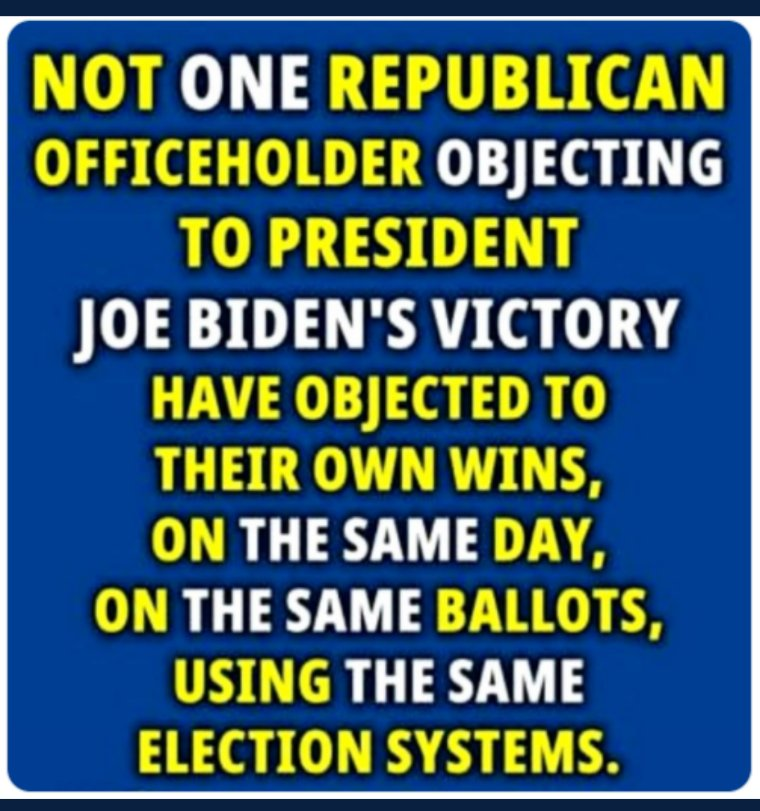

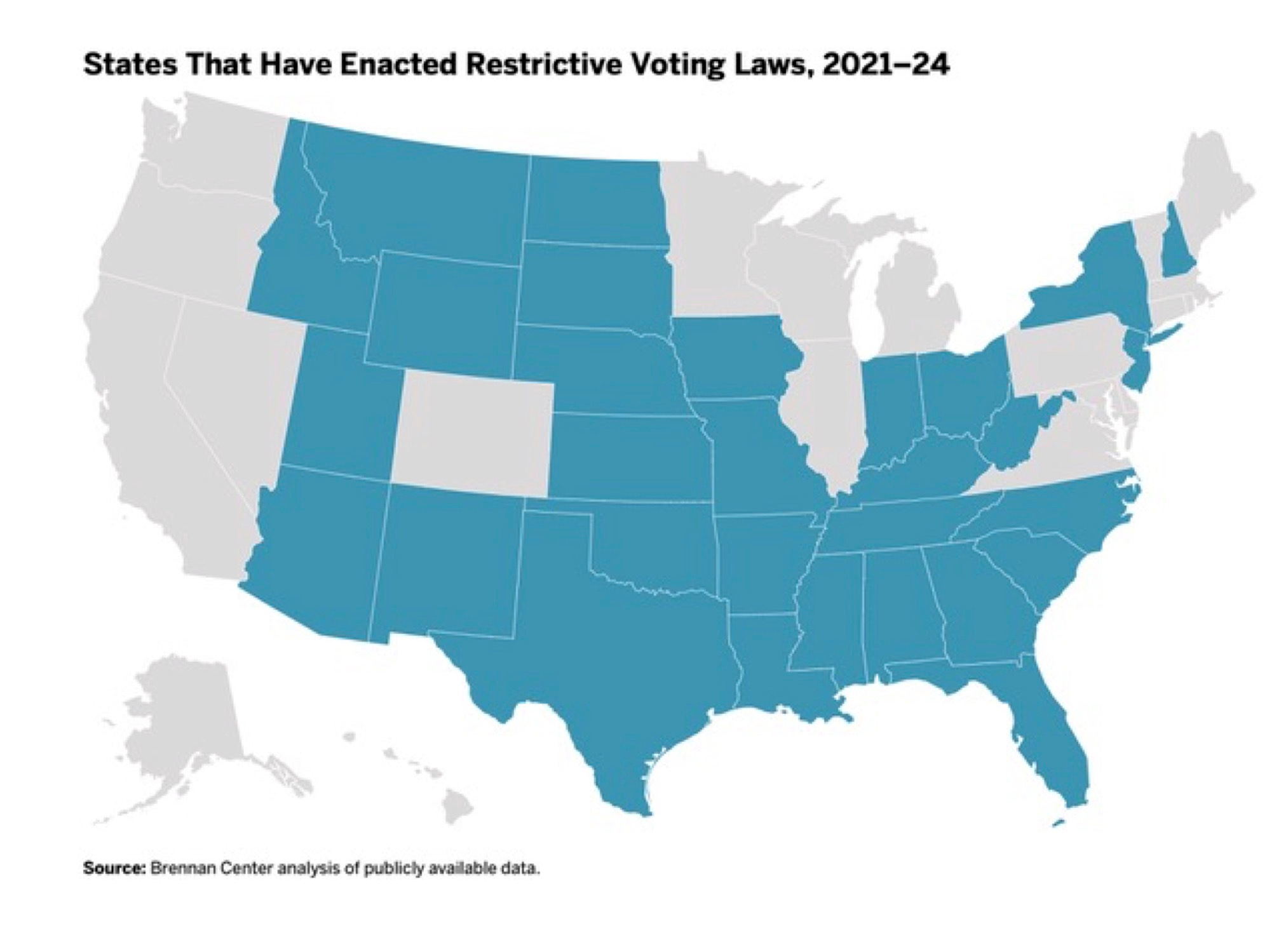
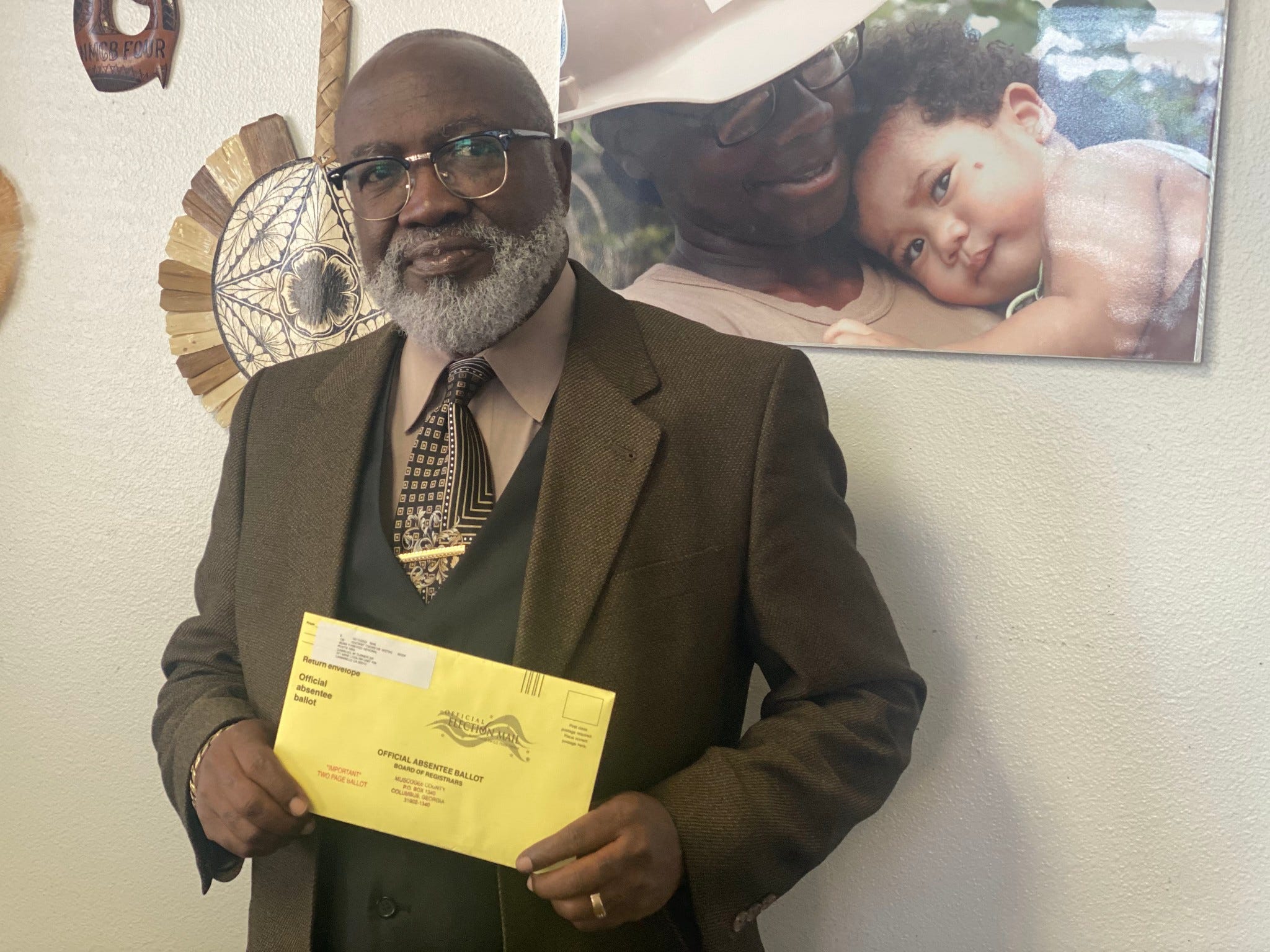








 NBC News
 fshiels