From The Pew Research Center: Americans Weigh In on Foreign Conflicts
Odesa Technical College in Odesa, Ukraine, damaged in a nighttime Russian drone attack on Feb. 8. (Nina Liashonok/Ukrinform/Future Publishing via Getty Images)
Two years on from Russia’s invasion of Ukraine, 74% of Americans view the war there as important to U.S. national interests – with 43% describing it as very important.
Similar shares see the war between Israel and Hamas (75%) and tensions between China and Taiwan (75%) as important to U.S. national interests, according to a Pew Research Center survey conducted Jan. 22-28.
How we did this
When asked how important each conflict is to them personally, 59% of Americans say the war between Russia and Ukraine is important to them.
This is similar to the share who say tensions between China and Taiwan (57%) are important to them personally. But it is lower than the share who see the Israel-Hamas war as personally important (65%).
Roughly a third of Americans describe the Israel-Hamas war as very important to them personally, compared with around a quarter for the other two conflicts we asked about.
Differences by party
Democrats and Democratic-leaning independents are more likely than Republicans and Republican leaners to see the Russia-Ukraine war as important to U.S. national interests (81% vs. 69%).
However, Democrats and Republicans are about equally likely to see the Israel-Hamas war (76% vs. 77%) and China-Taiwan tensions (76% vs. 78%) as important to U.S. interests.
Americans at the ideological poles – that is, conservative Republicans and liberal Democrats – are more likely than their more moderate counterparts in each party to view both the Israel-Hamas war and China-Taiwan tensions as important to U.S. interests.
When it comes to the importance of each conflict to them personally, Democrats are more likely than Republicans to say the Russia-Ukraine war is important to them (65% vs. 56%), while Republicans are more likely than Democrats to say this about China-Taiwan tensions (62% vs. 56%). Roughly equal shares of Democrats (67%) and Republicans (66%) say the Israel-Hamas war is personally important to them.
For all three conflicts we asked about, the oldest Americans are more likely than younger Americans to perceive them as important to both U.S. national interests and to them personally.
However, even among U.S. adults under 30, a majority (58%) see the Israel-Hamas war as personally important. This is not the case for the Russia-Ukraine war or for the ongoing tensions between China and Taiwan.
Traders work on the floor of the New York Stock Exchange (NYSE) on January 19, 2024 in New York City. Stocks closed up over 350 points while the S&P 500 closed at an all-time high on Friday.
Spencer Platt | Getty Images
Stocks rose Monday as investors built on the previous session’s historic move to record highs.
The Dow Jones Industrial Average climbed 138.01 points, or 0.36%, to finish at 38,001.81. Monday’s gains pushed the blue-chip average to a new record and above the 38,000 level for the first time. The S&P 500 added 0.22% to 4,850.43, also reaching a fresh all-time high. The Nasdaq Composite advanced 0.32% to 15,360.29.
Archer-Daniels-Midland plunged more than 24% after issuing weak earnings guidance and placing CFO Vikram Luthar on leave amid an investigation tied to accounting practices. B Riley Financial slipped around 2.5% after Bloomberg reported that regulators are investigating deals with a client connected to securities fraud.
Monday’s gains come after the broad S&P 500 on Friday broke above its intraday and closing record highs set in January 2022. The move signaled that Wall Street is indeed in a bull run that began in October 2022 after stocks plunged earlier that year.
“It’s almost like a fear of missing out,” said Brian Price, head of investment management at Commonwealth Financial. “We had a little bit of volatility to start the year as investors maybe rebalance portfolios and look to realize some gains. But now, it just seems like we’re resuming the trend that was clearly in place” in the fourth quarter.
Key question for this article: SHOULD PUTIN ACCEPT A NEGOTIATED SOLUTION IN UKRAINE, WOULD HIS NEED TO “DECLARE VICTORY” BE ACCEPTED ZELENSKY (Symbolic Victory with little loss of Ukrainian territory in reality)~ Blog Editor FLS
Despite its bravado in public, the Kremlin has indicated its interest in striking a deal to halt the war — so long as it could still declare victory.
President Vladimir V. Putin of Russia speaking at a rally in February at Luzhniki Stadium in Moscow.Credit…Nanna Heitmann for The New York Times
President Vladimir V. Putin’s confidence seems to know no bounds.
Buoyed by Ukraine’s failed counteroffensive and flagging Western support, Mr. Putin says that Russia’s war goals have not changed. Addressing his generals on Tuesday, he boasted that Ukraine was so beleaguered that Russia’s invading troops were doing “what we want.”
“We won’t give up what’s ours,” he pledged, adding dismissively, “If they want to negotiate, let them negotiate.”
But in a recent push of back-channel diplomacy, Mr. Putin has been sending a different message: He is ready to make a deal.
Mr. Putin has been signaling through intermediaries since at least September that he is open to a cease-fire that freezes the fighting along the current lines, far short of his ambitions to dominate Ukraine, two former senior Russian officials close to the Kremlin and American and international officials who have received the message from Mr. Putin’s envoys say.
In fact, Mr. Putin also sent out feelers for a cease-fire deal a year earlier, in the fall of 2022, according to American officials. That quiet overture, not previously reported, came after Ukraine routed Russia’s army in the country’s northeast. Mr. Putin indicated that he was satisfied with Russia’s captured territory and ready for an armistice, they said.
Ukrainian soldiers atop an armored vehicle last year in Ukraine’s northeastern Kharkiv region. Credit…Finbarr O’Reilly for The New York TimesThe bodies of Russian soldiers outside Lyman, Ukraine, in October 2022 after a railroad hub was retaken by Ukrainian forces.Credit…Nicole Tung for The New York Times
Mr. Putin’s repeated interest in a cease-fire is an example of how opportunism and improvisation have defined his approach to the war behind closed doors. Dozens of interviews with Russians who have long known him and with international officials with insight into the Kremlin’s inner workings show a leader maneuvering to reduce risks and keep his options open in a war that has lasted longer than he expected. While deploying fiery public rhetoric, Mr. Putin privately telegraphs a desire to declare victory and move on.
“They say, ‘We are ready to have negotiations on a cease-fire,’” said one senior international official who met with top Russian officials this fall. “They want to stay where they are on the battlefield.”
There is no evidence that Ukraine’s leaders, who have pledged to retake all their territory, will accept such a deal. Some American officials say it could be a familiar Kremlin attempt at misdirection and does not reflect genuine willingness by Mr. Putin to compromise. The former Russian officials add that Mr. Putin could well change his mind again if Russian forces gain momentum.
In the past 16 months, Mr. Putin swallowed multiple humiliations — embarrassing retreats, a once-friendly warlord’s mutiny — before he arrived at his current state of relaxed confidence. All along, he waged a war that has killed or maimed hundreds of thousands while exhibiting contradictions that have become hallmarks of his rule.
While obsessed with Russia’s battlefield performance and what he sees as his historic mission to retake “original Russian lands,” he has been keen for most Russians to go on with normal life. While readying Russia for years of war, he is quietly trying to make it clear that he is ready to end it.
“He really is willing to stop at the current positions,” one of the former senior Russian officials told The New York Times, relaying a message he said the Kremlin was quietly sending. The former official added, “He’s not willing to retreat one meter.”
Passengers waiting for delayed flights in August in Moscow. The airspace had been closed that morning because of drone strikes.Credit…Nanna Heitmann for The New York TimesA damaged skyscraper in a Moscow business district after a reported drone attack in August.Credit…Nanna Heitmann for The New York Times
Mr. Putin, the current and former officials said, sees a confluence of factors creating an opportune moment for a deal: a battlefield that seems stuck in a stalemate, the fallout over Ukraine’s disappointing offensive, its flagging support in the West, and, since October, the distraction of the war in Gaza. The officials spoke on the condition of anonymity, like others interviewed for this article, because of the sensitive nature of the back-channel overtures.
Responding to written questions after declining an interview request, Mr. Putin’s spokesman, Dmitri S. Peskov, said in a voice message that “сonceptually, these theses you presented, they are incorrect.” Asked whether Russia was ready for a cease-fire at the current battle lines, he pointed to the president’s recent comments; Mr. Putin said this month that Russia’s war goals had not changed.
“Putin is, indeed, ready for talks, and he has said so,” Mr. Peskov said. “Russia continues to be ready, but exclusively for the achievement of its own goals.”
Ukraine has been rallying support for its own peace formula, which requires Moscow to surrender all captured Ukrainian territory and pay damages. President Volodymyr Zelensky said Tuesday that he saw no sign that Russia wanted to negotiate.
“We just see brazen willingness to kill,” he said.
Early Talks
Mr. Putin first explored peace talks in the early weeks of the war, but they fell apart after Russia’s atrocities in Ukraine came to light. Then, in the fall of 2022, after Russia’s embarrassing retreat from northeastern Ukraine, Mr. Putin again sent messages to Kyiv and the West that he would be open to a deal to freeze the fighting, American officials say.
Some of Ukraine’s supporters, like Gen. Mark A. Milley, then the chairman of the Joint Chiefs of Staff, encouraged Kyiv to negotiate because Ukraine had achieved as much on the battlefield as it could reasonably expect. But other top American officials believed it was too soon for talks. And Mr. Zelensky vowed to fight on until the entire country had been freed from Russia’s grasp.
By early 2023, gloom had settled over Moscow. On eastern Ukraine’s frozen plains, much of Russia’s prewar professional force had been decimated, leaving poorly trained draftees and convicts recruited from prisons to be gunned down in haphazardly planned infantry storms.
Mr. Putin said little in public about the war, stoking questions about his plans and motivations. In private, though, Mr. Putin embraced his role as commander in chief with an almost messianic determination during these months, the people close to the Kremlin contend. One said last February that the president held two videoconferences a day with military officials who briefed him on the minutiae of movements on the battlefield.
The funeral for Garipul S. Kadyrov, a Russian soldier who was killed while fighting in Ukraine, last month in the village of Ovsyanka, Russia.Credit…Nanna Heitmann for The New York TimesRecruitment advertising for the Russian Army featuring the slogan, “People are not born heroes — they are self-made,” in May in Ivolginsk, Russia.Credit…Nanna Heitmann for The New York Times
The war was “impossible to stop,” the person said, describing a conversation with a top Russian military official, because Mr. Putin “remains consumed by all this.”
“People want to tell him only good news, and there’s not much of that,” the person said. “So you have to lie.”
Sergei K. Shoigu, the Russian defense minister, made clear in a private meeting earlier this year that, despite his setbacks, Mr. Putin was determined to keep fighting. According to the senior international official, who was present, Mr. Shoigu gave statistics showing Russia’s advantage in tanks and warplanes and its plans to increase defense production. He boasted that Russia could mobilize as many as 25 million men, the official recalled.
“For Putin, it’s about Russia versus the U.S. and the West,” the official said after the meeting. “Putin can’t afford to back down.”
Turning Points
As Ukraine launched its long-anticipated counteroffensive in June, Mr. Putin appeared tense, anxious for battlefield updates, people close to the Kremlin said. In public, Mr. Putin became a live commentator of the fight, eager to claim incremental successes.
“The enemy is trying to attack,” Mr. Putin said onstage at his marquee St. Petersburg International Economic Forum on June 16, describing a battle happening “right now.” “I think the armed forces of Ukraine have no chance.”
The same day, a delegation of African leaders arrived in Kyiv hoping to broker peace. At one point, Ukrainian officials rushed them into a shelter, warning of an attack. The next day, in St. Petersburg, President Cyril Ramaphosa of South Africa asked Mr. Putin whether he had really bombed the Ukrainian capital while the African leaders were there.
“Yes, I did,” Mr. Putin responded, according to two people close to Mr. Ramaphosa, “but I made sure it was very far from where you were.”
He still tried to play the gracious host, taking the leaders on a dinner cruise. A member of the African delegation said Mr. Putin seemed interested in preparing a channel for future talks.
“It’s not that I want to negotiate,” the person said, describing Mr. Putin’s stance. “But I need to have ready, when the time will come, a very well-conceived, intelligent, capable channel of negotiations.”
The body of a Russian soldier in July in the Zaporizhzhia region, where Ukraine was waging a counteroffensive.Credit…Tyler Hicks/The New York TimesPart of a delegation of African leaders to Kyiv, Ukraine, in June visited an exhibition of destroyed Russian military equipment.Credit…Brendan Hoffman for The New York Times
A week later, the mercenary warlord Yevgeny V. Prigozhin launched his failed mutiny.
After Mr. Prigozhin accepted a deal to retreat to Belarus, Mr. Putin proceeded to spin what seemed to be one of the most humiliating moments of his 24 years in power into a victory. He declared in a lavish Kremlin ceremony that the failure of the rebellion demonstrated the strength of the Russian state. It offered a hint of what Mr. Putin might do if he fell short of his original goals in Ukraine: declare victory and move on.
The Kremlin’s analysis appeared to be that public support for the war was broad, but not deep — meaning that most would accept whatever Mr. Putin termed a victory. One of the government’s pollsters, Valery Fyodorov, said in a September newspaper interview that only 10 to 15 percent of Russians actively supported the war, and that “most Russians are not demanding the conquest of Kyiv or Odesa.”
By the end of the summer, events were shifting in Mr. Putin’s favor. Mr. Prigozhin’s death in a plane crash, widely seen as the Kremlin’s doing, eliminated his most dangerous domestic foe. On the battlefield, Russia already appeared to be successful in repelling Ukraine’s counteroffensive.
Mr. Putin and his government exuded stability and confidence. The president continued to go for his morning swims, several people with knowledge of his schedule said. Top Kremlin officials had gone back to taking vacations.
“They’ve calmed down already,” Prime Minister Akylbek Zhaparov of Kyrgyzstan said in an interview in October, referring to the surprise and worry among many Russian officials and the elite when Mr. Putin invaded Ukraine last year. After first seeing Mr. Putin’s war as a “catastrophe,” he added, “they’ve now gotten used to it.”
Kremlin Confidence
On a Saturday in October, Mr. Putin marked his 71st birthday with the leaders of Uzbekistan and Kazakhstan, two Central Asian countries that have tried to take a neutral stance in the war. When they arrived at his suburban Moscow residence, Mr. Putin got behind the wheel of a new Russian-made limo, showing off one of the ways in which, in the Kremlin’s telling, Russia is becoming more self-sufficient.
Once indoors, the three leaders spoke about a plan to sell Russian gas to Uzbekistan. A person present recalled Mr. Putin’s calm confidence and relaxed body language.
“He doesn’t look like a man who’s waging war,” the person said.
A photograph released by Russian state media of President Vladimir V. Putin of Russia and President Shavkat M. Mirziyoyev of Uzbekistan in October near Moscow.Credit…Vyacheslav Prokofyev/Sputnik, via Associated PressPolice officers stood guard at the Porohovsky cemetery in St. Petersburg in August after it was announced that Yevgeny V. Prigozhin, the mercenary warlord, had been buried there.Credit…Nanna Heitmann for The New York Times
Only after a birthday lunch did they grasp the full significance of events elsewhere. It was Oct. 7.
The terrorist attack by Hamas that day — and Israel’s fierce military response — proved to be a propaganda boon for Russia, pulling attention away from Ukraine and allowing Mr. Putin to line up with much of the world in condemning the bombardment of Gaza and American support for Israel.
“He sees that the attention of the West is turning away,” said Balazs Orban, an aide to Prime Minister Viktor Orban who participated in the Hungarian leader’s meeting with Mr. Putin in October.
In late October, Grigory A. Yavlinsky, a liberal Russian politician, waited past midnight for an audience at the Kremlin. He said he tried to impress upon Mr. Putin the scale of the Russian deaths in Ukraine, which dwarfed Soviet losses over a decade of war in Afghanistan.
Then Mr. Yavlinsky made what he said was his central pitch in the 90-minute meeting: If Mr. Putin were prepared “at least to think about a cease-fire,” Mr. Yavlinsky, who was born in western Ukraine, would be ready to act as a negotiator.
“The fact that he agreed to talk to me for so long speaks for itself,” he said.
Cease-Fire Opening
Since at least September, Western officials have been picking up renewed signals that Mr. Putin is interested in a cease-fire.
The signals come through multiple channels, including via foreign governments with ties to both the United States and Russia. Unofficial Russian emissaries have spoken to interlocutors about the contours of a potential deal that Mr. Putin would accept, American officials and others said.
“Putin and the Russian army, they don’t want to stretch their capacity further,” said the international official who met with top Russian officials this fall.
Mr. Putin has also made vague public comments about being open to negotiations, which have largely been dismissed by Western commentators.
Some analysts argue that Mr. Putin benefits from a long war, and that he wants to delay any negotiation until a possible return to office by former President Donald J. Trump, the front-runner for the Republican presidential nomination in 2024. The former Russian officials said that Mr. Putin would prefer to strike a deal sooner, given the uncertainty inherent in war.
They said that Mr. Putin’s propaganda could easily spin the status quo as a victory, celebrating a land corridor to Crimea, an army that withstood Ukraine’s Western-supplied counteroffensive and Russia’s claimed annexation of four Ukrainian regions — papering over the fact that Russia doesn’t fully control them.
Ukrainian soldiers with the 22nd Mechanized Brigade firing at Russian positions in the direction of Bakhmut, in eastern Ukraine, last month. The front line has remained largely static over the past year.Credit…Tyler Hicks/The New York TimesA Ukrainian soldier who was severely injured on the front line in Avdiivka, in the Donetsk region of Ukraine, in November.Credit…Tyler Hicks/The New York Times
The ideal timing, one of the people said, would be before Russia’s presidential election in March. Mr. Putin is certain to secure another six-year term, but he cares deeply about the election as a marker of his domestic support.
Publicly, Mr. Putin has stuck to his aggressive stance, saying he is resisting a West seeking to destroy a 1,000-year-old Russian civilization.
But American officials see a shift in Mr. Putin’s position, noting that he is no longer demanding the departure of Mr. Zelensky’s government. They said that the cease-fire being floated by Mr. Putin would maintain a sovereign Ukraine with Kyiv as its capital, but leave Russia in control of the nearly 20 percent of Ukrainian territory it has already conquered. They added that while Mr. Putin is telegraphing that he is open to such a deal, he is waiting to be brought a more specific offer.
Among the many likely sticking points is Mr. Putin’s determination to keep Ukraine out of NATO. But one of the former Russian officials said a disagreement on that score would not be a deal breaker for Mr. Putin, because the alliance is not expected to admit Ukraine in the foreseeable future.
Still, senior American officials said they did not believe that any prominent Ukrainian politician could agree at this time to a deal leaving Russia with so much Ukrainian territory.
Russian conscripts in the Moscow region last year.Credit…Nanna Heitmann for The New York TimesA tour of the Victory Museum, a museum dedicated to the Great Patriotic War, in Moscow. Mr. Putin sees the current war as part of a historic Russian struggle against a West seeking to destroy a 1,000-year-old Russian civilization.Credit…Nanna Heitmann for The New York Times.
Another potential impasse stems from Mr. Putin’s efforts to put the United States at the center of any negotiations.
The U.S. and Russian governments have channels for communications on issues that include prisoner swaps. But William J. Burns, the director of the Central Intelligence Agency, and Sergei Naryshkin, the director of Russia’s foreign intelligence service, last met about a year ago in Turkey, officials said. And U.S. officials say the United States has not and will not negotiate on behalf of Ukraine.
American officials argue that regardless of Mr. Putin’s overture, Ukraine must demonstrate its staying power, and the United States must show it is willing to support Ukraine to puncture Mr. Putin’s confidence that time is on his side and to force concessions in any negotiations.
Many in the West are skeptical of a cease-fire because they say Mr. Putin would rearm for a future assault. President Edgars Rinkevics of Latvia argued in an interview that Mr. Putin was committed to war because he dreams of “re-establishing the empire.”
“They never honored any agreements,” Mr. Rinkevics said of the Russians, “and they have violated them immediately when they saw it was convenient.”
A heavily damaged church last month in the village of Bohorodychne, in Ukraine’s Donetsk region.Credit…Emile Ducke for The New York Times
Reporting was contributed by Neil MacFarquhar, John Eligon, Declan Walsh, Andrew E. Kramer and Valerie Hopkins.
Adam Entous is a Washington-based investigative correspondent and a two-time Pulitzer Prize winner. Before joining the Washington bureau of The Times, he covered intelligence, national security and foreign policy for The New Yorker magazine, The Washington Post and The Wall Street Journal. More about Adam Entous
Julian E. Barnes covers the U.S. intelligence agencies and international security matters for The Times. He has written about security issues for more than two decades. More about Julian E. Barnes
A version of this article appears in print on Dec. 24, 2023, Section A, Page 1 of the New York edition with the headline: Putin Quietly Signals Openness to Ukraine Deal. Order Reprints | Today’s Paper | Subscribe
Guaranteed to stir up a hornets’ nest on the Right. Is Trump still a happy camper? Doubt it. But a man on a mission. America’s women will Take Him out. There are 100 men in their ’80s who are highly functional. Biden is one. He may be forgetful and occasionally stumble.
But the incumbent will be re-elected because he is not diagnosibly a narcissistic grandiose sociopath like his opponent. In better shape than Trump, Just look at DT’s belly for starters. And that haircut! You can see the baldness when the wind blows over it. Nothing wrong with bald, Just don’t hide it with a $500 gel comb-over.
A District of Columbia nonprofit that has filed numerous ethics complaints and launched in-depth investigations into former President Trump was a key player in the case that got him kicked off the Colorado ballot.
In a stunning decision, Colorado’s highest court ruled this week that Trump was disqualified from running for president in the state for his role in inciting the Jan. 6, 2021, riot at the U.S. Capitol that left five people dead, more than 100 Capitol Police officers injured and a nation divided.
Citizens for Responsibility and Ethics in Washington (CREW) was part of a bipartisan legal team that brought the case on behalf of six Republican and unaffiliated Colorado voters including Norma Anderson, the former Republican majority leader of the state House and Senate.
“My fellow plaintiffs and I brought this case to continue to protect the right to free and fair elections enshrined in our Constitution and to ensure Colorado Republican primary voters are only voting for eligible candidates. Today’s win does just that,” Anderson said in a statement issued by CREW.
CREW President Noah Bookbinder told The Hill that “we have drifted back towards normalizing what happened after the 2020 election, particularly on Jan. 6,” and he hopes the Colorado court’s decision will help ensure the “unprecedented attack on democracy not be allowed to be normalized.”
The Colorado Supreme Court disqualified Trump from appearing on the state’s 2024 primary ballot under the 14th Amendment of the U.S. Constitution, which bars people who “engaged in insurrection or rebellion” after taking the oath of office from holding certain positions.
“I think this decision shows that this is very much a living protection in the Constitution, and one that we need to use and can use and will use going forward,” Bookbinder, former chief counsel for the Senate Judiciary Committee, told The Hill.
The former president lashed out at the “TRUMP DERANGED ‘CREW’” on various social media platforms following the decision.
This isn’t the first time CREW has clashed with Trump, whom the organization described in a January 2018 report as as “the most unethical president in history.”
CREW previously sued Trump for refusing to divest from his business interests when he took office and filed ethics complaints against more than a dozen key Trump officials, including top aide Kellyanne Conway.
“We’re an organization that pushes for government ethics and reducing the influence of money in politics and really, you know, protecting our democratic form of government,” Bookbinder said. “I feel entirely justified in devoting a lot of energy to combating this unique threat.”
‘Unprecedented’ decision draws criticism from both sides
Many Republicans have attacked the Colorado Supreme Court’s decision as voter suppression, and some Democrats and left-leaning groups have been wary of the decision.
Rep. Lauren Boebert (R-Colo.) called the decision “extreme judicial activism that is designed to suppress the vote and voices of hundreds of thousands of Coloradans, which is absolutely unacceptable.”
House Speaker Mike Johnson (R-La.) argued that voters “should not be denied the right to support our former president and the individual who is the leader in every poll of the Republican primary.” Trump has consistently led in GOP presidential primary polls, clocking a 52.9 percent lead over his closest opponent, Florida Gov. Ron DeSantis, according to the latest The Hill/Decision Desk HQ polling average.
Even former New Jersey Gov. Chris Christie, a GOP presidential primary candidate who has criticized the former president for his actions Jan. 6, said it would be “bad for the country” if a court kept Trump off the ballot.
Rep. Dean Phillips (D-Minn.), who is challenging President Biden for the 2024 Democratic nomination, wrote on X, formerly known as Twitter, that even though he believes Trump is guilty of “inspiring an insurrection and doing nothing to stop it,” it is “absolutely” wrong to bar Trump from the Colorado ballot.
Bookbinder disagrees.
“The Constitution sets out the rules for our democracy,” Bookbinder argued, adding that not engaging in an insurrection after taking an oath is just as much a qualification as being at least 35 years old and a natural-born citizen.
“It is unprecedented,” Bookbinder said. “We’ve never seen anything like that before in this country and so it kind of makes sense that the legal responses to it are going to be things you haven’t seen very often.”
A ‘very unique threat’ to democracy
For more than two decades, CREW has leveraged legal action and investigations to hold elected officials they say use their power for personal gain or to advance special interests accountable.
CREW, which describes itself as a nonpartisan nonprofit, has gone after both Republican and Democratic officials in the past.
The organization recently called on Sen. Bob Menendez (D-N.J.) to resign after federal prosecutors accused him of a bribery scheme to use his political influence to benefit the Egyptian government, allegations the senator has denied.
The organization also filed a complaint against then-Biden White House press secretary Jen Psaki for violating the Hatch Act after she endorsed Virginia gubernatorial candidate Terry McAuliffe from the briefing room podium, prompting an apology from Psaki.
But many of the group’s lawsuits and investigations are aimed at Republican lawmakers, officials and groups, with a particular focus on the former president’s alleged indiscretions.
Bookbinder pushed back on claims that the organization unfairly targets conservatives, saying, “I don’t think it is a partisan exercise to particularly respond to this very unique threat to our democracy.”
CREW’s board includes several former Democratic officials, including former Clinton White House counsel Beth Nolan and former Sen. Claire McCaskill (D-Mo.), as well as former GOP Rep. Claudine Schneider (R.I.). Other Republicans, including former Rep. Mickey Edwards (Okla.), have sat on the board in recent years.
Bookbinder also said the organization has worked with and continues to work with Republican members of Congress on legislation.
“There are plenty of I think good, ethical, democratic, democratically minded Republicans, just as there are Democrats. But right now that party is led by somebody — or appears to be in many ways led by somebody — who is quite open about being a threat to democracy,” he added, pointing to Trump’s comments that he would only be a dictator on his first day if reelected.
Case revives ‘constitutional protection,’ regardless of outcome
The Colorado high court stayed their decision until Jan. 4, 2024, the day before the deadline to file as a candidate in the state, to allow Trump to appeal before the U.S. Supreme Court.
The Trump campaign has said it plans to “swiftly file an appeal” to the Supreme Court and request “a stay of this deeply undemocratic decision.” The case faces a 6-3 conservative majority in the nation’s highest court that includes three Trump-nominated justices.
While much has been made of the partisan makeup of the court and how it could impact the case, Bookbinder told The Hill, “We are confident that we will get a fair hearing before the Supreme Court.”
“This is, in many ways, an issue that is tailored for this court,” Bookbinder said. This Supreme Court is perceived to be an “originalist and textualist” one, he added, an ideal audience for a 14th Amendment case.
“It’s important to note that the 14th Amendment does not say, as it could, convicted of an insurrection,” David Becker, executive director of the Election Official Legal Defense Network, said during a call with reporters Wednesday. “We take the drafters of the Constitution’s language at their word when it’s in there.”
Similar cases in Michigan, Minnesota and other states have thus far failed to remove Trump from the ballot. But this case has thrown a wrench into the Republican primary race with less than a month before other states start casting their ballots.
“On behalf of the American people, it would be better for all of us if this is resolved by the United States Supreme Court sooner rather than later,” Becker said.
Regardless of what happens, Bookbinder said he hopes the case “will help to define how people think about what happened going forward.”
“I think in some ways, regardless of how it goes, this revitalizes that constitutional protection and it’s one that I hope we don’t need to use for another 150 years,” Bookbinder said. “But we know it’s there, it’s alive and it can be used if the republic needs it.”
INTERESTING BUT COMPLETELY BONE-HEADED ON THE 1951 UNBEATABLE “SCROOGE” (DICKENS CHRISTMAS CAROL MOVIE). AT LEAST 10 VERSIONS OF THIS STORY HAVE BEEN MADE INTO MOVIES, BUT NONE COMES CLOSE TO ALISTAIR SIM IN THE 1951 FILM.
An Actual Ghost Story(RGR Collection / Alamy) View in browserChristmas, no matter what your religious beliefs, is a wonderful time to cherish our friends and family but also, in the season’s spirit of reconciliation, to recognize and embrace our common humanity with people everywhere. In the approaching depths of winter, we can recommit to kindness, peace, and joy. That’s why I would like to take this opportunity, right before the holiday, to make you all mad one more time with one of my cultural takes.There are some good adaptations of the Charles Dickens’ classic A Christmas Carol, and many bad ones, but only one truly great version, and it is the 1984 made-for-television movie starring George C. Scott.Wait. Hear me out.I know that many people are intensely loyal to the 1951 version (titled A Christmas Carol in the United States, and released in the U.K. as Scrooge), starring Alastair Sim. I understand why. It’s charming, in its way, but it is also enduring because so many of us grew up with it. For a time, it was like It’s a Wonderful Life, the black-and-white wallpaper always there in the background after Thanksgiving. And Sim is wonderful: He was only 50 when he filmed Scrooge but he looks much older; his Scrooge is so deformed by sin that his transformation later in the story is almost a physical change, wondrous and giddy.But for me, too much of Scrooge is formal and stagey.And let’s not even talk about the other versions from the 1930s, or the Muppets, or Bill Murray, or the cartoons, or the more arty takes. Some of them are truly awful. (I’m looking at you, Guy Pearce.)When I first saw the Scott version, however, I loved the tighter connection to the book, and especially the attention to detail and atmosphere. No, it doesn’t really snow that much in London, but the 1984 version is so evocative that you can almost smell Scrooge’s musty bedroom, the happy stink of the open-air butchers and fishmongers, and the scrawny goose roasting in Mrs. Cratchit’s tiny kitchen.Most important, just as Sim carried Scrooge, this version is Scott’s movie, despite the outstanding actors around him. Scott was an American, and his British accent slips now and then—I always wince when he tries to get his tongue around “I wonder you don’t go into Parl-ya-ment”—but years of hard living gave him a face, a voice, and a stare that no other Scrooge could match.And yes, he was fat. Scrooge, in most other iterations, is a scrawny geezer who doesn’t eat much or drink or “make merry” at Christmas. But Scott’s Scrooge is a barrel-chested bully, an imposing and nasty piece of work. He’s not particularly disciplined or monkish; he’s just a corpulent old bastard who can’t remember that he was once a human being.Then there are the ghosts. They’re deeply unsettling apparitions, which makes Scott’s version a bit more PG-13 than most of the other adaptations.Frank Finlay’s Marley, in particular, is not some old pal coming to issue a friendly warning. Marley is a damned soul, wailing and doomed. He’s a rotting corpse, for crying out loud. Angela Pleasence is a radiant and annoying Ghost of Christmas Past. At first, I found her off-putting, and then I realized: She’s supposed to be annoying. She’s not guiding Scrooge on a nostalgia tour of his youth; she’s taking acidic delight in showing Scrooge what a jerk he’s become. Every Scrooge loses his temper at these “pictures from the past,” but Scott’s anger seems especially justified as Pleasence smirks at him.Edward Woodward, however, steals every scene he’s in as the Ghost of Christmas Present. Instead of some phantasmic simp gently reminding Scrooge of the need for Christian charity, Woodward is a striding giant, a knight of Christmas whose mirth barely conceals his moral rage. When observing Bob Cratchit’s family doting on Tiny Tim, he snarls to Scrooge: “It may well be that, in the sight of heaven, you are more worthless and less fit to live than millions like this poor man’s child!” Woodward delivers it not as a rebuke but as a threat, and that moment still sends a chill through me.I also have a very personal reason for loving Scott’s version more than any other.My father was, if not a Scrooge, something of a Grinch, as my mother called him every year. He growled about how Christmas was a giant, expensive pain in the ass. But my dad was a churchgoing Christian, and he harbored a secret love for the holiday. Despite his bah-humbug approach, he insisted on a real tree every year, leaving the decorating to me and my mother. He wrapped his own presents, if you can count “rolling them through paper and tape” as “wrapping.” He and I would go to Christmas Eve services (in Greek Orthodox churches, they’re usually in the late afternoon or early evening) every year while my mother prepared dinner.But my father was also a very difficult man, and my parents had an extremely volatile marriage. Like many men, my father carried his share of sins and secrets. And like most men of his generation, he did not often speak of them. Some, I know, weighed on him to the very end of his life.So I was surprised when, one night in the mid-1980s, he joined us to watch A Christmas Carol.We sat in our dark living room with a small fire and no light but the blinking tree. He was chatty and seemed to enjoy it, but he became very quiet toward the end, when Scrooge realizes that at a not-so-distant future Christmas, he is dead and no one cares. Alone in the darkness and the snow, Scott pleads for mercy not like some accomplished thespian in the scene of his life but like an old man at the edge of the abyss, one who now fully understands how his own actions brought him to a desolate end.I looked over at my parents. My mom was holding my father’s hand. And my father, quiet in the dark, had tears on his cheeks.Until that moment, I could count on one hand the number of times I’d seen my father cry, including at his mother’s funeral—and certainly never at a movie. Scott got to him, perhaps because Scott’s Scrooge was a man my father could understand: loud, tough, and full of anger and regret, rather than the effete, pinched-face slip of a fellow played by Sim and others.In later life, I sometimes feel the same tears welling in my eyes when Scott pleads for one more chance. These tears are not only for my father, who struggled with his own burdens to the end of his life, but for myself as well. It’s easy to hate Scrooge when you’re young and think you have plenty of time to straighten yourself out. When you’re older, you start to wonder how much time you’ve let get by you, and whether you and the elderly miser have more in common than you might like to admit.Scott’s A Christmas Carol isn’t perfect; it has some especially cringeworthy and twee moments with Tiny Tim. But this isn’t Tim’s story. It’s about looking into the grave and realizing that on Christmas—or any day, really—it is always within our power to change our heart and to become, like Scrooge, “as good a friend, as good a master, and as good a man as the good old city knew.”To borrow another line from Dickens: May that be truly said of all of us.Merry Christmas. See you next week.Related:We need a little Christmas (music).The most beloved Christmas specials are (almost) all terrible.
Today’s NewsHamas leader Ismail Haniyeh arrived in Egypt for talks with Egyptian officials about a possible new cease-fire in Gaza and hostage swaps.After three years of negotiations, the European Union reached a provisional agreement to overhaul its asylum and migration laws. Pending ratification, the pact aims to make it easier to limit the entry of migrants while still protecting the right to asylum, according to EU officials.The World Health Organization designated the new JN.1 coronavirus strain as a “variant of interest” yesterday because of its “rapidly increasing” spread.
Evening Read(Pablo Delcan) My Father, My Faith, and Donald TrumpBY TIM ALBERTAIt was July 29, 2019—the worst day of my life, though I didn’t know that quite yet.The traffic in downtown Washington, D.C., was inching along. The mid-Atlantic humidity was sweating through the windows of my chauffeured car. I was running late and fighting to stay awake. For two weeks, I’d been sprinting between television and radio studios up and down the East Coast, promoting my new book on the collapse of the post–George W. Bush Republican Party and the ascent of Donald Trump. Now I had one final interview for the day …All in a blur, the producers took my cellphone, mic’d me up, and shoved me onto the set with the news anchor John Jessup. Camera rolling, Jessup skipped past the small talk. He was keen to know, given his audience, what I had learned about the president’s alliance with America’s white evangelicals … Polling showed that born-again Christian conservatives, once the president’s softest backers, were now his most unflinching advocates. Jessup had the same question as millions of other Americans: Why?Read the full article.
Culture Break(Apple TV+) Watch.Slow Horses (streaming on Apple TV+) features an island of misfit spies with a subversive worldview.Read. These seven books actually capture what sickness is like, by avoiding simple narratives and exploring the textures of human life.Play our daily crossword.
Did someone forward you this email? Sign up here.Katherine Hu contributed to this newsletter.Explore all of our newsletters here.When you buy a book using a link in this newsletter, we receive a commission. Thank you for supporting The Atlantic.
Stories that keep the conversation flowing. And a free tote.* This holiday, treat your loved ones to the perfect gift for the year to come: unlimited access to Atlantic journalism, including insightful election coverage, poignant personal essays, and moments of wonder and inspiration. A gift subscription also includes exclusive benefits at live events, the Atlantic mobile app, and our limited-time tote bag. Give a year of ideas to discuss and debate, for a gift that gets them talking.Give The Atlantic
View in browser Christmas, no matter what your religious beliefs, is a wonderful time to cherish our friends and family but also, in the season’s spirit of reconciliation, to recognize and embrace our common humanity with people everywhere. In the approaching depths of winter, we can recommit to kindness, peace, and joy. That’s why I would like to take this opportunity, right before the holiday, to make you all mad one more time with one of my cultural takes. There are some good adaptations of the Charles Dickens’ classic A Christmas Carol, and many bad ones, but only one truly great version, and it is the 1984 made-for-television movie starring George C. Scott. Wait. Hear me out. I know that many people are intensely loyal to the 1951 version (titled A Christmas Carol in the United States, and released in the U.K. as Scrooge), starring Alastair Sim. I understand why. It’s charming, in its way, but it is also enduring because so many of us grew up with it. For a time, it was like It’s a Wonderful Life, the black-and-white wallpaper always there in the background after Thanksgiving. And Sim is wonderful: He was only 50 when he filmed Scrooge but he looks much older; his Scrooge is so deformed by sin that his transformation later in the story is almost a physical change, wondrous and giddy. But for me, too much of Scrooge is formal and stagey.And let’s not even talk about the other versions from the 1930s, or the Muppets, or Bill Murray, or the cartoons, or the more arty takes. Some of them are truly awful. (I’m looking at you, Guy Pearce.) When I first saw the Scott version, however, I loved the tighter connection to the book, and especially the attention to detail and atmosphere. No, it doesn’t really snow that much in London, but the 1984 version is so evocative that you can almost smell Scrooge’s musty bedroom, the happy stink of the open-air butchers and fishmongers, and the scrawny goose roasting in Mrs. Cratchit’s tiny kitchen. Most important, just as Sim carried Scrooge, this version is Scott’s movie, despite the outstanding actors around him. Scott was an American, and his British accent slips now and then—I always wince when he tries to get his tongue around “I wonder you don’t go into Parl-ya-ment”—but years of hard living gave him a face, a voice, and a stare that no other Scrooge could match. And yes, he was fat. Scrooge, in most other iterations, is a scrawny geezer who doesn’t eat much or drink or “make merry” at Christmas. But Scott’s Scrooge is a barrel-chested bully, an imposing and nasty piece of work. He’s not particularly disciplined or monkish; he’s just a corpulent old bastard who can’t remember that he was once a human being. Then there are the ghosts. They’re deeply unsettling apparitions, which makes Scott’s version a bit more PG-13 than most of the other adaptations. Frank Finlay’s Marley, in particular, is not some old pal coming to issue a friendly warning. Marley is a damned soul, wailing and doomed. He’s a rotting corpse, for crying out loud. Angela Pleasence is a radiant and annoying Ghost of Christmas Past. At first, I found her off-putting, and then I realized: She’s supposed to be annoying. She’s not guiding Scrooge on a nostalgia tour of his youth; she’s taking acidic delight in showing Scrooge what a jerk he’s become. Every Scrooge loses his temper at these “pictures from the past,” but Scott’s anger seems especially justified as Pleasence smirks at him. Edward Woodward, however, steals every scene he’s in as the Ghost of Christmas Present. Instead of some phantasmic simp gently reminding Scrooge of the need for Christian charity, Woodward is a striding giant, a knight of Christmas whose mirth barely conceals his moral rage. When observing Bob Cratchit’s family doting on Tiny Tim, he snarls to Scrooge: “It may well be that, in the sight of heaven, you are more worthless and less fit to live than millions like this poor man’s child!” Woodward delivers it not as a rebuke but as a threat, and that moment still sends a chill through me. I also have a very personal reason for loving Scott’s version more than any other. My father was, if not a Scrooge, something of a Grinch, as my mother called him every year. He growled about how Christmas was a giant, expensive pain in the ass. But my dad was a churchgoing Christian, and he harbored a secret love for the holiday. Despite his bah-humbug approach, he insisted on a real tree every year, leaving the decorating to me and my mother. He wrapped his own presents, if you can count “rolling them through paper and tape” as “wrapping.” He and I would go to Christmas Eve services (in Greek Orthodox churches, they’re usually in the late afternoon or early evening) every year while my mother prepared dinner. But my father was also a very difficult man, and my parents had an extremely volatile marriage. Like many men, my father carried his share of sins and secrets. And like most men of his generation, he did not often speak of them. Some, I know, weighed on him to the very end of his life. So I was surprised when, one night in the mid-1980s, he joined us to watch A Christmas Carol.We sat in our dark living room with a small fire and no light but the blinking tree. He was chatty and seemed to enjoy it, but he became very quiet toward the end, when Scrooge realizes that at a not-so-distant future Christmas, he is dead and no one cares. Alone in the darkness and the snow, Scott pleads for mercy not like some accomplished thespian in the scene of his life but like an old man at the edge of the abyss, one who now fully understands how his own actions brought him to a desolate end. I looked over at my parents. My mom was holding my father’s hand. And my father, quiet in the dark, had tears on his cheeks. Until that moment, I could count on one hand the number of times I’d seen my father cry, including at his mother’s funeral—and certainly never at a movie. Scott got to him, perhaps because Scott’s Scrooge was a man my father could understand: loud, tough, and full of anger and regret, rather than the effete, pinched-face slip of a fellow played by Sim and others. In later life, I sometimes feel the same tears welling in my eyes when Scott pleads for one more chance. These tears are not only for my father, who struggled with his own burdens to the end of his life, but for myself as well. It’s easy to hate Scrooge when you’re young and think you have plenty of time to straighten yourself out. When you’re older, you start to wonder how much time you’ve let get by you, and whether you and the elderly miser have more in common than you might like to admit. Scott’s A Christmas Carol isn’t perfect; it has some especially cringeworthy and twee moments with Tiny Tim. But this isn’t Tim’s story. It’s about looking into the grave and realizing that on Christmas—or any day, really—it is always within our power to change our heart and to become, like Scrooge, “as good a friend, as good a master, and as good a man as the good old city knew.” To borrow another line from Dickens: May that be truly said of all of us. Merry Christmas. See you next week. Related: We need a little Christmas (music). The most beloved Christmas specials are (almost) all terrible.
Today’s News Hamas leader Ismail Haniyeh arrived in Egypt for talks with Egyptian officials about a possible new cease-fire in Gaza and hostage swaps. After three years of negotiations, the European Union reached a provisional agreement to overhaul its asylum and migration laws. Pending ratification, the pact aims to make it easier to limit the entry of migrants while still protecting the right to asylum, according to EU officials. The World Health Organization designated the new JN.1 coronavirus strain as a “variant of interest” yesterday because of its “rapidly increasing” spread. Evening Read (Pablo Delcan)
My Father, My Faith, and Donald Trump BY TIM ALBERTA It was July 29, 2019—the worst day of my life, though I didn’t know that quite yet. The traffic in downtown Washington, D.C., was inching along. The mid-Atlantic humidity was sweating through the windows of my chauffeured car. I was running late and fighting to stay awake. For two weeks, I’d been sprinting between television and radio studios up and down the East Coast, promoting my new book on the collapse of the post–George W. Bush Republican Party and the ascent of Donald Trump. Now I had one final interview for the day … All in a blur, the producers took my cellphone, mic’d me up, and shoved me onto the set with the news anchor John Jessup. Camera rolling, Jessup skipped past the small talk. He was keen to know, given his audience, what I had learned about the president’s alliance with America’s white evangelicals … Polling showed that born-again Christian conservatives, once the president’s softest backers, were now his most unflinching advocates. Jessup had the same question as millions of other Americans: Why? Read the full article.
Watch. Slow Horses (streaming on Apple TV+) features an island of misfit spies with a subversive worldview. Read. These seven books actually capture what sickness is like, by avoiding simple narratives and exploring the textures of human life. Play our daily crossword.
This holiday, treat your loved ones to the perfect gift for the year to come: unlimited access to Atlantic journalism, including insightful election coverage, poignant personal essays, and moments of wonder and inspiration. A gift subscription also includes exclusive benefits at live events, the Atlantic mobile app, and our limited-time tote bag. Give a year of ideas to discuss and debate, for a gift that gets them talking. Give The Atlantic
February 22, 2025)- You may post on this article This week if you have posted on the other topics The Battle of Russia film (+ any Monday post). There is also a thread for posting on the article Next week if you need more time.
Note: this may seem like a lot of reading, but there are 3 big pay-offs: 1. Something from this will be on the Midterm– also Week 8, 2. There is a discussion thread that will be double credit, 3. My vanity tells me you might want to read something written by your professor that reflects his early 2000’s research! Discussion thread moved to Week 8
I paste below my article WHY WE BOMB part of the Olson Grant I received in 2002. I hope this will stir up some controversy and that you can connect it to some of the issues in the chapter.. When you RESPOND to this article, I am providing this website link to the article so your comments on my article will not have the huge article underneath your post. Just read the article here and use this link and delete the pasted article in your comments message Week 6 or 7. The article is too large to include in your comments. Just use this link when you respond: https://progressivefutureusa.com/
NOTE: This post is a lot of reading, But: real appreciation and credit will be shown to students who get into their professor’s research, which has been presented in a number of countries. Also note, to minimize complication, it is better to read as much of the article as you can (if there is not time to read all of it) than not to read any of it!
========================
PROBLEMATIC ESSAY: “WHY WE BOMB” Frederick Shiels / Olson Project
[Advanced draft/2015]
Following many years of intense interest in the subject of the United States’ impact on Third World countries, the events of the first three years of the 21st Century prompted me to start a systematic study of civilian deaths resulting from U.S. military actions in the 20th. These include wars, police actions, and other occupations. It might be asked: why not also study American deaths resulting from the aggression of others, such as the 9/11 attacks, Pearl Harbor, or the Lusitania sinking in 1915? This is work that needs to be done and has been done to a limited extent, and the roughly agreed-upon figure for such 20th Cs. fatalities stands somewhere around 4000— nearly 2000 deaths at Pearl Harbor (three fourths of the dead) were military…
Or why not study American military deaths caused by the political/ military hostility of Others? This, too, is a worthy scholarly mission , one that has been attempted, and the 20th Cs. death count for Americans, mainly in two World Wars and the Korean and Vietnam wars, hovers at around 500,000. The military deaths on the other sides of American wars is harder to calculate, for reasons that will become apparent. To take but one example, American battles in the two world wars and, to a lesser extent, Korea and Vietnam, were fought alongside allies. But a fair estimate for such deaths in these wars— and a very conservative estimate–would be around 4 million.– half in Germany and Japan, half in Korea and Vietnam.
For my study, civilian casualties on the other side is the preferred focus, because:
1. Conservative estimates just for civilians in Japan, Germany, Korea and Vietnam would put the death toll at above 4 million,
2. The killing of civilians of any sort in a military action would have been appalling to most Americans in the 1700s and 1800s with the exception of wars against American Indians,
3. The killing of civilians in wars, declared or undeclared, is frowned upon in international law and the human rights literature regardless of which states are seen as having started the hostilities, and
4. Americans, rightly or not, believe themselves to be”outside the curve of historical imperialism” and generally to display more sensitivity to human life and safety and welfare than, say, Germany, Russia, China or Japan, and perhaps, if one looks at Indochina and India, France and Britain.
The argument to this point is not that Americans or their government like killing foreign civilians or even that they tolerate it casually, but rather that the American government, with the tacit approval of its citizenry, has killed civilians, mostly from altitudes of greater than 10,000 feet, often with considerable planning, and intentionally, with the use of carefully designed weapons and–less often– unintentionally.
So focusing for now on World War II, Korea, and Vietnam, we want to highlight several reasons given as justifications for treating non-military people as expendable in some measure and perhaps with some reluctance. Foreign civilians in these conflicts died in very large numbers, mostly from aerial bombs, which we will account for here, but also from chemical sprays, ground artillery fire, and as more or less innocent bystanders near the fields of battle.
One of the most horrific aspects of the World Trade Center and Pentagon killings of civilians was that they were so unexpected. No sense of danger attended the thousands of office workers heading into lower Manhattan and Arlington, Virginia on the morning of September 11, 2001. Many, though not all of the civilians in cities like Dresden, Cologne, Berlin, Hamburg, Leipzig, Tokyo, Osaka, Kobe, Nagoya, Hiroshima, Nagasaki–to name a few–and Pyongyang and Hanoi and the numerous smaller towns and villages of North Korea and Vietnam did go through a prolonged awareness of danger, risk, and deprivation before meeting their ends. The loss of loved ones in firestorms and blast-collapsed structures was more or less anticipated as a possibility, sometimes over a period of years–say, 1943-45, 1950-53, or 1965-72.
The broad reasons for the killing of civilians in Germany, Japan, from bombs dropped over urban centers, might be summarized as follows:
(1) Germans and Japanese had the misfortune to live under governments, either unelected (Japan)or elected by a minority (Germany)that had launched aggressive wars in Europe and that had themselves taken millions of lives, military and civilian,
2. The United States had committed several million men, mostly between the ages of 18 and 30, to extract or help allies extract several million German and Japanese military men from places like France, Scandinavia, the USSR, China, the Philippines and Korea. To shorten the war and reduce the cost in America lives, it might be necessary to sacrifice an unspecified number of civilian lives, mostly in about 80 German and Japanese cities (each). This unspecified number turned out to be about 900,000 each in Germany and Japan– these are the most conservative estimates and focus largely on the air raids during the 2-year period mid-1943 to 1945.
3. A certain number of German and Japanese civilians, who perished and a similar number of those who were maimed for life, worked in factories, government offices and transportation networks vital to the Axis war effort. Also there were large numbers of doctors, postal employees, nurses, sanitation workers, firemen, and other civil personal who, while at the center of the war machine, were involved in keeping the war machine’s more active participants healthier, cleaner, safer and to be able to communicate better.
Before breaking this reasoning down, we might anticipate a powerful question from the reader or audiences.: why devote so much attention to the populace in warring states so clearly devoted to the mass killing of others and conquest by force? To answer that “two wrongs don’t make a right” would be to oversimplify in more than one way. But in any case, before moral judgments are made, any national American project involving tens of thousands of bomber crew members under orders from career officers and civilians to carry out acts that result in a loss of life roughly equaling the combined populations of Baltimore, Boston, San Francisco and St. Louis, or the entire state of Oregon OR Connecticut or Oklahoma, is surely deserving of careful study. Such investigations have been made– and some very good ones**– but mine is the only one that both focuses on civilian deaths and attempts to compare the way in which civilians died in at least seven different military conflicts.
Return to the central question of why we bomb civilians. A breakdown of reasons for the official sanction of carefully planned actions leading to large numbers of deaths and injuries can proceed as follows:
1. Following Sherman’s 1864 dictum that “war is all hell” and needs to be made as painful as possible, generations of strategists have used “Shorten The War” as a rationale for all sorts of war intensifying strategies. These have included: massive drafts to throw as many soldiers as possible against the enemy, development of terror weapons such as the machine gun, heavy naval vessels capable of devastating coastal shelling and, beginning in the 1930s, aircraft designed to drop explosives, or even deadly gas, onto masses of infantry, fortifications, and, finally, cities. In chilling words of Douhet, the Italian air-war theorist, depicting air attack:
First would come explosions, then fires, then deadly gases floating on the surface and preventing any approach to the stricken area. As the hours passed and night advanced, the fires would spread while the poison gas paralyzed all life. ** Schaffer 21, Douhet
Politicians and generals on all sides in World War II spoke longingly of shortening the war and no doubt they were sincere.* More recently, the creation of “smart” bombs and “shock and awe tactics,” especially for use against Iraq in 1991 and 2003, provide an updated strategy of using highly accurate and very noisy bombs to cow the enemy into a faster surrender, while taking world public opinion sensibilities into account.
Even before World War Two, a US Army Air Corps tactical manual regarded air attack as “a method of imposing will by terrorizing the whole population.” It was, as Schaffer puts it, vastly preferable to long wars of attrition like the First World War[cite p 27]
Proving that hammer blows against a foreign population can shorten a conflict has been more difficult. It has made intuitive sense to say that Germany and Japan might well have fought longer had they not lost so many cities and industrial cites to massive air attack. This is most dramatically illustrated in the hasty Japanese call for a cease fire after the second atomic bomb obliterated Nagasaki on August 9, 1945 and the little- known final devastating conventional bomb raid in Tokyo August 13th.
It has argued for example been argued, for example, that Hirohito’s speech coming shortly after the second atomic bomb, represented a consensus that the level of destruction had become intolerable:
[Surrender Speech by Japanese Emperor Hirohito, August 14, 1945 [five days after Nagasaki]
The surrender announcement, broadcast by radio, was the first time Japanese people had ever heard the voice of their leader.To our good and loyal subjects: After pondering deeply the general trends of the world and the actual conditions obtaining in our empire today, we have decided to effect a settlement of the present situation by resorting to an extraordinary measure. We have ordered our Government to communicate to the Governments of the United States, Great Britain, China and the Soviet Union that our empire accepts the provisions of their joint declaration.
Indeed, we declared war on America and Britain out of our sincere desire to insure Japan’’s self- preservation and the stabilization of East Asia, it being far from our thought either to infringe upon the sovereignty of other nations or to embark upon territorial aggrandizement. But now the war has lasted for nearly four years. Despite the best that has been done by everyone——the gallant fighting of the military and naval forces, the diligence and assiduity of our servants of the State and the devoted service of our 100,000,000 people——the war situation has developed not necessarily to Japan’s advantage, while the general trends of the world have all turned against her interest.
Moreover, the enemy has begun to employ a new and most cruel bomb, the power of which to do damage is, indeed, incalculable, taking the toll of many innocent lives. Should we continue to fight, it would not only result in an ultimate collapse and obliteration of the Japanese nation, but also it would lead to the total extinction of human civilization. **
However there is also evidence that a little publicized final convention bombing raid on Tokyo, after Nagasaki on August 13, was decisive in bringing about surrender. On August 10, 1945, a day after Nagasaki, Japanese leaders still disagreed on the desirability of surrendering according to the Potsdam unconditional surrender terms. Hirohito ordered that the surrender be accepted, provided he be allowed to retain the throne. The Americans responded on August 11 that they recognized the Emperor but could not guarantee his position. All bombing was suspended pending a definitive Japanese response. When none was received, Gen. Arnold ordered the largest conventional raid of the war, with over 1000 planes, which took place on August 13th. The raid received little publicity and is little-mentioned in accounts of the war . The Emperor’s public statement of surrender (quoted above) followed the next day. It is not entirely clear whether further consideration of the implications of Hiroshima and Nagasaki or the final Tokyo raid was decisive. Perhaps both together were. [See J. Smith and M. O’Connell, The Last Mission, Broadway Books, 2002]
2. Save American lives- Although nobody likes a long war, Americans in particular have
placed a premium on speed and the use of machinery to shorten fighting time and perhaps transfer the human sacrifice (almost literally) that is war, from our side to theirs. High technology air and armed vehicle fighting tends to protect American– and other– combatants relative to the number of killed and injured on the other side, and the conflict shortened. It has been argued that not only American military lives would be saved and men transferred to the protection of high altitude aircraft and armored ground machines, but also, ultimately, many “enemy” lives–especially civilian–could be spared by the application of concentrated intense force.
3. Make war more “merciful”- A shorter war with less loss of life would certainly be more humane, if it could be demonstrated that it could be achieved. The argument has been used, as with the atomic bombing of Japan in 1945 and with the Iraq wars of 1991 and 2003. Of course such arguments are very difficult to prove: the best one can normally do is make a strong case. In the August, 1945 case of Japan, a sort of acceleration of the Japanese willingness to consider surrender occurred, first privately and then quite openly, publicly, and quickly with the Emperor’s call to end the fighting after the Nagasaki bomb was dropped on 9 August. What might be easier to establish is that shortening wars through terror bombing can take place, that the loss of life might not be reduced overall, but may be transferred from U.S. forces to foreign civilians. The term “merciful” (Churchill’s term for the use of atomic weapons was “avert a vast, indefinite butchery”) in any universal sense seems inappropriate unless there is a way of demonstrating that more American military would have died in a drawn out land battle such as the Japanese “home island” invasion envisioned for the fall of 1945.
The moral and strategic implications of these first three arguments for bombing are not simple. Even if it appears that a war has been shortened because of city-busting tactics (e.g., Japan, summer, 1945) it is very hard to demonstrate that fewer civilians would have died if the war continued with more ground fighting and less aerial destruction. Merciful to the American soldier probably, but merciful in universal human terms, probably not. A World War Two with more intense aerial attacks on German and Japanese infrastructure outside of cities, or on concentration of German and Japanese military forces, say in Russia or the South Pacific islands, would have killed different civilians, but probably smaller numbers of civilians and certainly more uniformed military. Most would agree that reducing civilian deaths in favor of military would be desirable, except that many of the military were young draftees and a number of civilians were directly involved politically or economically with the war effort. There are some shades of gray here to be reckoned with. The classic account of the debate over the “necessity” of using atomic weapons is Alperovitz, The Decision to Use the Atomic Bomb, updated 1996. **
4. Easier to demonstrate is that bombing campaigns dramatically reduced the production and output of “enemy” economic systems in Germany and Japan, and certainly North Korea, though to a lesser extent . Bombing damaged the North Vietnamese economy as well, although in a more limited way because of its less centralized and capital intensive infrastructure. The United States Strategic Bombing Survey published September 30, 1945, goes into great detail about the gradual destruction of German and Japanese industries by U.S. (and in the case of Germany British) bombing sorties. Preferred targets were steel, machine tool, tank, aircraft, other munitions factories and oil refineries. There were many other target categories as well. During World War Two the kind of pinpoint bombing available in the 1980s and 1990s into the Twenty First Century was not an option. When the nearly 300,000 tons of bombs were dropped over the two Axis powers between 1943 and 1945, much of the targeting was industrial and infrastructure sites. However, as other parts of this essay relate, a significant minority of bombings took out largely residential areas and an additional percentage of bombings against the war related cites, especially urban took the lives of tens of thousands of civilians as “collateral damage.”
5.A more specific and quite interesting American argument about the assault on enemy populations is that bombing civilians –literally the “inhabitants of cities”– thins out the number of industrial workers and potential soldiers, “castrating” (in FDR’s memorable metaphor) the opposition and quite literally reducing the number of future war-makers. For Roosevelt it was weakening German society by reducing the number of war-prone Germans:
We either have to castrate the German people or you have got to treat them
in such a manner so they can’t just go on reproducing people who want to continue the way they have in the past…[Schaffer 88]
Ronald Schaffer goes on to cite Robert Dallek’s citation of Roosevelt’s comments to Secretary of War Henry Stimson that:
It is of the utmost importance that every person in Germany should realize
that this time Germany is a defeated nation. I do not want them to starve to death, but, as an example, if they need food to keep body and soul together beyond what they have, they should be fed three times a day with soup from Army soup kitchens…The fact that they are a defeated nation , collectively and individually must be so impressed upon them that they will hesitate to start any new war. ** [in Dallek, Roosevelt, 472-473]
6. Bombing cities is more simply an efficient way of destroying industry, infrastructure and human capital. The problem with this reasoning is that attacks on cities destroyed much that was not directly involved in industrial production, although perhaps demonstrably involved in war-making indirectly: residential neighborhoods in non-industrial areas, urban targets of limited industrial value (e.g., Dresden and Nagasaki) including also schools, churches, hospitals and small businesses. An important part of the literature on aerial bombardment examines these non-industrial targets and questions the need for their destruction much as military policy-makers debated the wisdom of such targeting during the wars under consideration here. ** [Michael Sherry’s and Ronald Schaffer’s books are especially good in short sections on non-industrial “psychological” urban targets and residential areas; also Werrell]
7. An early and more specialized motive for the bombing of German, Japanese, and–later– Korea and Vietnamese cities, especially toward the beginning of those conflicts, was to demonstrate the physical vulnerability of the civilian population and urban centers that could affect both popular and leadership morale. It was believed that the post-Pearl Harbor air raid on Tokyo led by Gen. James Doolittle in April, 1942 achieved a stunning morale victory for the U.S., even though damage was quite modest by later standards. Early raids on Berlin (Nov. 1941) had been costly for the British but symbolically important. These raids were suspended during 1942 (until 1943) because of the heavy anti-air defenses around the city.
8. Demonstration effect for non-enemy but rival powers- this is a curious but credible perspective that notes the desire of some generals directing attacks on eastern German cities to make a statement about U.S. air power to the Soviets occupying those regions in ever greater numbers as well as to the Germans themselves. Schaffer notes that the (British) Royal Air Force bomber command was especially convinced that striking the heart of Berlin would impress the Russians with the “effectiveness of Anglo-American air power.” Schaffer quotes Air Force General David Schlatter, writing in his diary just before the Yalta conference:
I feel that our air forces are the blue chips with which we will approach the post-war treaty table and that [Operation THUNDERCLAP] will add immeasurably to their strength, or rather to Russian knowledge of their strength.” **[D.M. Schlatter Daily Diary, Jan 28, 1945, file 168.7052-5, 44/10/41-45/07/11, Alfred F. Simpson Historical Research Center, Maxwell Air Force Base, Alabama, cited in Shaffer, p. 96]
class= WordSection5>
9. Self-preservation for pilots-Another reason to bomb German, Japanese, Korean and Vietnamese cities thoroughly was to take out industries and military installations that would endanger bombers and crews (!) Through construction or emplacement of anti-aircraft equipment: guns, fighter planes, etc. [specify which cities had such factories and installations].
10. Terror bombing- related to many of the already mentioned reasons for air bombardment but worth focusing on as a special motive is the terror and morale-eroding effect of punishing air raids. This has been one of the most sensational and closely argued debates in the reconsideration of the value of city destruction, 1943-45, 1950-53, and 1965-72. In 1944 noted Harvard psychologist Gordon Allport sent out a survey, later forwarded to the Strategic Bombing Survey, asking “leading members of his profession” their views on the probable effects of bombing on German and Japanese morale. The responses reflected as much division on the question as their was in the upper ranks of the Air Force leadership.** [Schaffer, p. 90]
11. Dehumanization- Related to and magnifying some of the effects of the rationale for bombing missions listed above, is the oft-commented on tendency of societies and their military forces to dehumanize the other side. This process starts with leaders: Hitler, the Kaiser, Tojo, Hirohito; extends to the enemy military forces: “Huns” “Storm Troopers” “cruel Japs” and finally, in an age of total war, to the Other Society itself. Amerindians become expendable, more modern foes need to be castrated, exterminated, etc. There is a great range of feelings within the societies: not all Germans had contempt for Jews and Slavs, too many did; not all Japanese had disregard for the lives of conquered Asians– too many did; not all Americans felt the large numbers of civilian deaths in Germany and Japan were acceptable, but many did.
There seems to be some correlation between the power and scope of “enemy conquest” and the degree to which the corresponding society is deemed evil and worthy of severe counter-blows. Racism and differentiated xenophobia, discussed below, certainly contribute to rationalizing mass counter-killing. But the success of Germany and Japan and the perceived direct threat they posed to the United States, made the massive onslaught against their cities in some ways easier than the less publicized air attacks on North Korea, and the much more criticized attacks on North Vietnam.
**This might be an opportune time for a short but needed digression from the flow of this presentation: [consider inserting this earlier in oral presentations]: by cataloguing the devastation inflicted by American bombing missions, we are not saying that the German, Japanese, Korean and Vietnamese leadership and military were less than cruel or violent themselves. Atrocities abounded and excessive violence was not just “fallen into”, but carefully planned in some cases in substance if not in form and exact execution. And we are not saying that American allies do not share responsibility for helping get the U.S. involved and coordinating the attacks on enemy cities alongside the Washington leadership. The point is that the atrocities of enemies and shared brutality of Allies only partly absolves the U.S. from confronting fully the acts of collective destruction it has practiced.
12. Racism and Differentiated Xenophobia- Fueling the “Anger and Revenge” motives for strikes against Japanese cities in particular was a long- standing American animus toward Asians (the “Mongol race”) and particularly the Japanese, who had never been colonized. A history of immigration restrictions, anti-Japanese laws in California, resentment in the 1930s as the Greater East Asian Co-Prosperity Sphere became bigger and rougher, capped by the post Pearl Harbor internment of Japanese American civilians, raised the tolerance for total war against “the Japs.”
And when Allied prosecutors sitting in the gutted capital city of Japan in 1946 accused the country’s leaders of promoting the indiscriminate destruction of “men, women and children alike”, they still did so with little sense irony. Japan had merely reaped what it had sowed. ** Dower p. 41
This was compounded by newsreels of Japanese atrocities in China and the Philippines. The Bataan Death March would establish a public opinion climate against Japan that would give license to the fiercest air assault on any nation, including Germany, in the history of warfare before or since. It is essential to note, however, that the public opinion contempt for Asian culture and the differences of its people predated the aggressive phase of Japanese expansion after 1931 and was reflected in US newspapers nearly 40 years before that time:
Some, like the Hearst newspapers, warned of a yellow peril led by Japan as early as the 1890s, and maintained an unwavering editorial policy of anti-Oriental polemics over the next half-century.**Dower, p. 157
In the war itself, the no surrender, no-prisoners policy of Japanese soldiers and officers in the island hopping campaigns of the Pacific reinforced the image of a people for whom life was cheap and sacrifice a given. One of many famous Japanese soldier/sailor poems reads:
Across the sea, corpses soaking in the water
Across the mountains heaped upon the grass
We shall die by the side of our lord
We shall never look back. ** [Dower 25}
Dower and other scholars have also noted that the Japanese entertained many of their own racial stereotypes of effete Westerners, including Americans, with their exaggerated noses and ears, reflected in cartoons and drawings and in the press generally.
The Pacific war has been characterized as “The War Without Mercy.” 1941-1945 was replete with surprise attacks, forced marches, torture of prisoners, island battles in which the dead outnumbered the square mileage of the island to a power of 10 or 20, aerial firebombing, and, ultimately, kamikaze and flame- throwers-in-caves attacks (Okinawa), capped off by two bombs 1000 times more powerful than any explosive ever dropped from an airplane.
The race-based analysis that the atomic bomb was used against the Japanese but would not have been against the Germans is debatable. The first A-bomb was tested in New Mexico on July 21, 1945. Had Germany still been in the war, the chances of a sizeable bomb being used against a German city would have been high. I know of no memorandum or scholarly writing that indicates that the Manhattan Project was designed for Japan only.
In addition to racial prejudice intertwining with other forms of resentment against Japan to fuel the deadly incendiary assault on its cities, there was an American public opinion history– by no means unique to this country– of what might be called differentiated xenophobia. As a relatively isolated power 3,000 miles from Europe and 8,000 from Asia, the Americans had contact over the years with foreign cultures mainly through immigrants coming into the U.S. and from foreign travel, mostly by the elite classes– at least until World War One. Although there was not the kind of distaste for foreign cultures found in, say Korea or Japan before 1870, Americans did share what might be called an Anglo-American disdain for non-white, but also in varying degrees, Latin based Cultures (American and European) and Slavic as well as Celtic cultures. This observation greatly oversimplifies, but does help explain a somewhat greater reluctance to participate in the city bombing of Germany than Japan and also the receptivity of Americans for assisting the British over the Germans. Political ideology and perceptions of who the aggressors were in the world wars thus accounts for a great deal.
13. Anger and Revenge- When returning to the central question of “Why We Bomb,” we can differentiate between two genera of mid- Twentieth Century bombing: A. the use of bombs in later campaigns against North Korea and North Vietnam in which strategic and racial factors blended together to break the will of Asian communist nations that were upsetting the geo-political equilibrium sought by the United States and B. the earlier use of air attack against cities to cripple the populations of states engaged in costly wars of regional conquest, namely Germany and Japan.
North Korea had its urban landscape flattened because it tried to reunite all of Korea under its rule in 1950. No other country was involved in its real estate altering efforts. North Vietnam similarly attempted, ultimately successfully, to bring the South under its control in the late 1950s and 1960s, and the price of doing so was made higher by punitive U.S. air attacks.
In the case of Germany there was successful annexation of the Low Countries, Austria, western Czechoslovakia, Poland, and the rest of Eastern Norway, Denmark and France, with threats of conquest for Greece, Britain, and Russia by made-late 1941. The brutality of Hitler’s attacks on those societies, including civilians and particularly ethnic minorities like the Jews and gypsies and whole ethnic majorities like Slavs (the contrast between treatment of Germans and and Slavs in Czechoslovakia was characteristic) is legendary: aerial bombardment of Dutch, Polish and British cities, concentration camps, execution of city officials wherever resistance was met and sometimes when it was not met. Japan’s equally unrestrained moves into China, Indochina, Malaya, the Philippines and much of the Western Pacific offended international human rights sensibilities (insofar as they were developed at the time) as well as the geopolitical status quo.
I would argue that in any war, from medieval conflicts to religious and Amerindian wars in the 16th and 17th centuries to more modern wars, strategy has been colored in varying degrees by revenge and anger for past mistakes and slights. When the townsfolk of Puritan Massachusetts torched Wampanoag villages in King Philip’s War, they did so at first tentatively and later vigorously in response to attacks on Deerfield, Springfield, and other settlements. More to the current point, when the German Luftwaffe leveled Rotterdam, and parts of Warsaw and London, it mirrored the Nazi leadership and some of the German body politic’s loathing of European neighbors that had A. humiliated the Germans after World War I (UK), B. stood between Germany and those foes (Netherlands, Belgium) and C. held substantial German populations under the rule of the Slavic kin of Russia and then the Soviet Union (Czechoslovakia, Poland). While conquests and economic motives drove part of Berlin’s war machine, the octane of the fuel that the machine was running on was heightened by feelings of settling a score, rationalized by perceived slights from London, the Hague, Brussels and the Slavic capitals to the East.
When Japan launched its assaults on China between 1931 and 1938 and then moved against Hawaii, the Philippines, Indochina, the Dutch East Indies, it was for far more than the establishment of Tokyo’s hegemony over and economic exploitation of those areas. The motives were, equally, contempt for Asian neighbors that had allowed themselves to be colonized and animus against the European and American hegemons defiling Asia. In a certain sense, when the bombs fell and shells flew and bayonets thrust, causing such agony in Shanghai, Nanking, Rangoon, and Manila, the collective contempt for lesser Asian peoples in the eyes of Japanese leaders and their soldiers was intensified by a national resentment of American, British and French slights—the U.S.’s pro-Russian mediation of the Russo-Japanese War was an early example– against the “People of the Rising Sun. “
Right after the December 7, 1941 attack, General Leonard Gerow of the Army Chief of Staff’s planning office, had noted: “Perhaps the best way to offset this initial defeat is to Burn Tokyo and Osaka.” [Cited in Sherry, p. 115, note on p. 384]
And as the war was moving toward a conclusion, top generals were mindful, in the wake of the first a-bomb attack, of how a score was being settled:
When General Leslie R. Groves , the director of the Manhattan Project, told [Gen. Henry] Arnold and General Marshall about the attack on Hiroshima, Marshall suggested that it would be a mistake to rejoice too much, since the explosion had undoubtedly caused a large number of Japanese casualties. Groves replied that he was not thinking as much about those casualties as about the men who had made the Bataan Death March. Afterwards, in the hallway outside Marshall’s office, Arnold slapped Groves on the back and exclaimed, ‘I’m glad you said that,–it’s just the way I feel.’” **[Schaffer, p. 154, also quoting Groves in Now It Can be Told: The Story of the Manhattan Project (New York, 1962) p. 324.
So it was, with different historical particulars, with the vast aerial counter-thrust against Germany and Japan. There was a need not simply to stop the Tokyo and Berlin juggernauts, but also to avenge the losses of innocents in the paths of the aggressors and to avenge the humiliation of London and Washington for the Blitz against London, Coventry, Liverpool, and the smashing into Pearl Harbor, Manila, and British Hong Kong, Rangoon, and Kuala Lumpur.
British pilots over Dresden and Hamburg were well aware that those targets that were contributing to the war effort that had leveled sections of London, Manchester, and Belfast and equally as acutely, had necessitated the enlistment of many thousands of British and, later, American soldiers who were dying because of German bellicosity. American pilots and bombing crews flew mass sorties that lit up Tokyo, Kobe, Osaka, and two dozen other Japanese cities of size with the knowledge that the targets below had spawned the soldiery that had laid waste to Chinese and Philippine cities and, far more centrally, brought hundreds of thousands of American farmers, businessmen, workers, and budding professionals overwhelmingly under 30 years of age into the path of harm and death in the Pacific.
Because most accounts of bombing campaigns stress strategy, logistics, and statistical results: square mileage of flattened buildings, targets destroyed, civilians killed and injured, there is often not a clear way to gauge the extent to which the anger of leaders and the desire for revenge may shape these campaigns and their execution. The historian is forced to rely on anecdotal evidence: accounts of generals and politicians, memoirs of pilots and bombing crew-members, and– to a very limited extent– memoranda and journalistic pieces composed by players in the drama– in World War II men like Eisenhower, Arnold, Spaatz, Kuter, and even Roosevelt and Stimson. As with all of our motivation categories for the bombing of civilian areas, it would be valuable to have these sorts of recollections to leaven “the official record”. It would also be enlightening to compare these with memoirs of British, German and Japanese bombardiers. Anger does not always bottle and age well, however, and there is no guarantee the recollections would translate what went through the minds of theater commanders, mission weary pilots and worried White House and Pentagon occupants.
CONCLUSION: AND WAS IT WORTH IT?
Here we seek to pull together the strands of motivation to engage in what must surely rank as one of the most weighty and morally debatable human endeavors in history: the destruction of several dozen cities and 4 million or so civilian lives as part of the effort to subdue four adversaries: Germany Japan, Korea and Vietnam between 1942 and 1972. The distinguished British military historian, Gen. J.F.C. Fuller, in his The Second World War, writing of the July 1943 raid on Hamburg in particular, as part of a general discussion of the bombing of German cities said:
Eyewitnesses described how the holocaust was so terrible that the air was sucked into it from outside of the perimeter of the fire. Many were suffocated or shriveled up by the intense heat. Others were drowned on throwing themselves into the canals that ran through the city. Days later, when the nearby cellars were opened, thousands were found to have perished as if cooked in an oven….These appalling slaughterings, which would have disgraced Attila, were justified on the plea of military necessity– only military objectives were attacked. In Britain, there were vindicated by the Archbishop of York, because they would shorten the war and save many thousands of lives. **[Fuller, 238]
It is widely agreed that the cost of city-blitzing was extremely high. The debate rests on whether the strategic and national humanitarian objectives achieved (save American lives) were met (by the cost extended to others) and the surprisingly difficult and closely related question, for many, of whether the cost was too high. This inward debate played itself out early within the minds of the bomber crews themselves and those who advised them:
Airmen especially criticized the long and dangerous raids on Berlin. Typical complaints in a June 1944 survey were that the city is not a military target and bombed mainly for “headlines.” and “I don’t believe in spite bombing.” Almost three quarters of veteran flyers stated they occasionally or “quite often” had undergone missions “not worth the cost.” **[Crane, 38] and
One man was only able to keep his sanity by following his chaplain’s advice to “keep it impersonal and not to focus on what happened on the ground “He rationalized that he was doing his best to hit military targets, helping shorten the war and save lives in the long run. Yet he was still troubled throughout his tour by recurrent thoughts of an incident in which he had almost hit the city’s amphitheater with an errant bomb. [ibid.]
These perspectives, it must be emphasized, still represent a small sampling, a “minority report” of doubts set against an orthodox consensus that many of the life-saving, war-ending goals were met. Our thirteen ways of accounting for city-bombing can be collapsed into four broad areas: A. “Taking lives to save other lives” B. “Help defeat the enemy by psychological and physical means” C. “The results of anger, revenge, sometimes aggravated by racism and xenophobia, and
D. “Collateral damage”: that is, civilian lives lost in spite of an attempt to avoid taking them while aiming at other targets. For true believers, such as Gen. Curtis LeMay, architect of bombing strategies for both the ending German and Japanese war strategies, B & C melted together seamlessly:
We were going after military targets. No point in slaughtering civilians for the mere sake of slaughter. Of course there is a pretty thin veneer in Japan, but the veneer was there. All you had to do was visit one of those targets after we’d roasted it, and see the ruins of a multitude of tiny houses, with a drill press sticking up through the wreckage of every home. The entire population got in the act and worked to make those airplanes or munitions of war…men, women, children. We knew we were going to kill a lot of women and children when we burned that town. Had to be done. [LeMay with McKinlay Kantor, Mission with LeMay, Garden City, Doubleday, 1965, p. 384]
SOURCES
Alperovitz, Gar. The Decision to Use the Atomic Bomb, Vintage Books, 1996
Crane, Conrad. Bombing, Cities, and Civilians, U. Kansas Press, 1993
Dower, John. War Without Mercy, Pantheon, 1986
Fuller, J.F.C. . The Second World War, 1939-1945: Duell, Sloan and Pearce (NY), 1954
Keegan John. The Second World War, Penguin, 1990
Neillands, Robin. The Bomber War, Overlook, 2001
Schaffer, Ronald. Wings of Judgment, Oxford, 1988
Sherry, Michael. The Rise of American Air Power, Yale, 1987
Stokesbury, James. A Short History of World War II, William Morrow, 1980
Werrell, Kenneth. Blankets of Fire, Smithsonian Institution Press, 1996
Memoirs
Churchill, Winston, The Grand Alliance, Mariner Books (reissue), 1986
Le May, Curtis (with MacKinlay Kantor), Mission with Le May, Doubleday, 1965
A break from US politics, Republican debates, Biden age and Bidenomics, mass shootings and a look at what’s going on in Sub-Saharan Africa. Niger is a country in Sahelian Africa (North, but not costal like Morocco, Libya, Tunisia. The country was a favorite of mine in graduate because it is poor, obscure, not easy to get to (so I didn’t). It is interesting, but not uncommon, that a number of African countries have kept some ties to their former colonial conquerors. The French have military facilities in Niger, for example, but we don’t say “bases” (Air Force) because the French planes can only be used on order or request of the Nigerien government.
A break from US politics, Republican debates, Biden age and Bidenomics, mass shootings and a look at what’s going on in Sub-Saharan Africa.
How U.N. Peacekeeping Accidentally Fuels Africa’s Coups Foreign funds can produce stronger and less accountable militaries. By Jamie Levin and Nathan Allen, an associate professor of political science at St. Francis Xavier University in Canada. Officers of the Niger National Police and Nigerien soldiers stand guard during a demonstration outside the Nigerien and French air bases in Niamey. Officers of the National Police of Niger stand guard with Nigerien soldiers during a demonstration outside the Nigerien and French air bases in Niamey on Aug. 27 AFP VIA GETTY IMAGES My FP: Follow topics and authors to get straight to what you like. Exclusively for FP subscribers. Subscribe Now | Log In AUGUST 30, 2023, 4:06 PM On July 26, Gen. Abdourahamane Tchiani detained Niger’s democratically elected president, Mohamed Bazoum, and installed himself as the head of the so-called National Council for the Safeguard of the Homeland, a military junta. Less than a week later, on July 30, the Economic Community of West African States (ECOWAS) issued the junta an ultimatum: Return the former president to power within one week or face the threat of additional sanctions and military force. The region has experienced a wave of coups in recent years, and ECOWAS is rightly concerned about their spread. That ultimatum has since expired, with Tchiani remaining steadfast, sparking a crisis for ECOWAS. On Aug. 10, the bloc put its forces on alert, with member states Nigeria, Senegal, Benin, and Ivory Coast all pledging to contribute troops to restore democracy to Niger. Meanwhile, Burkina Faso and Mali—themselves both run by military juntas—have sent “solidarity” missions to Niger, bringing the region to the brink of war. Not much is known about Tchiani himself, and the junta has been tight-lipped, leading to intense speculation about the motives for the coup. Much has been written about Tchiani’s role as the head of the presidential guard—charged with protecting Bazoum—and his alleged part in a previous foiled coup attempt. Rumors had been swirling that Bazoum had been planning to remove Tchiani, but little attention has been paid to his previous role as a United Nations peacekeeper. Tchiani’s military career saw him serving on U.N. missions in Ivory Coast, the Democratic Republic of the Congo, and Sudan, in addition to several regional multilateral missions. His career is emblematic of a new crop of military professionals with significant international service records. Considering the historical evolution of peacekeeping allows us to contextualize these blue helmets-cum-coup plotters like Tchiani. Since the end of the Cold War, the international community and the United Nations have increasingly funded the militaries of undemocratic or weakly democratic countries to feed the growing demand for peacekeeping. And countries such as Niger have been eager to pick up the mantle. In the five years enfolding the end of the Cold War, the United Nations authorized 20 new peacekeeping missions requiring an almost sevenfold growth in the number of troops, from 11,000 to 75,000. Today, that number tops 90,000 peacekeepers deployed worldwide.
At the same time, wealthy democracies retreated from peacekeeping, increasing dependence on countries such as Niger. Where previous missions largely involved observation along clearly demarcated cease-fire lines, post-Cold War missions—which are sometimes referred to as second-generation peacekeeping—were more demanding and typically bloodier. Troops are now regularly tasked with securing cease-fires between warring parties in ongoing civil wars. In 1990, the top contributors of peacekeepers were Canada, Finland, Austria, Norway, Ireland, the United Kingdom, and Sweden—all liberal democracies. By 2015, they had been replaced by Bangladesh, Pakistan, Ethiopia, Rwanda, Nigeria, and Egypt, all less democratic states with histories of regime instability. While the effects of peacekeeping on the countries where peacekeepers are deployed are positive and well-established, the effects on the states that send troops—like Niger—are heavily contested. Some analysts suggest that peacekeeping has salutary effects for democratization among sending states, socializing them to the norms of human rights and incentivizing them to follow the rule of law because “insubordination”—read, coups—would jeopardize future missions and the lucrative incentives that accompany them for the peacekeepers, who are compensated generously for the task. The U.N. spends more than $6 billion on peacekeeping annually, much of it going to troop reimbursements and material costs. Peacekeeping remuneration can make up a significant proportion of sending states’ military budgets as well as individual soldier take-home pay, particularly in less developed countries. Indeed, some countries are today alleged to peace-keep for profit. But others caution that peacekeeping has more mixed effects, potentially entrenching autocratic rule and contributing to coup propensity in brittle democracies like Niger. While peacekeeping may socialize sending states into the cosmopolitan values associated with the United Nations, there are all too many examples where abuses are tolerated and illiberal norms are instead strengthened. And in reality, the international community has grown overly dependent on these countries for peacekeeping and has therefore been reluctant to sanction them, even when their behavior departs considerably from liberal norms. Indeed, some states have used peacekeeping to build more muscular armed forces. The result is often a more empowered military, throwing off the balance with civil authorities, often in countries with past histories of coups.
House GOP’s latest fracture: How fast to try to impeach Biden
Conservative hardliners are racing to force doomed votes hitting the president, frustrating battleground-seat members and causing a new headache for Republican leaders.
House Republicans respond to resolution to impeach BidenSharePlay Video
House GOP hardliners have found a new tactic to push their party further rightward — and cause heartburn for Speaker Kevin McCarthy: forcing doomed votes on impeaching President Joe Biden.
The rush to impeachment votes comes after first-term Rep. Anna Paulina Luna (R-Fla.) found success on her second try at forcing the House to censure Rep. Adam Schiff (D-Calif.) for his lead role in investigating former President Donald Trump’s ties to Russia. Luna is expected to prevail against Schiff on Wednesday using what’s called a “privileged resolution,” one that requires a speedy floor vote. And Luna’s maneuver appears to have inspired her fellow conservatives to go much further against their favorite Democratic target.
Rep. Lauren Boebert (R-Colo.), another House Freedom Caucus firebrand, is pushing forward with her own privileged resolution that would impeach Biden. At least two other Freedom Caucus members, Reps. Marjorie Taylor Greene (R-Ga.) and Andy Ogles (R-Tenn.), told POLITICO they are pursuing separate impeachment resolutions.
Marjorie Taylor Greene to introduce articles of impeachment against BidenSharePlay Video
It adds up to a new headache for McCarthy, just two weeks after roughly a dozen conservatives held the House floor hostage out of fury over the California Republican’s debt deal with Biden. McCarthy privately told his members during a closed-door meeting Wednesday that now isn’t the time for an impeachment vote, and some of his allies got more critical in public.
“Things like impeachment are one of the most awesome powers of the Congress. It’s not something you should flippantly exercise in two days,” said Rep. Garret Graves (R-La.), one of McCarthy’s biggest sounding boards in the conference.
Rep. Don Bacon (R-Neb.), a battleground-district Republican, called the impeachment race among conservatives frustrating and described it as “a person thinking about themselves versus the team. Impeachment is a serious thing. It should go through committee. They got to make the case, find the facts.”
Luna revised her resolution to censure Schiff after her first attempt failed to garner enough GOP support over concerns it violated the Democrat’s constitutional rights. While her second edition is poised to pass on Wednesday, winning over even swing-seat Republicans like Bacon, the same can’t be said for impeachment resolutions like Boebert’s.
Any quick resolution to impeach Biden is likely to fail, with Democrats only needing a few Republicans to join them as opponents in the narrowly divided House. And nudging less-hardline Republicans to vote against impeachment puts those members in an uncomfortable position, exposing them to criticism from the party’s fired-up, pro-Trump base — not to mention offering Biden a fundraising boon.
The president only has to look to Schiff as a model: His censure at the hands of Luna and the House GOP is giving him an opening to rake in cash as he runs for Senate.
But the risks of pushing for quick impeachment may not matter to the conservatives who are lining up to take their whacks at Biden.
After Luna’s first anti-Schiff measure failed, right-wing pundits like Steve Bannon used their platforms to condemn the 20 GOP members who voted against it, posting those Republicans’ office phone numbers and attacking the members’ conservative bona fides. The former House Intelligence Committee chair is still a potent punching bag for the right thanks to his role in the Trump-era Russia probe — but most of the 20 Republicans opposed to Luna’s first censure plan questioned the $16 million fine that she could have imposed upon Schiff.
A fine that size, some Republicans feared, would amount to a form of expulsion from Congress because Schiff would have to resign to have the levy dropped. Under the Constitution, expulsion from office requires support from two-thirds of the House.
Luna’s revised censure pitch won the co-sponsorship of Biden-district Rep. Mike Garcia (R-Calif.). Asked if there is a political risk in backing her now, Garcia replied: “Standing up for what’s right is never going to hurt us, regardless of what color the district is.”
As for a Biden impeachment resolution, however, Garcia is a clear no: “That’s ridiculous. That’s literally what they did to then-President Trump. And we all looked at that knowing it was absurd. There was no testimony. There’s no evidence. There was no due process.”
Garcia added that conservative claims of cause to impeach Biden may prove “valid, but there’s a process to get to that point of substantiation and validity. And we’re not, in my opinion, there yet.”
Ogles said on Tuesday that he has already filed another privileged impeachment resolution against Biden related to unproven allegations the president and his family are involved in a bribery scheme, as well as Biden’s handling of the southern border.
“I think people want some accountability and to know that there’s not a two-tier justice system. And so this is a step in that direction. So whether you’re moderate or conservative or somewhere on the spectrum, I don’t think it should be a tough vote,” Ogles said. “There’s a process for impeachment, but [people want] at least a vote, regardless of the outcome. So that’s what we’re looking at.”
Greene said Tuesday night — after Boebert introduced her impeachment resolution — that she, too, is moving forward with five previously floated impeachment resolutions that target Biden as well as Cabinet secretaries like Attorney General Merrick Garland and Homeland Secretary Alejandro Mayorkas.
Greene also signaled a hint of annoyance that Boebert went forward with a separate resolution: “I had introduced articles of impeachment on exactly all the same reasons, and she didn’t co-sponsor mine. So then she did her own and introduced them on the floor. I don’t know why. I’d asked her to co-sponsor. But I support it,” Greene said.
The Georgian, also a close ally of the speaker, insisted that she’s not trying to flout leadership’s wishes.
“Mine is not against leadership at all. And I don’t see it that way. It’s me following through with the promises that I made to my district,” Greene said, praising McCarthy.
During Trump’s term, House Democrats used the same strategy to circumvent their leaders — with mixed results.
Rep. Al Green (D-Texas) roiled his party when he forced the House to consider articles of impeachment against Trump as recently as 2019, before there was strong Democratic support for the move. (Republicans, who held the majority the first time Green offered an impeachment resolution, tabled the proposal each time and got some Democratic backing.)
Schiff, meanwhile, has deluged his supporters with fundraising solicitations related to the House GOP censure. And the Republican rush to impeachment votes is also handing Democrats a political cudgel that they see as a boost to their hopes of reclaiming the House in 2024.
Biden’s party is already eager to paint the measures as proof that the Republican fringe is more interested in fealty to Trump than in engagement on policy. Democratic Caucus Chair Rep. Pete Aguilar (D-Calif.) told reporters Wednesday that Republicans’ allegiance to Trump “time and time again” is evidence of “how extreme they are.”
Despite her rivalry against Schiff in next year’s Senate race, Rep. Barbara Lee (D-Calif.) said it was “outrageous” for Republicans to punish him.
“I think that they need to figure out how they can serve their constituents and represent their constituents,” Lee said, “rather than trying to attack somebody who’s trying to preserve our democracy.”
As gear reviews go, it was a glowing one: In a 60-second video clip posted on Telegram, a masked sniper sporting the death’s-head insignia of the Wagner mercenary army sings the praises of the Russian-made Orsis T-5000 rifle.
“The equipment comes very well recommended,” the soldier, pictured in the charred interior of a building, tells a war reporter from the Zvezda TV channel run by the Russian Ministry of Defense.
Pulling out the clip of the weapon at his side, he continues: “It uses Western .338 caliber ammunition. It works very well. It can penetrate light cover if the enemy is behind it. And, in the open, it can strike the enemy at a range of up to 1,500 meters.”
Filings obtained by POLITICO indicate that Promtekhnologiya and another Russian firm called Tetis have acquired hundreds of thousands of rounds made by Hornady, a U.S. company that trademarks its wares as “Accurate. Deadly. Dependable.” Hornady, founded in 1949, sums up its philosophy with the phrase: “Ten bullets through one hole.”
The findings add to a growing body of evidence that supplies of lethal and nonlethal military equipment are still reaching Russia despite the West’s imposition of unprecedented sanctions in response to President Vladimir Putin’s invasion of Ukraine last year. The exigencies of war have exposed Russia’s lack of capacity to manufacture high-end sniper rounds, say defense experts, and that is fueling a flourishing black market for Western ammunition.
Information on the procurement of such gear is hiding in plain sight: Details of deals — importers, suppliers and product descriptions — can be found online by anyone with access to the Russian internet and a grasp of international customs classification codes.
Anything but bulletproof
In a “declaration of conformity” filed with a Russian government registry and dated August 12, 2022, Promtekhnologiya stated that it planned to sourcea batch of 102,200 Hornady lead bullets for the assembly of “hunting cartridges” used in “civilian weapons with a rifled barrel.” The specifications — .338 Lapua Magnum bullets weighing 285 grains — match those of a product in the Hornady catalog.
A second declaration bearing the same date is for a batch of “uncapped cartridge cases for assembling civilian firearms cartridges” made by Hornady with the same .338 Lapua Magnum specification.
The description is misleading: The .338 Lapua Magnum isn’t a “hunting cartridge;” it’s a high-powered, long-range projectile that was developed by Western militaries in the 1980s and used by their snipers in Iraq and Afghanistan.
Reached by POLITICO, Steve Hornady, CEO of the family company based in Grand Island, Nebraska, denied selling ammunition to Russia in wartime.
“The instant Russia invaded Ukraine, we were done,” Hornady said in a brief telephone call.
Hornady declined at first to elaborate and, when asked to review the evidence, requested that it be sent by fax or courier as he did not use email. He eventually responded after POLITICO sent written requests for comment with supporting documentation by courier.
“We categorically are NOT exporting anything to Russia and have not had an export permit for Russia since 2014,” he replied. “We do not support any sale of our product to any Russian son-of-a-bitch and if we can find out how they acquire, if in fact they do, we will take all steps available to stop it.”
Turkey’s hotly contested May 14 presidential and parliamentary elections saw a record turnout of 88.9 percent. Heading into the election, polls had given opposition candidate Kemal Kılıçdaroğlu, who was supported by two alliances of opposition parties, a slight edge over President Recep Tayyip Erdoğan. Erdoğan, who has been in power for two decades, was seeking yet another term despite Turkey’s declining economy and the government’s poor response to a catastrophic earthquake earlier this year. He seemed more vulnerable going into the election than ever before.
By the end of the night, however, Erdoğan (with 49.5 percent) had just missed the 50 percent threshold to win outright and will head into the May 28 runoff nearly 5 points ahead of Kılıçdaroğlu (who won 44.9 percent). A third candidate, ultranationalist Sinan Oğan, won 5.2 percent of the vote, and his endorsement could tip the balance in either direction. The president’s Justice and Development Party (AKP) and its allies have for now retained their majority in parliament. However, allegations of election irregularities could lead to some seats being reallocated to the opposition.
These outcomes came as a surprise and disappointment to many. So we must ask: How did Erdoğan escape defeat? And how did the opposition come so close in the first place?
Three factors explain Erdoğan’s stronger-than-expected first-round performance. First, intense polarization and negative partisanship kept voters from switching from pro-Erdoğan to anti-Erdoğan blocs, even when they were unhappy with the government’s performance. Erdoğan’s use of political rhetoric demonizing the opposition, identity politics, and fear-mongering disinformation helped him to keep most of his base despite the distresses of high inflation (estimated to be at 80 percent) and the February earthquake. Meanwhile, Kılıçdaroğlu had the backing of opposition parties that had fielded separate presidential candidates in 2018, yet he failed to improve on their combined total from five years ago.
Second, it is exceedingly difficult to defeat elected autocrats. One need only look at Vladimir Putin in Russia, Hugo Chávez and Nicolas Maduro in Venezuela, and, more recently, Viktor Orbán in Hungary and Aleksandar Vučić in Serbia—both of whom won landslide elections last year, dashing hopes for change. Still, Erdoğan was facing his biggest challenge ever, given his mismanagement of the economy, his government’s inadequate response to the earthquake, and years of corruption. To compensate, he not only secured major loans from Saudi Arabia and Russia so that he could entice votes with handouts such as free gas for a year, but he also engaged in more electoral manipulation and discrimination.
Third, Erdoğan put to full use the “Frankenstate” he has constructed over the years to promote himself and stifle his opponents. He has politicized state television and, through his oligarchs, taken over most private mass media, allowing him to deny or control coverage of the opposition (for example, producing uneven, discrediting, and at times demonizing portrayals of opponents) for up to 80 percent of voters. Erdoğan also may have received Russian help with a deep-fake video that aired at his closing campaign rally and depicted terrorist PKK (Kurdistan Worker’s Party) members singing the opposition’s campaign song. He jailed leftist pro-Kurdish leaders and potential candidates, and convicted popular opposition figure Ekrem Imamoğlu, now mayor of Istanbul, of “insulting” the election commission following shenanigans in Imamoğlu’s 2019 mayoral race, threatening to disqualify him from running for president.
Crucially, Erdoğan’s compliant parliament changed the rules this year for seat allocations in that body, requiring parties in an alliance to agree on a single list of candidates if they wanted to receive the full benefit of forming an electoral alliance. This task was guaranteed to be a challenge for an alliance of six opposition parties. In the end, the opposition did better in large cities such as Istanbul and Ankara, but the ruling People’s Alliance won in rural areas where gaining a seat requires fewer votes. Thus the governing alliance won 53.5 percent of seats with just 48.4 percent of the vote, while the two opposition alliances together won 46 percent of seats with 45.5 percent of the vote.
The Opposition’s Innovations
Democratic oppositions often are ideologically fractured and helpless against autocrats’ democracy-eroding tactics, which over time tilt the playing field so dramatically that beating them becomes nearly impossible. Perhaps just as damaging, many opposition groups lack a vision for addressing fears and grievances that bring autocrats to power in the first place. They are not offering the people realistic, democratic alternative solutions to their problems. Turkey’s opposition, in contrast, has made significant and innovative advances on both fronts—electoral competition and governing strategies—in recent years. This, in large part, is why the opposition alliance was narrowly favored going into the election. And it did hold its own against great odds, ultimately keeping Erdogan’s presidential vote under 50 percent for the first time in his three presidential contests. Whether or not the opposition prevails on May 28, it has acted creatively and made strides in organization and mobilization that will serve it in the future. Its strategies and tactics could provide valuable lessons for oppositions worldwide. Here are seven of them:
1) Unite: Turkish opposition parties understood that they could not win on their own against an autocrat viciously using its powers to divide, discredit, and disempower the opposition. So they joined together, forming two major coalitions: the Nation Alliance (also known as Table of Six) and the Labor and Freedom Alliance. These coalitions jointly endorsed Kılıçdaroğlu as president. Oğan, the third presidential candidate, is now trying to play kingmaker.
Although the Nation alliance strategically coordinated electoral lists for some parliamentary districts, it should have created more united lists. It also failed to coordinate at all with the leftist Freedom and Labor Alliance for parliamentary seats, which helped Erdoğan’s alliance in the parliamentary vote. Turkey’s electoral system has a high threshold for party entry (7 percent) and uses the D’Hondt formula to distribute seats (benefiting larger parties). That, combined with the government’s ability to gerrymander the 87 electoral districts, at least to some degree means that Turkey’s is not a pure proportional-representation system, making it more imperative for opposition parties to join together.
2) Depolarizing messages: Erdoğan has long used polarizing politics to demean and vilify his opponents and to keep his voters loyal, whether they like the government or not. The more voters dislike or fear the opposition, the more hesitant they’ll be to punish the regime at the ballot box. To disarm or at least neutralize that strategy, the Turkish opposition formed left-right alliances that cannot be pinned to any single identity, ideology, or legacy. This was so effective that Erdoğan had to resort to unprecedented levels of disinformation and hate speech to demonize the opposition.
The opposition so far has mostly avoided the temptation to respond in kind and risk further polarizing Turks. Instead, it has proposed a new Turkey—one of tolerance and diversity that respects religious freedoms. Most surprising perhaps, is the viral “Alevi” video, in which Kiliçaroğlu put his own minority Alevi Muslim religious identity front and center and called on young people to embrace diverse identities. Although such positive tactics can be, and have been, effective, we must still recognize that it is hard to defeat negative sentiments of fear, anger, and hate.
3) Consensus-seeking and program-based politics: Rather than simply presenting an anti-incumbent message or offering an alternative strongman (a common approach), Turkey’s opposition alliances have focused on their programs and policies. They have stressed that Kılıçdaroğlu is seeking votes for his alliance and its program, not for himself, and they have signed detailed documents laying out their agreed-upon reforms. The agreements detailed in the Nation Alliance’s 244-page memorandum of understanding have injected an unprecedented programmatic depth into Turkish politics and lend credence to the opposition’s claim that it has a bigger agenda than simply ousting Erdoğan.
4) Conflict resolution: Turkey’s opposition alliances have developed an agree-to-disagree culture to back up their promise to rebuild the country’s democracy with a broad-based consensus. Nonetheless, they have not been immune from disagreements and infighting. In the most serious instance, Good Party leader Meral Akşener left the Nation Alliance only to return two days later. For the most part, however, the constituent parties have shown a commitment to keep talking until they reach some kind of agreement.
5) Extraordinary tactics disarming the autocrat: The opposition has used creativity and humor to counter the government’s heavy-handed tactics. The opposition’s clever use of social media has helped it to overcome the incumbent’s extensive informational advantages. Kılıçdaroğlu’s nightly videos from his humble kitchen, which contrasts sharply with Erdoğan’s flamboyant presidential palace, are a good example. Creativity comes in handy, especially for frustrating the government’s strategic repression. Erdoğan has weaponized a politicized judiciary to selectively cripple his most promising political rivals—for example, by bringing charges against İmamoğlu when he rose in the polls as a potential presidential candidate. Kılıçdaroğlu has declared İmamoğlu as his running mate, together with Mansur Yavaş, Ankara’s equally popular mayor, and the five other party leaders who make up his alliance. This creates not only a supremely representative leadership team, but also a clear obstacle to Erdoğan sidelining individual rivals.
6) Looking to the future with concrete proposals: Autocrats promise to navigate their countries through troubled times and address pressing problems such as climate change, immigration, and inequality with a strong hand. In reality, they hollow out democratic institutions, talk tough, and implement policies that exploit but do not solve these global problems. A week before Turkey’s pivotal twin elections, Erdoğan was not campaigning on promises of social equality, price stability, or food security. Instead, he was boasting about his assertive foreign policy and the country’s flourishing arms industry, huge parts of which are owned by members of his own family. This may swell national pride and bump up Turkey’s ranking in the global military pecking order, but it will not make Turkey or any of its neighbors more secure.
Many democratic oppositions fail to propose realistic solutions to the problems plaguing society beyond returning to the past that voters rejected in the first place. The Turkish opposition has been trying to change that. It is far from reaching consensus on many issues that divide parties of the right and left. But it is offering a program for the future while trying hard not to alienate supporters of its constituent parties, a problem that has stymied oppositions in Hungary, Serbia, and Venezuela. The opposition’s platform includes economic proposals, such as restoring the independence of the Central Bank, as well as far-reaching reforms, such as signing the Paris Climate Convention, promoting a green economy, and addressing poverty and high youth unemployment with a universal basic income for lower-class families and 18-to-25-year-olds. Perhaps most important, the opposition wants to replace Erdoğan’s oppressive hyperpresidential system with a democratic and consensus-based “reformed” parliamentary system more amenable to discussing issues freely and inclusively.
7) Collective leadership: In Turkey’s hyperpresidential system, the opposition has taken the extraordinary step of proposing a collective leadership team, with two popular mayors and the leaders of the other five parties joining Kılıçdaroğlu as proposed vice-presidents. Although vice-presidents are not elected in Turkey, this promise of a leadership team representative of all the parties in the Nation Alliance demonstrates its commitment to remaining united in a new government and implementing its agreed-upon program.
No Effort Is Wasted
None of these innovations guarantees success for the opposition. The limits to its ability to overcome the hurdles of an entrenched, energetic, and charismatic strongman were on full display on election night. But the opposition still has a chance to win. The runoff will be a battle for turnout, and the opposition must motivate demoralized voters to go to the polls. Kılıçdaroğlu will have to explain that he will be able to govern stably with a legislature dominated by the AKP and its allies. He will also need to find a way to secure Oğan’s endorsement, perhaps by finding common ground on policies of immigration and secularism. These are major challenges.
Whether the Turkish opposition wins this time around or not, its strategies and proposals will be highly informative. It may not yet be able to unseat Turkey’s autocrat, but it has managed to keep opposition support more alive than ever and forced Erdoğan to keep radicalizing his policies and alliances in order to survive. These same strategies can benefit other oppositions challenging autocrats and would-be autocrats. Beyond that, political parties and civil society groups in democracies worldwide can use these strategies as they try to confront urgent challenges in contexts of deep inequality, divided societies, and democratic backsliding.
Murat Somer is professor of political science at Koç University, Istanbul. He is coeditor, with Jennifer McCoy, of “Polarization and Democracy: A Janus-faced Relationship with Pernicious Consequences,” a special volume of American Behavioral Scientist (2018) and author of Return to Point Zero: The Turkish-Kurdish Question and How Politics and Ideas (Re)Make Empires, Nations and States (2022). Jennifer McCoy is Regent’s Professor of Political Science at Georgia State University, nonresident scholar at the Carnegie Endowment for International Peace, and visiting researcher at Koç University in Istanbul. She is coeditor, with Murat Somer, of“Polarizing Polities: A Global Threat to Democracy,” a special volume of the Annals of the American Academy of Political and Social Science (2019).

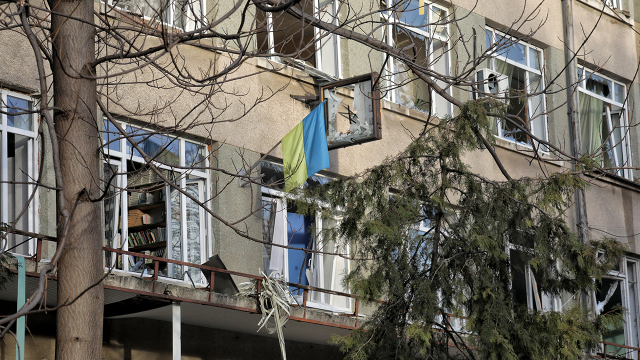
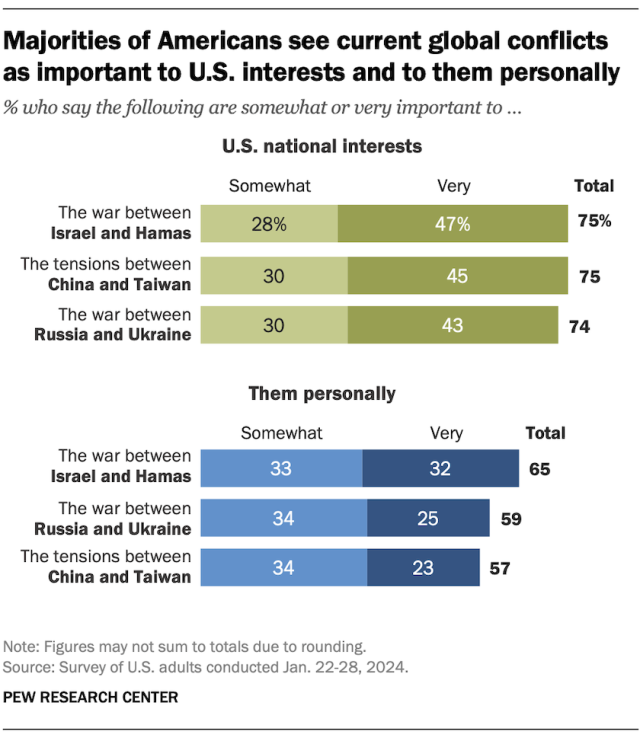
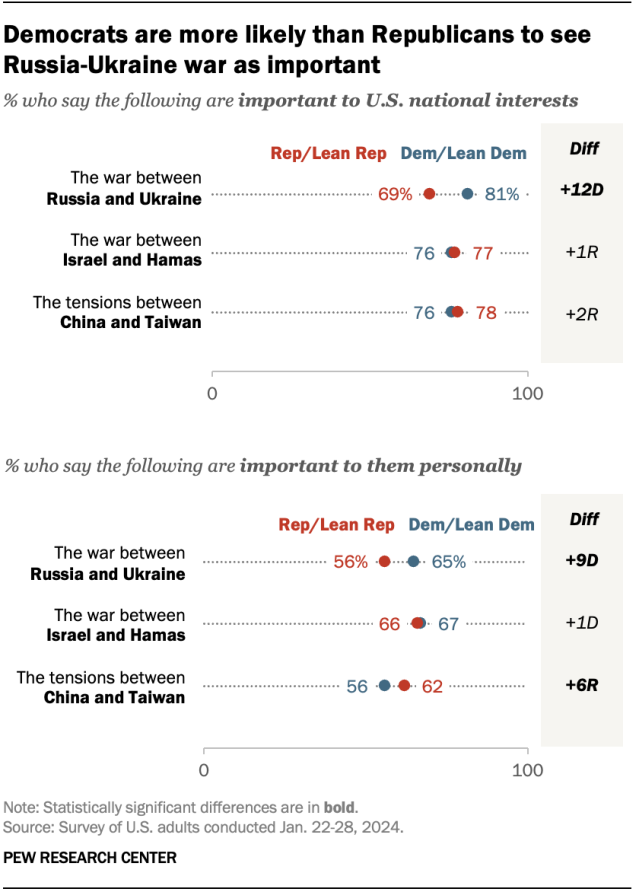
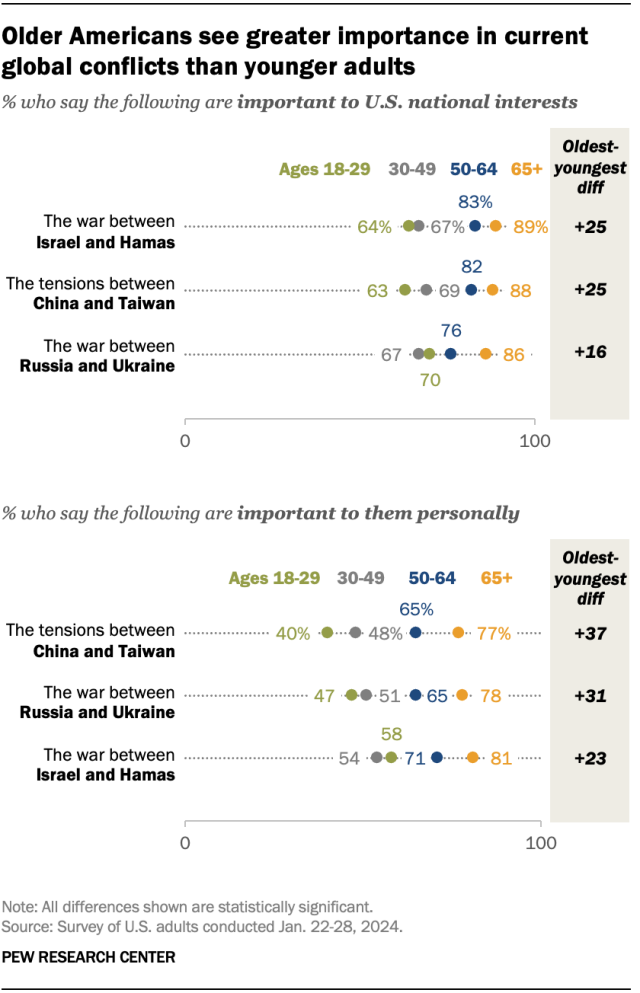





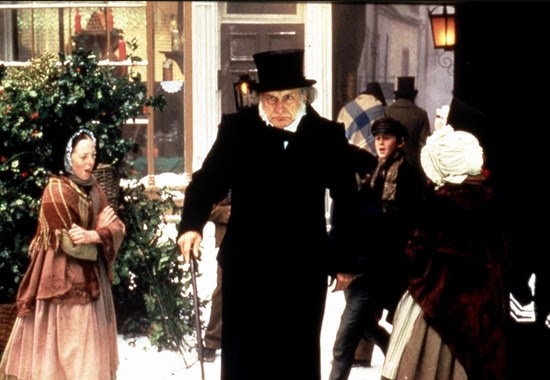 (RGR Collection / Alamy)
  (Apple TV+) Watch. Slow Horses (streaming on Apple TV+) features an
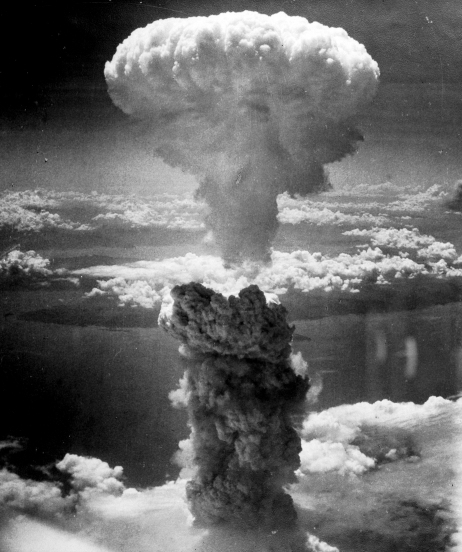


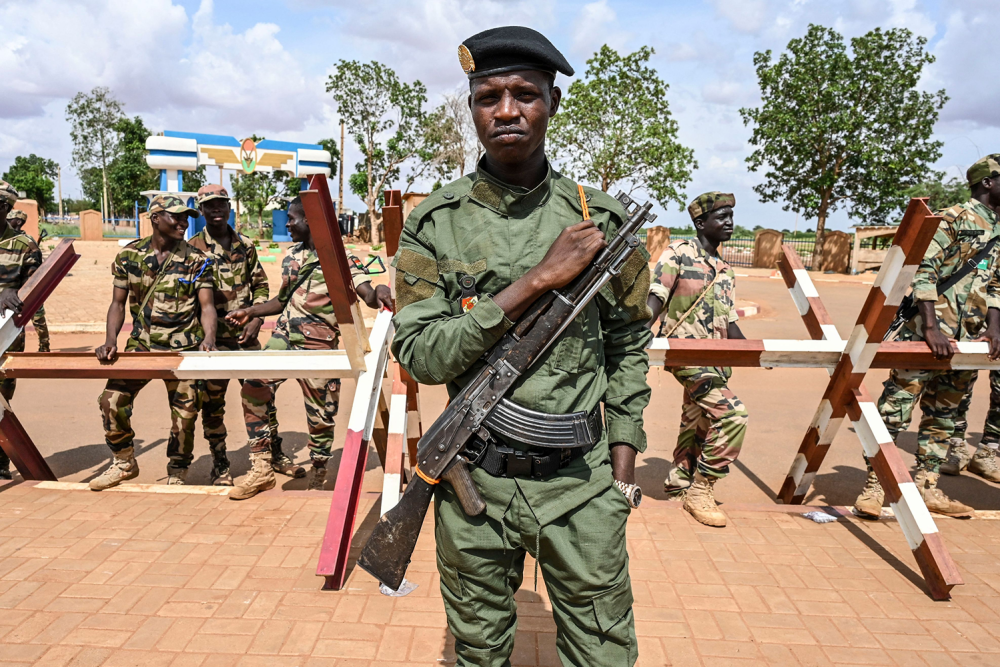






 fshiels