The question is WHY the UN mission for peacekeeping in Haiti is controversial
The deployment has been unpopular in Kenya, and rights groups have raised concerns over the UN-backed mission.
Members of the second contingent of Kenyan police arrive in Haiti’s capital, Port-au-Prince. [Ralph Tedy Erol/Reuters]
Published On 17 Jul 202417
Another 200 Kenyan police officers have arrived in Haiti under a United Nations-backed mission to try to quell rampant gang violence in the troubled Caribbean nation.
The new batch that arrived on Tuesday brings the total to 400 Kenyan boots on the ground in the violence-ravaged capital of Port-au-Prince, Haitian sources said.
The Kenyan contingent of what is shaping up to be a multinational mission has run into persistent legal challenges in Nairobi, where embattled President William Ruto is simultaneously trying to calm roiling antigovernment protests at home.
More Kenyans are expected to arrive in the coming weeks and months along with police and soldiers from the Bahamas, Bangladesh, Barbados, Benin, Chad and Jamaica for a total of 2,500 personnel.
The deployment was approved by a UN Security Council resolution in October, only to be delayed by a Kenyan court decision in January that ruled it unconstitutional.
The court said Ruto’s administration had no authority to send officers abroad without a prior bilateral agreement.
While the government secured that agreement with Haiti in March, a small opposition party, Thirdway Alliance Kenya, has filed a lawsuit in another attempt to block it.
The United States had been eagerly seeking a country to lead the mission and is supplying funding and logistical support.
President Joe Biden flatly ruled out putting US boots on the ground in Haiti.
Human Rights Watch has raised concerns about the Haiti mission and doubts over its funding, while watchdogs have repeatedly accused Kenyan police of using excessive force and carrying out unlawful killings.
Haiti has long been rocked by gang violence, but conditions sharply worsened at the end of February when armed groups launched coordinated attacks in Port-au-Prince, saying they wanted to overthrow then-Prime Minister Ariel Henry.
The violence in Port-au-Prince has affected food security and humanitarian aid access, with much of the city in the hands of gangs accused of abuses, including murder, rape, looting and kidnappings.
Haitian sources say the new batch that arrived on Tuesday brings the total to 400 Kenyan boots on the ground in violence-ravaged Port-au-Prince. [Ralph Tedy Erol/Reuters]
More Kenyans are expected to arrive in the coming weeks and months. [Ralph Tedy Erol/Reuters]
Authorities have declined to provide details on the Kenyans’ assignments, citing security concerns. [Ralph Tedy Erol/Reuters]
The mission aims to quell gangs accused of killing more than 4,450 people last year, according to the UN. [Clarens Siffroy/AFP]
People walk along a street in central Port-au-Prince. Haiti has long been rocked by gang violence, but conditions worsened at the end of February when armed groups launched coordinated attacks in the capital. [Johnson Sabin/EPA]
The violence in Port-au-Prince has affected food security and humanitarian aid access, with much of the city in the hands of gangs. [Mentor David Lorens/EPA]
Vice President Kamala Harris has one extraordinary campaign advantage — she is neither Joe Biden nor Donald Trump.
Before President Biden dropped his reelection bid on July 21, voters were unenthusiastic about a rematch between these two men, both born before the television age. Americans desperately wanted an alternative, and party affiliation was secondary.
Thus, factors such as Biden’s element of surprise, the switch/change effect, Trump’s inability to deal with the change, rapid Democratic unification, dominant support from the media and the potential rekindling of Obama’s 2008 coalition — sprinkled with his political fairy dust of hope, joy, and “Yes, She Can” — generated considerable political momentum for Harris that might just carry her across the Nov. 5 finish line.
But Trump can never lose! So, if he does, expect a 2020 post-election replay with much ranting, raving and contrived evidence. Team Trump will launch accusations of a corrupt, stolen election, cheating, judicial weaponization, illegal voters, foreign interference and rigged voting machines, resulting in legal challenges perhaps all the way to the Supreme Court. Our enemies will be watching for signs of electoral instability, democratic unrest and perhaps even a national security crisis.
That aside, a Trump loss inevitably means an internal civil war within the Republican Party. I believe a “war” is inevitable between the all-powerful Trump forces and those who want to move on from the Trump era and win the White House in 2028 without any Trump family members on the ticket.
Like all civil wars, this one could be brutal, because the GOP opposition forces see in Trumpism a political dead-end with a shrinking voter base. I publicly left the Republican Party Jan. 2021 thanks to Trump’s toxic brand. Today, identifying as a Republican is not about conservative governing principles but automatic loyalty to Trump, with his MAGA troops in control of the party machinery from top to bottom.
In 2016, the “Trumplican Party” was born (some would say “hijacked.”) After Trump’s unexpected victory, Republican Party leaders and activists who initially supported someone other than Trump were purged, resigned in disgust or else acquiesced to him.
After Trump’s loss in 2020, it became an act of disloyalty for Republicans to deny that Trump actually won reelection. So did the failure to defend or excuse his actions on Jan. 6 or his legal problems. So did the act of backing an alternative 2024 candidate.
To have one family in complete control of a major national political party is an aberration in our country. Daughter-in-law Lara Trump, installed as co-chair of the Republican National Committee in March, naively spoke the truth in February when she said of its fundraising, “Every single penny will go to the number one and the only job of the RNC — that is electing Donald J. Trump as president of the United States…”
Naturally, down-ballot candidates, officeholders and lowly party officials did not appreciate her honesty about the family mission.
If Harris defeats Trump, will he step down as party leader? Probably not. Unlike Biden, Trump will not be pushed aside. Biden never was and did not represent himself as the Democratic Party. Trump and family, in contrast, are the Republican Party. Hence, moving beyond the Trump era without someone named Trump would take a tectonic shift.
Who would lead the GOP through the hazardous terrain of a non-MAGA future? It probably wouldn’t be Sen. JD Vance (R-Ohio), who in this scenario would just be a losing also-ran.
So who would it be? Some names are familiar and obvious: Former UN Ambassador Nikki Haley, Florida Gov. Ron DeSantis (R) and Sen. Marco Rubio (R-Fla.), who each look in the mirror and see a future president. Add a new name with popular Georgia Gov. Brian Kemp (R), who has had a contentious history with Trump — haven’t they all, though? That experience will embolden these leaders to forge a new path for the party, maybe led by one of them, or else a new leader will emerge.
Speaking of new leaders, a post-Trump era will need rising stars to combat entrenched MAGA warriors such as Reps. Matt Gaetz (R-Fla.) and Marjorie Taylor Greene (R-Ga.). How about a real warrior? A Lt. colonel in the Air National Guard who piloted missions in Afghanistan and Iraq. His name is Adam Kinzinger — once widely considered a GOP rising star — the former Illinois congressman who served from 2011 to 2023.
After the 2020 election, then-Rep. Kinzinger rejected Trump’s claims of a stolen election. He was appalled by the events of Jan. 6, 2021, and subsequently voted to impeach. Kinzinger then served on the House Select Committee to investigate the Capitol attack. Trump placed a target on his back, and Kinzinger did not run for reelection in 2022.
Then, on August 15, Kinzinger fearlessly spoke the truth about Trump to more than 20 million primetime viewers who watched the Democratic National Convention. His message delighted former Republicans like me who want a party to come home to. Kinzinger said, “Donald Trump is a weak man pretending to be strong; he is a small man pretending to be big. He’s a faithless man pretending to be righteous. He’s a perpetrator who can’t stop playing the victim.”
Kinzinger dared to say what many in the Republican Party (including elected officials) only think: “The Republican Party is no longer conservative. It has switched its allegiance from the principles that gave it purpose to a man whose only purpose is himself.”
Shockingly, Fox News cut away from Kinzinger’s speech. Were they shielding their viewers from the truth? If Trump loses, those viewers and voters must hear the truth to set the Republican Party free from Trump’s control. But first, the party is destined to wage a war for the future.
Jack White rips Trump campaign for posting band’s song: ‘Don’t even think about using my music you fascists’
Trump asks federal court to take over hush money case
Harris asked about shifting positions in CNN interview: ‘My values have not changed’
The Biggest Takeaways from Harris’s Interview with CNN
Harris bus tour focused on reproductive rights to start in Palm Beach
Vance draws boos at firefighter union event: ‘We got some fans and some haters’
Inflation holds steady as Fed nears rate cuts
rved from 2011 to 2023.
After the 2020 election, then-Rep. Kinzinger rejected Trump’s claims of a stolen election. He was appalled by the events of Jan. 6, 2021, and subsequently voted to impeach. Kinzinger then served on the House Select Committee to investigate the Capitol attack. Trump placed a target on his back, and Kinzinger did not run for reelection in 2022.
Then, on August 15, Kinzinger fearlessly spoke the truth about Trump to more than 20 million primetime viewers who watched the Democratic National Convention. His message delighted former Republicans like me who want a party to come home to. Kinzinger said, “Donald Trump is a weak man pretending to be strong; he is a small man pretending to be big. He’s a faithless man pretending to be righteous. He’s a perpetrator who can’t stop playing the victim.”
Kinzinger dared to say what many in the Republican Party (including elected officials) only think: “The Republican Party is no longer conservative. It has switched its allegiance from the principles that gave it purpose to a man whose only purpose is himself.”
Shockingly, Fox News cut away from Kinzinger’s speech. Were they shielding their viewers from the truth? If Trump loses, those viewers and voters must hear the truth to set the Republican Party free from Trump’s control. But first, the party is destined to wage a war for the future.
BY JAMIE BARNETT, OPINION CONTRIBUTOR – 07/02/24 9:45 AM ET
This is a tough question, BUT: Absolutely not resign. WTF? Yet an open convention might be good. If Joe has no more senior moments his nomination could be reaffirmed. But note that the conservative HILL newsletter also has an opinion piece urging BOTH major party nominees to resign for the good of the country. We have two old men, one of which is certifiably insane. And then there’s the other: Joe Biden. The mainstream press that The Trump is always denigrating has been working diligently to ease Biden out for his senior moment daily updates.
This news blog editor is not voting for the President. But that has nothing to do with doubts about his age. It has to do with being EYELESS IN GAZA: a human rights catastrophe that Biden-Blinken seem to be deaf to. So a write-in is in order: say, Micky Mouse. Biden’s opponent is the most dangerous, mentally defective individual to seek the office– Ever.
The press gave lip service to Donald’s cascade of lies at the debate and his threats if elected. But they did not do much more than tap his wrists, because the expectations were so low and it was assumed that Biden would be in “State of the Union” mode. He wasn’t when it counted, but Was when visiting North Carolina the next day. The fact that ex-President Bone-spur has avoided prison and will be kept out of jail by his pet Supreme Court, another disgrace guarantees that 2024 will continue to be a rocky year. Yes, Joe Biden should have been a highly rated 1-term president.
PHILADELPHIA, PENNSYLVANIA – MAY 29: U.S. President Joe Biden and U.S. Vice President Kamala Harris wave to members of the audience after speaking at a campaign rally at Girard College on May 29, 2024 in Philadelphia, Pennsylvania. Biden and Harris are using today’s rally to launch a nationwide campaign to court black voters, a group that has traditionally come out in favor of Biden, but their support is projected lower than it was in 2020. (Photo by Andrew Harnik/Getty Images)
President Joe Biden should not just leave the presidential race. He should resign the presidency. Now.
The New York Times editorial board and a host of other non-partisan voices have called for Biden to announce that he will no longer run for president. But in this particular race, it is not enough. Biden’s departure from the race this summer would kick-off a tumultuous, bitter fight for the nomination in an open convention that is already in jeopardy of crippling protests. The infighting would leave bruises or wounds among the likely Democratic contenders and the constituencies that have been loosely united behind the incumbent until his unfortunate debate performance. Biden’s remaining in the race would most probably ensure a return of Donald Trump to the White House.
These are not the musings of a Trump supporter. I actively campaigned for the Obama-Biden ticket twice and appeared on stage at the Democratic National Convention in 2008 and in a convention video in 2012. I served in a low-level appointive position in the first Obama administration. I campaigned for Joe Biden in 2020, and I have a picture of him on the wall of my office. I think history will remember him as an extraordinarily effective president in a time of incredible peril.
Joe Biden does not get anywhere near the credit he deserves for his performance. He came into the presidency with the economy wrecked by Donald Trump’s malfeasance in handling the COVID-19 pandemic. Biden was able to overcome embittered partisanship to deliver the infrastructure bill with $1.2 trillion in investments to bridges, roads, waterways, broadband and energy. The infrastructure bill also paved the way to record-breaking job growth.
The CHIPS Act bolstered strong jobs with an industrial policy that ensures national security and a reliable supply chain. His Inflation Reduction Act has actually helped reduce the inflation caused by Trump’s mishandling of the pandemic and the Trump tariffs, which drove up prices for Americans. There are many other examples. At this time in history, no one else could have achieved this except Joe Biden. Whatever mistakes Biden has made, these achievements shine brightly.
But his greatest achievement was his first one, the one that caused him to run in 2020: saving the nation and the world from the disaster of another Trump term.
Biden has the judgment and the character to be president again, two things that Donald Trump does not have and never will. But judgment and character will not defeat Donald Trump. If President Biden stays in the race, I will vote for him, but we may look back at this moment and wonder whether Biden’s judgment and character should have led him to leave the race and the presidency.
If the goal is once again for Joe Biden to save the nation and the world from the disaster of another Trump term, there is no dishonor if Biden passes the baton, of his own accord, having run the good race. If he resigns the presidency now, he will give the Democratic Party a fighting chance to beat Trump. He will create the first female president, the first African American female, the first multi-racial female president in history. In one fell swoop, he will have enlivened many of the constituencies that the media have claimed are disaffected. Kamala Harris will have the first first gentleman in history, one who is Jewish. She will be able to unite the party with a strong running mate.
This will not keep the Democratic National Convention from being a chaotic, open convention, but it will be a strong move that could lead to unity and victory. It will be Joe Biden that provides that victory.
There are drawbacks, there are counterarguments to such a bold move. One is that Speaker Mike Johnson (R-La.) would be second in line to the presidency, and the minority-controlled Senate would be unlikely to confirm a new vice president before the election. Biden would be criticized for choosing his successor, but he already did in choosing Harris as his vice president.
Biden is no quitter. He has overcome many, many tragedies and challenges. But despite his weakened presentation as a campaigner, he is a truth teller, and he has good judgment and good character. He has said over and over: This is not about him.
It’s about the country. It’s about the democracy. It’s about the people.
Jamie Barnett is a retired rear admiral in the U.S. Navy, serving 32 years in the Navy and Navy Reserve. After he retired, he served as the chief of the Public Safety and Homeland Security Bureau of the Federal Communications Commission during the Obama administration.
Biden should not just drop out of the race. He should resign.
BY JAMIE BARNETT, OPINION CONTRIBUTOR – 07/02/24 9:45 AM ET
PHILADELPHIA, PENNSYLVANIA – MAY 29: U.S. President Joe Biden and U.S. Vice President Kamala Harris wave to members of the audience after speaking at a campaign rally at Girard College on May 29, 2024 in Philadelphia, Pennsylvania. Biden and Harris are using today’s rally to launch a nationwide campaign to court black voters, a group that has traditionally come out in favor of Biden, but their support is projected lower than it was in 2020. (Photo by Andrew Harnik/Getty Images)
President Joe Biden should not just leave the presidential race. He should resign the presidency. Now.
The New York Times editorial board and a host of other non-partisan voices have called for Biden to announce that he will no longer run for president. But in this particular race, it is not enough. Biden’s departure from the race this summer would kick-off a tumultuous, bitter fight for the nomination in an open convention that is already in jeopardy of crippling protests. The infighting would leave bruises or wounds among the likely Democratic contenders and the constituencies that have been loosely united behind the incumbent until his unfortunate debate performance. Biden’s remaining in the race would most probably ensure a return of Donald Trump to the White House.
These are not the musings of a Trump supporter. I actively campaigned for the Obama-Biden ticket twice and appeared on stage at the Democratic National Convention in 2008 and in a convention video in 2012. I served in a low-level appointive position in the first Obama administration. I campaigned for Joe Biden in 2020, and I have a picture of him on the wall of my office. I think history will remember him as an extraordinarily effective president in a time of incredible peril.
Joe Biden does not get anywhere near the credit he deserves for his performance. He came into the presidency with the economy wrecked by Donald Trump’s malfeasance in handling the COVID-19 pandemic. Biden was able to overcome embittered partisanship to deliver the infrastructure bill with $1.2 trillion in investments to bridges, roads, waterways, broadband and energy. The infrastructure bill also paved the way to record-breaking job growth.
The CHIPS Act bolstered strong jobs with an industrial policy that ensures national security and a reliable supply chain. His Inflation Reduction Act has actually helped reduce the inflation caused by Trump’s mishandling of the pandemic and the Trump tariffs, which drove up prices for Americans. There are many other examples. At this time in history, no one else could have achieved this except Joe Biden. Whatever mistakes Biden has made, these achievements shine brightly.
But his greatest achievement was his first one, the one that caused him to run in 2020: saving the nation and the world from the disaster of another Trump term.
Biden has the judgment and the character to be president again, two things that Donald Trump does not have and never will. But judgment and character will not defeat Donald Trump. If President Biden stays in the race, I will vote for him, but we may look back at this moment and wonder whether Biden’s judgment and character should have led him to leave the race and the presidency.
If the goal is once again for Joe Biden to save the nation and the world from the disaster of another Trump term, there is no dishonor if Biden passes the baton, of his own accord, having run the good race. If he resigns the presidency now, he will give the Democratic Party a fighting chance to beat Trump. He will create the first female president, the first African American female, the first multi-racial female president in history. In one fell swoop, he will have enlivened many of the constituencies that the media have claimed are disaffected. Kamala Harris will have the first first gentleman in history, one who is Jewish. She will be able to unite the party with a strong running mate.
This will not keep the Democratic National Convention from being a chaotic, open convention, but it will be a strong move that could lead to unity and victory. It will be Joe Biden that provides that victory.
There are drawbacks, there are counterarguments to such a bold move. One is that Speaker Mike Johnson (R-La.) would be second in line to the presidency, and the minority-controlled Senate would be unlikely to confirm a new vice president before the election. Biden would be criticized for choosing his successor, but he already did in choosing Harris as his vice president.
Biden is no quitter. He has overcome many, many tragedies and challenges. But despite his weakened presentation as a campaigner, he is a truth teller, and he has good judgment and good character. He has said over and over: This is not about him.
It’s about the country. It’s about the democracy. It’s about the people.
Jamie Barnett is a retired rear admiral in the U.S. Navy, serving 32 years in the Navy and Navy Reserve. After he retired, he served as the chief of the Public Safety and Homeland Security Bureau of the Federal Communications Commission during the Obama administration.
Pilgrims offer prayers outside at the Grand Mosque during the annual Hajj pilgrimage in Mecca, Saudi Arabia, June 12, 2024.
Here WeGo Again
WASHINGTON —
Once seemingly fading into obscurity, anti-Muslim hate groups in the United States have surged back into the spotlight in recent months, reinvigorated by the Israel-Hamas war in Gaza.
Many of these groups, such as Jihad Watch and ACT for America, emerged in the aftermath of the 9/11 attacks on the U.S. and thrived on public fears of terrorism. But as those fears waned in recent years, so did the groups’ sway. Some disbanded, while others gravitated to other hot-button issues.
From a peak of 114 in 2017, their number dropped to a mere 34 last year, according to the Southern Poverty Law Center, a nonprofit that tracks hate groups.
In early 2023, “Islamophobia was down to a slow trickle,” SPLC senior research analyst Caleb Kieffer said.
Then came the October 7 Hamas assault on Israel, which claimed about 1,200 lives and triggered a massive Israeli military response in Gaza.
Anti-Muslim groups that had “opportunistically” seized on divisive issues, such as critical race theory and LGBTQ-inclusive policies, swung back into action.
“These anti-Muslim groups went right back to their core messaging,” Kieffer said in an interview with VOA. “They’ve been going hard on the rhetoric since October last year.”
Take ACT for America. Founded in 2007 by Brigitte Gabriel, a Lebanese American political activist and self-described “survivor of terrorism,” it grew into one of the country’s leading anti-Muslim organizations.
At its peak, the group had more than 50 active chapters, each counted as a separate hate group by the SPLC. But in recent years, most of those chapters either shut down or shifted into other areas, leaving ACT for America with just eight on SPLC’s most recent list.
According to the SPLC, ACT for America embraced a “nativist tone” before October 7, circulating, among other things, a petition calling to “Stop the Taxpayer Funded Border Invasion.”
After October 7, the group launched another petition more in line with its agenda and with a call by former U.S. President Donald Trump to stop admitting Palestinian refugees from Gaza.
Warning her followers about homegrown jihadi terror, Gabriel, a staunch Trump supporter, began peddling her bestselling anti-Muslim book, Because They Hate: A Survivor of Islamic Terror Warns America, in exchange for a $25 donation.
In a video titled “Wake Up America” in October, she claimed, “Hamas has a large network of cells spreading all across America,” from Laurel, Maryland, to Tucson, Arizona.
Other groups that had also latched onto contentious issues similarly pivoted back to their core agenda.
Muslim pilgrims circumambulate the Kaaba, the cubic building at the Grand Mosque, during the annual Hajj pilgrimage in Mecca, Saudi Arabia, June 11, 2024.
Jihad Watch, a website run by prominent anti-Muslim figure Robert Spencer, published an article last October claiming, “We’re in a war between savages and civilization. Everything else is a detail.”
Eight days later, an affiliated political website called FrontPage Magazine ran a piece titled “It’s Islam, Stupid,” arguing that everything Hamas did “has been done by Muslims throughout history and is still being practiced today.”
FrontPage Magazine is published by the David Horowitz Freedom Center, another leading anti-Muslim group. Jihad Watch is a project of the center.
ACT for America, Jihad Watch and the David Horowitz Freedom Center are part of what experts describe as a well-funded, close-knit anti-Muslim industry, with each group playing a distinct role in the ecosystem.
With chapters across the country, Washington-based ACT for America provides the “grassroots muscle” to the movement, Kieffer said. The Center for Security Policy serves as its think tank, he said.
The SPLC-designated groups appear on other hate lists. Several SPLC-branded groups contacted by VOA condemned their designation.
In a statement to VOA, a spokesperson for ACT for America rejected the “anti-Muslim” label, saying the organization has “always welcomed and included members of all faiths,” including Muslims, and hosted Muslim keynote speakers at its conferences.
ACT for America works “on a broad range of issues, none of which are anti-Muslim,” the spokesperson said. “As a matter of fact, since the defeat of ISIS and al-Qaida between 2018 and 2024, you didn’t hear a blurb from ACT for America about radical Islam.”
In response to a VOA query, Jihad Watch’s Spencer accused the SPLC of smearing and defaming “organizations that oppose its far-left political agenda by lumping them in with the likes of the KKK and neo-Nazis.”
In a brief interview with VOA, J. Michael Waller, a senior analyst for strategy at the Center for Security Policy, called the designation “slander,” saying it was tied to his group’s criticism of the Iranian government and the Muslim Brotherhood.
Kieffer defended the SPLC’s methodology, saying it only designates groups that “vilify” and “demonize” people because of their race, religion, ethnicity, sexual orientation or gender identity.
The SPLC defines anti-Muslim hate groups as organizations that “broadly defame Islam and traffic in conspiracy theories of Muslims being a subversive threat to the nation.”
Not every anti-Muslim hate group has stood the test of time. In recent years, dozens of ACT for America chapters have closed.
The ACT for America spokesperson said most of its member groups have “turned into digital chapters meeting via zoom or other technology platforms.”
Last year, an anti-refugee and anti-Muslim blog called Refugee Resettlement Watch became inactive and was dropped from SPLC’s list of hate groups.
Another well-known anti-Muslim group called Understanding the Threat announced last year it was shutting down. The group was operated by a former FBI agent known for spreading anti-Muslim conspiracy theories.
Other groups have rebranded. One former ACT for America chapter now operates as AlertAmerica.News, according to SPLC. Its focus ranges from “strengthening national security” to “fighting communism and American Marxism.”
Kieffer said while the group’s central focus may have shifted away from Islamophobia, it continues to invite well-known, anti-Muslim speakers to its events.
With the war in Gaza still raging, the resurgence in Islamophobia remains unabated, Kieffer said. But that’s likely to change in the run-up to the presidential election in November.
“I imagine that we’re going to slowly see a decline again as these groups start to push other issues,” he said.
Brian Levin, a criminologist and hate crime researcher, noted that anti-Muslim hate crimes have surged in recent years, even as the number of hate groups has dwindled.
That’s because hatred has found a new home in the mainstream, rendering niche groups such as Islamophobic outfits increasingly obsolete, he said.
“The bottom line is, the way we associate to express and amplify hatred has changed,” Levin said in an interview with VOA. “Up-and-coming bigots of all sorts will find an array of xenophobic bigotry and conspiracism within general mainstream platforms.”
Crisis-ridden Haiti turns a page, officially welcomes new transitional government
Jacqueline Charles
Wed, June 12, 2024 at 4:07 PM EDT·4 min read
balawou.blogspot.com
Haiti welcomed a new government on Wednesday, completing the final step in a new political transition that many are hoping will bring a reprieve to the country’s ongoing gang-fueled crisis and pave the way for long-overdue general elections.
A new cabinet of ministers was presented by newly selected Prime Minister Garry Conille at a ceremony. Conille this week finalized his government after days of negotiations with members of the transitional presidential council. Conille, 58, a former regional director with UNICEF, the United Nations child welfare agency, managed to reduce the cabinet from 18 ministers to 14 by combining some ministries.
Like former Prime Minister Ariel Henry, who was forced to resign by the United States to pave the way for a transition amid gang attacks that erupted on Feb. 29, Conille will keep for himself the portfolio of interior minister. In Haiti, the interior ministry is responsible for issuing passports and staging elections.
Most of the members of Conille’s new cabinet are unknowns or relative newcomers to Haitian politics. Most of their names, however, were put forward by the sectors represented on the nine-member presidential council, where seven members have voting rights and two serve as observers. Still, there are some notable names among them. They include Carlos Hercule, the new minister of justice; Dominique Dupuy, the minister of foreign affairs and Haitians Living Abroad, and Ketleen Florestal, the minister of finance and planning.
Hercule, a lawyer, formerly headed the Port-au-Prince bar association. In his role he will need to rebuild the justice system that today is wrestling with the escape of more than 4,000 inmates after armed groups raided the country’s two largest prisons in early March. There is also the thorny issue of the investigation into the assassination of President Jovenel Moïse. More than 50 people, including the president’s widow, have been indicted and Hercule will face pressure to continue to pursue the case.
The justice ministry has also been intimately involved in the negotiations with the government of Kenya over the deployment of the Multinational Security Support mission to help the country’s beleaguered police take on powerful gangs.
Dominique Dupuy, Haiti’s former ambassador to UNESCO, has been named Haiti’s foreign minister.
Dupuy was Haiti’s ambassador to UNESCO and had been previously named as one of the seven members of the presidential council by a political party coalition led by former prime minister and foreign minister Claude Joseph. She resigned, citing threats to her life. She will be charged with not only overseeing Haiti’s foreign policy but cleaning up a ministry saddled with corruption allegations in some of its foreign embassies.
A Columbia University graduate, Florestal is an economist who began her career as a law intern and briefly served as chief of staff in Haiti’s justice ministry in the early 1990s. She replaces finance minister Michel Patrick Boisvert, who served as interim prime minister after Henry’s resignation Florestal has worked on the Haiti portfolio at the three leading international lending institutions including the World Bank, the Inter-American Development Bank and the International Monetary Fund. Florestal holds a master’s degree from Columbia University in economic policy management and a master’s from Johns Hopkins University in applied economics.
The new government faces a host of challenges, from restarting the economy to addressing the ongoing violence.
Armed violence that escalated nearly four months ago has brought Haiti to the brink of both economic and humanitarian collapse. The most recent numbers from the United Nations show that there’s been a 60% increase in the number of people displaced between March and June, from 360,000 to nearly 580,000.
On Wednesday, a court in Kenya postponed for two weeks a hearing on a new lawsuit against the government’s efforts to deploy police officers to Haiti. Days earlier three Haitian police officers were killed after armed gang members set a trap, leading to their ambush in the Delmas neighborhood of the capital.
In March, the Caribbean Community, along with the U.S. and other nations, brokered a deal with Haitian political and civic leaders that led to the formation of a nine-member presidential council. Last month, after wading through more that five dozen applications, the council selected Conille, a former U.N. development expert who briefly served as prime minister between 2011 and 2012 , as the new prime minister.
Over the weekend, Conille needed medical care after experiencing breathing problems. He was discharged from a hospital after spending the night. Though he immediately addressed the population in a video about his ordeal, Conille has yet to provide specifics about his priorities or how he intends on governing Haiti.
Haiti has formalized a new presidential transitional council that will help to move the embattled nation toward peace after the Caribbean island has been consumed by gang violence and left with almost no government.
A decree was published Friday establishing the new nine-member council in Le Moniteur, the official gazette of the Haitian government, according to local Haitian outlets. The decree states a goal of securing peace in the country and moving toward elections, with the formation of various governmental bodies to achieve those aims.
The Caribbean Community (CARICOM), an organization made up of regional nations, welcomed the arrival of the new council as the “possibility of a new beginning for Haiti.”
“CARICOM has supported Haiti, its sister nation, through the challenging process of arriving at a Haitian owned formula for governance that will take the troubled country through elections to the restoration of the lapsed state institutions and constitutional government,” the group said in a statement.
Haiti plunged into violence after the 2021 assassination of – Haitian President Jovenel Moïse, and gang violence has grown particularly rampant in the past year.
Gangs have run amok in the capitol of Port-au-Prince, pushing the island nation into a humanitarian crisis that the United Nations and aid groups say is teetering on the brink of a complete collapse.
The violence and demands from gang leaders forced Haitian Prime Minister Ariel Henry to step down last month. The U.S., U.N. and CARICOM want to restore order with a Kenyan-led police force, but Kenya paused its deployment in the wake of Henry’s resignation because there was no official government to work with.
The transitional council is viewed by regional countries as a step toward securing peace in Haiti.
In the decree shared by Haitian outlets, officials said Haiti must hold elections by February 2026. Haiti has not had an election since 2016 and has been without a president since 2021.
The decree also outlines steps toward constitutional and election reform and economic recovery.
CARICOM said the first priority for the new council will be to “address the security situation so that Haitians can go about their daily lives in a normal manner” and get access to food, water and other critical services.
“There are still daunting challenges ahead,” the organization said in the statement. “CARICOM stands ready to continue to support the Haitian people and their leaders as they determine their future in a sovereign manner through this transitional period on the path to stability, security and long-term sustainable development for Haiti.” Tags Ariel Henry CARICOM gang violence Haiti Haiti Jovenel Moise transitional council
Copyright 2024 Nexstar Media Inc. All rights reserved. This material may not be published, broadcast, rewritten, or redistributed.
Supreme Court Seems Inclined to Reject Bid to Curtail Abortion Pill Access
A majority of the justices questioned whether a group of anti-abortion doctors and organizations trying to sharply limit availability of the medication could show they suffered harm.
BLOG Editor: When Neil Gorsuch, Brett Kavanaugh, Elena Kagan and Sonia Sotomajor are all on the same page, more or less, That’s News!!!
The challenge to the abortion pill was brought in the fall of 2022, a few months after the Supreme Court overturned Roe v. Wade.Credit…Kent Nishimura for The New York Times
A majority of the Supreme Court appeared deeply skeptical on Tuesday of efforts to severely curtail access to a widely used abortion pill, questioning whether a group of anti-abortion doctors and organizations had a right to challenge the Food and Drug Administration’s approval of the medication.
Over nearly two hours of argument, justices across the ideological spectrum seemed likely to side with the federal government, with only two justices, the conservatives Samuel A. Alito Jr. and, possibly, Clarence Thomas, appearing to favor limits on the distribution of the pill.
Describing the case as an effort by “a handful of individuals,” Justice Neil M. Gorsuch raised whether it would stand as “a prime example of turning what could be a small lawsuit into a nationwide legislative assembly on an F.D.A. rule or any other federal government action.”
The challenge involves mifepristone, a drug approved by the F.D.A. more than two decades ago that is used in nearly two-thirds of abortions in the country. At issue is whether the agency acted appropriately in expanding access to the drug in 2016 and again in 2021 by allowing doctors to prescribe it through telemedicine and to send the pills by mail.
The Biden administration had asked the Supreme Court to intervene after a three-judge panel of a federal appeals court favored curbing distribution of the drug. Until the justices decide, access to mifepristone remains unchanged, delaying the potential for abrupt limits on its availability.
Even if the court preserves full access to mifepristone, the pills will remain illegal in more than a dozen states that have enacted near-total abortion bans. Those bans do not distinguish between medication and surgical abortion.
The case brought the issue of abortion access back to the Supreme Court, even as the conservative majority had said in the case that overturned Roe v. Wade, Dobbs v. Jackson Women’s Health Organization, that it would cede the question “to the people and their elected representatives.”
Justice Gorsuch’s pointed questioning was echoed by other justices, who asked whether any of the doctors involved in the lawsuit could show they were harmed by the federal government’s approval and regulation of the abortion drug.
In one instance, Justice Elena Kagan asked the lawyer for the anti-abortion groups whom they were relying on to show an actual injury.
“You need a person,” Justice Kagan said. “So who’s your person?”
Although the argument contained detailed descriptions of abortion, including questions about placental tissue and bleeding, the focus on whether the challengers were even entitled to sue suggested that the justices could rule for the F.D.A. without addressing the merits of the case.
Since the decision to overturn Roe v. Wade ended a nationwide right in place for nearly a half-century, abortion pills have increasingly become the center of political and legal fights.
The case began in November 2022, when a group of anti-abortion doctors and medical organizations sued the F.D.A., asserting that the agency erred when it approved the drug in 2000.
A federal judge in Texas, Matthew J. Kacsmaryk, issued a preliminary ruling last spring invalidating the F.D.A.’s approval of the drug. In August, a panel of federal appeals judges in New Orleans limited his ruling, determining that mifepristone should remain legal but imposing significant restrictions on access. Those focused on the F.D.A. decisions about telemedicine and pills by mail.
If you have information to share about the Supreme Court or other federal courts, please send us a secure tip at nytimes.com/tips.
A ruling for the anti-abortion doctors could have implications for the regulatory authority of the F.D.A., potentially calling into question the agency’s ability to approve and distribute other drugs.
Solicitor General Elizabeth B. Prelogar, arguing for the government, warned of the far-ranging consequences, both for the pharmaceutical industry and for reproductive rights. “It harms the pharmaceutical industry, which is sounding alarm bells in this case and saying that this would destabilize the system for approving and regulating drugs,” she said. “And it harms women who need access to medication abortion under the conditions that F.D.A. determined were safe and effective.”
To bring the legal challenge, the anti-abortion doctors and groups must show that they will suffer concrete harm if the pill remains widely available. Lawyers call this requirement standing.
Whether anti-abortion groups had met this basic threshold took up much of the questioning.
The argument zeroed in on the declarations by seven anti-abortion doctors in the lawsuit. They said they have suffered moral injuries from the availability of the abortion pill because they may be forced to treat women who come to emergency rooms suffering complications from the pill, including heavy bleeding.
Erin M. Hawley, the lawyer for the anti-abortion doctors, claimed that her clients suffered harm from the abortion pill and were subjected to acting against their conscience. They were forced to treat women in “life-threatening situations in which the choice for a doctor is either to scrub out and try to find someone else or to treat the woman who’s hemorrhaging on the emergency room table,” she said.
Ms. Hawley, who is married to Josh Hawley, a Republican senator from Missouri who has been involved in anti-abortion legislation, added that in an emergency, “it’s a lot to ask” for “doctors to go up to the top floor and litigate this with the general counsel when the federal government’s telling them they don’t have a conscience protection.”
Ms. Prelogar asserted that the claims by the anti-abortion doctors and groups “rest on a long chain of remote contingencies,” with scientific studies showing that medical complications from abortion pills are very rare.
She argued that there was only a slim chance that doctors who oppose abortion would have to treat patients. If those doctors wanted to opt out, they can do so under federal conscience protections, policies that allow doctors and other health workers to refrain from providing care they object to.
The anti-abortion challengers had made generalizations, with no specific example of a doctor who had to provide care against their conscience, Ms. Prelogar said, demonstrating “that the past harm hasn’t happened.”
She urged the justices to “put an end to this case.”
Justice Thomas asked Ms. Prelogar who could bring such a lawsuit, if she was correct that the doctors could not show a direct injury.
When Ms. Prelogar demurred, Justice Alito, who wrote the majority opinion in Dobbs, returned to the point.
“Is there anybody who could challenge in court the lawfulness of what the F.D.A. did here in this particular case?” he asked.
“In this particular case, I think the answer is no,” Ms. Prelogar responded.
“Well, that wasn’t my question,” Justice Alito said. “Is there anybody who can do that?”
Ms. Prelogar said there was “a profound mismatch here” between the injury claimed by the doctors — that they would be forced to participate in abortion by treating women who had taken an abortion pill — and the remedy they sought, which was to end access to the drug for everyone.
Justice Ketanji Brown Jackson examined the idea that if the justices chipped away at the F.D.A.’s regulatory powers, it may fall to “judges parsing medical and scientific studies” to determine whether a drug is safe.
Jessica L. Ellsworth, the lawyer for Danco Laboratories, a manufacturer of the drug, agreed that such a system would raise concerns for “pharmaceutical companies who do depend on F.D.A.’s gold standard review process to approve their drugs and then to be able to sell their products in line with that considered judgment.”
Abbie VanSickle covers the United States Supreme Court for The Times. She is a lawyer and has an extensive background in investigative reporting. More about Abbie VanSickle
NOTE: This post is a lot of reading, But: real appreciation and credit will be shown to students who get into their professor’s research, which has been presented in a number of countries. Also note, to minimize complication, it is better to read as much of the article as you can(if there is not time to read all of it) than not to read any of it!
WHY WE BOMB Article by Dr. F.L. Shiels, Mercy University, NY & blog editor
Posted on
========================
PROBLEMATIC ESSAY: “WHY WE BOMB” Frederick Shiels / Olson Project
Following many years of intense interest in the subject of the United States’ impact on Third World countries, the events of the first three years of the 21st Century prompted me to start a systematic study of civilian deaths resulting from U.S. military actions in the 20th. These include wars, police actions, and other occupations. It might be asked: why not also study American deaths resulting from the aggression of others, such as the 9/11 attacks, Pearl Harbor, or the Lusitania sinking in 1915? This is work that needs to be done and has been done to a limited extent, and the roughly agreed-upon figure for such 20th Cs. fatalities stands somewhere around 4000— nearly 2000 deaths at Pearl Harbor (three fourths of the dead) were military…
Or why not study American military deaths caused by the political/ military hostility of Others? This, too, is a worthy scholarly mission , one that has been attempted, and the 20th Cs. death count for Americans, mainly in two World Wars and the Korean and Vietnam wars, hovers at around 500,000. The military deaths on the other sides of American wars is harder to calculate, for reasons that will become apparent. To take but one example, American battles in the two world wars and, to a lesser extent, Korea and Vietnam, were fought alongside allies. But a fair estimate for such deaths in these wars— and a very conservative estimate–would be around 4 million.– half in Germany and Japan, half in Korea and Vietnam.
For my study, civilian casualties on the other side is the preferred focus, because:
1. Conservative estimates just for civilians in Japan, Germany, Korea and Vietnam would put the death toll at above 4 million,
2. The killing of civilians of any sort in a military action would have been appalling to most Americans in the 1700s and 1800s with the exception of wars against American Indians,
3. The killing of civilians in wars, declared or undeclared, is frowned upon in international law and the human rights literature regardless of which states are seen as having started the hostilities, and
4. Americans, rightly or not, believe themselves to be”outside the curve of historical imperialism” and generally to display more sensitivity to human life and safety and welfare than, say, Germany, Russia, China or Japan, and perhaps, if one looks at Indochina and India, France and Britain.
The argument to this point is not that Americans or their government like killing foreign civilians or even that they tolerate it casually, but rather that the American government, with the tacit approval of its citizenry, has killed civilians, mostly from altitudes of greater than 10,000 feet, often with considerable planning, and intentionally, with the use of carefully designed weapons and–less often– unintentionally.
So focusing for now on World War II, Korea, and Vietnam, we want to highlight several reasons given as justifications for treating non-military people as expendable in some measure and perhaps with some reluctance. Foreign civilians in these conflicts died in very large numbers, mostly from aerial bombs, which we will account for here, but also from chemical sprays, ground artillery fire, and as more or less innocent bystanders near the fields of battle.
One of the most horrific aspects of the World Trade Center and Pentagon killings of civilians was that they were so unexpected. No sense of danger attended the thousands of office workers heading into lower Manhattan and Arlington, Virginia on the morning of September 11, 2001. Many, though not all of the civilians in cities like Dresden, Cologne, Berlin, Hamburg, Leipzig, Tokyo, Osaka, Kobe, Nagoya, Hiroshima, Nagasaki–to name a few–and Pyongyang and Hanoi and the numerous smaller towns and villages of North Korea and Vietnam did go through a prolonged awareness of danger, risk, and deprivation before meeting their ends. The loss of loved ones in firestorms and blast-collapsed structures was more or less anticipated as a possibility, sometimes over a period of years–say, 1943-45, 1950-53, or 1965-72.
The broad reasons for the killing of civilians in Germany, Japan, from bombs dropped over urban centers, might be summarized as follows:
(1) Germans and Japanese had the misfortune to live under governments, either unelected (Japan)or elected by a minority (Germany)that had launched aggressive wars in Europe and that had themselves taken millions of lives, military and civilian,
2. The United States had committed several million men, mostly between the ages of 18 and 30, to extract or help allies extract several million German and Japanese military men from places like France, Scandinavia, the USSR, China, the Philippines and Korea. To shorten the war and reduce the cost in America lives, it might be necessary to sacrifice an unspecified number of civilian lives, mostly in about 80 German and Japanese cities (each). This unspecified number turned out to be about 900,000 each in Germany and Japan– these are the most conservative estimates and focus largely on the air raids during the 2-year period mid-1943 to 1945.
3. A certain number of German and Japanese civilians, who perished and a similar number of those who were maimed for life, worked in factories, government offices and transportation networks vital to the Axis war effort. Also there were large numbers of doctors, postal employees, nurses, sanitation workers, firemen, and other civil personal who, while at the center of the war machine, were involved in keeping the war machine’s more active participants healthier, cleaner, safer and to be able to communicate better.
Before breaking this reasoning down, we might anticipate a powerful question from the reader or audiences.: why devote so much attention to the populace in warring states so clearly devoted to the mass killing of others and conquest by force?To answer that “two wrongs don’t make a right” would be to oversimplify in more than one way. But in any case, before moral judgments are made, any national American project involving tens of thousands of bomber crew members under orders from career officers and civilians to carry out acts that result in a loss of life roughly equaling the combined populations of Baltimore, Boston, San Francisco and St. Louis, or the entire state of Oregon OR Connecticut or Oklahoma, is surely deserving of careful study. Such investigations have been made– and some very good ones**– but mine is the only one that both focuses on civilian deaths and attempts to compare the way in which civilians died in at least seven different military conflicts.
Return to the central question of why we bomb civilians. A breakdown of reasons for the official sanction of carefully planned actions leading to large numbers of deaths and injuries can proceed as follows:
1. Following Sherman’s 1864 dictum that “war is all hell” and needs to be made as painful as possible, generations of strategists have used “Shorten The War” as a rationale for all sorts of war intensifying strategies. These have included: massive drafts to throw as many soldiers as possible against the enemy, development of terror weapons such as the machine gun, heavy naval vessels capable of devastating coastal shelling and, beginning in the 1930s, aircraft designed to drop explosives, or even deadly gas, onto masses of infantry, fortifications, and, finally, cities. In chilling words of Douhet, the Italian air-war theorist, depicting air attack:
First would come explosions, then fires, then deadly gases floating on the surface and preventing any approach to the stricken area. As the hours passed and night advanced, the fires would spread while the poison gas paralyzed all life. ** Schaffer 21, Douhet
Politicians and generals on all sides in World War II spoke longingly of shortening the war and no doubt they were sincere.* More recently, the creation of “smart” bombs and “shock and awe tactics,” especially for use against Iraq in 1991 and 2003, provide an updated strategy of using highly accurate and very noisy bombs to cow the enemy into a faster surrender, while taking world public opinion sensibilities into account.
Even before World War Two, a US Army Air Corps tactical manual regarded air attack as “a method of imposing will by terrorizing the whole population.” It was, as Schaffer puts it, vastly preferable to long wars of attrition like the First World War[cite p 27]
Proving that hammer blows against a foreign population can shorten a conflict has been more difficult. It has made intuitive sense to say that Germany and Japan might well have fought longer had they not lost so many cities and industrial cites to massive air attack. This is most dramatically illustrated in the hasty Japanese call for a cease fire after the second atomic bomb obliterated Nagasaki on August 9, 1945 and the little- known final devastating conventional bomb raid in Tokyo August 13th.
It has argued for example been argued, for example, that Hirohito’s speech coming shortly after the second atomic bomb, represented a consensus that the level of destruction had become intolerable:
[Surrender Speech by Japanese Emperor Hirohito, August 14, 1945 [five days after Nagasaki]
The surrender announcement, broadcast by radio, was the first time Japanese people had ever heard the voice of their leader.To our good and loyal subjects: After pondering deeply the general trends of the world and the actual conditions obtaining in our empire today, we have decided to effect a settlement of the present situation by resorting to an extraordinary measure. We have ordered our Government to communicate to the Governments of the United States, Great Britain, China and the Soviet Union that our empire accepts the provisions of their joint declaration.
Indeed, we declared war on America and Britain out of our sincere desire to insure Japan’’s self- preservation and the stabilization of East Asia, it being far from our thought either to infringe upon the sovereignty of other nations or to embark upon territorial aggrandizement. But now the war has lasted for nearly four years. Despite the best that has been done by everyone——the gallant fighting of the military and naval forces, the diligence and assiduity of our servants of the State and the devoted service of our 100,000,000 people——the war situation has developed not necessarily to Japan’s advantage, while the general trends of the world have all turned against her interest.
Moreover, the enemy has begun to employ a new and most cruel bomb, the power of which to do damage is, indeed, incalculable, taking the toll of many innocent lives. Should we continue to fight, it would not only result in an ultimate collapse and obliteration of the Japanese nation, but also it would lead to the total extinction of human civilization. **
However there is also evidence that a little publicized final convention bombing raid on Tokyo, after Nagasaki on August 13, was decisive in bringing about surrender. On August 10, 1945, a day after Nagasaki, Japanese leaders still disagreed on the desirability of surrendering according to the Potsdam unconditional surrender terms. Hirohito ordered that the surrender be accepted, provided he be allowed to retain the throne. The Americans responded on August 11 that they recognized the Emperor but could not guarantee his position. All bombing was suspended pending a definitive Japanese response. When none was received, Gen. Arnold ordered the largest conventional raid of the war, with over 1000 planes, which took place on August 13th. The raid received little publicity and is little-mentioned in accounts of the war . The Emperor’s public statement of surrender (quoted above) followed the next day. It is not entirely clear whether further consideration of the implications of Hiroshima and Nagasaki or the final Tokyo raid was decisive. Perhaps both together were. [See J. Smith and M. O’Connell, The Last Mission, Broadway Books, 2002]
2. Save American lives– Although nobody likes a long war, Americans in particular have
placed a premium on speed and the use of machinery to shorten fighting time and perhaps transfer the human sacrifice (almost literally) that is war, from our side to theirs. High technology air and armed vehicle fighting tends to protect American– and other– combatants relative to the number of killed and injured on the other side, and the conflict shortened. It has been argued that not only American military lives would be saved and men transferred to the protection of high altitude aircraft and armored ground machines, but also, ultimately, many “enemy” lives–especiallycivilian–could be spared by the application of concentrated intense force.
3. Make war more “merciful”- A shorter war with less loss of life would certainly be more humane, if it could be demonstrated that it could be achieved. The argument has been used, as with the atomic bombing of Japan in 1945 and with the Iraq wars of 1991 and 2003. Of course such arguments are very difficult to prove: the best one can normally do is make a strong case. In the August, 1945 case of Japan, a sort of acceleration of the Japanese willingness to consider surrender occurred, first privately and then quite openly, publicly, and quickly with the Emperor’s call to end the fighting after the Nagasaki bomb was dropped on 9 August. What might be easier to establish is that shortening wars through terror bombing can take place, that the loss of life might not be reduced overall, but may be transferred from U.S. forces to foreign civilians. The term “merciful” (Churchill’s term for the use of atomic weapons was “avert a vast, indefinite butchery”) in any universal sense seems inappropriate unless there is a way of demonstrating that more American military would have died in a drawn out land battle such as the Japanese “home island” invasion envisioned for the fall of 1945.
The moral and strategic implications of these first three arguments for bombing are not simple. Even if it appears that a war has been shortened because of city-busting tactics (e.g., Japan, summer, 1945) it is very hard to demonstrate that fewer civilians would have died if the war continued with more ground fighting and less aerial destruction. Merciful to the American soldier probably, but merciful in universal human terms, probably not. A World War Two with more intense aerial attacks on German and Japanese infrastructure outside of cities, or on concentration of German and Japanese military forces, say in Russia or the South Pacific islands, would have killed different civilians, but probably smaller numbers of civilians and certainly more uniformed military. Most would agree that reducing civilian deaths in favor of military would be desirable, except that many of the military were young draftees and a number of civilians were directly involved politically or economically with the war effort. There are some shades of gray here to be reckoned with. The classic account of the debate over the “necessity” of using atomic weapons is Alperovitz, The Decision to Use the Atomic Bomb, updated 1996. **
4. Easier to demonstrate is that bombing campaigns dramatically reduced the production and output of “enemy” economic systems in Germany and Japan, and certainly North Korea, though to a lesser extent . Bombing damaged the North Vietnamese economy as well, although in a more limited way because of its less centralized and capital intensive infrastructure. The United States Strategic Bombing Survey published September 30, 1945, goes into great detail about the gradual destruction of German and Japanese industries by U.S. (and in the case of Germany British) bombing sorties. Preferred targets were steel, machine tool, tank, aircraft, other munitions factories and oil refineries. There were many other target categories as well. During World War Two the kind of pinpoint bombing available in the 1980s and 1990s into the Twenty First Century was not an option. When the nearly 300,000 tons of bombs were dropped over the two Axis powers between 1943 and 1945, much of the targeting was industrial and infrastructure sites. However, as other parts of this essay relate, a significant minority of bombings took out largely residential areas and an additional percentage of bombings against the war related cites, especially urban took the lives of tens of thousands of civilians as “collateral damage.”
5.A more specific and quite interesting American argument about the assault on enemy populations is that bombing civilians –literally the “inhabitants of cities”– thins out the number of industrial workers and potential soldiers, “castrating” (in FDR’s memorable metaphor) the opposition and quite literally reducing the number of future war-makers. For Roosevelt it was weakening German society by reducing the number of war-prone Germans:
We either have to castrate the German people or you have got to treat themin such a manner so they can’t just go on reproducing people who want to continue the way they have in the past…[Schaffer 88]
Ronald Schaffer goes on to cite Robert Dallek’s citation of Roosevelt’s comments to Secretary of War Henry Stimson that:
It is of the utmost importance that every person in Germany should realize
that this time Germany is a defeated nation. I do not want them to starve to death, but, as an example, if they need food to keep body and soul together beyond what they have, they should be fed three times a day with soup from Army soup kitchens…The fact that they are a defeated nation , collectively and individually must be so impressed upon them that they will hesitate to start any new war. ** [in Dallek, Roosevelt, 472-473]
6. Bombing cities is more simply an efficient way of destroying industry, infrastructure and human capital. The problem with this reasoning is that attacks on cities destroyed much that was not directly involved in industrial production, although perhaps demonstrably involved in war-making indirectly: residential neighborhoods in non-industrial areas, urban targets of limited industrial value (e.g., Dresden and Nagasaki) including also schools, churches, hospitals and small businesses. An important part of the literature on aerial bombardment examines these non-industrial targets and questions the need for their destruction much as military policy-makers debated the wisdom of such targeting during the wars under consideration here. ** [Michael Sherry’s and Ronald Schaffer’s books are especially good in short sections on non-industrial “psychological” urban targets and residential areas; also Werrell]
7. An early and more specialized motive for the bombing of German, Japanese, and–later– Korea and Vietnamese cities, especially toward the beginning of those conflicts, was to demonstrate the physical vulnerability of the civilian population and urban centers that could affect both popular and leadership morale. It was believed that the post-Pearl Harbor air raid on Tokyo led by Gen. James Doolittle in April, 1942 achieved a stunning morale victory for the U.S., even though damage was quite modest by later standards. Early raids on Berlin (Nov. 1941) had been costly for the British but symbolically important. These raids were suspended during 1942 (until 1943) because of the heavy anti-air defenses around the city.
8. Demonstration effect for non-enemy but rival powers– this is a curious but credible perspective that notes the desire of some generals directing attacks on eastern German cities to make a statement about U.S. air power to the Soviets occupying those regions in ever greater numbers as well as to the Germans themselves. Schaffer notes that the (British) Royal Air Force bomber command was especially convinced that striking the heart of Berlin would impress the Russians with the “effectiveness of Anglo-American air power.” Schaffer quotes Air Force General David Schlatter, writing in his diary just before the Yalta conference:
I feel that our air forces are the blue chips with which we will approach the post-war treaty table and that [Operation THUNDERCLAP] will add immeasurably to their strength, or rather to Russian knowledge of their strength.” **[D.M. Schlatter Daily Diary, Jan 28, 1945, file 168.7052-5, 44/10/41-45/07/11, Alfred F. Simpson Historical Research Center, Maxwell Air Force Base, Alabama, cited in Shaffer, p. 96]
class= WordSection5>
9. Self-preservation for pilots-Another reason to bomb German, Japanese, Korean and Vietnamese cities thoroughly was to take out industries and military installations that would endanger bombers and crews (!) Through construction or emplacement of anti-aircraft equipment: guns, fighter planes, etc. [specify which cities had such factories and installations].
10. Terror bombing- related to many of the already mentioned reasons for air bombardment but worth focusing on as a special motive is the terror and morale-eroding effect of punishing air raids. This has been one of the most sensational and closely argued debates in the reconsideration of the value of city destruction, 1943-45, 1950-53, and 1965-72. In 1944 noted Harvard psychologist Gordon Allport sent out a survey, later forwarded to the Strategic Bombing Survey, asking “leading members of his profession” their views on the probable effects of bombing on German and Japanese morale. The responses reflected as much division on the question as their was in the upper ranks of the Air Force leadership.** [Schaffer, p. 90]
11. Dehumanization-Related to and magnifying some of the effects of the rationale for bombing missions listed above, is the oft-commented on tendency of societies and their military forces to dehumanize the other side. This process starts with leaders: Hitler, the Kaiser, Tojo, Hirohito; extends to the enemy military forces: “Huns” “Storm Troopers” “cruel Japs” and finally, in an age of total war, to the Other Society itself. Amerindians become expendable, more modern foes need to be castrated, exterminated, etc. There is a great range of feelings within the societies: not all Germans had contempt for Jews and Slavs, too many did; not all Japanese had disregard for the lives of conquered Asians– too many did; not all Americans felt the large numbers of civilian deaths in Germany and Japan were acceptable, but many did.
There seems to be some correlation between the power and scope of “enemy conquest” and the degree to which the corresponding society is deemed evil and worthy of severe counter-blows. Racism and differentiated xenophobia, discussed below, certainly contribute to rationalizing mass counter-killing. But the success of Germany and Japan and the perceived direct threat they posed to the United States, made the massive onslaught against their cities in some ways easier than the less publicized air attacks on North Korea, and the much more criticized attacks on North Vietnam.
**This might be an opportune time for a short but needed digression from the flow of this presentation: [consider inserting this earlier in oral presentations]: by cataloguing the devastation inflicted by American bombing missions, we are not saying that the German, Japanese, Korean and Vietnamese leadership and military were less than cruel or violent themselves. Atrocities abounded and excessive violence was not just “fallen into”, but carefully planned in some cases in substance if not in form and exact execution. And we are not saying that American allies do not share responsibility for helping get the U.S. involved and coordinating the attacks on enemy cities alongside the Washington leadership. The point is that the atrocities of enemies and shared brutality of Allies only partly absolves the U.S. from confronting fully the acts of collective destruction it has practiced.
12. Racism and Differentiated Xenophobia- Fueling the “Anger and Revenge” motives for strikes against Japanese cities in particular was a long- standing American animus toward Asians (the “Mongol race”) and particularly the Japanese, who had never been colonized. A history of immigration restrictions, anti-Japanese laws in California, resentment in the 1930s as the Greater East Asian Co-Prosperity Sphere became bigger and rougher, capped by the post Pearl Harbor internment of Japanese American civilians, raised the tolerance for total war against “the Japs.”
And when Allied prosecutors sitting in the gutted capital city of Japan in 1946 accused the country’s leaders of promoting the indiscriminate destruction of “men, women and children alike”, they still did so with little sense irony. Japan had merely reaped what it had sowed. ** Dower p. 41
This was compounded by newsreels of Japanese atrocities in China and the Philippines. The Bataan Death March would establish a public opinion climate against Japan that would give license to the fiercest air assault on any nation, including Germany, in the history of warfare before or since. It is essential to note, however, that the public opinion contempt for Asian culture and the differences of its people predated the aggressive phase of Japanese expansion after 1931 and was reflected in US newspapers nearly 40 years before that time:
Some, like the Hearst newspapers, warned of a yellow peril led by Japan as early as the 1890s, and maintained an unwavering editorial policy of anti-Oriental polemics over the next half-century.**Dower, p. 157
In the war itself, the no surrender, no-prisoners policy of Japanese soldiers and officers in the island hopping campaigns of the Pacific reinforced the image of a people for whom life was cheap and sacrifice a given. One of many famous Japanese soldier/sailor poems reads:
Across the sea, corpses soaking in the water
Across the mountains heaped upon the grass
We shall die by the side of our lord
We shall never look back. ** [Dower 25}
Dower and other scholars have also noted that the Japanese entertained many of their own racial stereotypes of effete Westerners, including Americans, with their exaggerated noses and ears, reflected in cartoons and drawings and in the press generally.
The Pacific war has been characterized as “The War Without Mercy.” 1941-1945 was replete with surprise attacks, forced marches, torture of prisoners, island battles in which the dead outnumbered the square mileage of the island to a power of 10 or 20, aerial firebombing, and, ultimately, kamikaze and flame- throwers-in-caves attacks (Okinawa), capped off by two bombs 1000 times more powerful than any explosive ever dropped from an airplane.
The race-based analysis that the atomic bomb was used against the Japanese but would not have been against the Germans is debatable. The first A-bomb was tested in New Mexico on July 21, 1945. Had Germany still been in the war, the chances of a sizeable bomb being used against a German city would have been high. I know of no memorandum or scholarly writing that indicates that the Manhattan Project was designed for Japan only.
In addition to racial prejudice intertwining with other forms of resentment against Japan to fuel the deadly incendiary assault on its cities, there was an American public opinion history– by no means unique to this country– of what might be called differentiated xenophobia. As a relatively isolated power 3,000 miles from Europe and 8,000 from Asia, the Americans had contact over the years with foreign cultures mainly through immigrants coming into the U.S. and from foreign travel, mostly by the elite classes– at least until World War One. Although there was not the kind of distaste for foreign cultures found in, say Korea or Japan before 1870, Americans did share what might be called an Anglo-American disdain for non-white, but also in varying degrees, Latin based Cultures (American and European) and Slavic as well as Celtic cultures. This observation greatly oversimplifies, but does help explain a somewhat greater reluctance to participate in the city bombing of Germany than Japan and also the receptivity of Americans for assisting the British over the Germans. Political ideology and perceptions of who the aggressors were in the world wars thus accounts for a great deal.
13. Anger and Revenge- When returning to the central question of “Why We Bomb,” we can differentiate between two genera of mid- Twentieth Century bombing: A. the use of bombs in later campaigns against North Korea and North Vietnam in which strategic and racial factors blended together to break the will of Asian communist nations that were upsetting the geo-political equilibrium sought by the United States and B. the earlier use of air attack against cities to cripple the populations of states engaged in costly wars of regional conquest, namely Germany and Japan.
North Korea had its urban landscape flattened because it tried to reunite all of Korea under its rule in 1950. No other country was involved in its real estate altering efforts. North Vietnam similarly attempted, ultimately successfully, to bring the South under its control in the late 1950s and 1960s, and the price of doing so was made higher by punitive U.S. air attacks.
In the case of Germany there was successful annexation of the Low Countries, Austria, western Czechoslovakia, Poland, and the rest of Eastern Norway, Denmark and France, with threats of conquest for Greece, Britain, and Russia by made-late 1941. The brutality of Hitler’s attacks on those societies, including civilians and particularly ethnic minorities like the Jews and gypsies and whole ethnic majorities like Slavs (the contrast between treatment of Germans and and Slavs in Czechoslovakia was characteristic) is legendary: aerial bombardment of Dutch, Polish and British cities, concentration camps, execution of city officials wherever resistance was met and sometimes when it was not met. Japan’s equally unrestrained moves into China, Indochina, Malaya, the Philippines and much of the Western Pacific offended international human rights sensibilities (insofar as they were developed at the time) as well as the geopolitical status quo.
I would argue that in any war, from medieval conflicts to religious and Amerindian wars in the 16th and 17th centuries to more modern wars, strategy has been colored in varying degrees by revenge and anger for past mistakes and slights. When the townsfolk of Puritan Massachusetts torched Wampanoag villages in King Philip’s War, they did so at first tentatively and later vigorously in response to attacks on Deerfield, Springfield, and other settlements. More to the current point, when the German Luftwaffe leveled Rotterdam, and parts of Warsaw and London, it mirrored the Nazi leadership and some of the German body politic’s loathing of European neighbors that had A. humiliated the Germans after World War I (UK), B. stood between Germany and those foes (Netherlands, Belgium) and C. held substantial German populations under the rule of the Slavic kin of Russia and then the Soviet Union (Czechoslovakia, Poland). While conquests and economic motives drove part of Berlin’s war machine, the octane of the fuel that the machine was running on was heightened by feelings of settling a score, rationalized by perceived slights from London, the Hague, Brussels and the Slavic capitals to the East.
When Japan launched its assaults on China between 1931 and 1938 and then moved against Hawaii, the Philippines, Indochina, the Dutch East Indies, it was for far more than the establishment of Tokyo’s hegemony over and economic exploitation of those areas. The motives were, equally, contempt for Asian neighbors that had allowed themselves to be colonized and animus against the European and American hegemons defiling Asia. In a certain sense, when the bombs fell and shells flew and bayonets thrust, causing such agony in Shanghai, Nanking, Rangoon, and Manila, the collective contempt for lesser Asian peoples in the eyes of Japanese leaders and their soldiers was intensified by a national resentment of American, British and French slights—the U.S.’s pro-Russian mediation of the Russo-Japanese War was an early example– against the “People of the Rising Sun. “
Right after the December 7, 1941 attack, General Leonard Gerow of the Army Chief of Staff’s planning office, had noted: “Perhaps the best way to offset this initial defeat is to Burn Tokyo and Osaka.” [Cited in Sherry, p. 115, note on p. 384]
And as the war was moving toward a conclusion, top generals were mindful, in the wake of the first a-bomb attack, of how a score was being settled:
When General Leslie R. Groves , the director of the Manhattan Project, told [Gen. Henry] Arnold and General Marshall about the attack on Hiroshima, Marshall suggested that it would be a mistake to rejoice too much, since the explosion had undoubtedly caused a large number of Japanese casualties. Groves replied that he was not thinking as much about those casualties as about the men who had made the Bataan Death March. Afterwards, in the hallway outside Marshall’s office, Arnold slapped Groves on the back and exclaimed, ‘I’m glad you said that,–it’s just the way I feel.’” **[Schaffer, p. 154, also quoting Groves in Now It Can be Told: The Story of the Manhattan Project (New York, 1962) p. 324.
So it was, with different historical particulars, with the vast aerial counter-thrust against Germany and Japan. There was a need not simply to stop the Tokyo and Berlin juggernauts, but also to avenge the losses of innocents in the paths of the aggressors and to avenge the humiliation of London and Washington for the Blitz against London, Coventry, Liverpool, and the smashing into Pearl Harbor, Manila, and British Hong Kong, Rangoon, and KualaLumpur.
British pilots over Dresden and Hamburg were well aware that those targets that were contributing to the war effort that had leveled sections of London, Manchester, and Belfast and equally as acutely, had necessitated the enlistment of many thousands of British and, later, American soldiers who were dying because of German bellicosity. American pilots and bombing crews flew mass sorties that lit up Tokyo, Kobe, Osaka, and two dozen other Japanese cities of size with the knowledge that the targets below had spawned the soldiery that had laid waste to Chinese and Philippine cities and, far more centrally, brought hundreds of thousands of American farmers, businessmen, workers, and budding professionals overwhelmingly under 30 years of age into the path of harm and death in the Pacific.
Because most accounts of bombing campaigns stress strategy, logistics, and statistical results: square mileage of flattened buildings, targets destroyed, civilians killed and injured, there is often not a clear way to gauge the extent to which the anger of leaders and the desire for revenge may shape these campaigns and their execution. The historian is forced to rely on anecdotal evidence: accounts of generals and politicians, memoirs of pilots and bombing crew-members, and– to a very limited extent– memoranda and journalistic pieces composed by players in the drama– in World War II men like Eisenhower, Arnold, Spaatz, Kuter, and even Roosevelt and Stimson. As with all of our motivation categories for the bombing of civilian areas, it would be valuable to have these sorts of recollections to leaven “the official record”. It would also be enlightening to compare these with memoirs of British, German and Japanese bombardiers. Anger does not always bottle and age well, however, and there is no guarantee the recollections would translate what went through the minds of theater commanders, mission weary pilots and worried White House and Pentagon occupants.
CONCLUSION: AND WAS IT WORTH IT?
Here we seek to pull together the strands of motivation to engage in what must surely rank as one of the most weighty and morally debatable human endeavors in history: the destruction of several dozen cities and 4 million or so civilian lives as part of the effort to subdue four adversaries: Germany Japan, Korea and Vietnam between 1942 and 1972. The distinguished British military historian, Gen. J.F.C. Fuller, in his The Second World War, writing of the July 1943 raid on Hamburg in particular, as part of a general discussion of the bombing of German cities said:
Eyewitnesses described how the holocaust was so terrible that the air was sucked into it from outside of the perimeter of the fire. Many were suffocated or shriveled up by the intense heat. Others were drowned on throwing themselves into the canals that ran through the city. Days later, when the nearby cellars were opened, thousands were found to have perished as if cooked in an oven….These appalling slaughterings, which would have disgraced Attila, were justified on the plea of military necessity– only military objectives were attacked. In Britain, there were vindicated by the Archbishop of York, because they would shorten the war and save many thousands of lives. **[Fuller, 238]
It is widely agreed that the cost of city-blitzing was extremely high. The debate rests on whether the strategic and national humanitarian objectives achieved (save American lives) were met (by the cost extended to others) and the surprisingly difficult and closely related question, for many, of whether the cost was too high. This inward debate played itself out early within the minds of the bomber crews themselves and those who advised them:
Airmen especially criticized the long and dangerous raids on Berlin. Typical complaints in a June 1944 survey were that the city is not a military target and bombed mainly for “headlines.” and “I don’t believe in spite bombing.” Almost three quarters of veteran flyers stated they occasionally or “quite often” had undergone missions “not worth the cost.” **[Crane, 38] and
One man was only able to keep his sanity by following his chaplain’s advice to “keep it impersonal and not to focus on what happened on the ground “He rationalized that he was doing his best to hit military targets, helping shorten the war and save lives in the long run. Yet he was still troubled throughout his tour by recurrent thoughts of an incident in which he had almost hit the city’s amphitheater with an errant bomb. [ibid.]
These perspectives, it must be emphasized, still represent a small sampling, a “minority report” of doubts set against an orthodox consensus that many of the life-saving, war-ending goals were met. Our thirteen ways of accounting for city-bombing can be collapsed into four broad areas: A. “Taking lives to save other lives” B. “Help defeat the enemy by psychological and physical means” C. “The results of anger, revenge, sometimes aggravated by racism and xenophobia, and
D. “Collateral damage”: that is, civilian lives lost in spite of an attempt to avoid taking them while aiming at other targets. For true believers, such as Gen. Curtis LeMay, architect of bombing strategies for both the ending German and Japanese war strategies, B & C melted together seamlessly:
We were going after military targets. No point in slaughtering civilians for the mere sake of slaughter. Of course there is a pretty thin veneer in Japan, but the veneer was there. All you had to do was visit one of those targets after we’d roasted it, and see the ruins of a multitude of tiny houses, with a drill press sticking up through the wreckage of every home. The entire population got in the act and worked to make those airplanes or munitions of war…men, women, children. We knew we were going to kill a lot of women and children when we burned that town. Had to be done. [LeMay with McKinlay Kantor, Mission with LeMay, Garden City, Doubleday, 1965, p. 384]
SOURCES
Alperovitz, Gar. The Decision to Use the Atomic Bomb, Vintage Books, 1996
Crane, Conrad. Bombing, Cities, and Civilians, U. Kansas Press, 1993
Dower, John. War Without Mercy, Pantheon, 1986
Fuller, J.F.C. . The Second World War, 1939-1945: Duell, Sloan and Pearce (NY), 1954
Keegan John. The Second World War, Penguin, 1990
Neillands, Robin. The Bomber War, Overlook, 2001
Schaffer, Ronald. Wings of Judgment, Oxford, 1988
Sherry, Michael. The Rise of American Air Power, Yale, 1987
Stokesbury, James. A Short History of World War II, William Morrow, 1980
Werrell, Kenneth. Blankets of Fire, Smithsonian Institution Press, 1996
Memoirs
Churchill, Winston, The Grand Alliance, Mariner Books (reissue), 1986
Le May, Curtis (with MacKinlayKantor), Mission with Le May, Doubleday, 1965
OK, then the question becomes: How long are the media going to fill their copy with obsession with the aging candidate? Or candidate’s? Or as a neurologist on NPR interview suggests: age Can be a a factor increasing cognitive issues. BUT age is not a disease, you have to judge the older person on a specific basis. Biden’s sharpness on policy speaks for itself.
By Kayla Epstein,BBC NewsShare
Getty ImagesViewers watch a 2020 presidential debate between Joe Biden and Donald Trump. The two will likely face off again this year
US President Joe Biden and his predecessor Donald Trump have both passed the delegate thresholds to clinch their parties’ nominations.
They each won several states in primary elections on Tuesday to propel them over the finish line.
The two 2020 contenders will provide the US with its first rematch in a presidential election for 70 years.
Polling suggests it will be a tight race that will come down to narrow margins in a few key states.
The nominations will be made official at party conventions this summer.
The 81-year-old president said on Tuesday evening that he was “honoured” voters had backed his re-election bid “in a moment when the threat Trump poses is greater than ever”.
Citing positive economic trends, he asserted the US was “in the middle of a comeback”, but faced challenges to its future as a democracy, as well as from those seeking to pass abortion restrictions and cut social programmes.
“I believe that the American people will choose to keep us moving into the future,” Mr Biden said in a statement from his campaign.
Incumbency gave Mr Biden a natural advantage and he faced no serious challengers for the Democratic nomination.
Despite persistent concerns from voters that his age limits his ability to perform the duties of the presidency, the party apparatus rallied around him.
Meanwhile, Mr Trump, 77, remains very popular with the Republican voter base, which has propelled him to victory in primary after primary over well-funded rivals.
His campaign for a second term in the White House has zeroed in on stricter immigration laws, including a pledge to “seal the border” and implement “record-setting” deportations.
Mr Trump has also vowed to fight crime, boost domestic energy production, tax foreign imports, end the war in Ukraine and resume an “America first” approach to global affairs.
Tuesday night’s results do not come as a shock, as both men have dominated their races so far.
The Democrats and the Republicans have slightly different rules for their primaries, but the process is essentially the same.
Each state is allocated a certain share of party delegates, which are awarded either as a whole to the winning candidate or proportionally, based on the results.
A Republican candidate must secure at least 1,215 of their party’s delegates during the primary season to win their presidential nomination, while a Democrat must secure 1,968.
On Tuesday, Republicans held primaries in Mississippi, Georgia and Washington State, as well as a caucus in Hawaii.
Democrats, meanwhile, held primaries in the states of Georgia, Washington and Mississippi, as well as in the Northern Mariana Islands and for Democrats living abroad.
Mr Biden and Mr Trump’s main competitors had dropped out before Tuesday’s primary contests, so the results had been all but certain.
Former UN Ambassador Nikki Haley, Mr Trump’s last remaining rival, dropped out earlier this month after losing 14 states to Mr Trump on Super Tuesday.
Although several more states have yet to hold their primary contests, with Mr Trump and Mr Biden over the delegate threshold, the 2024 general election is now in effect under way.
The US presidential election will be held on 5 November 2024.
NOTE: This post is a lot of reading, But: real appreciation and credit will be shown to students who get into their professor’s research, which has been presented in a number of countries. Also note, to minimize complication, it is better to read as much of the article as you can(if there is not time to read all of it) than not to read any of it!
========================
PROBLEMATIC ESSAY: “WHY WE BOMB” Frederick Shiels / Olson Project
Following many years of intense interest in the subject of the United States’ impact on Third World countries, the events of the first three years of the 21st Century prompted me to start a systematic study of civilian deaths resulting from U.S. military actions in the 20th. These include wars, police actions, and other occupations. It might be asked: why not also study American deaths resulting from the aggression of others, such as the 9/11 attacks, Pearl Harbor, or the Lusitania sinking in 1915? This is work that needs to be done and has been done to a limited extent, and the roughly agreed-upon figure for such 20th Cs. fatalities stands somewhere around 4000— nearly 2000 deaths at Pearl Harbor (three fourths of the dead) were military…
Or why not study American military deaths caused by the political/ military hostility of Others? This, too, is a worthy scholarly mission , one that has been attempted, and the 20th Cs. death count for Americans, mainly in two World Wars and the Korean and Vietnam wars, hovers at around 500,000. The military deaths on the other sides of American wars is harder to calculate, for reasons that will become apparent. To take but one example, American battles in the two world wars and, to a lesser extent, Korea and Vietnam, were fought alongside allies. But a fair estimate for such deaths in these wars— and a very conservative estimate–would be around 4 million.– half in Germany and Japan, half in Korea and Vietnam.
For my study, civilian casualties on the other side is the preferred focus, because:
1. Conservative estimates just for civilians in Japan, Germany, Korea and Vietnam would put the death toll at above 4 million,
2. The killing of civilians of any sort in a military action would have been appalling to most Americans in the 1700s and 1800s with the exception of wars against American Indians,
3. The killing of civilians in wars, declared or undeclared, is frowned upon in international law and the human rights literature regardless of which states are seen as having started the hostilities, and
4. Americans, rightly or not, believe themselves to be”outside the curve of historical imperialism” and generally to display more sensitivity to human life and safety and welfare than, say, Germany, Russia, China or Japan, and perhaps, if one looks at Indochina and India, France and Britain.
The argument to this point is not that Americans or their government like killing foreign civilians or even that they tolerate it casually, but rather that the American government, with the tacit approval of its citizenry, has killed civilians, mostly from altitudes of greater than 10,000 feet, often with considerable planning, and intentionally, with the use of carefully designed weapons and–less often– unintentionally.
So focusing for now on World War II, Korea, and Vietnam, we want to highlight several reasons given as justifications for treating non-military people as expendable in some measure and perhaps with some reluctance. Foreign civilians in these conflicts died in very large numbers, mostly from aerial bombs, which we will account for here, but also from chemical sprays, ground artillery fire, and as more or less innocent bystanders near the fields of battle.
One of the most horrific aspects of the World Trade Center and Pentagon killings of civilians was that they were so unexpected. No sense of danger attended the thousands of office workers heading into lower Manhattan and Arlington, Virginia on the morning of September 11, 2001. Many, though not all of the civilians in cities like Dresden, Cologne, Berlin, Hamburg, Leipzig, Tokyo, Osaka, Kobe, Nagoya, Hiroshima, Nagasaki–to name a few–and Pyongyang and Hanoi and the numerous smaller towns and villages of North Korea and Vietnam did go through a prolonged awareness of danger, risk, and deprivation before meeting their ends. The loss of loved ones in firestorms and blast-collapsed structures was more or less anticipated as a possibility, sometimes over a period of years–say, 1943-45, 1950-53, or 1965-72.
The broad reasons for the killing of civilians in Germany, Japan, from bombs dropped over urban centers, might be summarized as follows:
(1) Germans and Japanese had the misfortune to live under governments, either unelected (Japan)or elected by a minority (Germany)that had launched aggressive wars in Europe and that had themselves taken millions of lives, military and civilian,
2. The United States had committed several million men, mostly between the ages of 18 and 30, to extract or help allies extract several million German and Japanese military men from places like France, Scandinavia, the USSR, China, the Philippines and Korea. To shorten the war and reduce the cost in America lives, it might be necessary to sacrifice an unspecified number of civilian lives, mostly in about 80 German and Japanese cities (each). This unspecified number turned out to be about 900,000 each in Germany and Japan– these are the most conservative estimates and focus largely on the air raids during the 2-year period mid-1943 to 1945.
3. A certain number of German and Japanese civilians, who perished and a similar number of those who were maimed for life, worked in factories, government offices and transportation networks vital to the Axis war effort. Also there were large numbers of doctors, postal employees, nurses, sanitation workers, firemen, and other civil personal who, while at the center of the war machine, were involved in keeping the war machine’s more active participants healthier, cleaner, safer and to be able to communicate better.
Before breaking this reasoning down, we might anticipate a powerful question from the reader or audiences.: why devote so much attention to the populace in warring states so clearly devoted to the mass killing of others and conquest by force?To answer that “two wrongs don’t make a right” would be to oversimplify in more than one way. But in any case, before moral judgments are made, any national American project involving tens of thousands of bomber crew members under orders from career officers and civilians to carry out acts that result in a loss of life roughly equaling the combined populations of Baltimore, Boston, San Francisco and St. Louis, or the entire state of Oregon OR Connecticut or Oklahoma, is surely deserving of careful study. Such investigations have been made– and some very good ones**– but mine is the only one that both focuses on civilian deaths and attempts to compare the way in which civilians died in at least seven different military conflicts.
Return to the central question of why we bomb civilians. A breakdown of reasons for the official sanction of carefully planned actions leading to large numbers of deaths and injuries can proceed as follows:
1. Following Sherman’s 1864 dictum that “war is all hell” and needs to be made as painful as possible, generations of strategists have used “Shorten The War” as a rationale for all sorts of war intensifying strategies. These have included: massive drafts to throw as many soldiers as possible against the enemy, development of terror weapons such as the machine gun, heavy naval vessels capable of devastating coastal shelling and, beginning in the 1930s, aircraft designed to drop explosives, or even deadly gas, onto masses of infantry, fortifications, and, finally, cities. In chilling words of Douhet, the Italian air-war theorist, depicting air attack:
First would come explosions, then fires, then deadly gases floating on the surface and preventing any approach to the stricken area. As the hours passed and night advanced, the fires would spread while the poison gas paralyzed all life. ** Schaffer 21, Douhet
Politicians and generals on all sides in World War II spoke longingly of shortening the war and no doubt they were sincere.* More recently, the creation of “smart” bombs and “shock and awe tactics,” especially for use against Iraq in 1991 and 2003, provide an updated strategy of using highly accurate and very noisy bombs to cow the enemy into a faster surrender, while taking world public opinion sensibilities into account.
Even before World War Two, a US Army Air Corps tactical manual regarded air attack as “a method of imposing will by terrorizing the whole population.” It was, as Schaffer puts it, vastly preferable to long wars of attrition like the First World War[cite p 27]
Proving that hammer blows against a foreign population can shorten a conflict has been more difficult. It has made intuitive sense to say that Germany and Japan might well have fought longer had they not lost so many cities and industrial cites to massive air attack. This is most dramatically illustrated in the hasty Japanese call for a cease fire after the second atomic bomb obliterated Nagasaki on August 9, 1945 and the little- known final devastating conventional bomb raid in Tokyo August 13th.
It has argued for example been argued, for example, that Hirohito’s speech coming shortly after the second atomic bomb, represented a consensus that the level of destruction had become intolerable:
[Surrender Speech by Japanese Emperor Hirohito, August 14, 1945 [five days after Nagasaki]
The surrender announcement, broadcast by radio, was the first time Japanese people had ever heard the voice of their leader.To our good and loyal subjects: After pondering deeply the general trends of the world and the actual conditions obtaining in our empire today, we have decided to effect a settlement of the present situation by resorting to an extraordinary measure. We have ordered our Government to communicate to the Governments of the United States, Great Britain, China and the Soviet Union that our empire accepts the provisions of their joint declaration.
Indeed, we declared war on America and Britain out of our sincere desire to insure Japan’’s self- preservation and the stabilization of East Asia, it being far from our thought either to infringe upon the sovereignty of other nations or to embark upon territorial aggrandizement. But now the war has lasted for nearly four years. Despite the best that has been done by everyone——the gallant fighting of the military and naval forces, the diligence and assiduity of our servants of the State and the devoted service of our 100,000,000 people——the war situation has developed not necessarily to Japan’s advantage, while the general trends of the world have all turned against her interest.
Moreover, the enemy has begun to employ a new and most cruel bomb, the power of which to do damage is, indeed, incalculable, taking the toll of many innocent lives. Should we continue to fight, it would not only result in an ultimate collapse and obliteration of the Japanese nation, but also it would lead to the total extinction of human civilization. **
However there is also evidence that a little publicized final convention bombing raid on Tokyo, after Nagasaki on August 13, was decisive in bringing about surrender. On August 10, 1945, a day after Nagasaki, Japanese leaders still disagreed on the desirability of surrendering according to the Potsdam unconditional surrender terms. Hirohito ordered that the surrender be accepted, provided he be allowed to retain the throne. The Americans responded on August 11 that they recognized the Emperor but could not guarantee his position. All bombing was suspended pending a definitive Japanese response. When none was received, Gen. Arnold ordered the largest conventional raid of the war, with over 1000 planes, which took place on August 13th. The raid received little publicity and is little-mentioned in accounts of the war . The Emperor’s public statement of surrender (quoted above) followed the next day. It is not entirely clear whether further consideration of the implications of Hiroshima and Nagasaki or the final Tokyo raid was decisive. Perhaps both together were. [See J. Smith and M. O’Connell, The Last Mission, Broadway Books, 2002]
2. Save American lives– Although nobody likes a long war, Americans in particular have
placed a premium on speed and the use of machinery to shorten fighting time and perhaps transfer the human sacrifice (almost literally) that is war, from our side to theirs. High technology air and armed vehicle fighting tends to protect American– and other– combatants relative to the number of killed and injured on the other side, and the conflict shortened. It has been argued that not only American military lives would be saved and men transferred to the protection of high altitude aircraft and armored ground machines, but also, ultimately, many “enemy” lives–especiallycivilian–could be spared by the application of concentrated intense force.
3. Make war more “merciful”- A shorter war with less loss of life would certainly be more humane, if it could be demonstrated that it could be achieved. The argument has been used, as with the atomic bombing of Japan in 1945 and with the Iraq wars of 1991 and 2003. Of course such arguments are very difficult to prove: the best one can normally do is make a strong case. In the August, 1945 case of Japan, a sort of acceleration of the Japanese willingness to consider surrender occurred, first privately and then quite openly, publicly, and quickly with the Emperor’s call to end the fighting after the Nagasaki bomb was dropped on 9 August. What might be easier to establish is that shortening wars through terror bombing can take place, that the loss of life might not be reduced overall, but may be transferred from U.S. forces to foreign civilians. The term “merciful” (Churchill’s term for the use of atomic weapons was “avert a vast, indefinite butchery”) in any universal sense seems inappropriate unless there is a way of demonstrating that more American military would have died in a drawn out land battle such as the Japanese “home island” invasion envisioned for the fall of 1945.
The moral and strategic implications of these first three arguments for bombing are not simple. Even if it appears that a war has been shortened because of city-busting tactics (e.g., Japan, summer, 1945) it is very hard to demonstrate that fewer civilians would have died if the war continued with more ground fighting and less aerial destruction. Merciful to the American soldier probably, but merciful in universal human terms, probably not. A World War Two with more intense aerial attacks on German and Japanese infrastructure outside of cities, or on concentration of German and Japanese military forces, say in Russia or the South Pacific islands, would have killed different civilians, but probably smaller numbers of civilians and certainly more uniformed military. Most would agree that reducing civilian deaths in favor of military would be desirable, except that many of the military were young draftees and a number of civilians were directly involved politically or economically with the war effort. There are some shades of gray here to be reckoned with. The classic account of the debate over the “necessity” of using atomic weapons is Alperovitz, The Decision to Use the Atomic Bomb, updated 1996. **
4. Easier to demonstrate is that bombing campaigns dramatically reduced the production and output of “enemy” economic systems in Germany and Japan, and certainly North Korea, though to a lesser extent . Bombing damaged the North Vietnamese economy as well, although in a more limited way because of its less centralized and capital intensive infrastructure. The United States Strategic Bombing Survey published September 30, 1945, goes into great detail about the gradual destruction of German and Japanese industries by U.S. (and in the case of Germany British) bombing sorties. Preferred targets were steel, machine tool, tank, aircraft, other munitions factories and oil refineries. There were many other target categories as well. During World War Two the kind of pinpoint bombing available in the 1980s and 1990s into the Twenty First Century was not an option. When the nearly 300,000 tons of bombs were dropped over the two Axis powers between 1943 and 1945, much of the targeting was industrial and infrastructure sites. However, as other parts of this essay relate, a significant minority of bombings took out largely residential areas and an additional percentage of bombings against the war related cites, especially urban took the lives of tens of thousands of civilians as “collateral damage.”
5.A more specific and quite interesting American argument about the assault on enemy populations is that bombing civilians –literally the “inhabitants of cities”– thins out the number of industrial workers and potential soldiers, “castrating” (in FDR’s memorable metaphor) the opposition and quite literally reducing the number of future war-makers. For Roosevelt it was weakening German society by reducing the number of war-prone Germans:
We either have to castrate the German people or you have got to treat themin such a manner so they can’t just go on reproducing people who want to continue the way they have in the past…[Schaffer 88]
Ronald Schaffer goes on to cite Robert Dallek’s citation of Roosevelt’s comments to Secretary of War Henry Stimson that:
It is of the utmost importance that every person in Germany should realize
that this time Germany is a defeated nation. I do not want them to starve to death, but, as an example, if they need food to keep body and soul together beyond what they have, they should be fed three times a day with soup from Army soup kitchens…The fact that they are a defeated nation , collectively and individually must be so impressed upon them that they will hesitate to start any new war. ** [in Dallek, Roosevelt, 472-473]
6. Bombing cities is more simply an efficient way of destroying industry, infrastructure and human capital. The problem with this reasoning is that attacks on cities destroyed much that was not directly involved in industrial production, although perhaps demonstrably involved in war-making indirectly: residential neighborhoods in non-industrial areas, urban targets of limited industrial value (e.g., Dresden and Nagasaki) including also schools, churches, hospitals and small businesses. An important part of the literature on aerial bombardment examines these non-industrial targets and questions the need for their destruction much as military policy-makers debated the wisdom of such targeting during the wars under consideration here. ** [Michael Sherry’s and Ronald Schaffer’s books are especially good in short sections on non-industrial “psychological” urban targets and residential areas; also Werrell]
7. An early and more specialized motive for the bombing of German, Japanese, and–later– Korea and Vietnamese cities, especially toward the beginning of those conflicts, was to demonstrate the physical vulnerability of the civilian population and urban centers that could affect both popular and leadership morale. It was believed that the post-Pearl Harbor air raid on Tokyo led by Gen. James Doolittle in April, 1942 achieved a stunning morale victory for the U.S., even though damage was quite modest by later standards. Early raids on Berlin (Nov. 1941) had been costly for the British but symbolically important. These raids were suspended during 1942 (until 1943) because of the heavy anti-air defenses around the city.
8. Demonstration effect for non-enemy but rival powers– this is a curious but credible perspective that notes the desire of some generals directing attacks on eastern German cities to make a statement about U.S. air power to the Soviets occupying those regions in ever greater numbers as well as to the Germans themselves. Schaffer notes that the (British) Royal Air Force bomber command was especially convinced that striking the heart of Berlin would impress the Russians with the “effectiveness of Anglo-American air power.” Schaffer quotes Air Force General David Schlatter, writing in his diary just before the Yalta conference:
I feel that our air forces are the blue chips with which we will approach the post-war treaty table and that [Operation THUNDERCLAP] will add immeasurably to their strength, or rather to Russian knowledge of their strength.” **[D.M. Schlatter Daily Diary, Jan 28, 1945, file 168.7052-5, 44/10/41-45/07/11, Alfred F. Simpson Historical Research Center, Maxwell Air Force Base, Alabama, cited in Shaffer, p. 96]
class= WordSection5>
9. Self-preservation for pilots-Another reason to bomb German, Japanese, Korean and Vietnamese cities thoroughly was to take out industries and military installations that would endanger bombers and crews (!) Through construction or emplacement of anti-aircraft equipment: guns, fighter planes, etc. [specify which cities had such factories and installations].
10. Terror bombing- related to many of the already mentioned reasons for air bombardment but worth focusing on as a special motive is the terror and morale-eroding effect of punishing air raids. This has been one of the most sensational and closely argued debates in the reconsideration of the value of city destruction, 1943-45, 1950-53, and 1965-72. In 1944 noted Harvard psychologist Gordon Allport sent out a survey, later forwarded to the Strategic Bombing Survey, asking “leading members of his profession” their views on the probable effects of bombing on German and Japanese morale. The responses reflected as much division on the question as their was in the upper ranks of the Air Force leadership.** [Schaffer, p. 90]
11. Dehumanization-Related to and magnifying some of the effects of the rationale for bombing missions listed above, is the oft-commented on tendency of societies and their military forces to dehumanize the other side. This process starts with leaders: Hitler, the Kaiser, Tojo, Hirohito; extends to the enemy military forces: “Huns” “Storm Troopers” “cruel Japs” and finally, in an age of total war, to the Other Society itself. Amerindians become expendable, more modern foes need to be castrated, exterminated, etc. There is a great range of feelings within the societies: not all Germans had contempt for Jews and Slavs, too many did; not all Japanese had disregard for the lives of conquered Asians– too many did; not all Americans felt the large numbers of civilian deaths in Germany and Japan were acceptable, but many did.
There seems to be some correlation between the power and scope of “enemy conquest” and the degree to which the corresponding society is deemed evil and worthy of severe counter-blows. Racism and differentiated xenophobia, discussed below, certainly contribute to rationalizing mass counter-killing. But the success of Germany and Japan and the perceived direct threat they posed to the United States, made the massive onslaught against their cities in some ways easier than the less publicized air attacks on North Korea, and the much more criticized attacks on North Vietnam.
**This might be an opportune time for a short but needed digression from the flow of this presentation: [consider inserting this earlier in oral presentations]: by cataloguing the devastation inflicted by American bombing missions, we are not saying that the German, Japanese, Korean and Vietnamese leadership and military were less than cruel or violent themselves. Atrocities abounded and excessive violence was not just “fallen into”, but carefully planned in some cases in substance if not in form and exact execution. And we are not saying that American allies do not share responsibility for helping get the U.S. involved and coordinating the attacks on enemy cities alongside the Washington leadership. The point is that the atrocities of enemies and shared brutality of Allies only partly absolves the U.S. from confronting fully the acts of collective destruction it has practiced.
12. Racism and Differentiated Xenophobia- Fueling the “Anger and Revenge” motives for strikes against Japanese cities in particular was a long- standing American animus toward Asians (the “Mongol race”) and particularly the Japanese, who had never been colonized. A history of immigration restrictions, anti-Japanese laws in California, resentment in the 1930s as the Greater East Asian Co-Prosperity Sphere became bigger and rougher, capped by the post Pearl Harbor internment of Japanese American civilians, raised the tolerance for total war against “the Japs.”
And when Allied prosecutors sitting in the gutted capital city of Japan in 1946 accused the country’s leaders of promoting the indiscriminate destruction of “men, women and children alike”, they still did so with little sense irony. Japan had merely reaped what it had sowed. ** Dower p. 41
This was compounded by newsreels of Japanese atrocities in China and the Philippines. The Bataan Death March would establish a public opinion climate against Japan that would give license to the fiercest air assault on any nation, including Germany, in the history of warfare before or since. It is essential to note, however, that the public opinion contempt for Asian culture and the differences of its people predated the aggressive phase of Japanese expansion after 1931 and was reflected in US newspapers nearly 40 years before that time:
Some, like the Hearst newspapers, warned of a yellow peril led by Japan as early as the 1890s, and maintained an unwavering editorial policy of anti-Oriental polemics over the next half-century.**Dower, p. 157
In the war itself, the no surrender, no-prisoners policy of Japanese soldiers and officers in the island hopping campaigns of the Pacific reinforced the image of a people for whom life was cheap and sacrifice a given. One of many famous Japanese soldier/sailor poems reads:
Across the sea, corpses soaking in the water
Across the mountains heaped upon the grass
We shall die by the side of our lord
We shall never look back. ** [Dower 25}
Dower and other scholars have also noted that the Japanese entertained many of their own racial stereotypes of effete Westerners, including Americans, with their exaggerated noses and ears, reflected in cartoons and drawings and in the press generally.
The Pacific war has been characterized as “The War Without Mercy.” 1941-1945 was replete with surprise attacks, forced marches, torture of prisoners, island battles in which the dead outnumbered the square mileage of the island to a power of 10 or 20, aerial firebombing, and, ultimately, kamikaze and flame- throwers-in-caves attacks (Okinawa), capped off by two bombs 1000 times more powerful than any explosive ever dropped from an airplane.
The race-based analysis that the atomic bomb was used against the Japanese but would not have been against the Germans is debatable. The first A-bomb was tested in New Mexico on July 21, 1945. Had Germany still been in the war, the chances of a sizeable bomb being used against a German city would have been high. I know of no memorandum or scholarly writing that indicates that the Manhattan Project was designed for Japan only.
In addition to racial prejudice intertwining with other forms of resentment against Japan to fuel the deadly incendiary assault on its cities, there was an American public opinion history– by no means unique to this country– of what might be called differentiated xenophobia. As a relatively isolated power 3,000 miles from Europe and 8,000 from Asia, the Americans had contact over the years with foreign cultures mainly through immigrants coming into the U.S. and from foreign travel, mostly by the elite classes– at least until World War One. Although there was not the kind of distaste for foreign cultures found in, say Korea or Japan before 1870, Americans did share what might be called an Anglo-American disdain for non-white, but also in varying degrees, Latin based Cultures (American and European) and Slavic as well as Celtic cultures. This observation greatly oversimplifies, but does help explain a somewhat greater reluctance to participate in the city bombing of Germany than Japan and also the receptivity of Americans for assisting the British over the Germans. Political ideology and perceptions of who the aggressors were in the world wars thus accounts for a great deal.
13. Anger and Revenge- When returning to the central question of “Why We Bomb,” we can differentiate between two genera of mid- Twentieth Century bombing: A. the use of bombs in later campaigns against North Korea and North Vietnam in which strategic and racial factors blended together to break the will of Asian communist nations that were upsetting the geo-political equilibrium sought by the United States and B. the earlier use of air attack against cities to cripple the populations of states engaged in costly wars of regional conquest, namely Germany and Japan.
North Korea had its urban landscape flattened because it tried to reunite all of Korea under its rule in 1950. No other country was involved in its real estate altering efforts. North Vietnam similarly attempted, ultimately successfully, to bring the South under its control in the late 1950s and 1960s, and the price of doing so was made higher by punitive U.S. air attacks.
In the case of Germany there was successful annexation of the Low Countries, Austria, western Czechoslovakia, Poland, and the rest of Eastern Norway, Denmark and France, with threats of conquest for Greece, Britain, and Russia by made-late 1941. The brutality of Hitler’s attacks on those societies, including civilians and particularly ethnic minorities like the Jews and gypsies and whole ethnic majorities like Slavs (the contrast between treatment of Germans and and Slavs in Czechoslovakia was characteristic) is legendary: aerial bombardment of Dutch, Polish and British cities, concentration camps, execution of city officials wherever resistance was met and sometimes when it was not met. Japan’s equally unrestrained moves into China, Indochina, Malaya, the Philippines and much of the Western Pacific offended international human rights sensibilities (insofar as they were developed at the time) as well as the geopolitical status quo.
I would argue that in any war, from medieval conflicts to religious and Amerindian wars in the 16th and 17th centuries to more modern wars, strategy has been colored in varying degrees by revenge and anger for past mistakes and slights. When the townsfolk of Puritan Massachusetts torched Wampanoag villages in King Philip’s War, they did so at first tentatively and later vigorously in response to attacks on Deerfield, Springfield, and other settlements. More to the current point, when the German Luftwaffe leveled Rotterdam, and parts of Warsaw and London, it mirrored the Nazi leadership and some of the German body politic’s loathing of European neighbors that had A. humiliated the Germans after World War I (UK), B. stood between Germany and those foes (Netherlands, Belgium) and C. held substantial German populations under the rule of the Slavic kin of Russia and then the Soviet Union (Czechoslovakia, Poland). While conquests and economic motives drove part of Berlin’s war machine, the octane of the fuel that the machine was running on was heightened by feelings of settling a score, rationalized by perceived slights from London, the Hague, Brussels and the Slavic capitals to the East.
When Japan launched its assaults on China between 1931 and 1938 and then moved against Hawaii, the Philippines, Indochina, the Dutch East Indies, it was for far more than the establishment of Tokyo’s hegemony over and economic exploitation of those areas. The motives were, equally, contempt for Asian neighbors that had allowed themselves to be colonized and animus against the European and American hegemons defiling Asia. In a certain sense, when the bombs fell and shells flew and bayonets thrust, causing such agony in Shanghai, Nanking, Rangoon, and Manila, the collective contempt for lesser Asian peoples in the eyes of Japanese leaders and their soldiers was intensified by a national resentment of American, British and French slights—the U.S.’s pro-Russian mediation of the Russo-Japanese War was an early example– against the “People of the Rising Sun. “
Right after the December 7, 1941 attack, General Leonard Gerow of the Army Chief of Staff’s planning office, had noted: “Perhaps the best way to offset this initial defeat is to Burn Tokyo and Osaka.” [Cited in Sherry, p. 115, note on p. 384]
And as the war was moving toward a conclusion, top generals were mindful, in the wake of the first a-bomb attack, of how a score was being settled:
When General Leslie R. Groves , the director of the Manhattan Project, told [Gen. Henry] Arnold and General Marshall about the attack on Hiroshima, Marshall suggested that it would be a mistake to rejoice too much, since the explosion had undoubtedly caused a large number of Japanese casualties. Groves replied that he was not thinking as much about those casualties as about the men who had made the Bataan Death March. Afterwards, in the hallway outside Marshall’s office, Arnold slapped Groves on the back and exclaimed, ‘I’m glad you said that,–it’s just the way I feel.’” **[Schaffer, p. 154, also quoting Groves in Now It Can be Told: The Story of the Manhattan Project (New York, 1962) p. 324.
So it was, with different historical particulars, with the vast aerial counter-thrust against Germany and Japan. There was a need not simply to stop the Tokyo and Berlin juggernauts, but also to avenge the losses of innocents in the paths of the aggressors and to avenge the humiliation of London and Washington for the Blitz against London, Coventry, Liverpool, and the smashing into Pearl Harbor, Manila, and British Hong Kong, Rangoon, and KualaLumpur.
British pilots over Dresden and Hamburg were well aware that those targets that were contributing to the war effort that had leveled sections of London, Manchester, and Belfast and equally as acutely, had necessitated the enlistment of many thousands of British and, later, American soldiers who were dying because of German bellicosity. American pilots and bombing crews flew mass sorties that lit up Tokyo, Kobe, Osaka, and two dozen other Japanese cities of size with the knowledge that the targets below had spawned the soldiery that had laid waste to Chinese and Philippine cities and, far more centrally, brought hundreds of thousands of American farmers, businessmen, workers, and budding professionals overwhelmingly under 30 years of age into the path of harm and death in the Pacific.
Because most accounts of bombing campaigns stress strategy, logistics, and statistical results: square mileage of flattened buildings, targets destroyed, civilians killed and injured, there is often not a clear way to gauge the extent to which the anger of leaders and the desire for revenge may shape these campaigns and their execution. The historian is forced to rely on anecdotal evidence: accounts of generals and politicians, memoirs of pilots and bombing crew-members, and– to a very limited extent– memoranda and journalistic pieces composed by players in the drama– in World War II men like Eisenhower, Arnold, Spaatz, Kuter, and even Roosevelt and Stimson. As with all of our motivation categories for the bombing of civilian areas, it would be valuable to have these sorts of recollections to leaven “the official record”. It would also be enlightening to compare these with memoirs of British, German and Japanese bombardiers. Anger does not always bottle and age well, however, and there is no guarantee the recollections would translate what went through the minds of theater commanders, mission weary pilots and worried White House and Pentagon occupants.
CONCLUSION: AND WAS IT WORTH IT?
Here we seek to pull together the strands of motivation to engage in what must surely rank as one of the most weighty and morally debatable human endeavors in history: the destruction of several dozen cities and 4 million or so civilian lives as part of the effort to subdue four adversaries: Germany Japan, Korea and Vietnam between 1942 and 1972. The distinguished British military historian, Gen. J.F.C. Fuller, in his The Second World War, writing of the July 1943 raid on Hamburg in particular, as part of a general discussion of the bombing of German cities said:
Eyewitnesses described how the holocaust was so terrible that the air was sucked into it from outside of the perimeter of the fire. Many were suffocated or shriveled up by the intense heat. Others were drowned on throwing themselves into the canals that ran through the city. Days later, when the nearby cellars were opened, thousands were found to have perished as if cooked in an oven….These appalling slaughterings, which would have disgraced Attila, were justified on the plea of military necessity– only military objectives were attacked. In Britain, there were vindicated by the Archbishop of York, because they would shorten the war and save many thousands of lives. **[Fuller, 238]
It is widely agreed that the cost of city-blitzing was extremely high. The debate rests on whether the strategic and national humanitarian objectives achieved (save American lives) were met (by the cost extended to others) and the surprisingly difficult and closely related question, for many, of whether the cost was too high. This inward debate played itself out early within the minds of the bomber crews themselves and those who advised them:
Airmen especially criticized the long and dangerous raids on Berlin. Typical complaints in a June 1944 survey were that the city is not a military target and bombed mainly for “headlines.” and “I don’t believe in spite bombing.” Almost three quarters of veteran flyers stated they occasionally or “quite often” had undergone missions “not worth the cost.” **[Crane, 38] and
One man was only able to keep his sanity by following his chaplain’s advice to “keep it impersonal and not to focus on what happened on the ground “He rationalized that he was doing his best to hit military targets, helping shorten the war and save lives in the long run. Yet he was still troubled throughout his tour by recurrent thoughts of an incident in which he had almost hit the city’s amphitheater with an errant bomb. [ibid.]
These perspectives, it must be emphasized, still represent a small sampling, a “minority report” of doubts set against an orthodox consensus that many of the life-saving, war-ending goals were met. Our thirteen ways of accounting for city-bombing can be collapsed into four broad areas: A. “Taking lives to save other lives” B. “Help defeat the enemy by psychological and physical means” C. “The results of anger, revenge, sometimes aggravated by racism and xenophobia, and
D. “Collateral damage”: that is, civilian lives lost in spite of an attempt to avoid taking them while aiming at other targets. For true believers, such as Gen. Curtis LeMay, architect of bombing strategies for both the ending German and Japanese war strategies, B & C melted together seamlessly:
We were going after military targets. No point in slaughtering civilians for the mere sake of slaughter. Of course there is a pretty thin veneer in Japan, but the veneer was there. All you had to do was visit one of those targets after we’d roasted it, and see the ruins of a multitude of tiny houses, with a drill press sticking up through the wreckage of every home. The entire population got in the act and worked to make those airplanes or munitions of war…men, women, children. We knew we were going to kill a lot of women and children when we burned that town. Had to be done. [LeMay with McKinlay Kantor, Mission with LeMay, Garden City, Doubleday, 1965, p. 384]
SOURCES
Alperovitz, Gar. The Decision to Use the Atomic Bomb, Vintage Books, 1996
Crane, Conrad. Bombing, Cities, and Civilians, U. Kansas Press, 1993
Dower, John. War Without Mercy, Pantheon, 1986
Fuller, J.F.C. . The Second World War, 1939-1945: Duell, Sloan and Pearce (NY), 1954
Keegan John. The Second World War, Penguin, 1990
Neillands, Robin. The Bomber War, Overlook, 2001
Schaffer, Ronald. Wings of Judgment, Oxford, 1988
Sherry, Michael. The Rise of American Air Power, Yale, 1987
Stokesbury, James. A Short History of World War II, William Morrow, 1980
Werrell, Kenneth. Blankets of Fire, Smithsonian Institution Press, 1996
Memoirs
Churchill, Winston, The Grand Alliance, Mariner Books (reissue), 1986
Le May, Curtis (with MacKinlayKantor), Mission with Le May, Doubleday, 1965
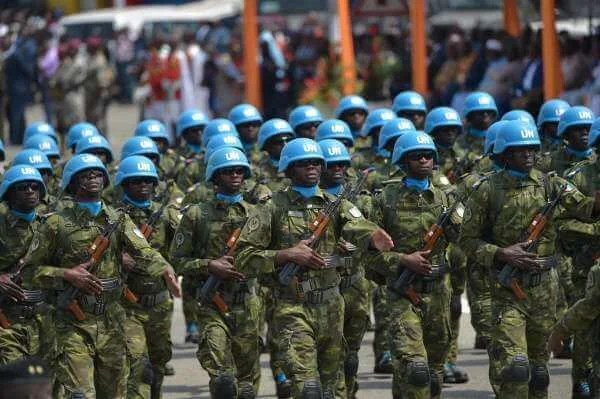


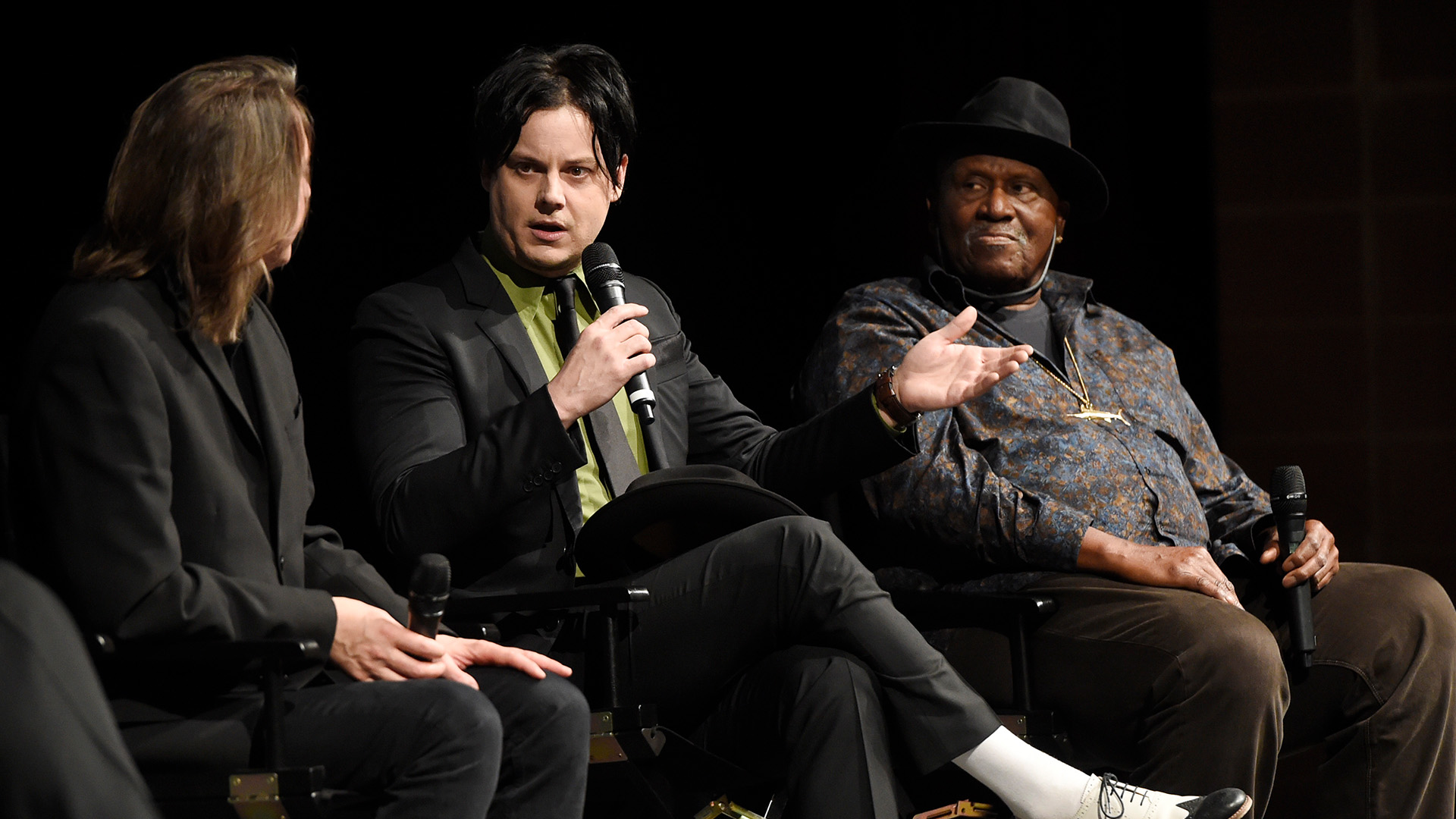
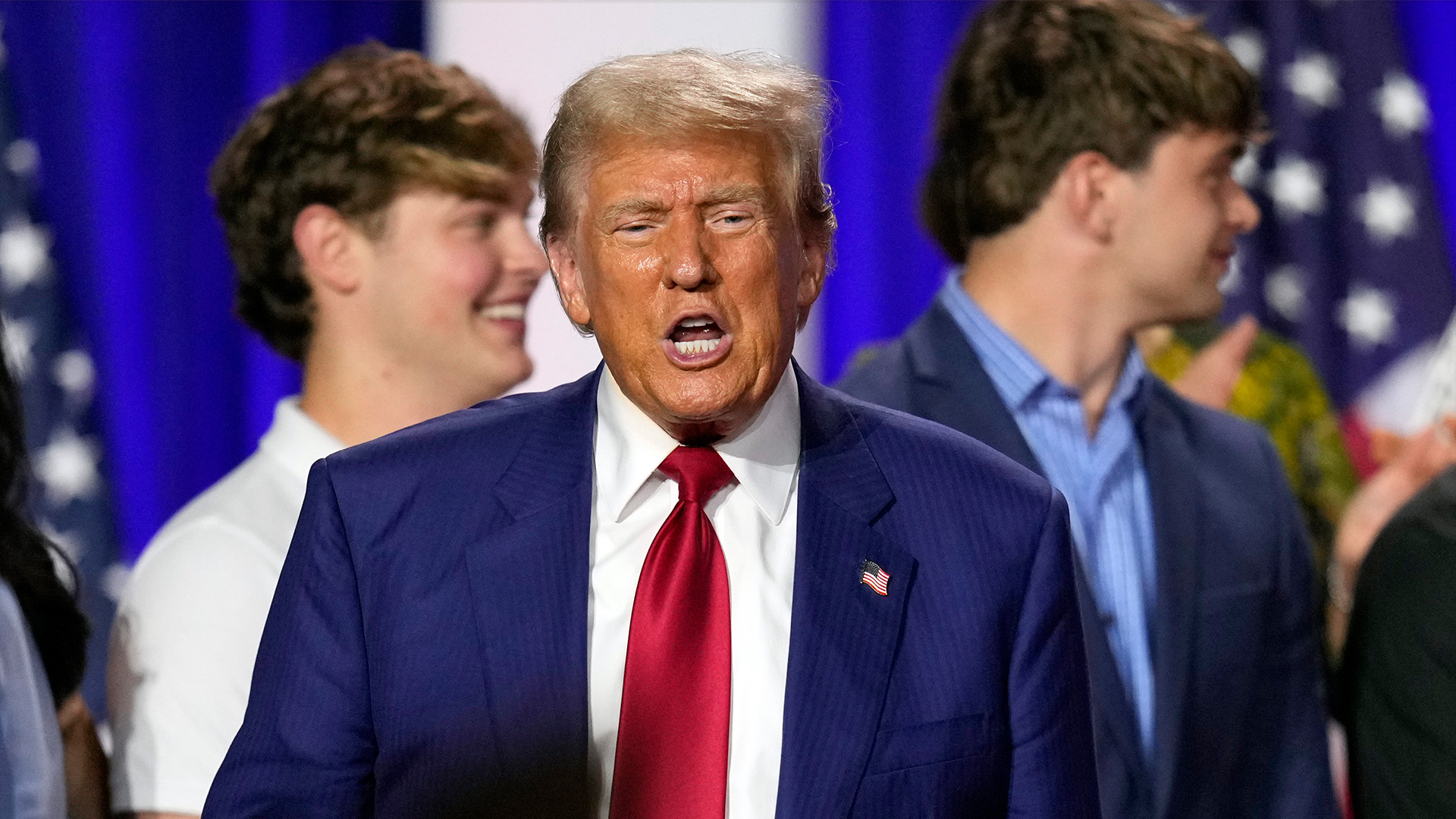
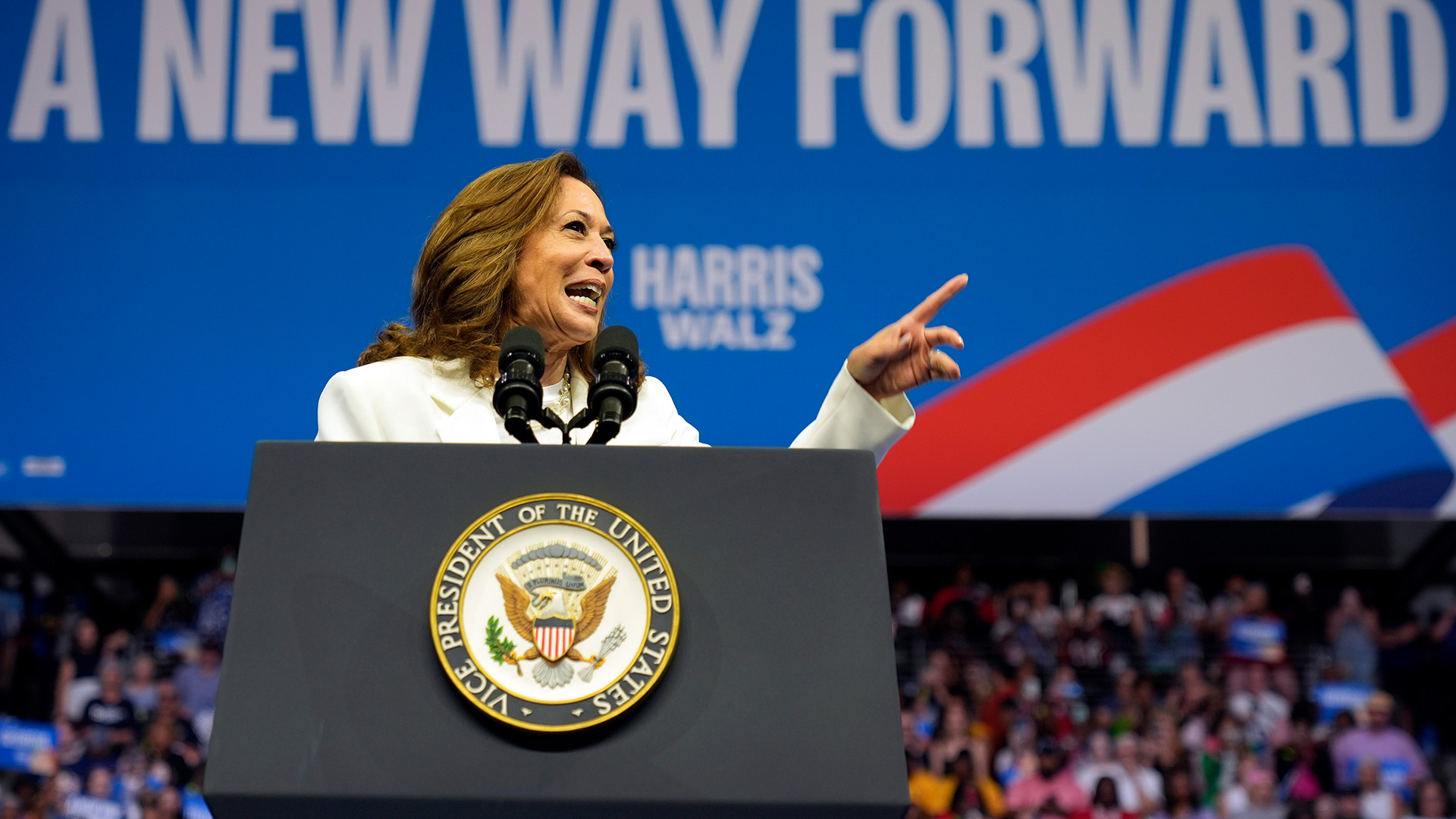
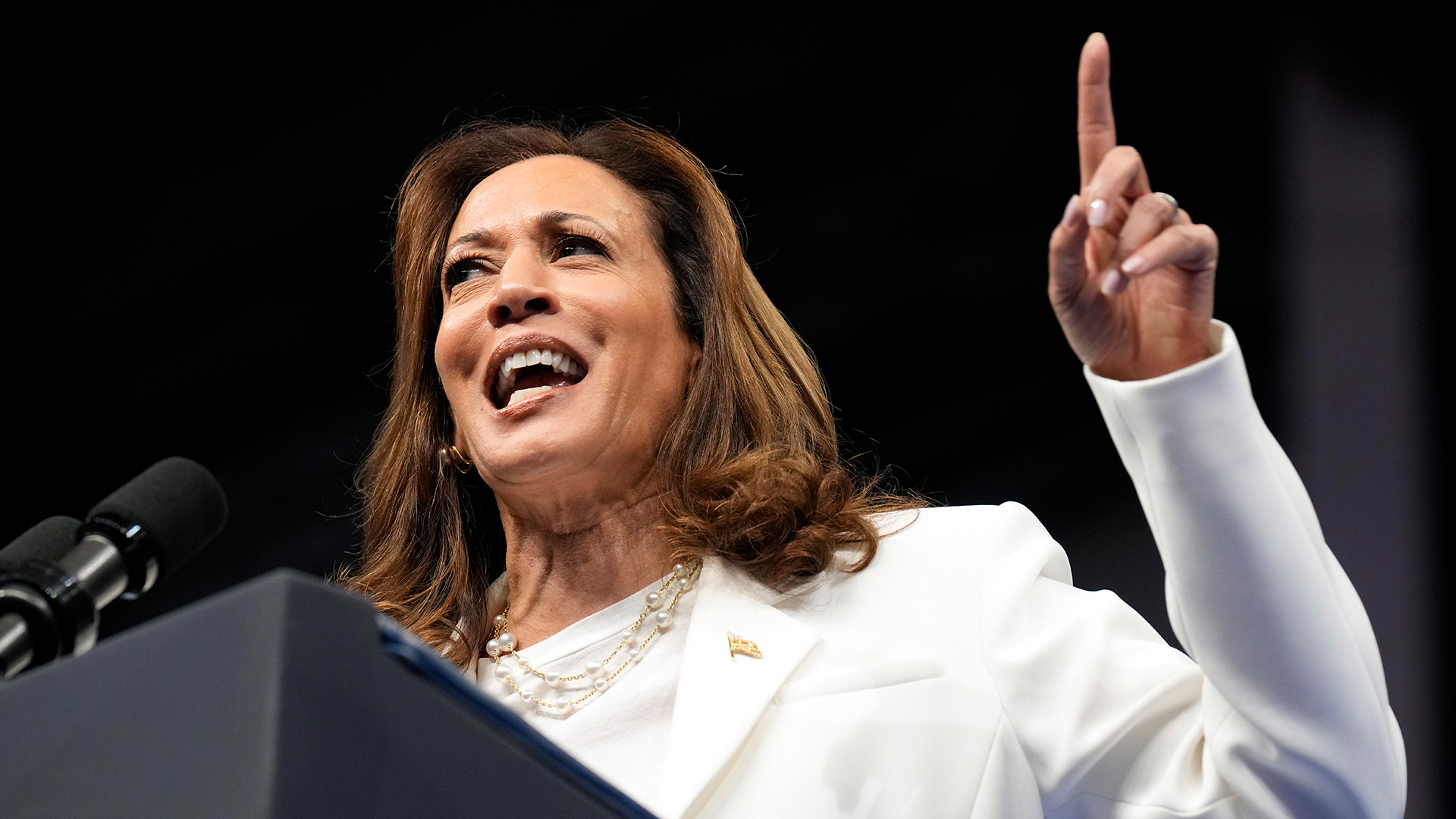
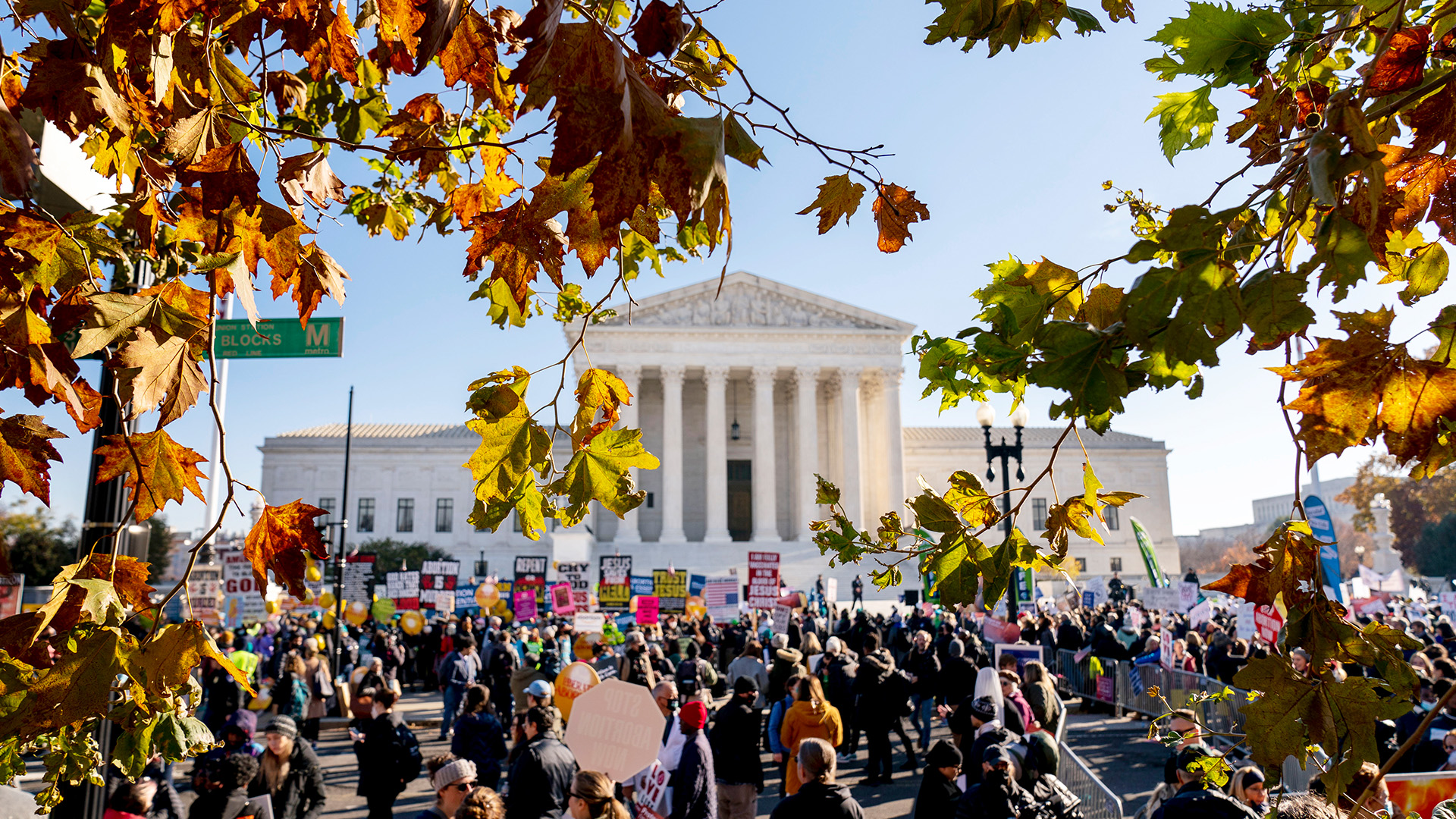
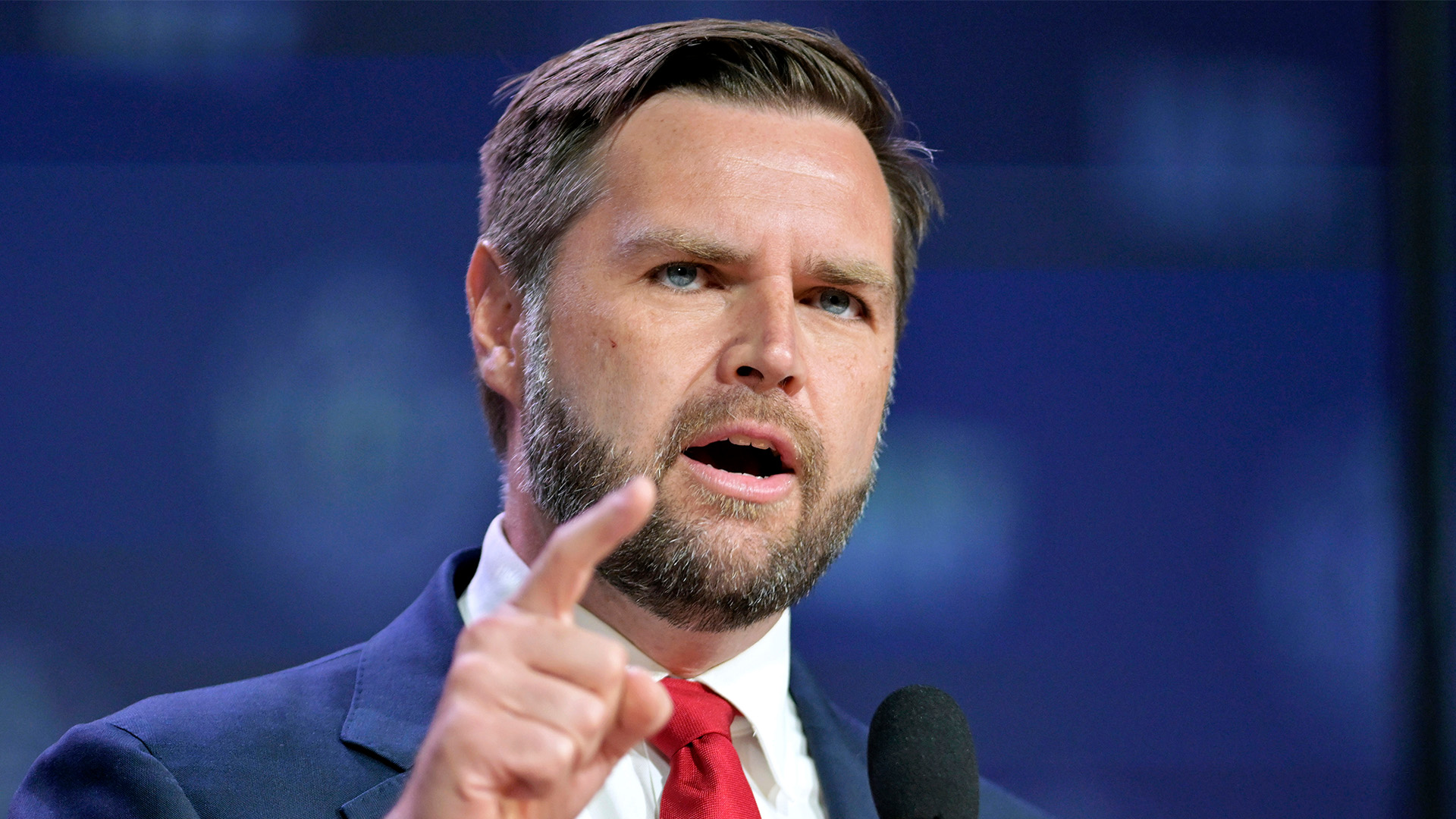

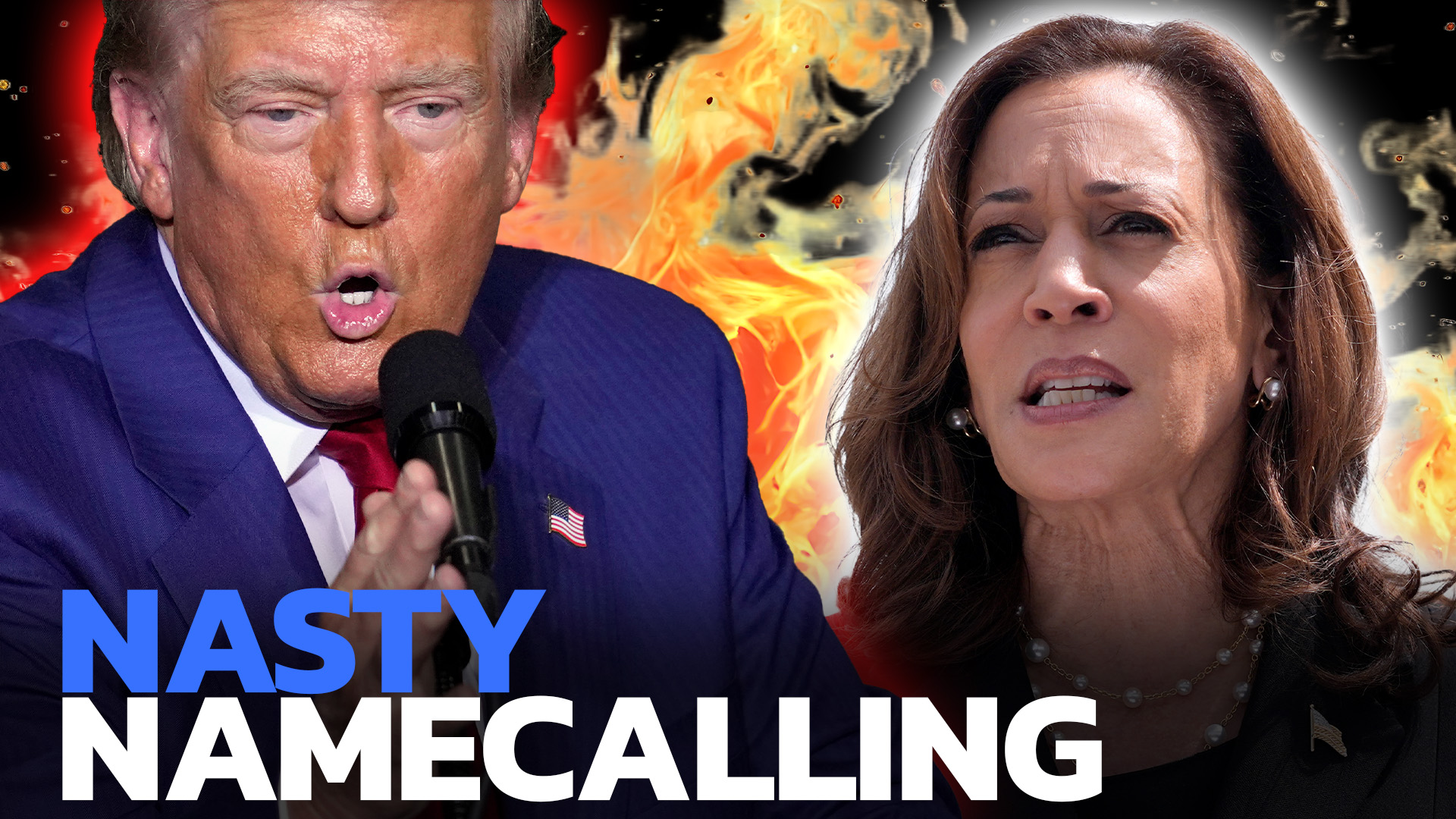


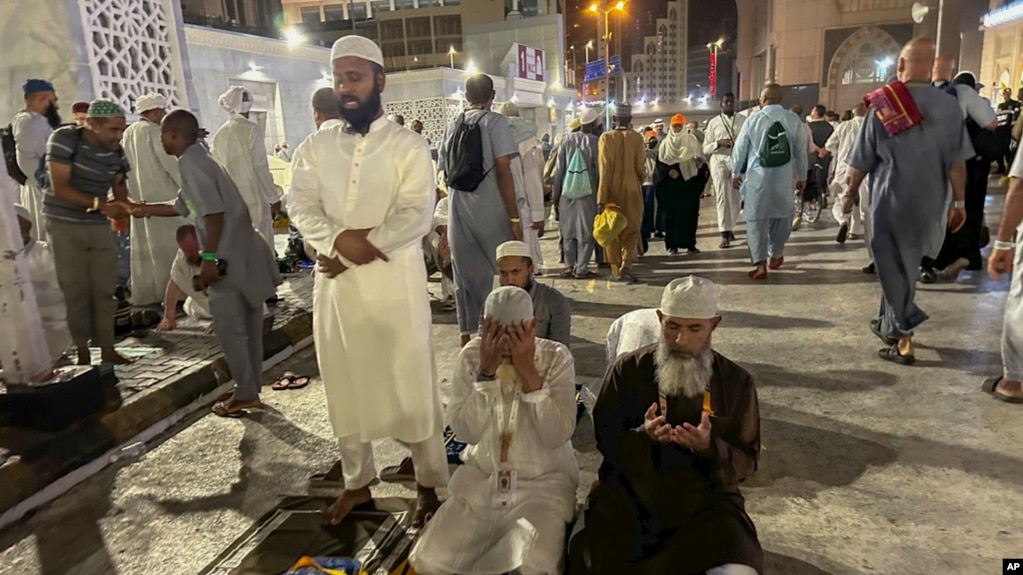





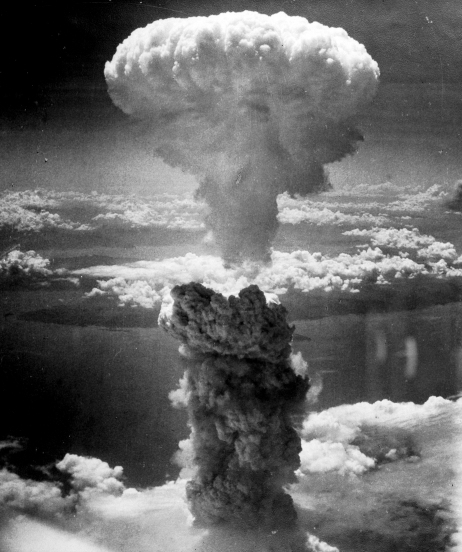

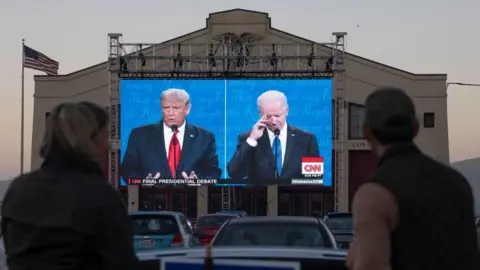 Getty ImagesViewers watch a 2020 presidential debate between Joe Biden and Donald Trump. The two will likely face off again this year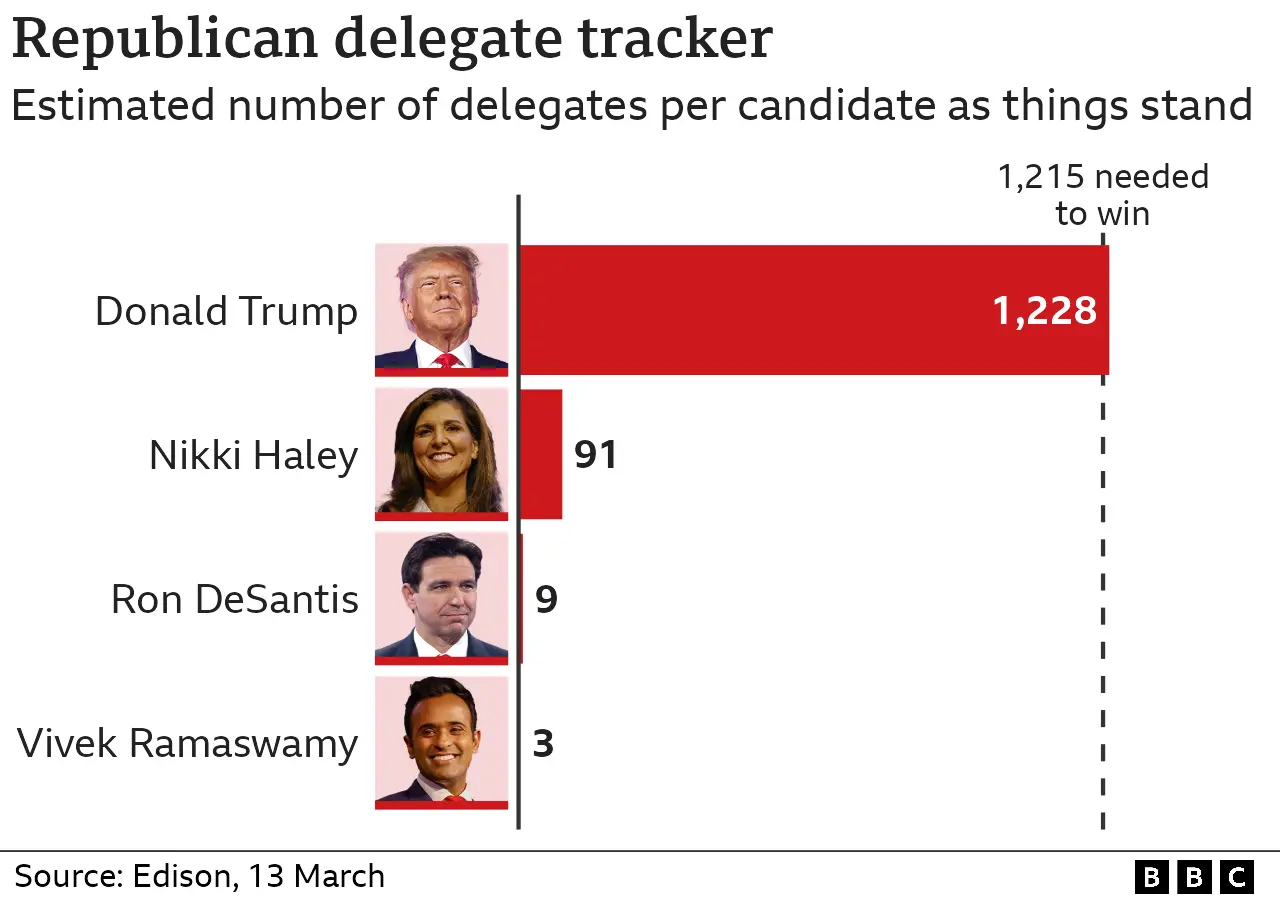

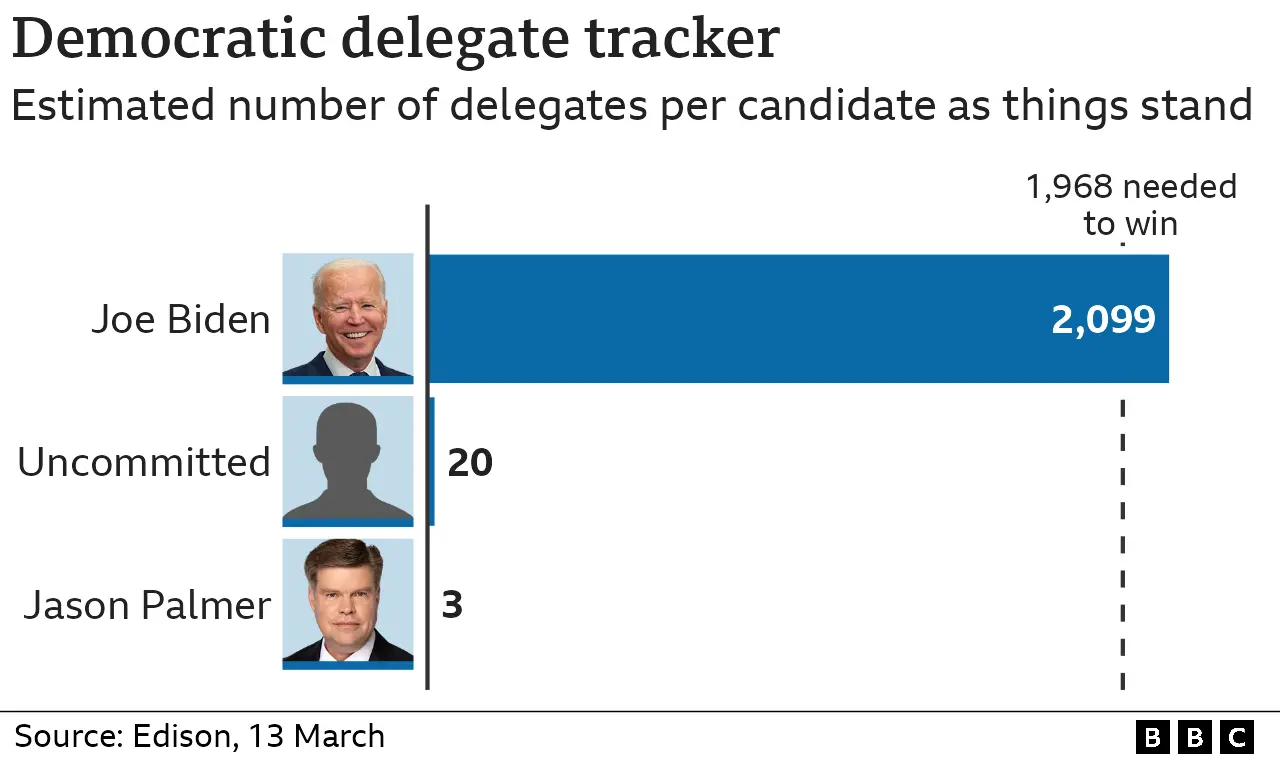


 fshiels