IS HE RIGHT? In part, but we are not so sure [Krugman Nov. 6 TRIUMPH OF THE WRONG, ny times]

PAUL KRUGMAN

The Opinion Pages | OP-ED COLUMNIST

Triumph of the Wrong

The race is not to the swift, nor the battle to the strong, neither yet bread to the wise, nor yet midterms to men of understanding. Or as I put it on the eve of another Republican Party sweep, politics determines who has the power, not who has the truth. Still, it’s not often that a party that is so wrong about so much does as well as Republicans did on Tuesday.

I’ll talk in a bit about some of the reasons that may have happened. But it’s important, first, to point out that the midterm results are no reason to think better of the Republican position on major issues. I suspect that some pundits will shade their analysis to reflect the new balance of power — for example, by once again pretending that Representative Paul Ryan’s budget proposals are good-faith attempts to put America’s fiscal house in order, rather than exercises in deception and double-talk. But Republican policy proposals deserve more critical scrutiny, not less, now that the party has more ability to impose its agenda.

So now is a good time to remember just how wrong the new rulers of Congress have been about, well, everything.

First, there’s economic policy. According to conservative dogma, which denounces any regulation of the sacred pursuit of profit, the financial crisis of 2008 — brought on by runaway financial institutions — shouldn’t have been possible. But Republicans chose not to rethink their views even slightly.They invented an imaginary history in which the government was somehow responsible for the irresponsibility of private lenders, while fighting any and all policies that might limit the damage. In 2009, when an ailing economy desperately needed aid, John Boehner, soon to become the speaker of the House, declared: “It’s time for government to tighten their belts.”

So here we are, with years of experience to examine, and the lessons of that experience couldn’t be clearer. Predictions that deficit spending would lead to soaring interest rates, that easy money would lead to runaway inflation and debase the dollar, have been wrong again and again. Governments that did what Mr. Boehner urged, slashing spending in the face of depressed economies, have presided over Depression-level economic slumps. And the attempts of Republican governors to prove that cutting taxes on the wealthyis a magic growth elixir have failed with flying colors.

In short, the story of conservative economics these past six years and more has been one of intellectual debacle — made worse by the striking inability of many on the right to admit error under any circumstances.

Then there’s health reform, where Republicans were very clear about what was supposed to happen: minimal enrollments, more people losing insurance than gaining it, soaring costs. Reality, so far, has begged to differ, delivering above-predicted sign-ups, a sharp drop in the number of Americans without health insurance, premiums well below expectations, and a sharp slowdown in overall health spending.

And we shouldn’t forget the most important wrongness of all, on climate change. As late as 2008, some Republicans were willing to admit that the problem is real, and even advocate serious policies to limit emissions — Senator John McCain proposed a cap-and-trade system similar to Democratic proposals. But these days the party is dominated by climate denialists, and to some extent by conspiracy theorists who insist that the whole issue is a hoax concocted by a cabal of left-wing scientists. Now these people will be in a position to block action for years to come, quite possibly pushing us past the point of no return.

And we shouldn’t forget the most important wrongness of all, on climate change. As late as 2008, some Republicans were willing to admit that the problem is real, and even advocate serious policies to limit emissions — Senator John McCain proposed a cap-and-trade system similar to Democratic proposals. But these days the party is dominated by climate denialists, and to some extent by conspiracy theorists who insist that the whole issue is a hoax concocted by a cabal of left-wing scientists. Now these people will be in a position to block action for years to come, quite possibly pushing us past the point of no return.

But if Republicans have been so completely wrong about everything, why did voters give them such a big victory?

Part of the answer is that leading Republicans managed to mask their true positions. Perhaps most notably, Senator Mitch McConnell, the incoming majority leader, managed to convey the completely false impression that Kentucky could retain its impressive gains in health coverage even if Obamacare were repealed.

But the biggest secret of the Republican triumph surely lies in the discovery that obstructionism bordering on sabotage is a winning political strategy. From Day 1 of the Obama administration, Mr. McConnell and his colleagues have done everything they could to undermine effective policy, in particular blocking every effort to do the obvious thing — boost infrastructure spending — in a time of low interest rates and high unemployment.

This was, it turned out, bad for America but good for Republicans. Most voters don’t know much about policy details, nor do they understand the legislative process. So all they saw was that the man in the White House wasn’t delivering prosperity — and they punished his party.

Will things change now that the G.O.P. can’t so easily evade responsibility? I guess we’ll find out.

Russia may ban circulation of US dollar: US NEWSBLOG

PUTIN

Russia may ban circulation of US dollar
[ 05 November 2014 14:46 ]

The State Duma has been submitted a relevant bill

Moscow. Farid Akbarov – APA. Russia may ban the circulation of the United States dollar.

The State Duma has already been submitted a relevant bill banning and terminating the circulation of USD in Russia, APA’s Moscow correspondent reports.

If the bill is approved, Russian citizens will have to close their dollar accounts in Russian banks within a year and exchange their dollars in cash to Russian ruble or other countries’ currencies.

Otherwise their accounts will be frozen and cash dollars levied by police, customs, tax, border, and migration services confiscated.

After the law enters into force, it will be impossible to obtain cash dollar in Russia. The ban or termination of the US dollar will not apply to the exchange operations carried out by Russian Central Bank, the Russian government, ministries of foreign affairs and defense, the Foreign Intelligence Service and the Federal Security Service.

From Reuters: India, isolated, toughs it out in WTO food-stockpiling row

NEW DELHI/GENEVA Wed Nov 5, 2014 10:03am ESTIndian PM Modi speaks with Finance Minister Jaitley during the launch of the Jan Dhan Yojana, or the Scheme for People's Wealth, in New Delhi

Related Topics

(Reuters) – India defied the world on Wednesday in a row over food stockpiling that has crippled attempts to reach a global trade agreement, raising doubts that backroom talks can reach a compromise before a Group of 20 summit this month.

At the end of July, Prime Minister Narendra Modi pulled the plug on implementing a so-called trade-facilitation deal struck in Bali last year, linking it to the emotive issue of rural poverty in his country of 1.25 billion people.

India wants to keep a so-called ‘peace clause’ that protects its huge state food purchases until the World Trade Organization can strike a definitive deal on stockpiling. As originally envisaged in Bali, the clause would expire in four years.

Critics say the food stockpiling amounts to paying farmers to produce food, which is likely to lead to food surpluses that will get dumped on world markets.

New Delhi’s blockade has plunged the WTO into its worst crisis in two decades, leading Director General Roberto Azevedo to float the idea of abandoning the consensus principle on which the 160-member group operates.

Modi’s tough line jars with the ‘Make in India’ pitch he has taken to investors abroad in his first five months in charge. Having failed to make progress on trade when he met U.S. President Barack Obama in Washington, he could find himself isolated at his first G20 summit of world leaders in Brisbane, Australia, on Nov. 15-16.

“India’s position on trade facilitation has been completely misunderstood because of unreasonable positioning by some of the developed countries,” Finance Minister Arun Jaitley told a World Economic Forum conference in New Delhi.

Jaitley repudiated suggestions that India was fundamentally opposed to trade facilitation, which would entail easing port and customs procedures and, by some estimates, add $1 trillion and 21 million jobs to the global economy.

QUIET DIPLOMACY

India has begun backroom efforts to break the deadlock, sending a top trade ministry official to Geneva this week for talks with Azevedo and key WTO members.

Trade diplomats said that there was no hint, however, that a compromise could be reached on India’s demands, which have been vague and varied in the months since its veto.

On Monday, Modi held a meeting of Indian trade ministry officials to discuss how the deadlock could be broken without compromising India’s food-security concerns.

“If India has to submit a proposal, it would be presented at the right time,” a senior trade ministry official with direct knowledge of the matter told Reuters.

India refuses to bow to foreign calls to scale back a scheme to buy wheat and rice that it distributes to 850 million people. In a recent disclosure to the WTO, India said those purchases cost $13.8 billion in 2010-11 – part of the $56.1 billion it spent in total on farm support.

“All that we are requesting is the settlement of the dispute with regard to the food stock holdings, and the peace clause must continue to co-exist,” Jaitley said.

Diplomats say that without a WTO deal on trade facilitation, countries could simply tack the draft agreement onto their existing membership terms, putting the onus on India to object – and explain why its interests had been damaged by such a move.

Yet economists say WTO members lack any effective means to bring pressure to bear against Asia’s third-largest economy, which is home to a sixth of the world population.

“It’s an issue that in India is so politicized – you have hordes of the population living in poverty and depending on food aid,” said Shilan Shah, an economist who covers India at Capital Economics in London.

“The WTO hasn’t really shown the kind of will to move on without India’s agreement. What it demonstrates is how important India is to the global trading community.”

(This story corrects typo in ‘a’ in first paragraph)

(Reporting and writing by Douglas Busvine)

The Kids Need Cash A simple way to reduce child poverty is to give families cash: From US NEWSBLOG NOV 5

KIDS NEED CASH

Last week, UNICEF released a report detailing the state of child poverty in 41 of the world’s richest countries. The United States, all on its own, put 1.7 million children into poverty since the 2008 recession. As it turns out, we are second only to Mexico in terms of creating poor children.

So what can our country do better, when it comes to our children?

We could piggyback on the recent popularity of an old social security policy idea that’s been dusted off and circulated around the Internet blogosphere — the Universal Basic Income. The concept is simple: Every person in America would get a yearly stipend, say, $10,000, which would either bolster or replace other forms of social insurance. Services are streamlined into one simple payout, and there are no messy administrative barriers. If you’re alive, you make the cut. Such a policy would guarantee that all households, whether they had children or not, would get an income boost.

Given the extreme skepticism in the United States toward the social safety net, a universal basic income’s recent surge in popularity is encouraging.

[SEE: Political Cartoons on the Economy]

But I think the wrong issue is being put on the table.
For starters, even supporters of guaranteed income acknowledge that it is politically infeasible in the United States — and probably anywhere else, for that matter. The only precedent we have among our developed counterparts is in Switzerland, a much smaller, wealthier, and more homogeneous state. Even there, the policy isn’t actually in place yet — advocates have simply gathered enough support to hold a referendum sometime in the future.

So, as much as policy wonks would like to hope otherwise, in its current state, and with the state of our gridlocked government, the Utopian idea of a basic income remains more a political theory than a policy in reality (albeit a compelling one). It’s just not going to happen.

But there is a related policy idea that social democracies have used for years that I think deserves as much, if not more, of our attention: cash for children.

Child benefits and conditional cash transfers, which give money to children (or, rather, the households in which they reside), are examples of existing basic income-like policies that have proven to work. But unlike guaranteed income, which has no current working models, child benefits have been put in practice in nearly every European country. Because of this, we have years worth of data that shows child benefits help to reduce child poverty. They are also Latin America’s poverty-cutting policy tool of choice, and their benefits have been rigorously measured and tested.

[READ: Housing Matters]

In fact, among economically advanced countries evaluated by an earlier UNICEF report on child poverty, the United States is the only one that does not have a child cash benefit policy. It also happens to have the second highest child poverty rate among the same cohort.

The theory behind providing child benefits lies in the fact that, while children are necessary for a healthy economy, they are an extremely expensive undertaking for their parents. The total cost of raising a child is $241,080, as estimated by the U.S. Department of Agriculture. Lessening this burden, so that children would not be raised in poverty, would be in the national interest, for many reasons.

In most child benefit systems, cash is given monthly, usually to mothers, and is adjusted depending on the number of children they have. Benefits can be means-tested (conditional on income level) or universal, big or small, but evidence shows the more cash transferred, the more you cut child poverty. An annual transfer of $3,000 per child would reduce child poverty by 40 percent in the United States, as estimated by Steven Pressman.

[READ: Choosing Schools at Any Income]

Perhaps most importantly, there is a much better chance of implementing child benefits in the United States than universal income. The latter would require a massive overhaul of how our country views and treats poverty, and require our government to spearhead a relatively uncharted redistributive policy. On the other hand, the universal child benefit is not a far cry from tax credits we already have in place, such as the earned income tax credit and the child tax credit, which give money back to working parents.

The main difference is parents must have an income to receive the benefits, and while the EITC is refundable (if the benefit exceeds a low-wage worker’s income tax liability, the balance will be paid back), the child tax credot is only partially and regressively so. For example, families receive a refund from the credit equal to 15 percent of their earnings above $3,000 — a family earning $4,000 would only receive $150, while a family earning $10,000 would receive $1,050. This counter-intuitive benefit means the less parents make, the less money they get back. A universal child benefit could help close this gap and give cash to parents who need it the most.

The child benefit also differs from traditional welfare in the United States, or the Temporary Assistance for Needy Families, due to the fact that it is not tied to work requirements, nor are funds spent on anything other than cash to parents (less than 30 percent of TANF dollars are spent on cash assistance).

With one out of five children in the United States living under the poverty line, universal child benefits deserve our attention more than guaranteed income. While the tagline for child benefits may not be as sexy, it’s a long-awaited policy for children who have waited too long.

 KIDS NEED CASH

Education The Government Antidote to Poverty, Disease and Terrorism

Education

The Government Antidote to Poverty, Disease and Terrorism

by CESAR CHELALA

Despite enormous technological advances, humanity continues to grapple with three enormous burdens: poverty, disease and terrorism (both individual and state-sponsored.) Although the policies aimed at solving those problems are different, there is one approach that can help lower the negative effect of all three: education.

There is a clear connection between poverty and a lack of education. Although overall access to education has risen markedly over the past decade, poor children are still less likely to attend school or be enrolled in school and also more likely to repeat grades than those who come from more prosperous families.

It is harder for children from poor families to have easy access to schools, because schools tend to be concentrated in urban areas where only better-off families live. Gender disparity in access to education is also greater among the poor. To be a girl from a poor family becomes a double disadvantage. In addition, gender bias against girls in approaches to teaching and the degree of attention they receive from teachers- leaves girls at a further disadvantage.

The gender gap is generally wider at higher levels of schooling, particularly in developing countries. According to some estimates, women in South Asia, for example, have only half as many years of basic education as men, and female enrollment rates at the high-school level are two thirds that of males.

Governments tend to spend less on public education -the kind of schooling that tends to benefit mostly the poor- particularly in developing countries, during times of economic crises. In addition, wars, civil conflicts, and epidemics disrupt school services and school attendance. The wars in Afghanistan, Iraq, Yemen, Libya, to name just a few, are ample evidence of this, as is the effect that the Ebola epidemic is having now in several African countries.

Eliminating gender bias in education is particularly important when the parents’ level of education is considered with regard to their children’s educational attainment. To increase the chances of their children’s success, several studies have shown that educating mothers is more important than educating fathers.

Educated girls develop better essential life skills, including self-confidence, the ability to participate effectively in society and the capacity to better protect themselves from HIV/AIDS and sexual exploitation. Girls’ education not only empowers them, but is also considered the best investment in a country’s development.

Although many diseases are unavoidable, others are created or worsened by social and living conditions. The World Health Organization has insisted on the importance of the “social determinants of health,” which are the social and economic conditions in which people are born, grow up, live, work and age. They significantly influence people’s health status, their access to education and social services and their quality of life.

In regard to terrorism, one question notably absent from the discussion on this phenomenon are the reasons behind it, and why it has increased so markedly in recent years. Although many countries suffer this problem, it seems to be aimed to a large extent against the U.S. One cannot avoid thinking how the foreign policies of the U.S. have been a major cause.

Among those policies are: the presence of U.S. troops in Arab countries; the U.S. support for dictatorships throughout the world; the widespread use of torture and humiliation in U.S. prisons, particularly against prisoners from Arab countries; and the unconditional U.S. support for Israel’s policies in the Middle East to the detriment of Palestinians’ rights and aspirations.

Rather than trying to understand those reasons, the U.S. has led a brutal war against those it perceives as terrorists, killing thousands of innocent people in a state of unending war of enormous economic cost. Rather than eliminating terrorists these policies are only fueling the creation of new ones. As Malala Yousafzai, the 17-year-old Nobel Peace Laureate Pakistani young woman told President Obama: “While guns only kill terrorists education kills terrorism.” As such, it is necessary to improve the disenfranchised youth who may become involved in violent activities.

These three burdens of humanity: poverty, disease and terrorism can be better solved through education, by adequately responding to people’s just grievances and by putting emphasis on policies that address justice and human rights concerns.

Dr. Cesar Chelala is a winner of an Overseas Press Club of America award

NEW YORK POST REPORTS TROUBLE FOR BAGHDAD

Thousands of jihadi fighters from the murderous ISIS terrorist group surrounded Baghdad Sunday and were prepared to mount an assault.

More than 10,000 of the fanatical barbarians had gathered outside the Iraqi capital, poised to take it by force, an Iraqi official told Britain’s Telegraph newspaper.

Sabah al-Karhout, president of the provisional council of Anbar Province, told the paper that the fighters had advanced as far as Abu Ghraib, a suburb.

He said Iraq needed US aid because the western part of the country had fallen largely under the control of ISIS.

In response, the United States called in Apache helicopters to keep Iraqi forces from being overrun by ISIS savages near Baghdad’s airport.

Army Gen. Martin Dempsey, chairman of the Joint Chiefs of Staff, said the militants had come within 15 miles of the airport and had overrun the Iraqis.

“It was a straight shot to the airport,” he told ABC’s “This Week.” “So we’re not going to allow that to happen.”

Also on Sunday, three suicide bombings killed 58 people, many of them Kurdish security forces, in Qara Tappah, northeast of Baghdad. And a roadside bomb killed Anbar Province’s police chief and six civilians.

Secretary of State John Kerry said Sunday that while US-led strikes would weaken ISIS, it was ultimately up to the Iraqis to fight the group off.

“It is Iraqis who will have to take back Iraq. It is Iraqis in Anbar who will have to fight for Anbar,” he said.

Later Sunday, Turkey offered support to the campaign against ISIS by finally granting the US access to its air bases.

Sen. John McCain, however, said the US was failing to stop the jihadist onslaught and needed to ramp up airstrikes as the militants battled to seize the Syrian border city of Kobani.

“They’re winning, and we’re not,” he told CNN’s “State of the Union.” “There has to be a fundamental re-evaluation of what we’re doing because we are not degrading and ultimately destroying ISIS.”

ISIS’s advance on the largely Kurdish city of Kobani has sent 200,000 residents fleeing.

Kerry said the US-led coalition must act to stop it.

With Post Wire Services

40 Years Of Income Inequality In America, In Graphs

Without comment yet but passed on from Planet Money on NPR’s Sunday 10/5//2014 website, this article merits attention. Text here but you most go to website for compelling graphics.

http://www.npr.org/blogs/money/2014/10/02/349863761/40-years-of-income-inequality-in-america-in-graphs?utm_source=npr_email_a_friend&utm_medium=email&utm_content=20141005&utm_campaign=storyshare&utm_term=
40 Years Of Income Inequality In America, In Graphs
by QUOCTRUNG BUI
October 02, 201410:46 AM ET
Here’s the story of income inequality in America over the past 40 years.

Hover over each line to identify household income, and click through to see the percentage growth over the past 40 years.
The graph reveals a striking pattern. After adjusting for inflation, income was basically flat for households in the bottom half of the economic ladder. Right around the middle, income starts to pick up — and the higher you go up the income ladder, the more income growth you see.

Income grew 9 percent for households at the 60th percentile, 22 percent for those at the 80th percentile and 36 percent for those at the 95th percentile. (Update: To be clear, as we reported earlier this year, many households move up and down the income ladder over time.) Gains were even larger for those at the very top, but the census data we’re using in this graph make it hard to track incomes for the top 1 percent.

Here’s how income growth shakes out over the past 20 years by the education and age of the head of household.
Among households headed by high school dropouts, incomes grew roughly in lockstep — and were basically stagnant at all levels. Among households headed by high school graduates, and in those headed by college graduates, those in the middle actually saw their wages fall. The only group that saw significant gains was households headed by high-earning college grads.

Labor economists call this “the hollowing out of the middle.” Globalization and technological change have made middle-skill, middle-income jobs harder to find. Low-skill, low-paying jobs have stuck around. And there are high-paying jobs for those at the top with the skills to put technology to profitable use.

One thing to note: That bump in 2000 for incomes among bachelor’s degree holders does not reflect reality — it’s the result of a temporary change in the way the census reported income for those at the top.

Does age make much of a difference in income inequality? Yes, especially for households headed by people between 45 and 65. In those groups, income for the middle class and the poor actually fell in the past 20 years.
A note about the data. The census has a broad definition of income, counting things like earnings, dividends and cash benefits from the government (like earned income tax credit and unemployment benefits). But it excludes capital gains and any noncash benefits from the government (like Medicare or Medicaid). This means it’s good at measuring total incomes of poor to middle-class households (where government cash transfers play a large role in income) and not so good at measuring total incomes of the rich (where capital gains play a big role in income). This is why when measuring incomes of the very rich, analysts typically look at the data set collected by Piketty and Saez, who use raw tax data to compute their estimates.

Foreign Policy Corner: (big policy implications) Art Lerman on Plight of Latin American Children Crossing the Border

immigrant_children_crossing_border_2014-06-24_af4b20children crossing border

To the Editor: (Bergen, NJ, RECORD)

Regarding “Paying for kids who entered illegally” (Your Views, Sept. 1):

In reference to the flood of “children who have illegally crossed the border [into the United States] since October,” the writer asks, “…Who pays for their health, education, maintenance and support? I worry that those expenses will be pushed onto taxpaying [U.S.] citizens…”

The writer feels that the children are freeloaders, sent to our care by parents who are not taking responsibility for their own children. It’s their responsibility, not ours! “Where are their parents?” he asks.

But maybe we are responsible—very responsible for the plight of these children and their parents.

Is it not the U.S. drug laws, and the widespread willingness of Americans to break them, that have created the incredibly lucrative illegal drug market, motivating and funding the gang violence that drives Central American parents to send their children to our borders?

And is it not our guns, bought in U.S. gun shops and shipped to Central America, that makes the gang violence so lethal?

And maybe it is also a lack of attention by our society, thinking that poverty rates of 65% in Honduras, 75% in Guatemala, and 40% in El Salvador will somehow not spill over to our borders–and thinking that Central American governments, run by tiny, sometimes even uncaring elites, facing the threats of drug gang guns and the temptations of drug gang money (both originating in the U.S.), can turn the tide without our help.

Arthur J. Lerman
………………………………………

Foreign policy corner: A NEW LOOK AT THE GRENADA INVASION OF 1983

GRENADAGRENADA MAP

ONE OF MY INTERNATIONAL RELATIONS STUDENTS ON “ANALYZING GRENADA, 1983

We have been studying Levels of Analysis (Kenneth Waltz, Graham Allison) in our course, and MS. MERCEDES GUERRERO had this to say about the Reagan administration’s handling of the Grenada “crisis” that year.

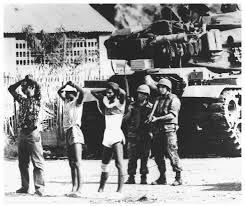
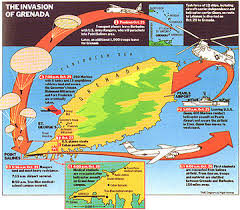
The Invasion of Grenada in 1983 –

Grenada, Small Island of 91,000 in population close to Venezuela in the Caribbean, was invaded by the United States in 1983. The reason for the invasion was that the 3 years prior to that a revolutionary group of Venezuelan and Cuban overthrew the government, establishing a revolutionary government.

The Countries of Barbados and Jamaica allied with the Organization of the Eastern Caribbean States organized and made a request for assistance to Ronald Reagan, the president of the United States at that time, which had decided to take military action. The military action took place because allegedly there was a group of American medical students held hostage by the local revolutionary government and the invasion was requested through a diplomatic channel. The US Official cited the murder of the imposed Maurice Bishop.

INDIVIDUAL LEVEL ANALYSIS:

The international press criticized the decision of the invasion to Grenada, this being a free country that it can take care its own problems. The United States violated several treaties and conventions to which it was a party. For example, Margaret Thatcher, British Prime Minister sent a message to President Ronald Reagan to consider his decision and cancel the order to landing in Grenada. When she told him that, he had already begun to do so. Also, A group of democratic senators restrained to vote in favor of his decision, but he made his own decision to do so.

The chaos came after that, because they did not know who to blame for it. The New York Times said that “the Analysis by the U.S. Department of Defense showed a need for improved communications and coordination between the branches of the U.S. forces.” Who is the commander in chief at that time? Ronald Reagan.

Reasons for his decision were not really the American Students. The reason for that decision was the need to eradicate a possible growing community of revolutionary in this area, next to Cuba as an allied, the support of the Britain, Libya and Algeria. It was the construction of an international airport too big to the necessity of such a small country, what they alleged it was for the tourism demand in the Island. Reagan saw the possibility it would enhance the Soviet and Cuban transportation of weapon to Central American insurgents and expand Soviet regional influence.

It was the Wishful thinking of the President Reagan to control of the propagation of the communism in the Caribbean and Latin America.

State Level Analysis:

By the same talking, the decision-making coming from the Commander in Chief, President Ronald Reagan to invade Grenada it was nothing more the fear of the exposition of the Cuban influence and the Soviet Union in the Caribbean community, so close to its beach and sea delimitations that could fulfill the ideas to continue fabricating missiles, and therefore the easiness of the transportation of those weapons throughout our barriers.

System-Level Analysis

By restraining this type of revolutionary governments in Latin America United States was trying to restrain the communism in our area.

We can see that was the glorious era of the imposition of the United States, with his power to control the expansion of said doctrine in our society, making the Yankee imperialism more realist than ever. It was imposing its power all around the world.

This entry was posted in Uncategorized on September 24, 2014. Edit
LOSS OF $1 TRILLION IN WELL INTENTIONED THIRD WORLD AID
Leave a reply
THIRD WORLD AID
People in some of the world’s poorest countries are being deprived of one trillion dollars every year.

Criminals are secretly siphoning off cash through money laundering, tax evasion and embezzlement. Not just a little cash. One trillion dollars.

We’re not talking about international aid, which is making a real and tangible difference, but money taken from developing countries’ own budgets and economies. Imagine what just a fraction of that money could do if it was invested in helping families lift themselves out of poverty for good.

This is a Trillion Dollar Scandal and it’s up to us to tell world leaders to stop it.

In just a few weeks, finance ministers from the world’s 20 most powerful countries are meeting in Australia. They’ve got the power to help put an end to these deals – but only if we make this scandal impossible to ignore.

Tweet or send a message to US Treasury Secretary Jack Lew right now and tell him it’s time for the world’s poorest to get their $1,000,000,000,000 back.

It might seem like there’s nothing you can do to help. But if this issue is on the finance ministers’ agenda when they meet, we could see our leaders commit to some powerful new rules.

So here’s the plan: Tweet our finance ministers – including US Treasury Secretary Jack Lew. And we won’t send just a couple of tweets, but thousands for all the world to see. Urge them to make history and end this Trillion Dollar Scandal.

That’s only phase one – we’ll have more ideas to get leaders to act, so stay tuned.

It’s time to help the world’s poorest people get their trillion dollars back.

Make sure our leaders know we mean business: http://www.one.org/scandal

Thanks for your support.

-ONE

This entry was posted in Uncategorized on September 7, 2014. Edit
20 MILLION PEOPLE DIE EACH YEAR OF HUNGER AND MALNUTRITION/ Frederick L. Shiels
Leave a reply
HUNGER WORLDWIDE
and malnutrition. That’s 1 Vietnam (all statistics are American-only comparisons) very week , 1 World War I in 1.2 years, 1 World War II, every 3 years. These are people in Africa and Asia mainly, often civil war refugees, esp. in Africa now. This does not include any Other disease (AIDS, malaria, polio, tropical diseases).
To nourish most of these people through NGO’s (you should know the term) and government aid would cost about $300 billion per year. The U.S. defense budget is $700 billion, it’s federal budget 4 TRILLION $. Europe and Japan together spend more than that. So do the math: $300 bil. to save over 15 million lives annually out of budgets of 9 Trillion (9,000,000,000,000).
Americans spend several hundred billion annually on cosmetics, beer, and cappuccino’s (see the prices at Starbucks). That’s 20 million humans mostly under 10 yrs. or over 60 yrs. old, annually.
nd malnutrition. That’s 1 Vietnam (all statistics are American-only comparisons) very week , 1 World War I in 1.2 years, 1 World War II, every 3 years. These are people in Africa and Asia mainly, often civil war refugees, esp. in Africa now. This does not include any Other disease (AIDS, malaria, polio, tropical diseases).
To nourish most of these people through NGO’s (you should know the term) and government aid would cost about $300 billion per year. The U.S. defense budget is $700 billion, its federal budget 4 TRILLION $. Europe and Japan together spend more than that. So do the math: $300 bil. to save over 15 million lives annually out of budgets of 9 Trillion (9,000,000,000,000).
Americans spend several hundred billion annually on cosmetics, beer, and cappuccino’s (see the prices at Starbucks). That’s 20 million humans mostly under 10 yrs. or over 60 yrs. old, annually.

FROM PAUL KRUGMAN’S NY TIMES BLOG: AMERICANS’ SPECIAL TAKE ON INEQUALITY


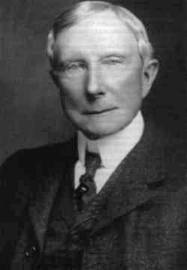
PAUL KRUGMAN 2      ROCKEFELLER  JUNGLE UPTON SINCLAIR

The piece published below by Paul Krugman, at  http://krugman.blogs.nytimes.com/?8dpc.

is part of our occasional series of comments by respected progressives (and sometimes non-progressives!). Here Krugman argues, as we have, that Americans tend to have an acceptance of economic inequality based on a kind of implied Social Darwinism. This oversimplifies Krugman and the American outlook but observes that those that have greater wealth generally Merit it, and vice versa. This is not only different from the current view in many countries that greater wealth is not always “earned,” there is a larger component of luck—or structural factors than many Americans would acknowledge. It also (America’s view for much of the past 150 years) different from the 19th (and earlier) Century view that wealth was just sort of the natural order of things (a view prevalent in ancient and Medieval times as well), without much attention to how that order emerged. Systematic inquiries into the origins of inequality emerged in the 19th C. writings of David Ricardo and Karl Marx, among other, and at least hinted at in the work of Adam Smith in the late 1700s. The topic has been most recently taken up on a grand scale, as noted in our previous blog entry, by Thomas Picketty in his CAPITAL… IN THE 21ST CENTURY.


KRUGMAN

AUG 20 1:17 PM 
Inequality Delusions

Via the FT, a new study compares perceptions of inequality across advanced nations. The big takeaway here is that Americans are more likely than Europeans to believe that they live in a middle-class society, even though income is really much less equally distributed here than in Europe. I’ve truncated the table to show the comparison between the U.S. and France: the French think they live in a hierarchical pyramid when they are in reality mostly middle-class, Americans are the opposite.

Photo

Credit

As the paper says, other evidence also says that Americans vastly underestimate inequality in their own society – and when asked to choose an ideal wealth distribution, say that they like Sweden.

Why the difference? American exceptionalism when it comes to income distribution – our unique suspicion of and hostility to social insurance and anti-poverty programs – is, I and many others would argue, very much tied to our racial history. This does not, however, explain in any direct way why we should misperceive real inequality: people could oppose aid to Those People while understanding how rich the rich are. There may, however, be an indirect effect, because the racial divide empowers right-wing groups of all kinds, which in turn issue a lot of propaganda dismissing and minimizing inequality.

Interesting stuff.