
STUDENTS ON THE BATTLE OF RUSSIA FILM FROM 1943

FRANK CAPRA’S CLASSIC 1943 DOCUMENTARY ABOUT THE GERMAN INVASION AND SOVIET RUSSIA: First let Josh Neboa record his reaction:
Josh Noboa

11 hours ago, at 8:05 PMNEW

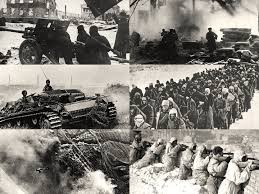
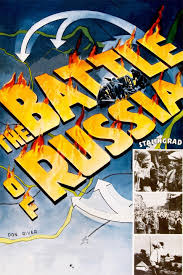
Watching The Battle of Russia (Chapter V of Frank Capra’s Why We Fight series) proved to be a surprisingly impactful viewing experience. While the film does at first appear to be dated in its tone and manner of presentation, its purpose soon becomes evident. This is not simply a historical account or a movie – it is meant to have an educational impact on American soldiers and civilians. Hitler is portrayed as pompous and absurdly unrealistic, failing to recognize that Russia has never succumbed to any foreign conquest throughout history. The lessons of past failed invasions are shown as well as the Nazi onslaught on Soviet Russia. 

The elements of the film that fascinated me involve the depiction of the Soviet people. Given that this film was created in 1943 (years prior to the Cold War), it is certainly impressive to see how much the film loves and admires the Russians for their courage, their unity, their artistry, and, almost, their freedom-loving nature. Considering this information now, however, only a few years after World War II ended, it becomes apparent just how much of an aid American propaganda films gave their allied nations during wartime. Furthermore, it’s equally impressive just how propaganda styles can change throughout history according to political relations between nations. 

The film’s graphics are impressive despite dating back decades, as this film predates computer graphics. The imaginative battle maps and transitions using footage from different times in history made for a compelling viewing experience. Despite all that technology provided different options for storytelling back then, this film still conveys a sense of grand scale and urgency. Even without relying on the most creative technology of the time, the film effectively makes its points.  

On the whole, sticking with the film made it clear just how impactful many older documentaries can be despite being produced decades ago. Although this one is certainly different from what we see today, this historical account of Russia and its history successfully weaves together history, warfare, and persuasion. In many ways, this series shows us just how often media has been utilized throughout history to help unify public opinions in times of turmoil, making this film impactful in its own right.

MY INTERNATIONAL RELATIONS STUDENT IVANNA ON NATIONALISM

Ivanna Lewis-McGregor

Jan 22, 2026 10:19 PM

Constructive Example: India’s Anti‑Colonial Nationalism (1880s–1947)

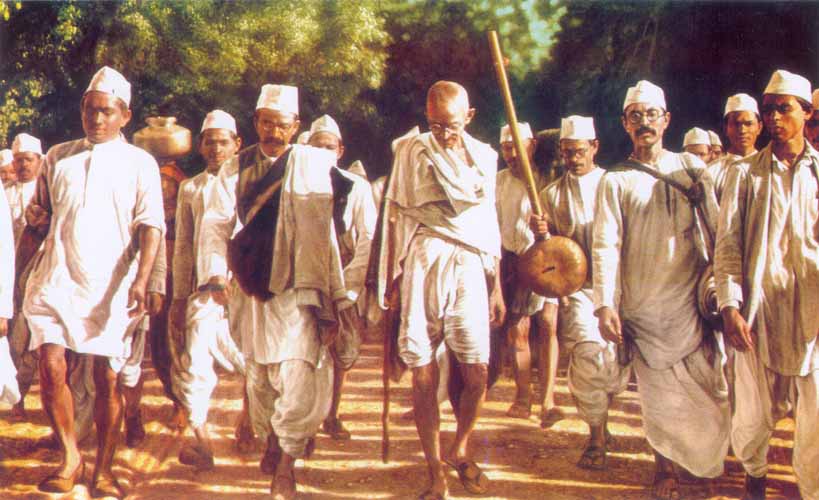
Gandhi’s Salt March, The Tax Protest that changed Indian History
Salt March

One moment that always stands out to me is how Indian nationalism shifted from scattered regional identities into a shared political force during British rule. You can see this unity in scenes like the 1930 Salt March, where thousands of ordinary people walked behind Gandhi, barefoot, refusing to fight back even when beaten. That march was not just symbolic; it showed Indians from different castes, religions, and languages acting as one political body for the first time.

Why is this nationalism constructive?

  • It united a fragmented subcontinent without relying on violence.
  • It created a civic identity based on rights, dignity, and self‑rule.
  • It helped dismantle one of the largest empires in history.

This was nationalism as empowerment, a way for people who had been treated as subjects to finally see themselves as citizens.

Toxic Example: Rwanda’s Hutu Power Nationalism (early 1990s)

On the other side, nationalism in Rwanda shows how quickly pride can turn into poison. Radio broadcasts in 1993–94 didn’t just criticize Tutsis, they described them as “cockroaches,” as if they weren’t human at all. That language wasn’t accidental. It was a deliberate attempt to turn national identity into a weapon.

You can picture the scene: neighbors who had lived side‑by‑side for decades suddenly checking ID cards, deciding who belonged and who didn’t. Nationalism became a test of purity, not unity.

Why has this nationalism become toxic?

  • It defined the nation by exclusion instead of inclusion.
  • It used fear and myth to justify violence.
  • It turned political competition into ethnic survival.

The result was catastrophic: a genocide carried out not by an invading army, but by citizens who believed they were “protecting” their nation.

Positive Nationalism — India

History.com  (Salt March)  

History.com  Editors. “Salt March.” History, 2019, https://www.history.com/topics/india/salt-march (history.com.

Britannica (Indian Independence Movement)  

“Indian Independence Movement.” Encyclopaedia Britannica, https://www.britannica.com/event/Indian-independence-movement.

Toxic Nationalism — Rwanda

United Nations (Rwanda Genocide Overview)  

“Rwanda: A Brief History of the Country.” United Nations, https://www.un.org/en/preventgenocide/rwanda (un.org.

Human Rights Watch (Leave None to Tell the Story)  

Des Forges, Alison. Leave None to Tell the Story: Genocide in Rwanda. Human Rights Watch, 1999, https://www.hrw.org/report/1999/03/01/leave-none-tell-story/genocide-rwanda (hrw.org.

Britannica (Rwandan Genocide)  

“Rwandan Genocide.” Encyclopaedia Britannica, https://www.britannica.com/event/Rwandan-Genocide (britannica.com