Mozambique Assignment OF STUDENT AURORA S RUUD From Norway

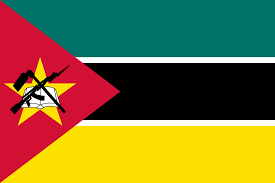
Many countries have been able to better their economy through tourism. This is especially true for countries that have a high unemployment rate but scenic views. Mozambique is an example of a country that has provided more jobs through tourism, but it has not realized its full potential in the tourism industry. Many other countries, such as the Maldives, Tanzania, and Indonesia have been able to alleviate poverty through the tourism sector. This essay will look at how Mozambique has alleviated poverty, especially through tourism, and look at how they can take it further with inspiration from other countries that have done this successfully.
Mozambique became independent in 1975, but after this came a civil war that lasted until 1992. This civil war displaced nearly five million people, fractured the country, and increased the poverty rate in Mozambique significantly. The civil war set back the nation’s economic development significantly (The Borgen Project). Mozambique is located in South-Eastern Africa and is a very scenic country. It has a lot of natural resources and is located on the coast. This gives it strategic access to the maritime economy (The Borgen Project) and provides for a beautiful and vibrant environment.
Being that Because Mozambique is such a scenic country, tourism is a great resource to create jobs and promote economic development. The country is rich in culture and has opportunities for safaris and beach activities. Since 2006 The International Finance Corporation (IFC) has been helping to grow Mozambique’s tourism sector to create employment opportunities for the nation’s poor. The IFC has made legal material on the country’s tourism industry free for potential investors (The Borgen Project). The IFC has been aiding Mozambique in sustainably developing its tourism assets such as its beaches, coral reefs, and turquoise seas. According to the IFC, this sustainable development attracts foreign exchange investments, and creates much-needed jobs, while facilitating economic development in the country as a whole. It is also important to focus on other areas than only the capital, Maputo. In 2009 the World Bank Group started the Competitiveness and Private Sector Development project which aimed to help economies outside of Maputo. Amongst other things, it promoted tourism in the Inhambane province by developing tourism-related skills such as financial accounting and management. This initiative trained more than 1300 people in order to get them to work in the tourism sector.
While tourism has already contributed to Mozambique’s economy, weaknesses in the tourism sector present challenges to future growth. These challenges include low levels of spending per visitor and poor occupancy rates. “The tourism sector needs to improve, a shift from a focus on hotel investments and a number of tourists to a focus on quality-based performance and prioritization of diversification of cultural and natural aspects of tourism” (Jones & Ibrahimo, 2007). This means prioritizing the bettering of activities and making tourists spend money once they are already in the country. In order for the tourism industry to be more beneficial, spending per visitor has to increase.
In 2017, the president of Mozambique, Filipe Nyusi, said that other challenges to tourism include poor access to roads, low quality of drinking water and electricity in tourist areas, and shortage of trained tourist guides. Programs that train locals in needed jobs like tour guides not only benefit the quality of the tourist experience but also benefit the locals and the economy. Infrastructural improvements are necessary in order to attract even more tourists, foreign investment in the country and economic development will result in money that can be used to improve infrastructure.
“The total contribution of Travel &Tourism to Mozambique’s GDP, including its wider economic impacts, is forecast to rise by 6.4% each year over the next ten years. By 2021 Travel & Tourism will support over 700,000 jobs in Mozambique” (World Tourism Organization, 2011). In 2019, travel and tourism employed 755 thousand people (World data atlas, 2019). This number was significantly reduced when the COVID-19 pandemic halted tourism all over the world. Since the beginning of the pandemic, the employment level in travel and tourism declined by around 28%, resulting in almost 200 thousand jobs lost (Statista, 2021). Mozambique is once again working toward building its economy, and when doing so it is important to consider areas for improvement in order to build the economy in the right way.
A country that Mozambique can look to for inspiration on how to better its tourism sector is the Maldives which has been very successful in creating jobs and promoting economic development in this industry. Mozambique and the Maldives have many traits in common, namely white beaches, turquoise water, and coral reefs. “In recent years, tourism has accounted directly for one-third of GDP and employment. Around 30% of government tax revenues and 70% of total foreign exchange earnings come from the sector.” (Asian Development Bank, 2002). Tourism is closely monitored by the government in the Maldives, which may be a good focus for Mozambique in the future as well. In the Maldives, the Ministry of Tourism keeps records of tourists and monitors the number of tourists on uninhabited islands and fragile coral reefs.
The ministry has created rules for the tourism and travel industry, such as; “for each island resort that is created, one island must be left as a reserve, any new resorts must only be two stories high, only 20% of the land area of an island can be built upon.” (BBC). These rules attempt to address the negative effects that tourism can have on a country. With government involvement and clear engagement and guidelines, the Maldives has been able to provide jobs for 11% of the population and generate over 600 million dollars of income a year. In 2021, the Ministry of Tourism and United Nations Development Programme (UNDP) signed the “GoM-UNDP Reimagining Tourism” project.
This project focuses on diversification of tourism and more community engagement. “Tourism is to be diversified through community-led conservation and utilization of natural ecosystems and cultural heritage as a novel tourism product. This is envisioned to facilitate a bigger role for local councils in tourism planning and enable the establishment of formal linkages of the tourism sector with traditional knowledge and livelihoods, creating avenues for greater participation of women and youth.” (United Nations Development Programme, 2021). This cooperation between the government and a UN agency will continue to better tourism in the country with a focus on the protection of local communities and the environment. The government of Mozambique has shown the political will to better the travel and tourism industry, both the previous and the present president have expressed will to better infrastructure and tourism offers in order to take full advantage of their opportunities for growth. A more hands-on and cooperative approach between the government and other agencies may allow tourism in Mozambique to become better in the right aspects. Good to divide this into 2 paragraphs…
Tourism allows for the creation of jobs that do not require high-level skills. In developing countries, many people, especially in rural areas, do not have the opportunity to pursue higher education. Jobs in hospitality create jobs for people that have not received this education. In Mozambique, many women drop out of education early, these jobs will allow for them to enter the work economy without being limited by their socioeconomic status. After making primary and secondary school free in 2003, Mozambique has a high number of girls in primary school, but only 11% of these girls progress to secondary school (The Borgen Project, 2019). Domestic responsibilities and early pregnancies are a large part of the reasons why women often do not finish education or progress to higher levels. Between 30 and 40 percent of girls in Mozambique become pregnant before they turn 18.
Already present domestic responsibilities combined with the responsibility of providing for and taking care of a child complicates women’s progress in education and work environments. This starts a bad circle where mothers’ lack of education deprives them of possibilities that can, in turn, affect their children. Since tourism creates jobs that do not require high education, it can alleviate the dispersed effects of poverty and unemployment on women and children. It allows for new groups of people to contribute to the economy and enter the workplace. This can also increase the quality of life as it will take away some of the stresses of poverty and give citizens a sense of fulfillment and purpose.
Tanzania has also been able to attract tourists and foreign investment in the country. These investments have resulted in 470 000 jobs in tourism and travel in 2016. In Indonesia the tourism sector gives great support within communities – regions with higher tourist activity have a poverty rate of 1.5-3.4% lower than regions with less tourist activity (The Borgen Project).
There are complications to the tourism sector, such as the protection of biodiversity and pollution. This problem can be mediated through hands-on government monitoring and policies as seen in the Maldives. The rules established by the Ministry of Tourism in the Maldives mediate and limit the effects tourism can have on the environment by making sure that resorts, buildings, etc. do not take over and ruin the nature on the islands. We have seen the Great Barrier Reef in Australia greatly impacted by tourism. When tourists touch and break the corals, intentionally or accidentally, it often results in coral bleaching. Even sunscreen particles can kill coral larvae and cause coral bleaching. It is important for countries such as Mozambique and the Maldives to take measures to protect and preserve the environment, which the Maldives is clearly doing. Here, tourism is a profitable industry, but it is not all-consuming. Another downside to tourism, which is actually happening in the Maldives, is that many resorts are owned by foreign companies. This means that a lot of money actually leaves the Maldives, and although it still provides jobs, it does not help the economy on a larger scale by keeping the money domestically to continually better travel, tourism, infrastructure, and conservation efforts. Yes, good observation.
Tourism is not the solution to the poverty problem in low-income scenic countries. It is important for countries to look to other solutions as well as tourism, such as bettering educational programs and making vocational training for basic and/or specific skills available for the population. According to the World Bank, “Governments need to take public policy actions to create an enabling environment. They need to invest in education, from early childhood to adulthood, to build the human capital needed for a rapidly evolving global economy.” (2018).
Many of these factors are also connected, e.g. lack of education causes unemployment and so on. By improving on one area, countries can gain money that can, in turn, be put towards bettering the other areas. This is important for countries like Mozambique in addressing the problem of unemployment, especially in girls and women as discussed above. Yes, women are crucial for training and a presence in the tourism project. They can do many jobs more effectively then men.
In conclusion, tourism can have already been and can continue to be a way for low-income countries to better their economy. Taking advantage of rich culture and scenic views is extremely important as it taps into what is already there and attracts new money. Mozambique has already seen the creation of many jobs, over 700 000 in 2019, and although this number was reduced by the COVID-19 pandemic, it is indicative of how important travel and tourism can be in addressing the problem of poverty and unemployment. As seen with the example of the Maldives, a hands-on approach from the government can be very important, and cooperation with agencies such as the UNDP can better tourism and address pressing problems such as loss of biodiversity and pollution.
Seeing what other countries have done right and wrong is extremely beneficial when implementing policies and guidelines for travel and tourism. Focus in the right areas, such as getting spending per visitor, by means such as developing more guided tours, increasing offers of watersports and other activities, can greatly benefit the industry. There are many areas that can be used to alleviate poverty, and measures such as bettering education and making sure people are able to complete their education may be a way of addressing a larger issue early. This is extremely important, and bettering one area of focus, such as the tourism sector, other things, such as unemployment and education, may benefit. It might be observed that attraction of private investment skillfully executed would take some of the pressure off of the government.
Bibliography
Asian Development Bank. (2002). POVERTY REDUCTION IN THE MALDIVES: ISSUES, FINDINGS, AND APPROACHES. https://www.adb.org/sites/default/files/publication/27927/povred-mld.pdf
Axel van Trotsenburg, Vice-President of Development Finance, World Bank. (2018, May 10). More and Better Jobs for Developing Nations. World Bank. https://www.worldbank.org/en/news/opinion/2018/05/11/more-and-better-jobs-for-developing-nations
BBC. (00). How tourism can reduce the development gap – Maldives case study – Closing the development gap – AQA – GCSE Geography Revision – AQA. BBC Bitesize. https://www.bbc.co.uk/bitesize/guides/zwhgwxs/revision/2
Cossio, C. (2018, February 22). Coral Reefs and the Unintended Impact of Tourism. Earthjustice. https://earthjustice.org/blog/2016-april/coral-reefs-and-the-unintended-impact-of-tourism#:%7E:text=How%20Tourism%20Threatens%20Corals,them%20and%20become%20completely%20white.
Jones, S., & Ibrahimo, H. (2007, August). The Economic Contribution of Tourism in Mozambique -Present and Future-. Instituto de Estudos Sociais e Economicos. https://www.iese.ac.mz/lib/publication/Jones,Sam%20&%20Ibrahimo,Hanifa_EconomicContribution.pdf
Sharma, N. (2020, October 16). Poverty eradication in Mozambique: Progress and challenges amid COVID-19. IGC. https://www.theigc.org/blog/poverty-eradication-in-mozambique-progress-and-challenges-amid-covid-19/
Statista. (2021, August 17). Share of employment in travel and tourism in Mozambique 2019–2020. https://www.statista.com/statistics/1257794/share-of-employment-in-travel-and-tourism-mozambique/
The Borgen Project. (2020, August 21). Poverty in Mozambique: Challenges and Hope. https://borgenproject.org/poverty-in-mozambique/#:%7E:text=Despite%20facing%20tremendous%20adversity%2C%20Mozambique,great%20progress%20in%20poverty%20reduction.&text=Over%20the%20last%2015%20years,1990%20to%200.446%20in%202018.
Thelwell, K. (2019, December 18). Top 10 Facts About Girls’ Education in Mozambique. The Borgen Project. https://borgenproject.org/top-10-facts-about-girls-education-in-mozambique/
Thelwell, K. (2020, September 18). Tourism’s Impact On Reducing Poverty. The Borgen Project. https://borgenproject.org/tourisms-impact-on-reducing-poverty/
Tourism Update. (2017, October 17). Mozambique’s President tackles tourism challenges at Fikani fair. Southern & East African Tourism Update. https://www.tourismupdate.co.za/article/mozambiques-president-tackles-tourism-challenges-fikani-fair#:%7E:text=Poor%20access%20roads%2C%20lack%20of,in%20Maputo%20on%20October%2012
United Nations Development Programme. (2021, April 8). Government of Maldives and UNDP Sign ‘Re-imagining Tourism’ Project. UNDP. https://www.mv.undp.org/content/maldives/en/home/presscenter/pressreleases/2021/ReimaginingTourismProjectSigning.html
World data atlas. (2019, June 4). Mozambique Contribution of travel and tourism to employment, 1995–2019 – knoema.com. Knoema. https://knoema.com/atlas/Mozambique/topics/Tourism/Travel-and-Tourism-Total-Contribution-to-Employment/Contribution-of-travel-and-tourism-to-employment
World Tourism Organization. (2011, July 8). Tourism a poverty reduction tool says President Guebuza of Mozambique – joins UNWTO/WTTC global campaign. UNWTO. https://www.unwto.org/archive/global/press-release/2011-07-08/tourism-poverty-reduction-tool-says-president-guebuza-mozambique-joins-unwt
—



 fshiels
