
Ivanna Lewis-McGregor
Jan 22, 2026 10:19 PM
Constructive Example: India’s Anti‑Colonial Nationalism (1880s–1947)
| Gandhi’s Salt March, The Tax Protest that changed Indian History |
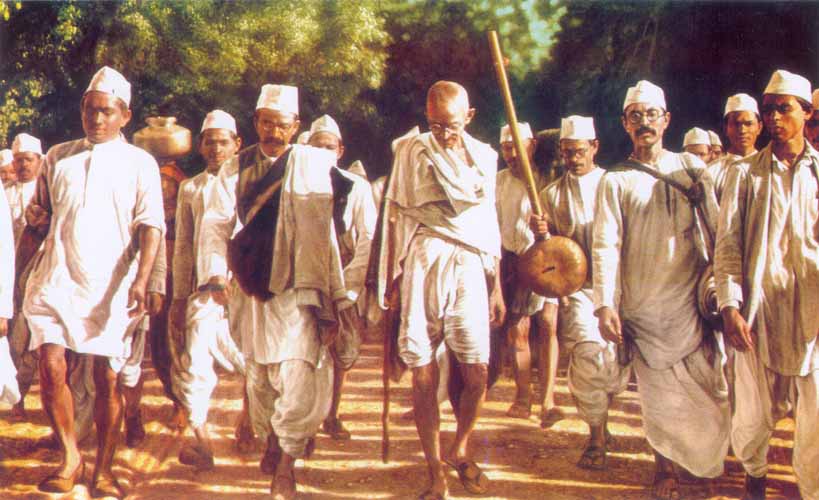 |
One moment that always stands out to me is how Indian nationalism shifted from scattered regional identities into a shared political force during British rule. You can see this unity in scenes like the 1930 Salt March, where thousands of ordinary people walked behind Gandhi, barefoot, refusing to fight back even when beaten. That march was not just symbolic; it showed Indians from different castes, religions, and languages acting as one political body for the first time.
Why is this nationalism constructive?
- It united a fragmented subcontinent without relying on violence.
- It created a civic identity based on rights, dignity, and self‑rule.
- It helped dismantle one of the largest empires in history.
This was nationalism as empowerment, a way for people who had been treated as subjects to finally see themselves as citizens.
Toxic Example: Rwanda’s Hutu Power Nationalism (early 1990s)
On the other side, nationalism in Rwanda shows how quickly pride can turn into poison. Radio broadcasts in 1993–94 didn’t just criticize Tutsis, they described them as “cockroaches,” as if they weren’t human at all. That language wasn’t accidental. It was a deliberate attempt to turn national identity into a weapon.
You can picture the scene: neighbors who had lived side‑by‑side for decades suddenly checking ID cards, deciding who belonged and who didn’t. Nationalism became a test of purity, not unity.
Why has this nationalism become toxic?
- It defined the nation by exclusion instead of inclusion.
- It used fear and myth to justify violence.
- It turned political competition into ethnic survival.
The result was catastrophic: a genocide carried out not by an invading army, but by citizens who believed they were “protecting” their nation.
Positive Nationalism — India
History.com (Salt March)
History.com Editors. “Salt March.” History, 2019, https://www.history.com/topics/india/salt-march (history.com.
Britannica (Indian Independence Movement)
“Indian Independence Movement.” Encyclopaedia Britannica, https://www.britannica.com/event/Indian-independence-movement.
Toxic Nationalism — Rwanda
United Nations (Rwanda Genocide Overview)
“Rwanda: A Brief History of the Country.” United Nations, https://www.un.org/en/preventgenocide/rwanda (un.org.
Human Rights Watch (Leave None to Tell the Story)
Des Forges, Alison. Leave None to Tell the Story: Genocide in Rwanda. Human Rights Watch, 1999, https://www.hrw.org/report/1999/03/01/leave-none-tell-story/genocide-rwanda (hrw.org.
Britannica (Rwandan Genocide)
“Rwandan Genocide.” Encyclopaedia Britannica, https://www.britannica.com/event/Rwandan-Genocide (britannica.com

 fshiels
Do you think the U.S. is now moving toward toxic nationalism?
LikeLike
I’d say the Administration is encouraging Toxic nationalism, Leroy. I think the American people are not in “tic nationalism mode. Sorry for delayed response
LikeLike